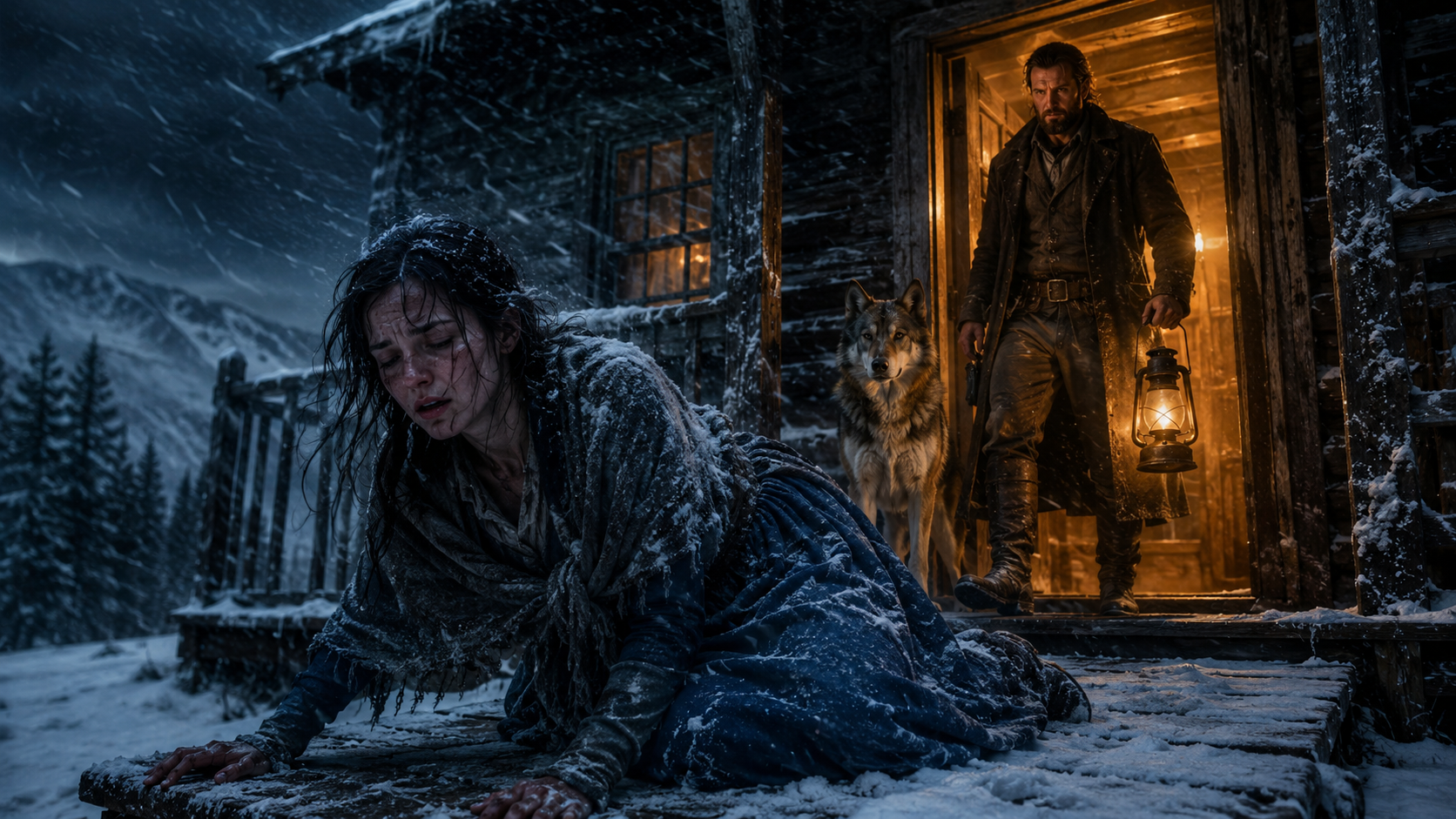
Rowan looked at her.
“You already did.”
“I ran.”
“That was fighting.”
She turned toward the window. The valley below lay hidden beneath blue dusk.
“I have no proof,” she said. “Only what Bram shouted.”
“You have more than that.”
Livia looked back.
Rowan nodded toward the tin box on the shelf.
“Your mother’s paper.”
Her heart thudded.
“I never opened it.”
“Maybe now is when she meant you to.”
Livia took the box down with shaking hands.
The wax seal had cracked with age. She unfolded the paper carefully.
At first, the words blurred.
Her mother’s handwriting leaned across the page, delicate but firm.
My dearest Livia,
If you are reading this, then I am gone, and I fear I have left you with a man who does not know how to love anything he cannot own.
Forgive me.
There are truths I should have spoken sooner.
Your father is not Bram Hart.
Livia stopped breathing.
The cabin vanished around her.
Rowan rose but did not come closer.
She forced herself to continue.
Bram married me when I was already carrying you. He knew. He agreed to raise you because my family paid him to give us his name and silence. Your true father was Elias Wren, a surveyor from the eastern line. He died before you were born, thrown from a horse during a storm.
But he knew of you. He left papers. He left land rights. He left a recorded claim under your full name: Livia Celeste Wren.
Bram kept those papers hidden. I believe he meant to use them one day. I write this copy in case the originals disappear.
You are not his property.
You were never his shame.
You are my daughter, Elias’s daughter, and your own soul before God.
Make them say your name.
Your loving mother,
Celia Wren
Livia read the final line three times.
Make them say your name.
The paper trembled in her hands.
Rowan stood across the room, still as stone.
“He knew,” she whispered. “Bram knew I wasn’t his.”
Rowan’s jaw tightened.
“And he still—”
Her voice broke.
Everything shifted inside her. Not the pain. That remained. But the shape of it changed.
Bram had called her ungrateful blood, useless blood, cursed blood. He had beaten her for reminding him of her mother, then sold her as if fatherhood were a bill of ownership.
But he had never owned even the lie he used to hurt her.
“There may be records,” Rowan said. “Land office. Church register. County clerk.”
“Would they still exist?”
“If Voss has not burned them.”
“Why would Voss care?”
Rowan’s eyes darkened. “Land rights.”
The next morning, Rowan took down a metal strongbox from beneath a loose plank near his own bed.
Inside were letters, old receipts, military discharge papers, and a ribbon tied around a small bundle of legal documents.
“I know something about hidden records,” he said.
Livia did not ask until he handed her a folded deed.
Elise Vale had owned three hundred acres in the lower valley before she married Rowan. After her death, her cousin tried to claim Rowan had no right to remain on the ridge. Voss had funded the claim. Sheriff Pike had served the notice.
Rowan had fought for two years.
He had won.
“That is why Voss hates you,” Livia said.
“One reason.”
“He tried to take your home.”
“And failed.”
Rowan closed the strongbox.
“Men like Voss build power by making people feel alone. A widow with land. A trapper with grief. A girl with no family. Separate, each can be cornered. Together, the math changes.”
Livia looked at her mother’s letter on the table.
For years, she had believed her life was a locked room.
Now she saw a door.
Not open.
But real.
They spent the next week preparing.
Rowan rode to an old friend named Amos Bell, a retired clerk who lived beyond the northern ford and trusted Voss as much as he trusted rattlesnakes. Amos remembered Celia Wren. More importantly, he remembered Elias Wren’s survey claim.
“There was a packet,” Amos said, peering through spectacles at Livia across his kitchen table. “Filed under Wren. Mineral rights, timber rights, water access. Valuable land if the railroad spur ever came through.”
“And where is it now?” Rowan asked.
“County archive, if honest men kept it.” Amos snorted. “Which means we had better look before dishonest men hear us asking.”
They rode to the archive at dawn two days later.
Livia had not been in Mercy Creek since the night she fled. Every storefront seemed to stare. Every window held a memory. She wore a plain blue dress Rowan had bought from a widow near the ford, her mother’s shawl, and the pearl-handled knife hidden in her boot.
Rowan rode beside her, not ahead.
People stopped to watch.
Some whispered.
A boy outside the blacksmith shop said, “That’s Bram Hart’s girl.”
Livia heard Rowan inhale.
But before he could speak, she turned her horse and looked at the boy.
“My name is Livia Wren.”
The boy flushed and looked down.