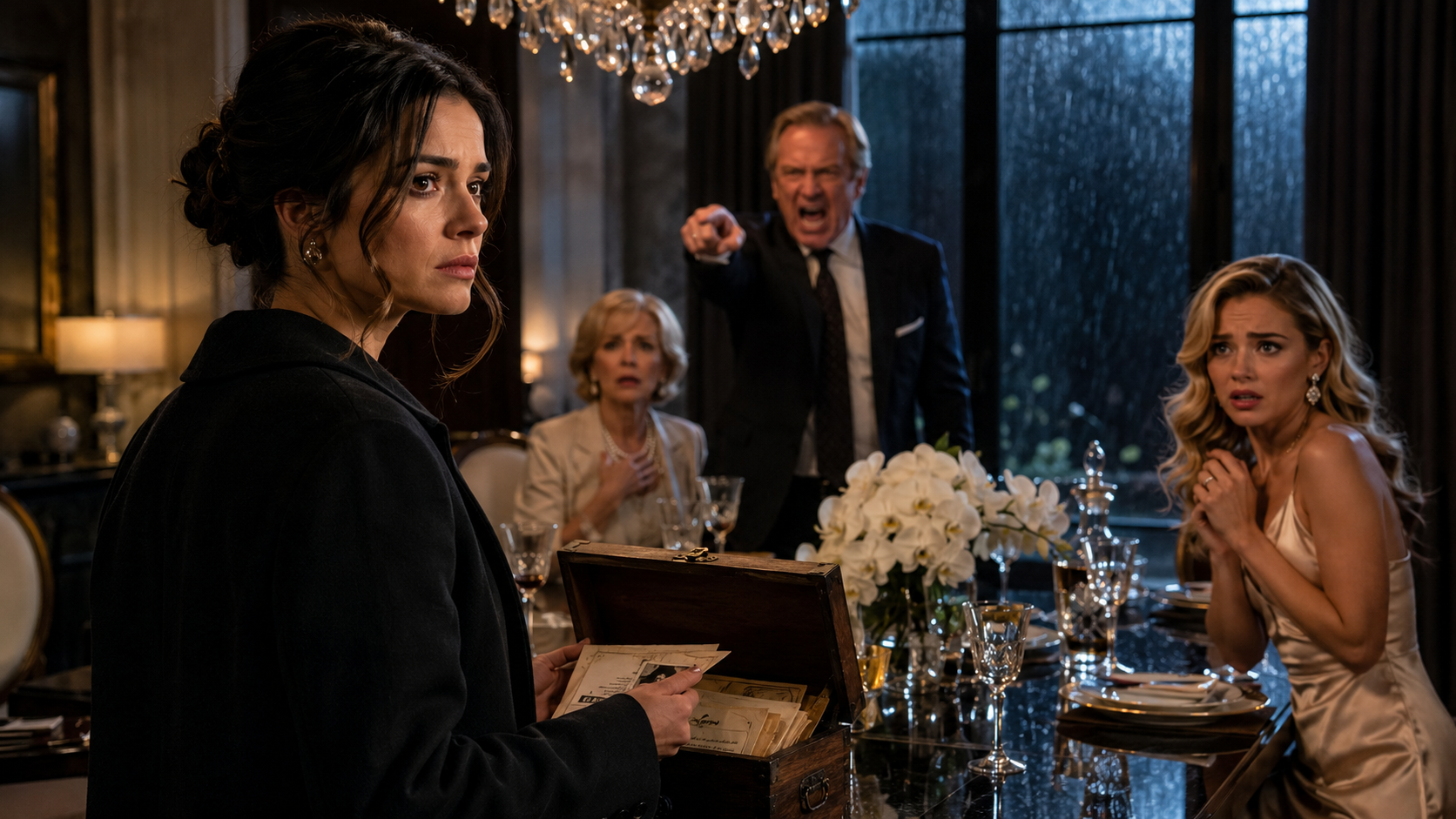
Mara cried with her whole body, bent forward, one hand over her mouth, the note pressed against her chest.
She cried for Westlake.
For the girl in the photograph.
For the years she thought she was hard to love.
For every family dinner where she had laughed too softly, spoken too carefully, made herself useful so no one would call her bitter.
She cried until the cottage grew dark around her.
Then she stood.
Turned on a lamp.
Took the sheets off the furniture.
Opened the windows even though the air was cold.
And one by one, room by room, she began removing dust from the house that had always remembered her correctly.
By spring, the cottage was different.
Not renovated exactly.
Restored.
Mara painted the kitchen a soft green. She replaced the broken porch boards. She turned the upstairs guest room, the one Clara had always claimed, into a studio with wide tables, shelves of paper, and morning light that poured across the floor like forgiveness.
Not the kind given to others.
The kind given to herself.
She enrolled in a design certification program online.
Not Westlake.
Not the stolen dream in its original shape.
Something new.
Something hers.
When the first assignment came back with a note from the instructor — You have a strong eye. Keep going. — Mara sat at the kitchen table and laughed until she cried again.
This time, the tears felt different.
One Saturday in May, a car pulled into the gravel driveway.
Mara saw it from the porch.
Her mother stepped out.
Alone.
No Malcolm.
No Clara.
She looked older than she had at the Ashbourne Club. Less polished. More human. She held a small paper bag in both hands like an offering.
Mara did not move from the porch.
Irene walked halfway up the path and stopped.
“I know I should have called,” she said.
“Yes,” Mara replied.
Irene nodded.
“I brought your grandmother’s teacups. The blue ones. I found them in the dining cabinet at home.”
Mara looked at the bag.
Grandma Ruth’s teacups had disappeared after the funeral.
Clara had once said they were probably donated by mistake.
Mara had believed that for about twelve seconds.
“Why bring them now?” Mara asked.
Irene swallowed.
“Because they were hers. And because she would have wanted them here. With you.”
Mara said nothing.
A year earlier, that sentence would have opened a door.
Now it knocked.
That was all.
Irene set the bag carefully on the porch step.
“I’m not asking to come in.”
Mara studied her mother’s face.
For once, Irene did not cry.
That helped.
Tears had always made Mara feel responsible.
Absence of tears allowed her to think.
“Are you still with him?” Mara asked.
Irene’s mouth trembled.
“Yes.”
Mara nodded.
Irene looked down.
“But it is not the same.”
“No,” Mara said. “It probably isn’t.”
“I should have protected you.”
“Yes.”
“I don’t know how to fix that.”
Mara leaned against the porch railing.
“You don’t fix it by saying that once.”
Irene nodded.
“I know.”
Maybe she did.
Maybe she didn’t.
But for the first time, she did not ask Mara to make the moment easier.
That was something.
Not enough.
But something.
Mara picked up the paper bag.
“Thank you for bringing them.”
Irene’s eyes filled, but she blinked the tears back.
“You’re welcome.”
She turned to leave.
Mara watched her reach the car.
Then, before she could overthink it, she called out, “Mom.”
Irene turned quickly.
Too quickly.
Hope was a dangerous thing on her face.
Mara held the bag against her side.
“I’m not ready.”
Irene nodded, tears finally slipping down her cheeks.
“I understand.”
Mara’s voice softened.
“But you can write.”
It was not forgiveness.
It was not access.
It was a narrow bridge built over a very deep place.
Irene understood enough not to run across it.
“I will,” she said.
Then she got into her car and left.
Mara stood on the porch until the sound of the engine disappeared.
Inside the bag were four blue teacups wrapped in newspaper.
One had a chip near the rim.
Mara washed them carefully and placed them in the kitchen cabinet.
Not because everything was healed.
Because not everything broken needed to be thrown away.
Some things could be kept.
Some could not.
Learning the difference was the work now.
That summer, Mara hosted one dinner at the cottage.
Not a family holiday.
Not a reunion.
Not an apology performance staged around a roast chicken.
Just dinner.
Noah came.
Owen came with his wife.
Aunt Patricia came and brought flowers from her garden.
Uncle Neil came early and repaired the loose step without making a speech about it.
Irene did not come.
She had asked.
Mara had said not yet.
For once, Irene accepted the answer without making Mara manage her disappointment.