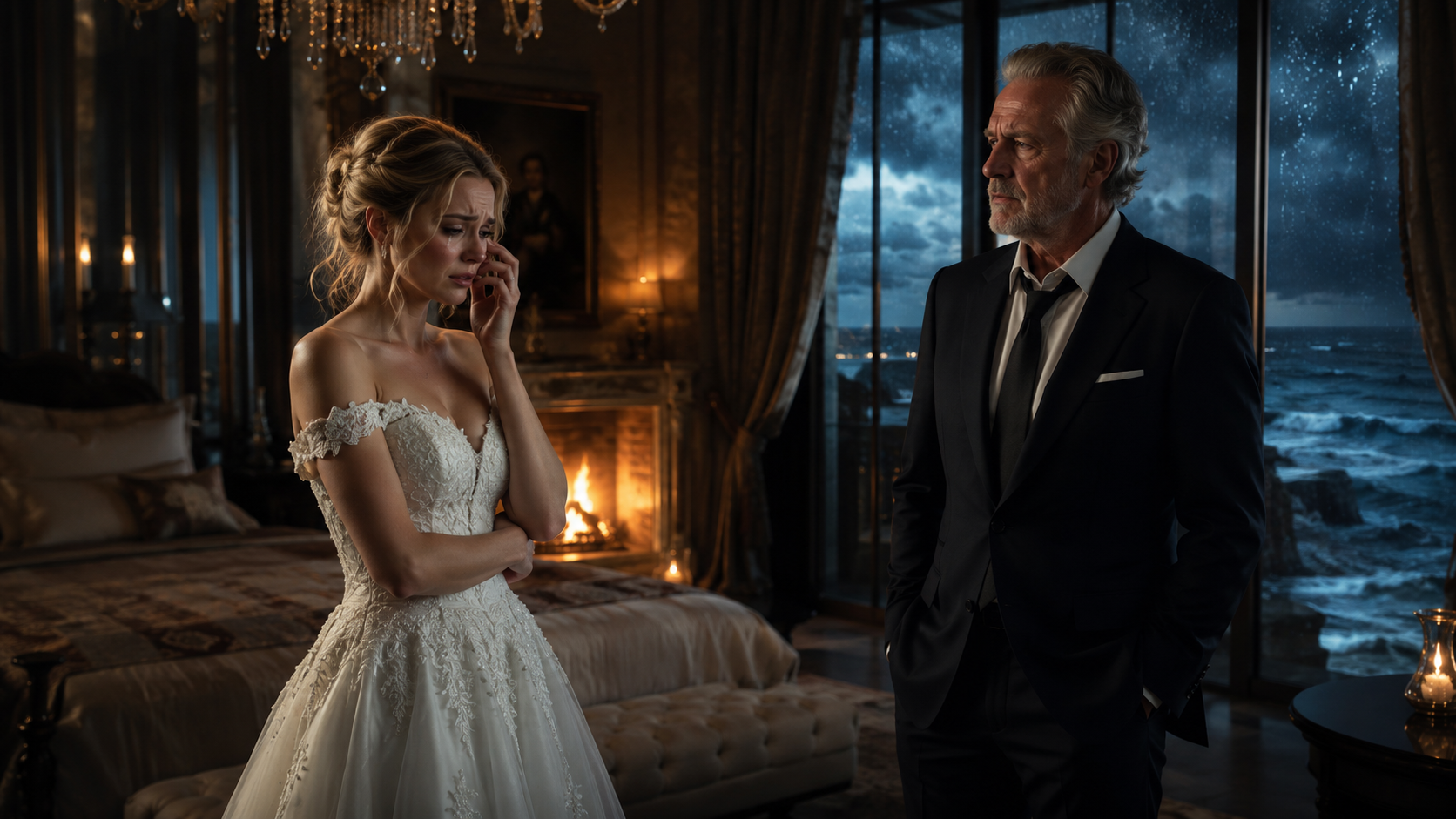
A laugh broke through her tears.
“You bought me a laundromat?”
“I bought you a beginning.”
She pressed the papers to her chest.
For a long moment, she was twenty-three again, frightened in a wedding dress, listening to a man tell her she was not property. Then she was twenty-four, standing in the same room, no longer wondering whether freedom was real.
Dorian touched nothing, claimed nothing. He simply waited.
Mara walked to him.
“You know what you whispered to me that night?” she asked.
His eyes softened. “Yes.”
“You said I only had to be free.”
“I did.”
She looked at the rain sliding down the glass, at the ocean beyond, at the man who had never asked her to confuse protection with possession.
Then she smiled through tears.
“I think I am,” she said.
Dorian’s voice was rough when he answered.
“Good.”
And this time, when Mara cried, it was not because she was afraid.
It was because somewhere between a locked door, a signed paper, a ruined enemy, a shared kitchen, and a love that never demanded surrender, she had finally become the woman everyone else had tried to name for her.
Not a poor girl bought by a billionaire.
Not a rescued bride.
Not a rumor in silk.
Mara Vale Whitestone was a woman who had walked into a marriage expecting a prison and found, against every warning, a key.
But the miracle was not that Dorian had given it to her.
The miracle was that he had placed it in her hand and stepped back.
So she could decide whether to open the door herself.