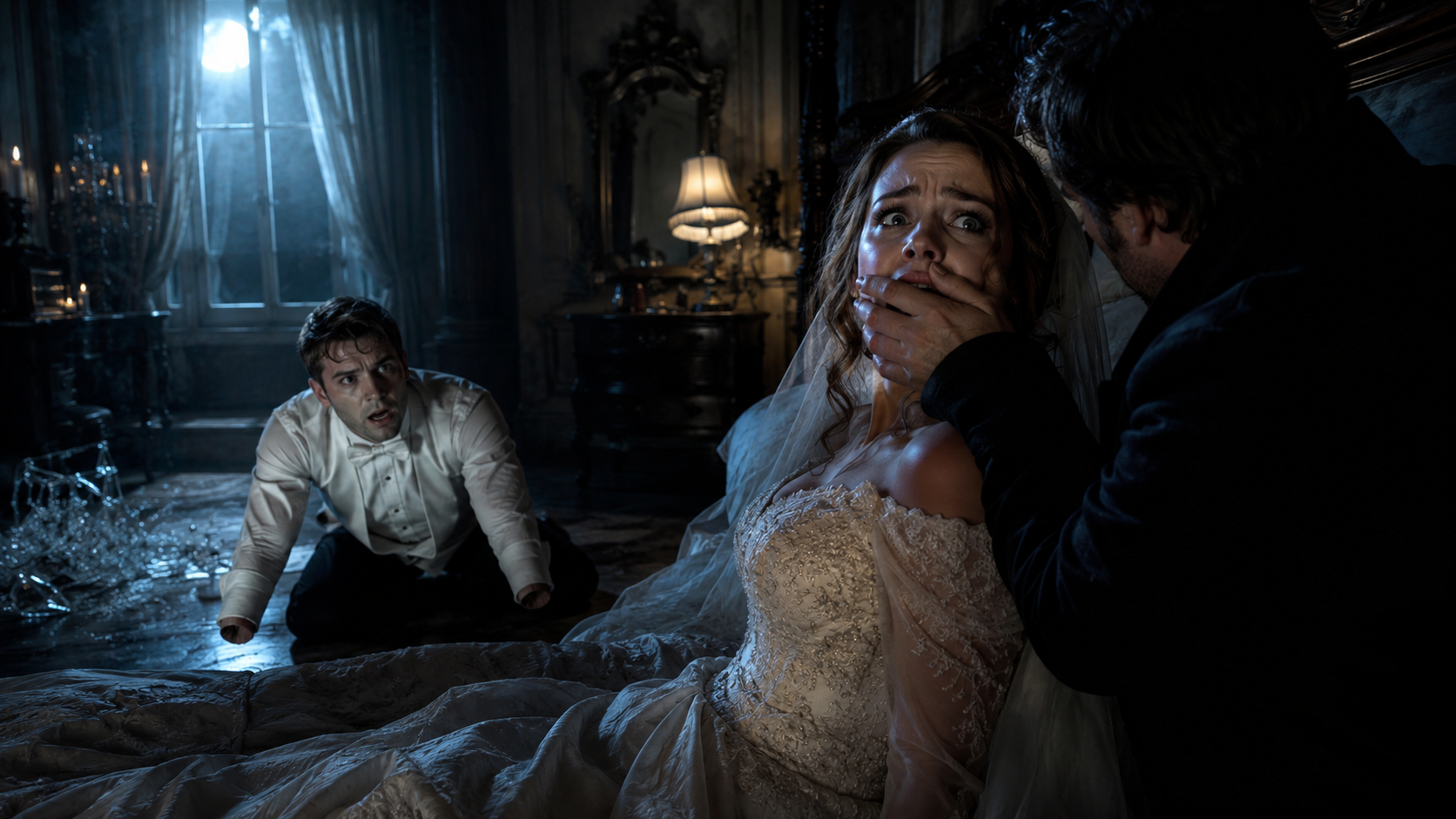
And when people asked whether Silas was her husband because of pity, gratitude, or obligation, Nora would smile.
“No,” she would say. “The first marriage was bought. The second one was chosen.”
Because three years after that terrible wedding night, Nora married Silas again.
Not in a cathedral filled with Blackthorne guests.
Not under Evangeline’s cold eyes.
Not beside a contract waiting to be signed.
They married in a small garden behind The Second Seam, beneath white roses and strings of warm lights.
Lucia sat in the front row.
Mrs. Rowe held a handkerchief to her eyes.
The officiant asked if they had written vows.
Silas activated the speaker he controlled himself.
“Nora,” his voice said, steady and clear, “I cannot hold your hand the way another man might. But I promise never to cage you, never to buy your silence, never to mistake kindness for debt, and never to let any door in our life lock from the outside.”
Nora cried before he finished.
Then she spoke.
“Silas, I entered your family’s house because I was terrified of losing my mother. I found cruelty there. I found fear. But I also found you. Not a savior. Not a burden. A witness. A survivor. A man who taught me that love is not measured by what the body has lost, but by what the heart refuses to become.”
When the officiant pronounced them married, Silas leaned forward.
Nora kissed him first.
The garden erupted in applause.
There were no chains that day.
No locked doors.
No drugged sweetness in a cup.
No bargain hidden beneath white flowers.
Only sunlight, choice, and two people who had walked through horror without allowing horror to write the ending.
And beyond the town, the old Blackthorne House stood with its windows open, filled now with voices that were no longer afraid to speak.
That was the real revenge.
Not violence.
Not ruin.
Freedom.