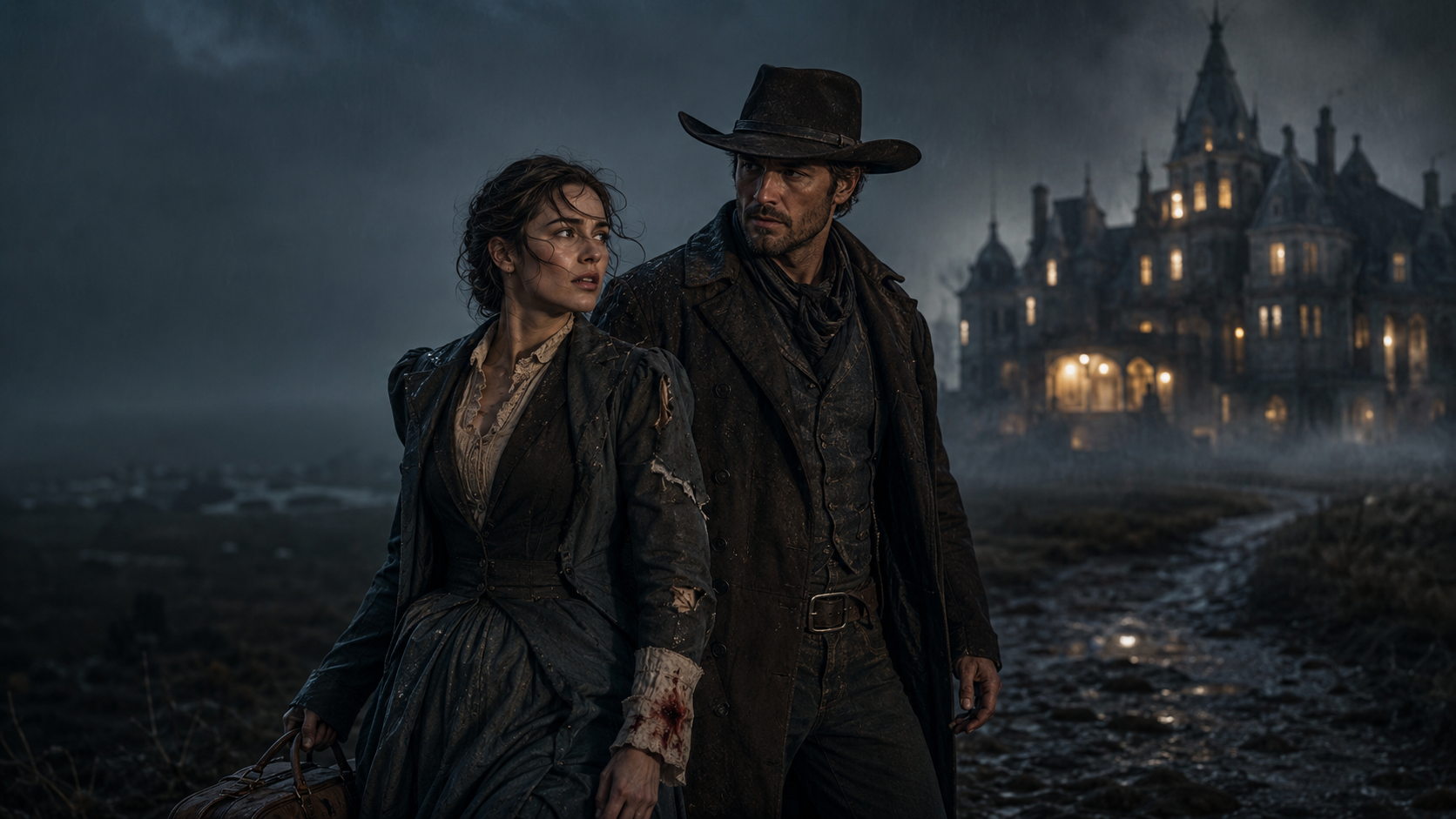
Lydia understood then.
Victor had not chased her only because she had escaped him. He had chased her because marriage had made her dangerous. Her signature could open ledgers. Her name could expose him. Her freedom could ruin him.
Iron Hollow was not only Callum’s home.
It was her inheritance.
Victor lunged for the papers.
Lydia stepped back, but he caught her wrist.
For one terrible second, she was nineteen again, trapped between a desk and a locked door while Victor explained that pain was instruction.
Then Callum’s hand closed around Victor’s arm.
“Let go of my wife.”
Victor’s civilized face cracked.
“She is mine.”
Silence fell so hard it seemed to break the chandelier light.
Lydia pulled her wrist free.
“No,” she said.
One word.
Clear.
Steady.
Final.
“I was never yours. Not as a child. Not as a ward. Not as a woman. Not as a line in your ledger. You stole from me because you believed fear would make me small enough to keep.”
Her voice trembled, but did not fail.
“You were wrong.”
Miriam had arranged the final blow before entering the house. A federal marshal waited in the hall. The papers went into his hands. Victor tried outrage first, then dignity, then denial. None survived contact with ink, witnesses, and numbers.
The physician who had signed Lydia’s false diagnosis turned gray and asked for counsel.
The bank letters tied Victor to the attempt to seize Iron Hollow.
The hidden ledger showed years of theft.
As the marshal took him away, Victor looked back at Lydia.
“You think that cowboy loves you?” he spat. “He’ll love the land more.”
Lydia looked at Callum.
His eyes were not on the deed. They were on the red mark Victor’s fingers had left around her wrist.
“No,” she said quietly. “He taught me the difference.”
They stayed in Boston long enough to bury the legal ghosts.
Miriam filed petitions until clerks groaned at the sight of her. The trust passed to Lydia. The mortgage demand vanished. Blackthorn Hall was sold, not because Lydia needed money, but because she refused to let it stand as a monument to fear.
Before leaving, she stood alone in her old bedroom.
The broken window latch had been replaced. The curtains were clean. The wallpaper was the same pale green. The bed was made. The room looked harmless.
That was the cruelest part.
Bad places did not always look bad.
Sometimes they had polished floors, silver tea sets, and neighbors who praised the man holding the key.
Callum appeared at the threshold but did not enter.
“You all right?”
Lydia looked at the window.
“I used to think escape meant never being afraid again.”
“And now?”
“Now I think it means being afraid and opening the door anyway.”
Callum nodded.
She crossed the room and took his hand.
“Take me home.”
They returned to Wyoming when the cottonwoods had turned gold along the creek. Iron Hollow looked the same and not the same. The barn still leaned. The porch still complained. Duchess the cow still treated Lydia’s absence as a personal insult.
Legally, the land was hers.
In practice, they made it theirs.
Lydia paid the debts. Callum insisted on a written partnership agreement, drafted by Miriam before they left Boston. His cattle remained his. Her land remained hers. Decisions required both names.
“Very romantic,” Lydia said when he laid the agreement on the kitchen table.
“Very necessary,” Callum replied.
She read every line.
Then she signed.
Winter came early. By then, Lydia could saddle her own horse, split kindling, bake bread worth eating, read accounts without flinching, and shoot a bottle from a fence post when Amos’s nephews needed humbling.
She still woke from nightmares.
On those mornings, Callum never told her to forget. He lit the stove, made coffee, and sat nearby until the room remembered it was safe.
In spring, they took in the first woman.
She arrived from a mining camp with a split lip and two children asleep in a wagon. Lydia gave her soup, a bed, and work if she wanted it. Then came a widow whose brother wanted her land. Then a schoolteacher ruined by gossip after refusing a banker’s son. Then a girl who had stolen her own wages back from an employer who called theft justice.
Iron Hollow became known for good horses, strong coffee, and doors that locked only from the inside.
One evening, a year after Lydia had arrived with blood on her cuff, she stood on the porch watching Callum mend a bridle in the low gold light.
He looked up.
“What?”
“I’m trying to understand you.”
“Any progress?”
“Some.”
“And?”
“You are stubborn. Too quiet when you’re hurt. Bad at admitting fear. Certain that coffee should taste like burned rope. You pretend not to be tender because tenderness embarrasses you.”
“That all?”
“No.”
She stepped down from the porch and crossed to him.
“You are also the first man who made staying feel like a choice.”