
Interestingly, a study published in the Journal of Personality and Social Psychology showed that people who describe others in positive terms are more often perceived by those around them as happier, kinder and more emotionally stable.
There is also a flip side. Constant criticism, negativity and gossip can lead others to think that these are the very qualities that characterise you, rather than the people you are talking about.
In many cases, those around you learn more about you from your assessments than about the person you are discussing.
Your facial features

Most people want to believe that they judge others by their actions rather than their appearance. But in reality, the brain begins to form an opinion even before a person has uttered a single word.
Researchers at New York University have found that people often make instant assumptions about a person’s character simply by looking at their face. Interestingly, such conclusions are usually based not on facts, but on past experience.
For example, a person with soft or more youthful facial features may be perceived as friendly, safe or trustworthy. Whereas someone whose facial expression appears stern is sometimes considered intimidating, cold or less approachable. None of these assumptions has to be true, but the brain likes to rely on familiar patterns when faced with new information.
Mental health counsellor Tzlil Herzberg explains that many such judgements are formed from beliefs we absorb throughout our lives. Family experiences, culture, the media and our social environment gradually teach us to read faces in our own way.
The problem is that these instant assessments can be completely wrong.
Someone who looks stern may, in fact, turn out to be incredibly kind. Conversely, someone who seems friendly isn’t always as open as they appear. But first impressions form so quickly that many people don’t even realise they’ve already drawn a conclusion.
That is precisely why experts advise keeping an open mind when meeting new people. A face can tell a story, but it almost never tells the whole story.
Your voice
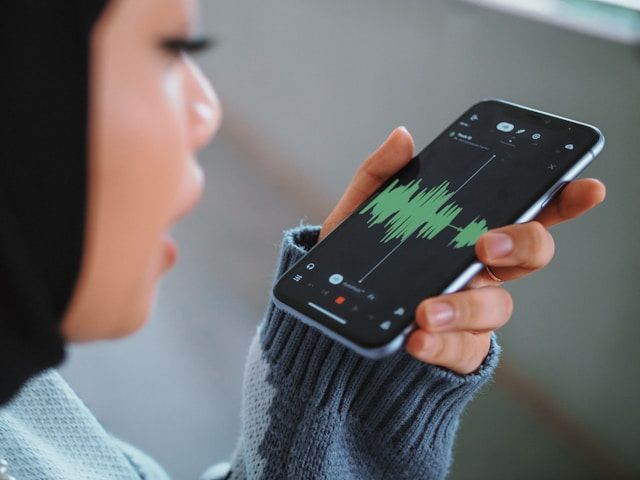
People don’t need to listen to you for long before they start forming an opinion about who you are.
Researchers from the University of Aix-Marseille and the University of Glasgow have found that listeners are able to draw fairly detailed conclusions based solely on a person’s voice. During the study, participants were played recordings of strangers saying just one word — ‘Hello’ or ‘Hola’ — and were then asked to describe those people.
Even with such minimal information, listeners confidently assessed the speakers on qualities such as confidence, trustworthiness, competence and a tendency to dominate.
Think about it for a moment: most of us do this every day.
A calm and steady voice often gives the impression of confidence and reliability. Hasty or trembling speech can be perceived as a sign of nervousness. One person might find a loud voice assertive, whilst another might find it aggressive.
It is particularly interesting how quickly such impressions form. Sometimes just a few seconds are enough.
Of course, the characteristics of a voice do not automatically reveal a person’s true character. Stress, tiredness, nervousness and even illness can affect the sound of a voice. But the voice conveys a great deal of emotional information, which is why people naturally use it as a clue when assessing those around them.
Next time you hear someone’s voice for the first time, pay attention to the conclusions your brain draws even before you actually get to know the person.
Your appearance

Few topics spark as much debate as judgements based on appearance. Most people agree that appearance should not define a person’s character. Yet research shows time and again that it does influence first impressions.
A study published in 2009 showed that people could predict certain personality traits quite accurately simply by looking at photographs of strangers.
Participants were shown over a hundred photographs of people they had never met. In some photos, the people had neutral facial expressions and were in controlled poses. In others, they looked more natural: smiling, relaxing or expressing genuine emotions.
The results were unexpected.
Even when looking at neutral photographs, participants were often able to make fairly accurate guesses about certain personality traits. But when the people in the photos looked more natural and expressive, the accuracy of their assessments increased significantly.
Participants guessed traits such as extroversion, openness, sociability and even loneliness more often than the researchers had expected.
This does not mean that appearance tells the whole truth. Not at all.
Rather, it suggests that people pick up on a multitude of subtle cues without even realising it. Posture, facial expressions, personal grooming, clothing and overall appearance — all these factors combine to form the impression a person leaves behind.