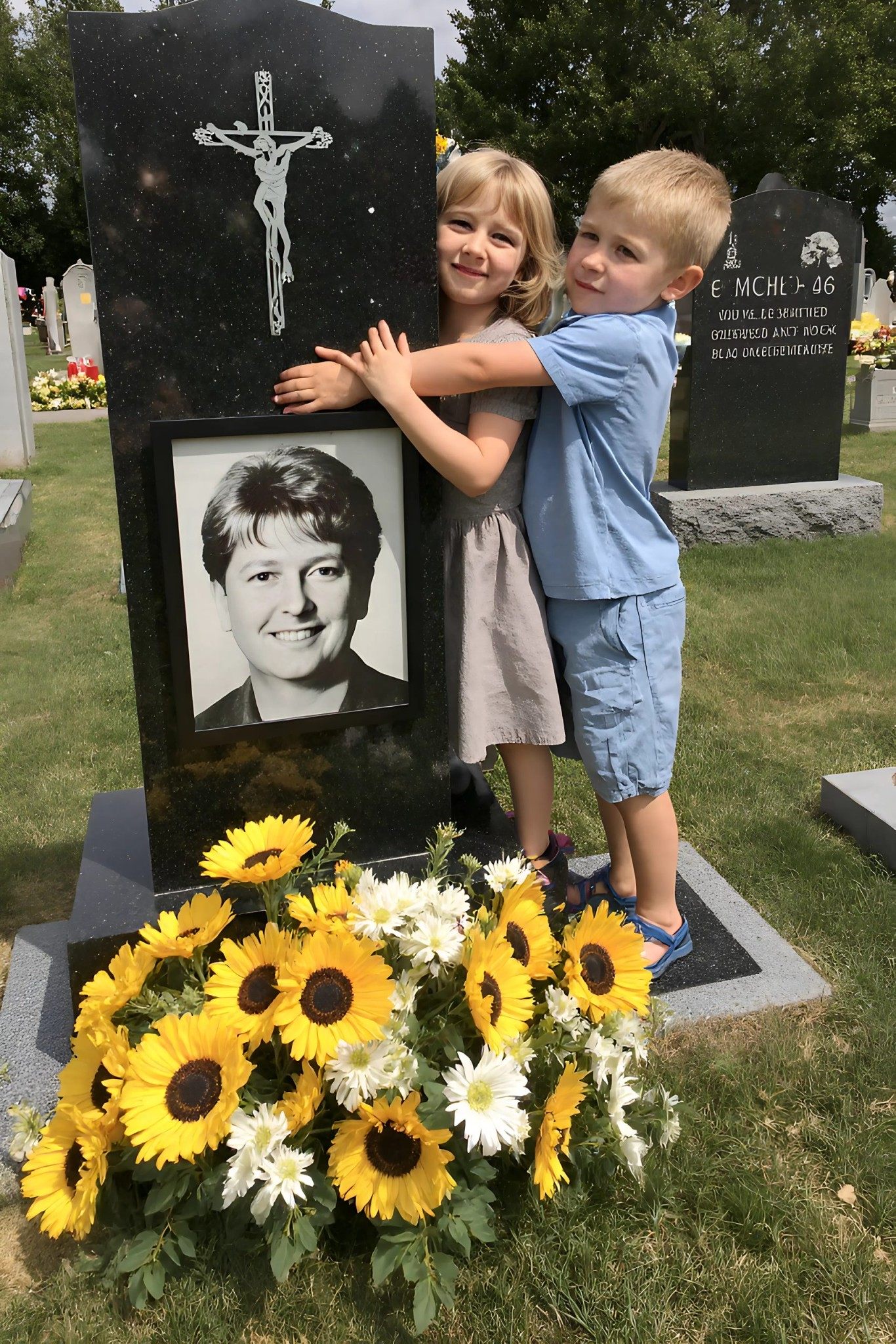
About what it means to carry such love and never speak of it.
About my mother, living with that silence for so long.
The following week, I returned to the cemetery.
I put the photographs and the letter back in the box, but I added something else — one of our recent photographs. Me and the children. At the beach last summer.
On the back, I wrote: ‘She raised us with love. Thank you for being part of her story.’
I carefully hid it and left it there.
I didn’t expect what happened next.
Three weeks later, I received a letter. In my postbox. No return address.
Inside was a simple note:
“I am Denis’s niece. He passed away in ’95.
He left a request that if anyone ever left a photo on her grave, I should find them.
He wanted it to be with you.”
Inside was a key.
And an address in Tver.
Against my better judgement — and with my heart full of curiosity — I went.
I left the children with their father for the weekend and drove along winding roads until I reached a small white cottage by the lake.
A man my age met me at the door. His name was Grisha.
‘My uncle’s cottage,’ he said, unlocking the door. ‘He left it all to me when I turned 18. But this room,’ he said, ‘is not to be opened until someone brings a photograph from the beach.’
We went inside.
The room was small. Cosy.
But every wall was covered with photographs of my mother. Newspaper clippings. Sketches. Poems.
Even a recording — an old cassette tape labelled ‘Her Laughter.’
I stood in the middle of it all, stunned.
‘He was obsessed with her,’ Grisha said quietly. ‘But not in a creepy way. He was deeply in love.’
I picked up one of the sketches.
My mother, younger than I had ever seen her. Smiling.
‘Why did he never contact her again?’
Grisha shrugged. “He wrote letters that he never sent. I found them after he died. He said he didn’t want to ruin her new life.”
My eyes filled with tears. ‘Do you want them?’ he asked.
I nodded.
I drove home with a box of memories in the boot.
That night, I read every letter. Some made me laugh. Others broke me.
But the last one — written a few days before Denis died — said:
‘I hope that one day her daughter will find me. I hope she learns that her mother meant something to someone once in her life.’
It was humbling.
Suddenly, my own difficulties — being a single father, trying to keep everything together — seemed easier.
As if love didn’t have to be perfect to be strong.
I told the children a little about Denise.
Enough for their age.
I told them that sometimes people love each other even if they are not meant to be together.
‘Like in the movies?’ asked Andrew.
‘Exactly,’ I smiled. ‘Only this is real.’
The next time we visited Grandma, the children brought two flowers each.
‘Why two?’ I asked.
‘One for Grandma,’ said Elia. ‘And one for the man who loved her.’
It’s strange how one box can change the way you see your whole life.
It’s even stranger how love — real love — can span decades without ever losing its shape.
I hung one of Denis’s sketches on the wall of our living room.
Right above the children’s drawings.
Because sometimes the best way to honour the past is to let it stand alongside the present.
Life has a way of hiding the truth until you’re ready to accept it.

But when it comes, it doesn’t change your story — it deepens it.
And maybe that’s what true love is.
If this story touched you, share it with someone who has loved and lost, and remind them that some stories don’t end.
They echo. Like laughter in the next room.
Have you ever discovered something unexpected about someone you thought you knew completely?