And I saw it: a regular transfer to his parents’ mortgage company.
‘Why are you paying for their loan?’ I asked. Subtlety is not my superpower.
He flinched. ‘It’s not… well, they just need a little help.’
‘Thomas,’ I said, ‘you’re a student. You’re a hair’s breadth away from eating only cereal for dinner every night.’
‘I have a scholarship,’ he protested weakly. ‘And the lab pays. And… they’re really grateful.’
Spoiler alert: no.
Then I noticed another line: Melanie’s translation.
‘Why are you paying your sister?’
‘She’s between jobs.’
Melanie is always ‘between jobs.’ It’s her natural state.
At that moment, I didn’t argue. I thought: it’s his money, his family, his choice. And I thought it was temporary, which, looking back, seems naive.
Next: Thomas finishes his master’s degree, starts his doctorate, works seventy hours a week for a school nanny’s salary… and continues to send money ‘home’ as if he were sponsoring two ungrateful reality TV contestants. When he finally got a well-paid job in applied science, I thought: Finally. I can breathe.
Instead, the requests only increased: Bella’s ‘special programmes,’ Melanie’s new degree, which she never finished, repairs to his parents’ house, a ‘temporary’ monthly payment that mysteriously lasted three years.
Every time I brought it up, Thomas looked distressed.
‘They need help,’ he said. ‘We’ll manage.’
We managed because we quietly cut back on everything while his parents did urgent repairs in the bathroom.
Then Noah was born, and everything became blurred for a while. My in-laws loved him immediately.
‘He looks so much like Thomas,’ they would say. ‘Our genes are strong.’
Ours. Not mine. But I was too tired to argue about pronouns.
Two years later, Mia arrived.
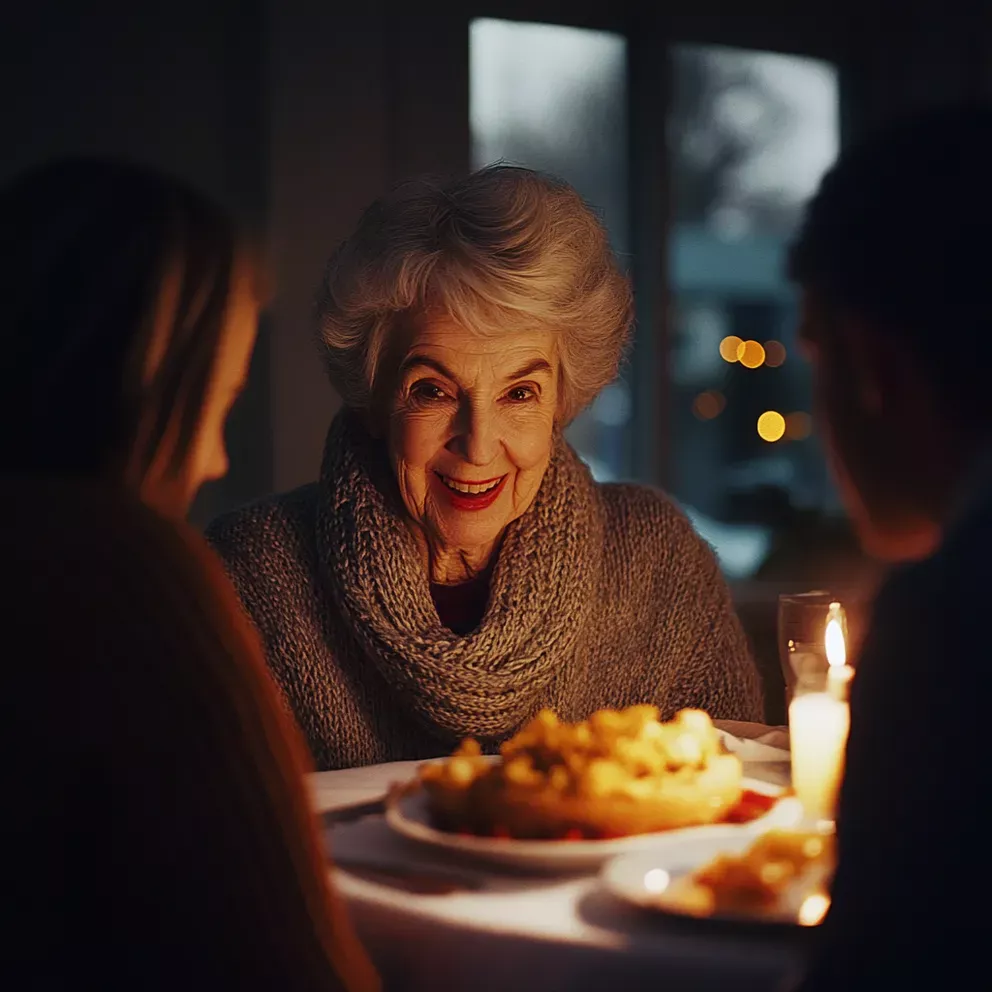
When she emerged from the newborn haze and her features took shape, I began to see glimpses of someone I hadn’t seen in a long time: my grandmother, who had passed away. The same soft eyes, the same half-smile, the same quiet tenderness in her face. It struck me in an unexpected way. My grandmother had been the safest place in my childhood — warm, stable, endlessly patient. Finding her features in Mia was like bringing her back a little.
When Sharon saw Mia ‘for real’ for the first time, she frowned.
‘She doesn’t look like Noah.’
‘She looks like my grandmother,’ I replied, beaming.
‘Oh,’ she said, looking at the baby as if she were an alien. ‘Well, I hope she takes after the family. Like shoes.’
And then the ‘jokes’ began.
‘Are you sure it’s hers?’
‘Come on, relax.’
‘It’s just funny: Noah is Mini-Thomas, and Mia… I don’t know where she came from.’
‘She looks like my grandmother,’ I said. Again. And again. And again.

They squinted at the photo, shrugged, and continued to hint that I had somehow reproduced my grandmother using the postman’s DNA.
The older Mia got, the more the cruelty grew. Little phrases on birthdays, jabs whispered over dinner.
‘She’s not like our side at all. Maybe someday we’ll have to tell her the truth.’
The prejudice grew too. Noah got big presents, praise, special outings. Mia got crafts from the sale, every time. She saw it. She always saw it. Once, Noah had a cupcake with a superhero topper and twice as much frosting. Mia got a sad, plain, economical version. Noah — bless his heart — quietly transferred half of his frosting to his sister’s plate and gave her the superhero.
‘There,’ he said. ‘Better.’
I had to pretend to look at my phone so I wouldn’t cry in front of everyone. I tried to talk to Thomas about it.
‘It’s not on purpose,’ he said, the eternal peacemaker.
On purpose or not, my daughter was learning that she was less important in this house. And at Christmas, she learned exactly how much Sharon considered her ‘extra.’
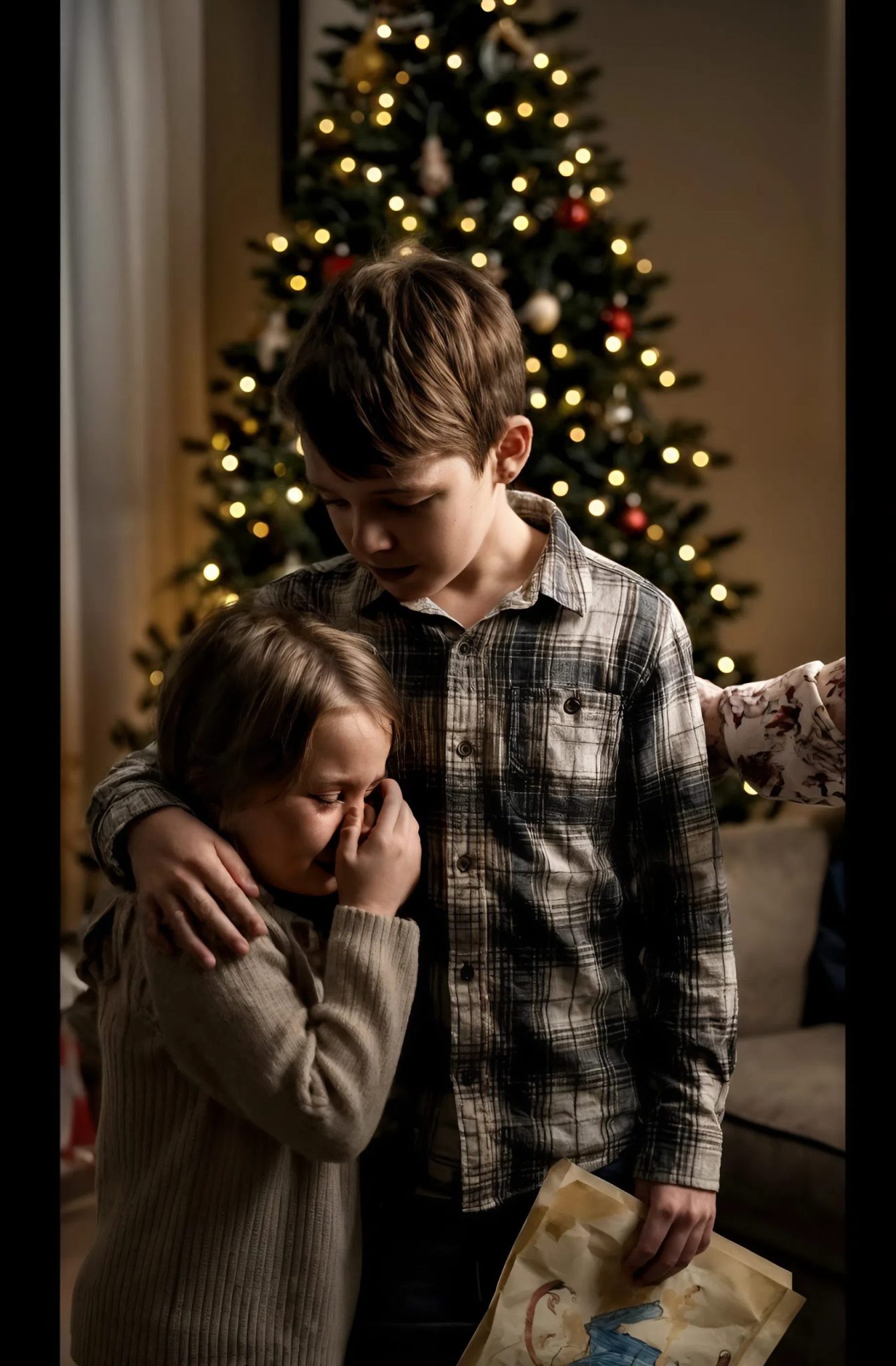
So yes, when Sharon rejected Mia’s drawing, I wasn’t surprised. But I was at my limit.
And as we drove home in silence, the lights flashing like strobe lights, I realised that I had no idea that the explosion she had just caused was only the beginning.
As soon as we got back, I felt emotionally drained. It didn’t work.
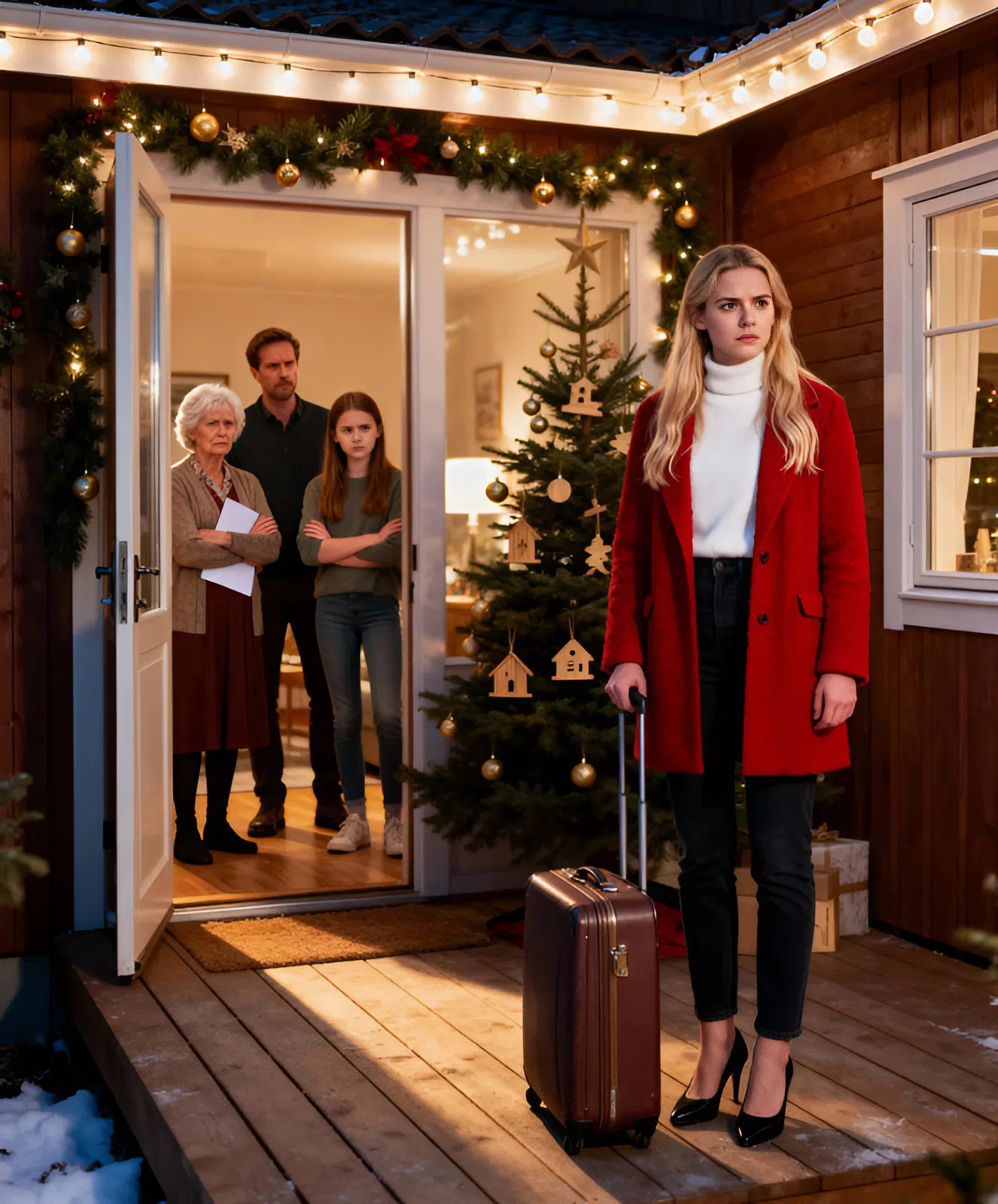
I put Noah and Mia to bed with a film, unable to bear the thought of them being more than two metres away from me. Then I went into the hallway, sure I would find Thomas pacing back and forth, spiralling, or quietly collapsing on the floor.
Instead, I found him at his desk, still wearing his wool coat, illuminated by the cold blue light of the screen. He was clicking his mouse with rhythmic, mechanical precision. Click. Click. Click.
‘Thomas?’ I asked cautiously. ‘What are you doing?’
He didn’t even look up. ‘Fixing something.’
It was the kind of tone a man uses before doing something irreversible.
I stood behind him. My heart was pounding in my chest. His bank account was open. Regular payments, transfers, auto-debit lists I didn’t even know about. Tabs with names like Contribution Crédit Immo, Melanie Mensuel, Fonds École Bella.