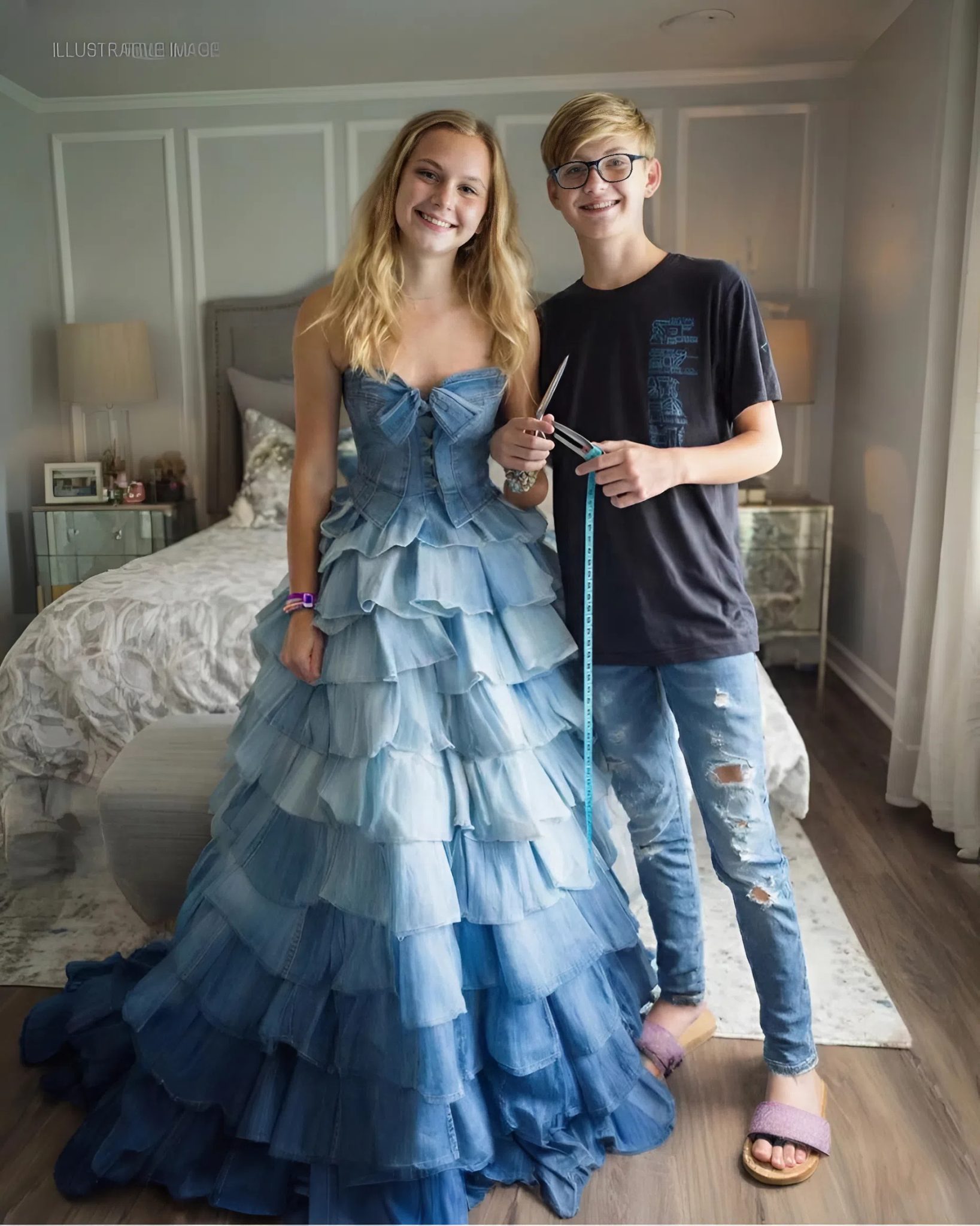
My stepmother made fun of the dress my brother sewed for me out of Mom’s old jeans. By the end of the evening, though, everyone saw exactly who she really was.
I’m 17. My brother, Noé, is 15.
Mom died when I was 12. Dad remarried two years later, which is how Karla came into our lives. Then last year, Dad had a heart attack, and overnight, everything changed at home.
Mom left money for me and Noé. Dad always said it was for “important things”—school, college, big milestones. Karla, however, seemed to have a different definition of “important.”

A month ago, the prom came up. Karla was sitting in the kitchen, scrolling through her phone, when I told her it was in three weeks and I needed a dress.
Her response was quick and cold.
“Prom dresses are a ridiculous waste of money.”
I told her Mom had saved up for exactly this kind of occasion. She laughed at that—not the way someone laughs when they’re happy, but the way someone laughs when they want to be snarky. Then she looked at me and snapped that no one cares to see me prancing around in an overpriced princess costume.
I tried to stay calm.
“So there’s money for the house, but not for this?”
“Watch your tone.”
I said what I’d been holding back.
“You’re spending our money.”
Karla jumped up, the chair creaked. She said she’s the one keeping this family alive, and I have no idea how much anything costs. When I asked why Dad had said the money was ours, her voice went flat.
“Because your dad was bad with money, and his boundaries were all wrong.”
I went up to my room and cried into my pillow, just like when I was little.
Two days later, Noé came into my room with a pile of old jeans. They were Mom’s jeans. He set them down on the bed and said only this:
“Do you trust me?”
I looked at the pants, then at him.

He told me he’d learned to sew last year; I remember he was proud of it back then, too, but Karla always made fun of him for it. He said he’d try to make a dress. His voice trembled, as if he were already afraid I’d laugh at him.
But I immediately grabbed his wrist.
“No. I love the idea.”
From then on, we worked in secret. We sewed when Karla left the house or locked herself in her room. Noé pulled Mom’s old sewing machine out of the laundry room cabinet and set it on the kitchen table.
Sometimes he’d tell me to move over or hold the fabric taut. I smiled at him.
“You’re bossing me around.”
Yet, in the midst of it all, it felt as if Mom were right there with us. In the scent of the denim, in the sound of the old sewing machine, in the way Noé carefully smoothed out the fabric.
The dress hugged her waist nicely and flared out at the bottom in several panels of varying shades of blue. She pieced together pockets, seams, and worn patches in a way that gave the whole thing a distinct style. It wasn’t “thrown together,” but thought-out, deliberate, and authentic.
When it was finished, I ran my hand over one part of it, and all I could say was:
“You made this.”
The next morning, Karla saw the dress hanging on my door.
She stopped. She stepped closer. Then she burst out laughing.
“You can’t be serious.”

Her voice was full of sarcasm.
“What is this?”
I stepped out into the hallway.
“My prom dress.”
She laughed even louder.
“That stained, patched-up thing?”
Noé came out of his room immediately. Karla looked at us, then back at me, as if she couldn’t believe we were actually doing this.
“Tell me you’re just joking.”
“I’m going to wear it,” I said.
Karla put her hand on her chest, as if I’d offended her.
“If you wear that, the whole school is going to laugh at you.”
Noah tensed up beside me. I could tell it hurt him, but I didn’t want to back down.
“It’s fine.”
“No, it’s not,” Karla snapped, and waved her hand dismissively at the outfit. “It looks pathetic.”
Noé’s face flushed red.
“I made it.”
Karla looked at him as if she’d just found a new target.
“You made it?”
Noé lifted his chin.

“Yes.”
Karla’s smile was slow and malicious.
“Now I get it.”
I took a step forward.
“Enough.”
I could tell she was enjoying my backtalk. She said she’d have a good time when I showed up in a “charity project” sewn from an old pair of jeans, and I think they’d applaud.
I answered quietly because I didn’t want to yell.
“I’d rather wear something made with love than something bought with money taken from children.”
The hallway fell silent. Karla’s expression changed. Then she just told me to get out of her sight before she actually said what she was thinking.
I put the dress on anyway.
That evening, Noé helped me zip it up. His hand was shaking. I looked at him.
“Hey.”
He tried to smile. He said that if anyone laughed at me, he’d haunt them.
That made it easier for me, too.
Karla announced that she was coming too, because she “wanted to see the disaster live.” Later, I heard her talking to someone on the phone. She said they should come early because she needed “witnesses.”
The strange thing was that no one laughed.
At the entrance, I saw Karla in the back, already holding her phone. Tessa, my friend, just whispered that my stepmother was mean.

People were looking, but not the way Karla had hoped. More out of curiosity.
A girl from the choir stepped up.
“Wait, are those jeans?”
Another asked where I’d bought them. A teacher touched her chest and said they were beautiful.
I was still nervous. Karla was watching too intently, as if waiting for the moment when it would all fall apart.
Then came the formal part of the evening. The principal stepped up to the microphone, thanked everyone for their work, went over the usual safety procedures, and then talked about the awards. Suddenly, his gaze slipped away from us and settled on Karla.
His face hardened.
He lowered the microphone and asked someone to point the camera toward the back rows, at that woman. Karla’s face appeared on the screen.
Karla smiled at first. She thought a heartwarming parent-child moment was about to unfold.
But then the principal spoke up slowly.
“I know you.”
The room fell silent.
Karla laughed nervously.
“Excuse me?”
The principal stepped down from the stage, moved closer, holding the microphone in his hand.
“Karla.”
Karla stood up straight.

“Yes. And I don’t think this belongs here.”
The principal didn’t respond to that. He looked at me, then at Noé, who had come with Tessa’s mom and was standing by the wall, then back at Karla.
“I knew your mother,” he said. “Very well.”
I felt the hairs on my arms stand on end.
The principal continued. He told us that Mom had volunteered here, raised money, and talked about us all the time. She also often mentioned that she’d set money aside for special occasions because she wanted us to be protected.
Karla’s face went pale.
“It has nothing to do with him.”
The principal remained calm.
“It became her business when I heard that a student almost missed the prom because she was told there was no money for a dress.”
A murmur ran through the room.
The principal turned slightly to the side and pointed at me.
“Then I also heard that her younger brother had hand-sewn a dress for her out of their late mother’s clothes.”
Now everyone was looking at us. Karla tried to defend herself, saying they were turning a rumor into a drama. The director, however, said that it was cruel enough for someone to laugh at a child because of a dress like that. But it was even worse when the person doing so was the one in charge of the money intended for the children.

Karla snapped.
“He can’t accuse me of anything.”
Just then, a man stepped out from the side. He looked vaguely familiar; I thought I’d seen him at Dad’s funeral. He said he could clear up a few things.
A teacher handed him a spare microphone. He introduced himself; he was the lawyer who had handled Mom’s estate papers. He explained that he’d been trying for months to get answers about the children’s trust fund, but had only been given the runaround. That’s why he’d contacted the school—because he was worried.
The whispering grew louder.
Karla hissed that this was harassment.
The lawyer looked at her.
“No, this is a matter of documents.”
The principal then did something I will never forget. He turned to me and asked me to come up on stage.
My legs were shaking. Tessa squeezed my hand and gently nudged me forward.
I stepped up. The room blurred; I could only feel the lights.
The director was smiling kindly now.
“Tell everyone who made your dress.”
I swallowed hard.
“My brother.”
The director nodded.
“Noah, come up here too.”
Noé looked like he’d rather disappear, but he came over.
The principal pointed to the dress.

“This is talent. This is care. This is love.”
No one laughed.
They clapped.
Not out of politeness. Properly, loudly, sincerely. From the front row, an art teacher called out that Noah had a gift. Someone else said the outfit was incredible.
Meanwhile, I spotted Karla, still on her phone. Only now it wasn’t my humiliation that would be recorded. It was hers, live.
Then Karla made her final mistake.
She exclaimed:
“Everything in that house is mine anyway!”
The room fell silent again.
The lawyer replied immediately.
“No. It isn’t.”
Karla looked around, as if she were only now realizing there was nowhere to run.
I barely remember how I came down from the stage. I do remember that Noah was there beside me. I started to cry. Strangers touched my arm and said kind things. Karla had disappeared even before the last dance.
When we got home, she was waiting in the kitchen.
“You think you won?” she snapped. “You turned me into a monster.”
“You did this to yourself,” I said.
Then she pointed at Noé.

“And you, you little sneak… with this sewing nonsense.”
Noé flinched.
But for the first time in a year, she didn’t stay silent.
She stood in front of me and said:
“Don’t call me that.”
Karla laughed.
“Or what?”
Noé’s voice trembled, but she finished what she was saying.
“Nothing. That’s exactly the point. You do it because you think no one will stop you.”
Karla was about to interrupt, but Noé raised his voice.
“You’ve made fun of everything. Mom, Dad, me for sewing. Her too, because she wanted a normal evening. You just take and take, and then you get offended when someone notices.”
I’d never heard him speak like that.
Karla looked at me.
“Do you let him talk to me like that?”
“Yes,” I said.
Just then, there was a knock at the door.
The lawyer was standing in the doorway, with Tessa’s mom beside him. They had come straight from school.
The lawyer told us that, given the statements made that evening and our previous concerns, we couldn’t be left without support during the court review, and they wouldn’t leave us alone with Karla while they looked into the guardianship and the trust fund.
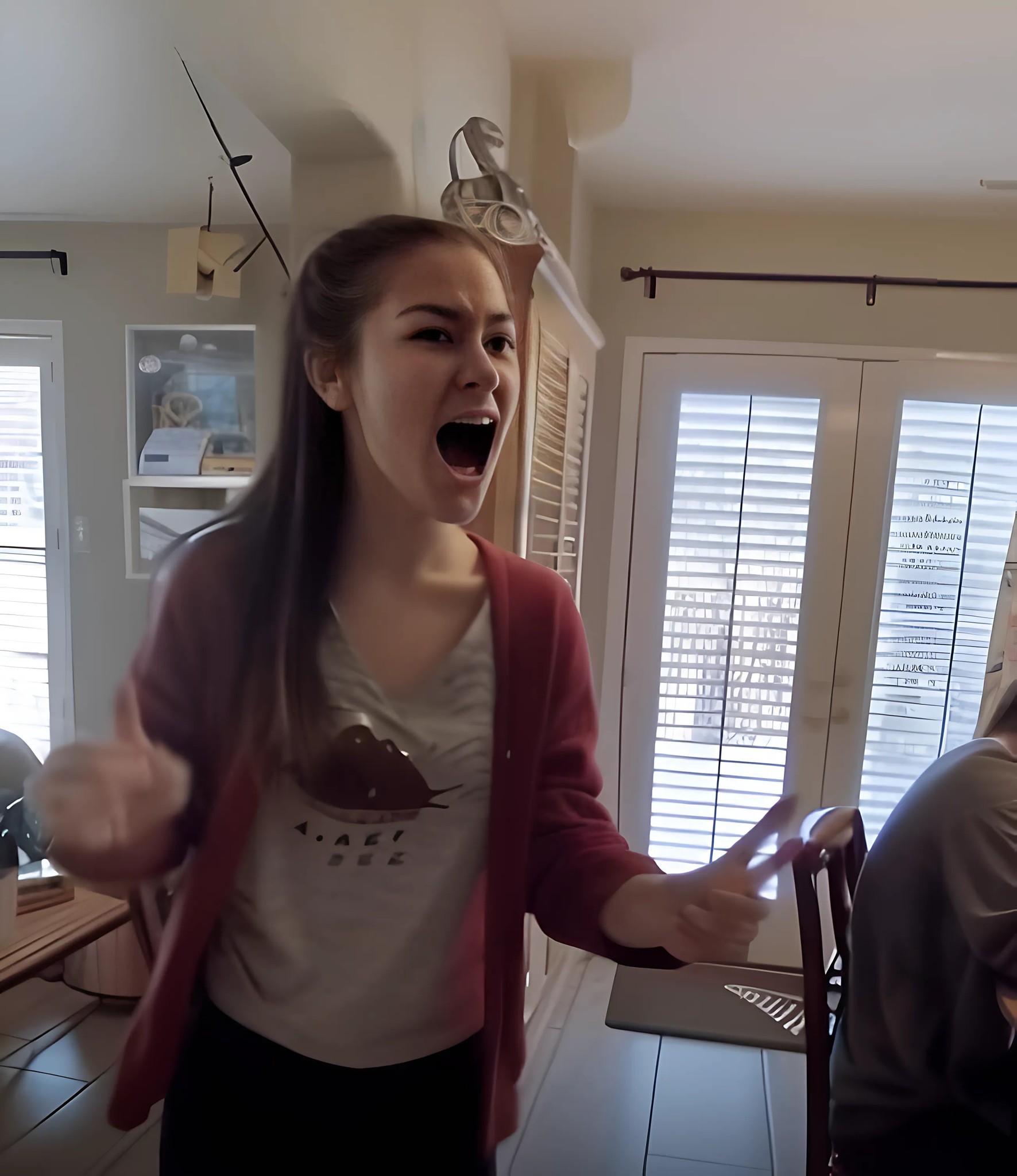
Karla just stared.
Tessa’s mom walked past her as if she weren’t even there and said to us:
“Pack a bag.”
We did just that.
Three weeks later, Noé and I moved in with our aunt. Two months later, they took control of the money away from Karla. She fought for it, but she lost.
The dress is hanging in my closet now.
One of the teachers took a picture of it and sent it to the director of a local arts program. Noé was invited to a summer design workshop. For a day, he pretended not to care, then I caught him smiling at the email.
Sometimes I still run my fingers over the seams.
Karla wanted everyone to laugh at me when they saw what I was wearing. Instead, it was the first night people actually saw us.