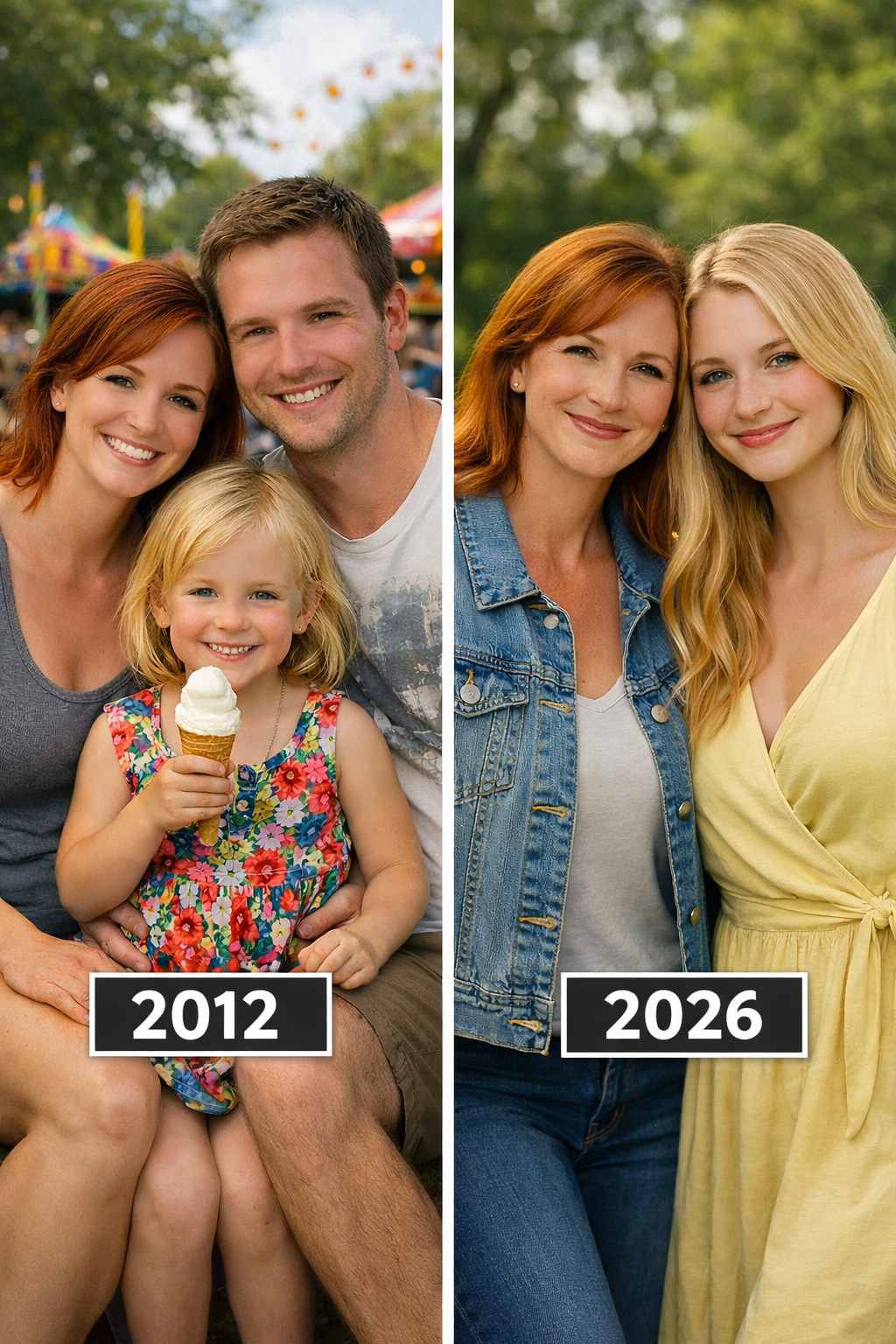
For the first four years of my life, my world was very small.
It was just my father and me in a little yellow house with squeaky floors, a crooked mailbox, and a kitchen that always smelled like coffee and butter. I didn’t know we were missing something because, to me, we were complete.
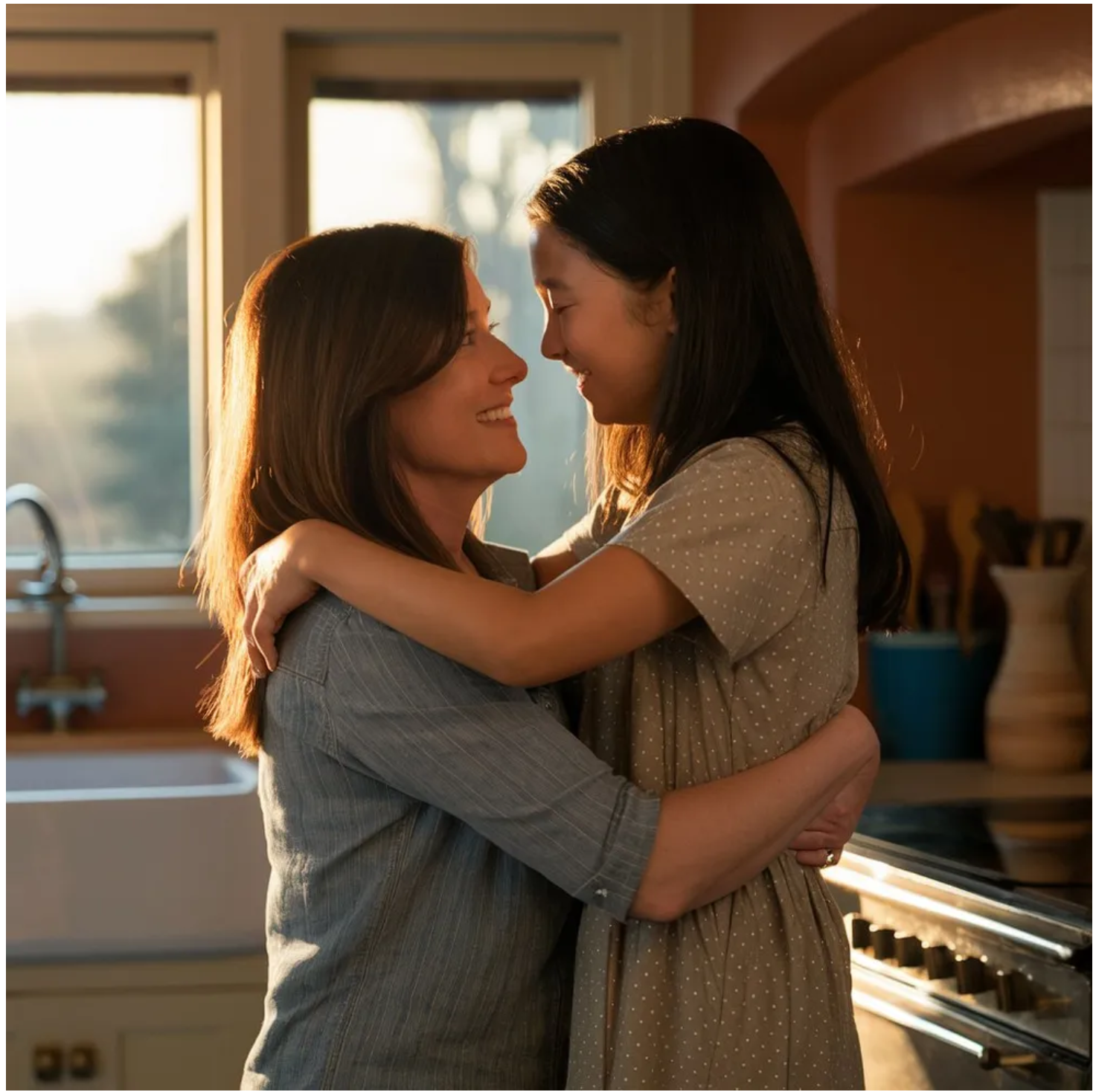
My father made everything feel magical, even the ordinary things.
He would lift me onto the kitchen counter while he made breakfast and say, “Supervisors sit up high.” Then he’d tap my nose with a flour-dusted finger and grin like I was the best thing that had ever happened to him.
“Are you my boss?” I once asked.
He laughed and kissed my forehead. “You’re my whole world, kiddo. That’s even bigger.”
I didn’t understand then how much love could be packed inside a tired smile.
I only knew that when he came home, the house felt warm again. I knew that when I had nightmares, he sat beside my bed until sunrise, pretending he wasn’t falling asleep himself.
My biological mother had died the day I was born.
Nobody told me that with those exact words when I was little, of course. Adults have a way of folding tragedy into soft sentences, as if gentler language can make grief smaller.
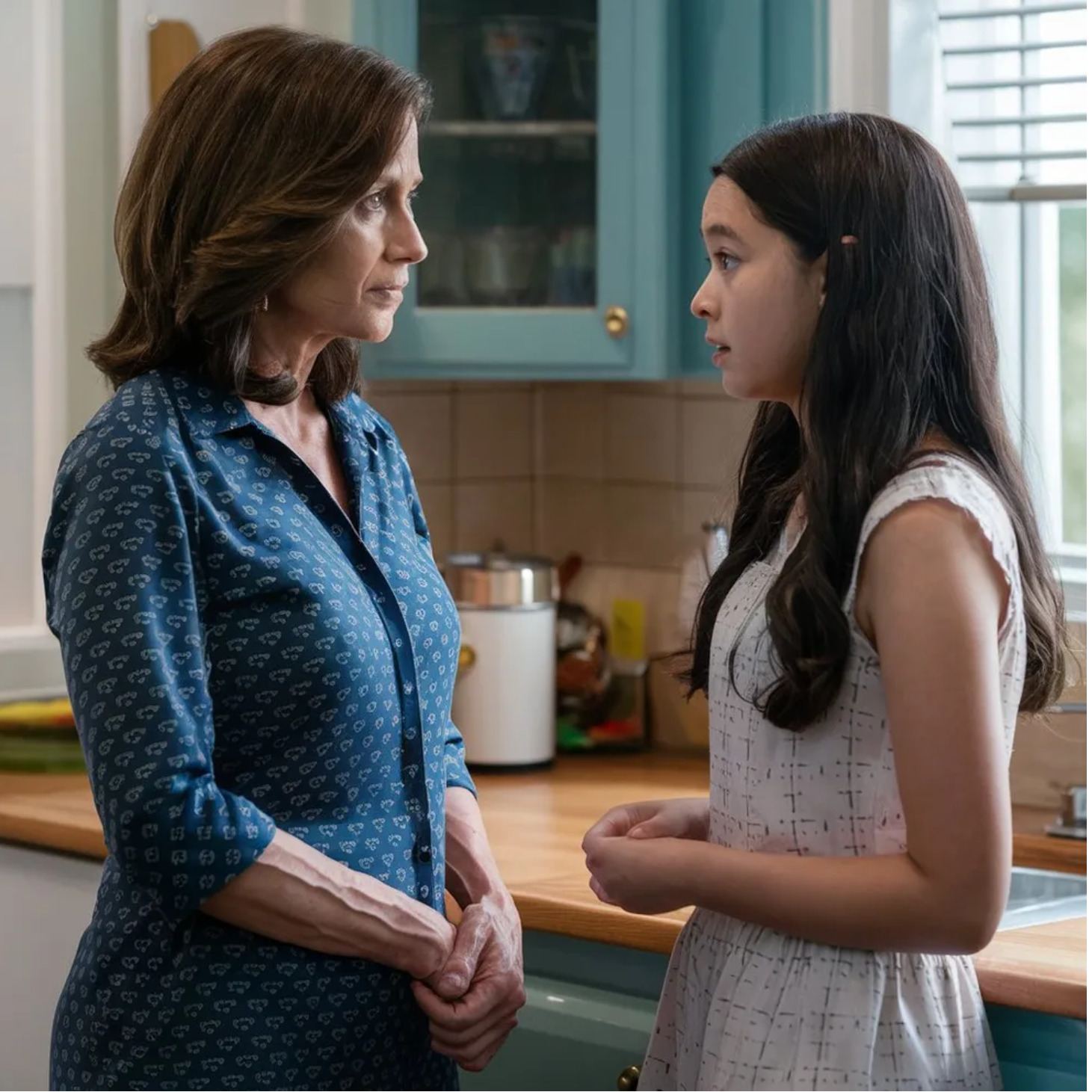
I remember the first time I asked about her.
Dad was standing at the stove flipping pancakes, and I was swinging my legs from the counter. Morning light poured through the window, turning everything gold.
“Did Mommy like pancakes?” I asked.
His hand stopped in midair for just a second. Then he turned the pancake too quickly, and it folded over on itself.
“She loved them,” he said quietly. “But not as much as she would’ve loved you.”
At four years old, I noticed the strange thickness in his voice, but I didn’t understand it.
I just nodded and accepted the answer the way children accept weather. Some things simply were, and that was enough.
For a while, life stayed that way.
There were daycare pickups, bedtime stories, and grocery store trips where I was allowed to choose one sugary cereal if I promised not to tell anybody. Dad tied my shoes badly, packed my lunches unevenly, and once sent me to preschool with two different socks.
He was imperfect in all the ways that made him mine.
Then, a few months after my fourth birthday, he brought Meredith home.
I remember the exact moment because I had been sitting on the floor in the living room, lining up crayons in rainbow order. The front door opened, and Dad stepped inside smiling in that nervous, hopeful way people smile when they care too much about what happens next.
Beside him stood a woman with chestnut hair and kind eyes.
She didn’t tower over me the way most adults did. Instead, she crouched down until her face was level with mine, her knees bent awkwardly on our old rug.
“I’ve heard you’re the boss around here,” she said.
I narrowed my eyes and immediately hid behind Dad’s leg.
He chuckled, embarrassed. “She’s shy.”
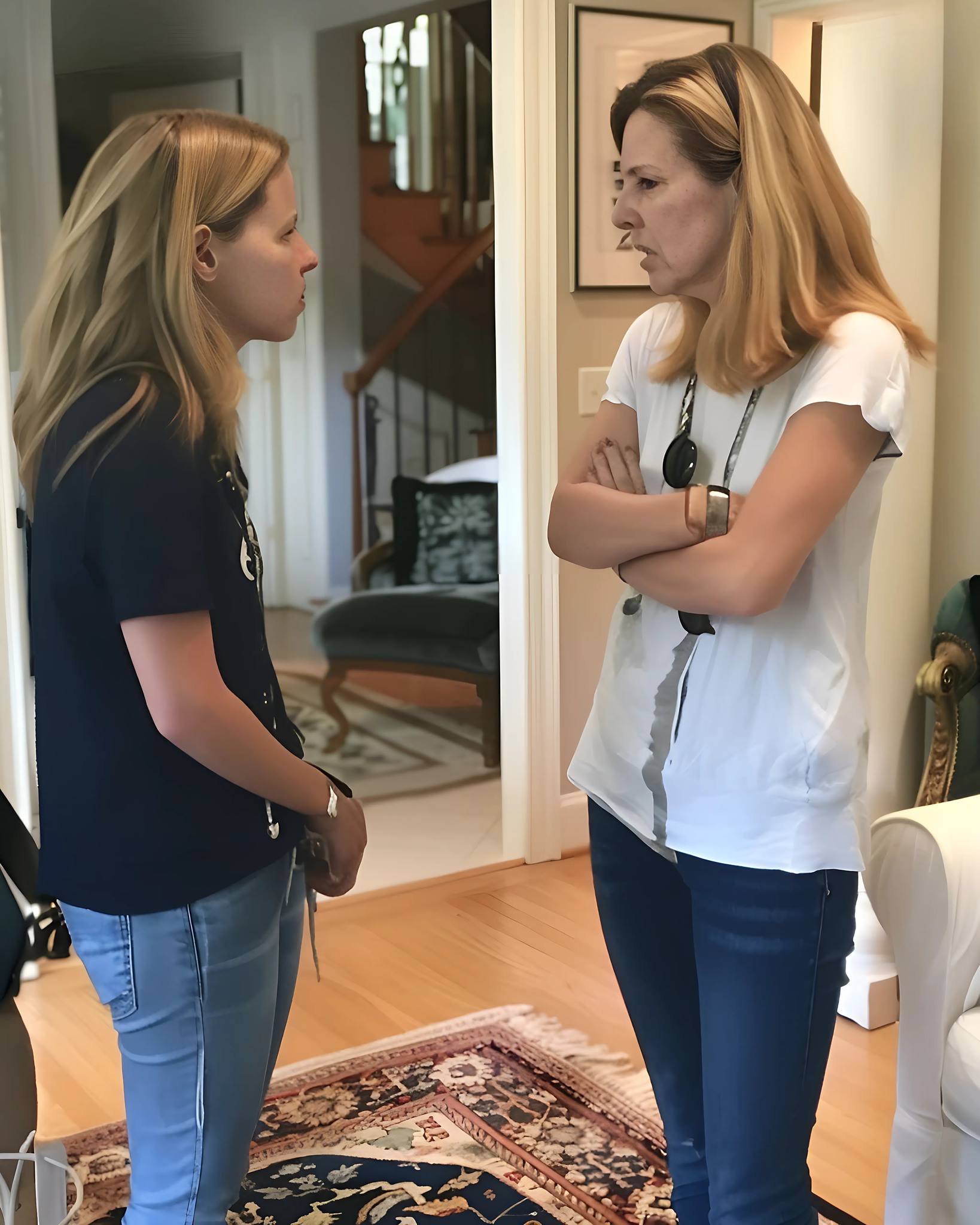
But Meredith didn’t reach for me, didn’t force a hug, didn’t tell me I was rude.
She only smiled and said, “That’s okay. I’d be suspicious too if someone walked into my house and claimed she’d heard about me.”
That made me peek out from behind his leg.
There was something different about her. She didn’t talk to me like I was cute or silly. She talked to me like I was a person whose opinion mattered.
The next time she came over, I decided to test her.
I had spent most of the afternoon making a drawing with three stick figures standing under a crooked blue sky. One was me with giant curly scribbles for hair, one was Dad with impossibly long arms, and one was Meredith in a purple dress because I had decided purple felt trustworthy.
When she came in, I marched up to her and held the paper out with both hands.
“For you,” I said seriously. “It’s very important.”
Her expression changed instantly.
She took the drawing like I had handed her something fragile and sacred, not cheap construction paper covered in crayon. “Thank you,” she said. “I promise I’ll keep it safe.”
Dad looked at her, and something passed between them that I couldn’t yet name. Relief, maybe. Gratitude. The first small breath after holding one too long.
After that, Meredith started showing up more often.
She read books in silly voices, let me “help” stir brownie batter, and listened carefully when I explained which stuffed animals were brave and which ones were absolutely not to be trusted. She never acted offended when I chose Dad over her. She seemed to understand that love wasn’t a door you walked through once, but a bridge you crossed slowly.
Six months later, she and Dad got married.
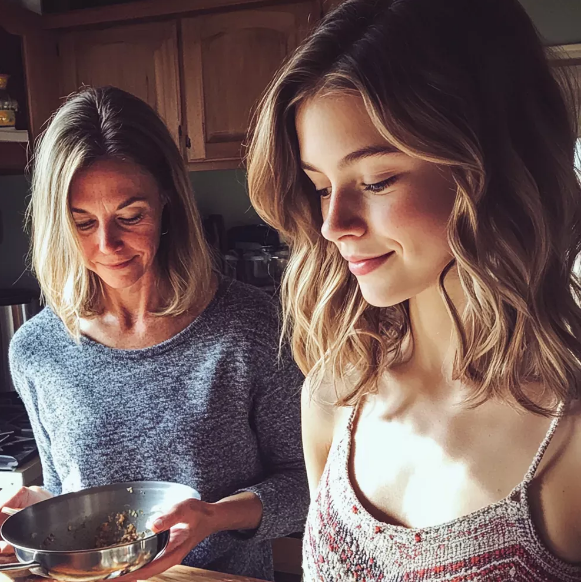
I wore a white dress with itchy lace and carried flower petals in a basket that was far too heavy for how small I was. I remember being more interested in the cake than in the ceremony, but I also remember the way Dad looked at Meredith.
He looked steadier.
Like some part of him that had been holding on alone for too long had finally found somewhere safe to rest.
Not long after the wedding, Meredith adopted me.
I was young, but even then I understood that meant something serious. Papers were signed. Adults cried. A judge smiled at me and asked if I was happy.
I looked at Meredith, then at Dad.
“Yes,” I said.
And I meant it.
For a while, life felt sturdy in a way I hadn’t known it could.
We became a real little family, held together by routines and laughter and all the tiny things that make a home. Meredith braided my hair before school. Dad danced with me in the kitchen while dinner burned. We made forts in the living room and left them up for two days like rebels.
I started calling Meredith “Mom” one afternoon without planning to.
She had bandaged my scraped knee after I’d tripped in the driveway. I’d been crying hard enough to hiccup, and she kissed the top of my head and said, “You’re okay, sweetheart.”
“Okay, Mom,” I sniffled.
The word just slipped out.
I froze, terrified I had done something wrong. Meredith froze too, the roll of gauze still in her hand.
Then tears filled her eyes.
“If that feels right to you,” she said softly, “it feels right to me.”
Dad had been standing in the doorway listening.
He turned away quickly, pretending he needed something in the kitchen. Even at five, I knew it was because he was crying.
And then, just when everything finally felt safe, everything broke.
I was six years old when Meredith walked into my room and changed my life forever.
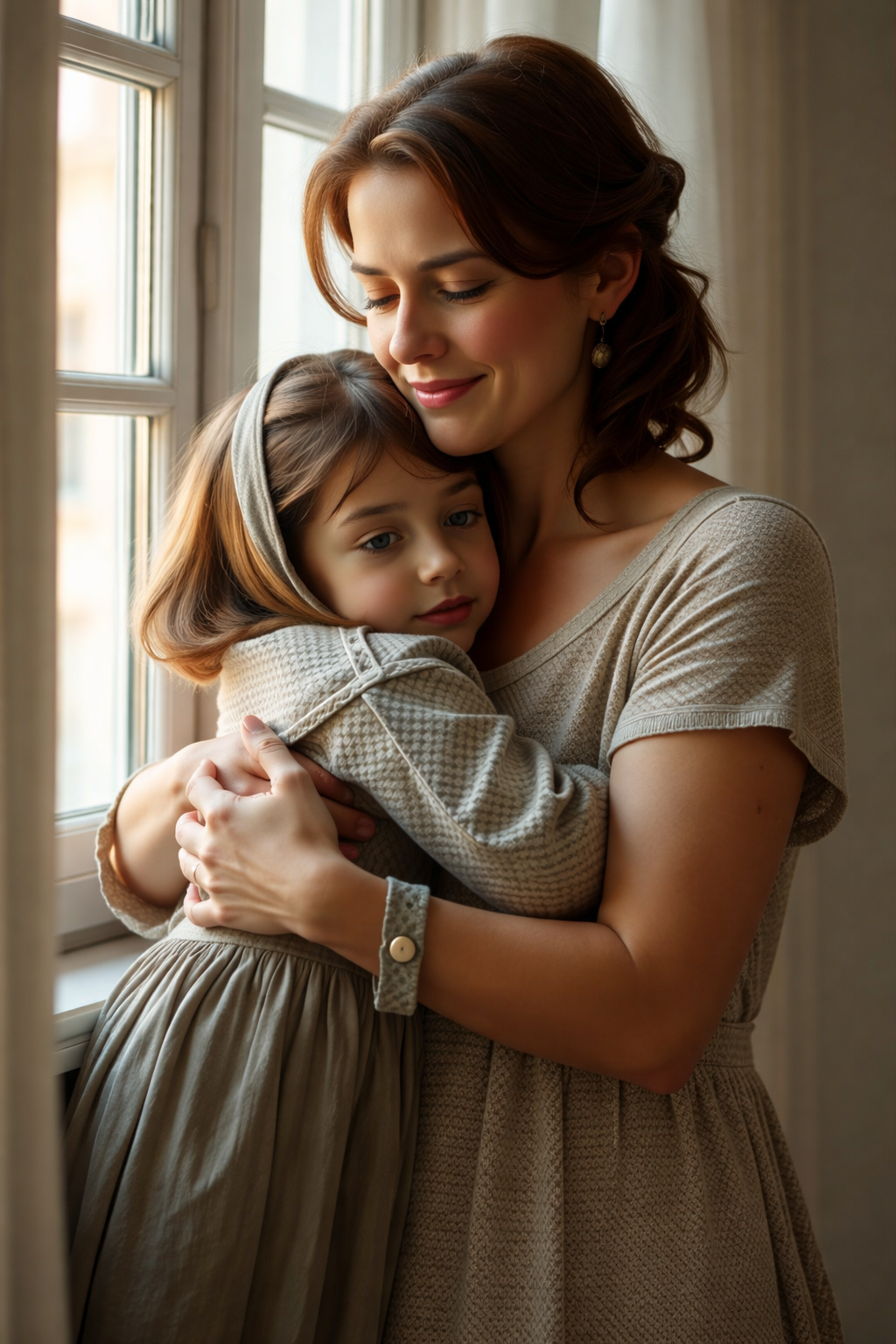
I had been sitting cross-legged on the carpet with my dolls, arranging a tea party no one was taking seriously enough. The air felt strange before she even spoke, as if the whole house had stopped breathing.
When I looked up, Meredith was standing in the doorway with both hands clenched together.
Her face was pale, and her eyes looked too wide.
“Sweetheart,” she said.
Something in her voice made my stomach tighten.
She crossed the room, knelt in front of me, and took my hands. Her fingers were cold. Colder than I had ever felt them.
“Daddy isn’t coming home.”
I blinked at her, confused. “From work?”
Her lips trembled so hard she had to press them together before answering. “At all.”
I didn’t understand death in the way adults think children do.
I understood absence. I understood waiting. I understood thinking if I stayed by the window long enough, the right headlights would turn into the driveway and everything would make sense again.
The funeral was a blur of dark clothes and damp tissues and too many grown-ups speaking in whispers.
The church smelled like flowers and polished wood, and everyone kept touching my shoulder as if that could somehow anchor me. I remember staring at the casket and thinking it was far too small to hold a whole father.
People said things like, “He loved her so much,” and “Such a tragedy,” and “So sudden.”
Nobody said anything that actually explained why the world had ended.
Afterward, Meredith sat on the edge of my bed every night until I fell asleep.
Sometimes I pretended to be asleep already because I didn’t know what to say. In the dark, I’d hear her crying quietly, the kind of crying someone does when they think no one can hear them.
As the years passed, the story never changed.
“It was a car accident,” Meredith would say whenever I asked. “Nothing anyone could have done.”
At six, that was enough.
At eight, it started to itch.
At ten, it haunted me.
“Was he tired?” I asked one afternoon while Meredith folded laundry. “Was it raining? Did another car hit him?”
She stopped folding one of my T-shirts and looked at me with a face so carefully blank it frightened me. “It was an accident, honey.”
“But how?”
Her fingers pressed the shirt into a neat square. “Sometimes terrible things just happen.”
So I learned not to push too hard.
I stored my questions in quiet places inside me, where children keep the things adults where children keep the things adults don’t want to answer. But the questions never disappeared. They only grew heavier.
Life, stubbornly, went on.
Meredith kept showing up every single day in all the ways that mattered. She packed lunches, came to school plays, sat through fevers, taught me how to shave my legs, and never once made me feel like loving my father too much would hurt her.
When I was fourteen, she remarried.
I hated the idea before I even met him.
His name was Daniel, and he had a patient smile and the cautious energy of someone entering sacred ground. Still, when Meredith sat me down and told me she was thinking about marrying him, I looked her straight in the eye and said, “I already have a dad.”
She didn’t flinch.
She reached across the table and took my hand gently, the way she had the day she told me Dad wasn’t coming home. “No one is replacing him,” she said. “This just means there will be more people who love you.”
I searched her face for a lie, but there wasn’t one.
Daniel proved her right.
He never asked me to call him Dad. He never inserted himself into memories that weren’t his. He fixed broken cabinet doors, drove me to debate practice, and let our relationship become whatever it needed to become without forcing it.
Then, when I was sixteen, my little sister was born.
I didn’t realize until that moment how afraid I had been of being pushed aside. New babies rearrange households. They become the center of gravity. I feared I would become the daughter from Meredith’s first life, the one who belonged to another chapter.
But in the hospital room, Meredith looked at me first.
“Come meet your sister,” she said, her face glowing with exhaustion and joy.
She held out that tiny pink bundle, and when I took her, something inside me loosened.
Two years later, my baby brother arrived, red-faced and loud and deeply offended by existence. By then I was old enough to make bottles and fold onesies and rock a screaming infant at 3 a.m. while Meredith showered for the first time all day.
I became less like an only child and more like a bridge between versions of our family.
At twenty, I thought I understood my life.
It wasn’t perfect. It wasn’t simple. But I believed I knew the shape of it. One mother died giving me life. One father raised me until a tragic accident took him away. One stepmother stepped in and became the anchor that kept me from drifting apart.
It was painful, yes, but it was clear.
Or at least I thought it was.

That year, the questions about my father started returning in sharper ways.
I caught myself staring at my reflection too long, studying my own face like it might confess something. The shape of my eyes. The curl of my hair. The dimple in one cheek when I smiled at the wrong moment.
“Do I look like him?” I asked Meredith one evening while she washed dishes.
She turned off the water and studied me with a softness that made my chest ache. “You have his eyes.”
I leaned against the counter. “What about my biological mom?”
Meredith dried her hands slowly on a towel. “You got your dimples from her. And your beautiful curly hair.”
Her voice carried a carefulness that immediately caught my attention.
Not fear exactly. Not guilt either. It was something gentler, sadder. Like she was walking barefoot over broken glass and trying not to let me hear it crunch.
That night, after everyone had gone to bed, I went up to the attic looking for an old photo album.
It used to sit on the living room shelf when I was little. I remembered pulling it down sometimes and staring at the pictures of my father before Meredith would gently take it from me and say, “Let’s put this away for now.”
Eventually, it disappeared entirely.
She told me she had stored it somewhere safe so the photos wouldn’t fade. I had never thought much about that explanation until now.
The attic smelled like cardboard, dust, and summer heat trapped in insulation.
I moved boxes aside one at a time, sneezing every few minutes, until I found a plastic bin tucked behind an old lamp. Inside were baby clothes, Christmas decorations, a cracked picture frame, and at the bottom, wrapped in an old blanket, the album.
My heart started pounding before I even opened it.
I sat cross-legged on the floor beneath the single dim bulb and began turning the pages carefully. There was Dad in college, laughing beside a beat-up truck. Dad holding a fishing pole with the expression of someone who had no idea what he was doing. Dad dancing with Meredith in the backyard, both of them barefoot.
Then I found pictures of the woman I had never known.
My biological mother was beautiful in a quiet, unguarded way. She had eyes that looked like mine and hair even curlier than mine, falling around her face in dark waves.
In one photo, Dad stood behind her with both arms around her waist, his chin resting on her shoulder.
“Hi,” I whispered before I could stop myself.
The word felt strange and intimate in the dusty silence.
Then I turned another page and saw the picture that made me stop breathing.
Dad was standing outside a hospital entrance, younger than I had ever known him, exhausted and terrified and radiant all at once. In his arms was a tiny bundle wrapped in a pale blanket.
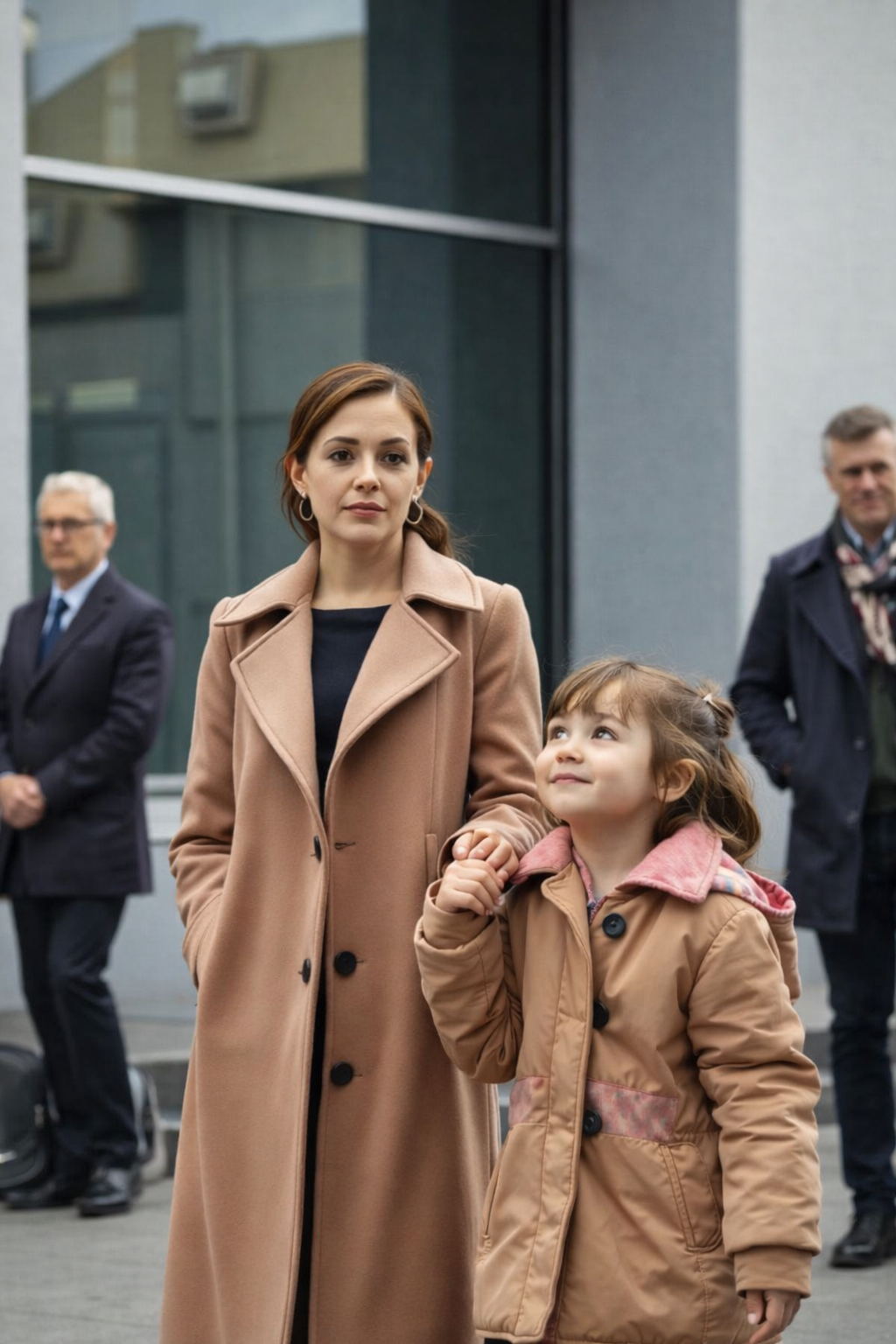
Me.
His expression in that photo undid me.
He looked like a man holding both joy and fear in the same trembling hands. Like he knew love had just made him stronger and more breakable at exactly the same time.
I wanted that picture.
Carefully, I slid two fingers under the edge and lifted it from the plastic sleeve. As I pulled it free, something else slipped loose from behind it and drifted into my lap.
A folded piece of paper.
Old. Thin. Creased twice down the middle.
On the front, written in unmistakable handwriting, was my name.
My breath caught so sharply it hurt.
My hands started shaking before I even touched it. I stared at the letters of my name, written by the man whose voice I remembered only in fragments now, and suddenly the whole attic felt too small, too hot, too full of ghosts.
I unfolded the paper slowly, terrified it might tear.
At the top was a date.
The day before my father died.
And beneath it, the first line of a letter written in his hand:
My sweet girl, if you’re old enough to read this on your own, then you’re old enough to know where you came from.
The air vanished from my lungs.
I kept reading, my vision blurring with tears almost immediately. The letter spoke of my birth, of my biological mother’s last moments, of how frightened he had been raising me alone, and of Meredith walking into our lives like hope he hadn’t dared to ask for.
Then I hit the line that made my entire body go cold.
So tomorrow I’m leaving work early. No excuses. We’re making pancakes for dinner like we used to, and I’m letting you put too many chocolate chips in them.
I stared at that sentence until it stopped looking like language.
He hadn’t just been driving home from work.
He had been coming home early for me.
The rain-slick road. The accident. The timing. The secret Meredith had buried inside a photo album and hidden in the attic.
“No,” I whispered into the dim, dusty dark.
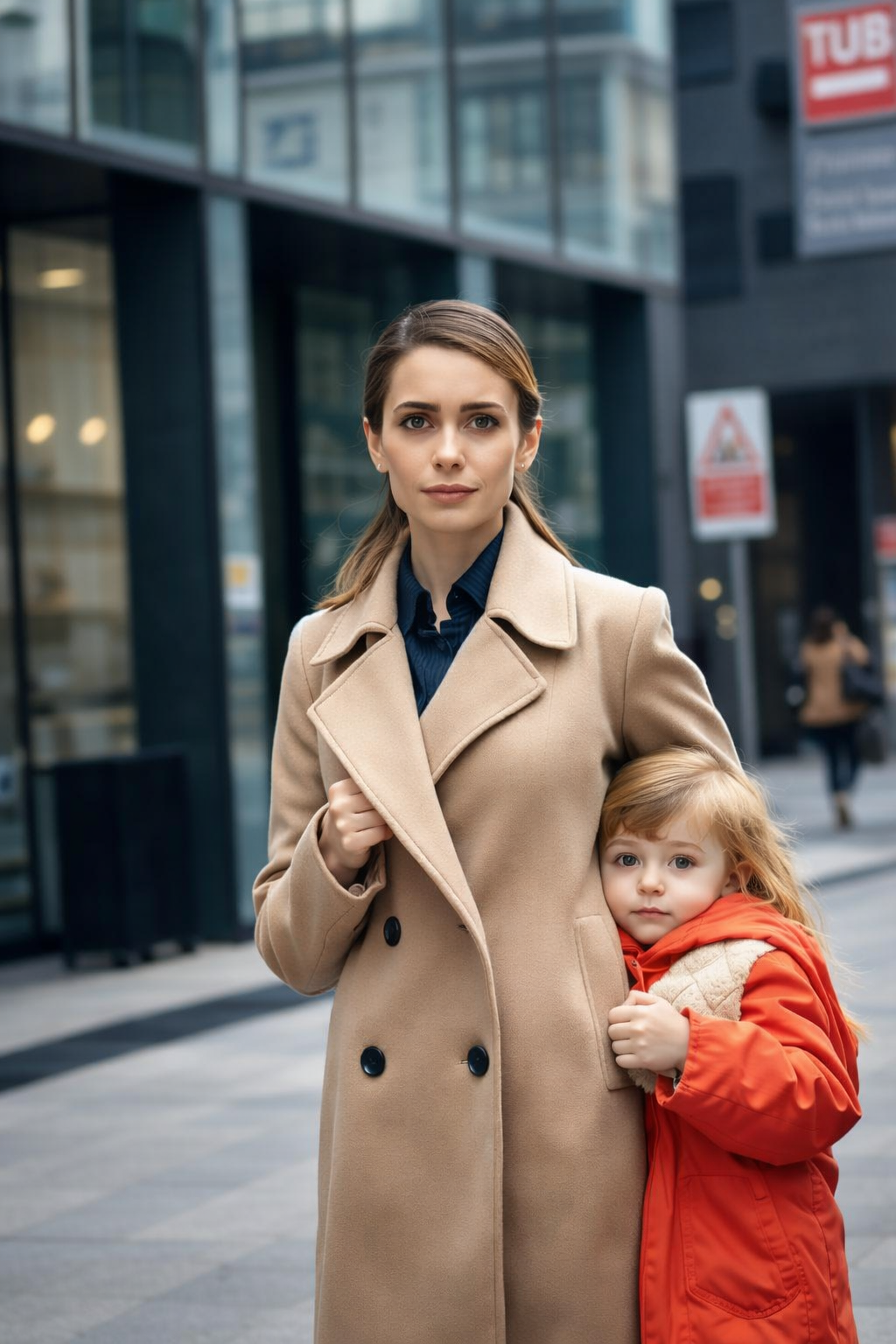
My voice sounded small and broken, like it belonged to the six-year-old girl who had sat in her bedroom and waited for headlights that would never turn into the driveway.
I clutched the letter so tightly it crackled in my hands.
For fourteen years, I had been told it was random. Tragic, but random. Nothing anyone could have done.
But this wasn’t random.
This was a promise.
A promise to come home early. A promise to make pancakes. A promise to try harder. A promise that had ended on a wet road before sunset.
My tears hit the paper in warm, blurring drops.
Then I rose to my feet, the letter trembling in my hand, and headed for the attic stairs.
For the first time in my life, I didn’t want comfort. I wanted the truth.
And downstairs, in the kitchen, the woman I had called Mom for sixteen years was about to see that I had finally found it.
I stood at the top of the stairs, the letter clenched in my fist, my heart pounding in my chest.
I could feel the weight of the paper, each word pulling me down, deeper into a place I wasn’t sure I wanted to go. But there was no turning back now. The truth had found its way to me in a way I couldn’t ignore, and there was nothing left to do but face it head-on.
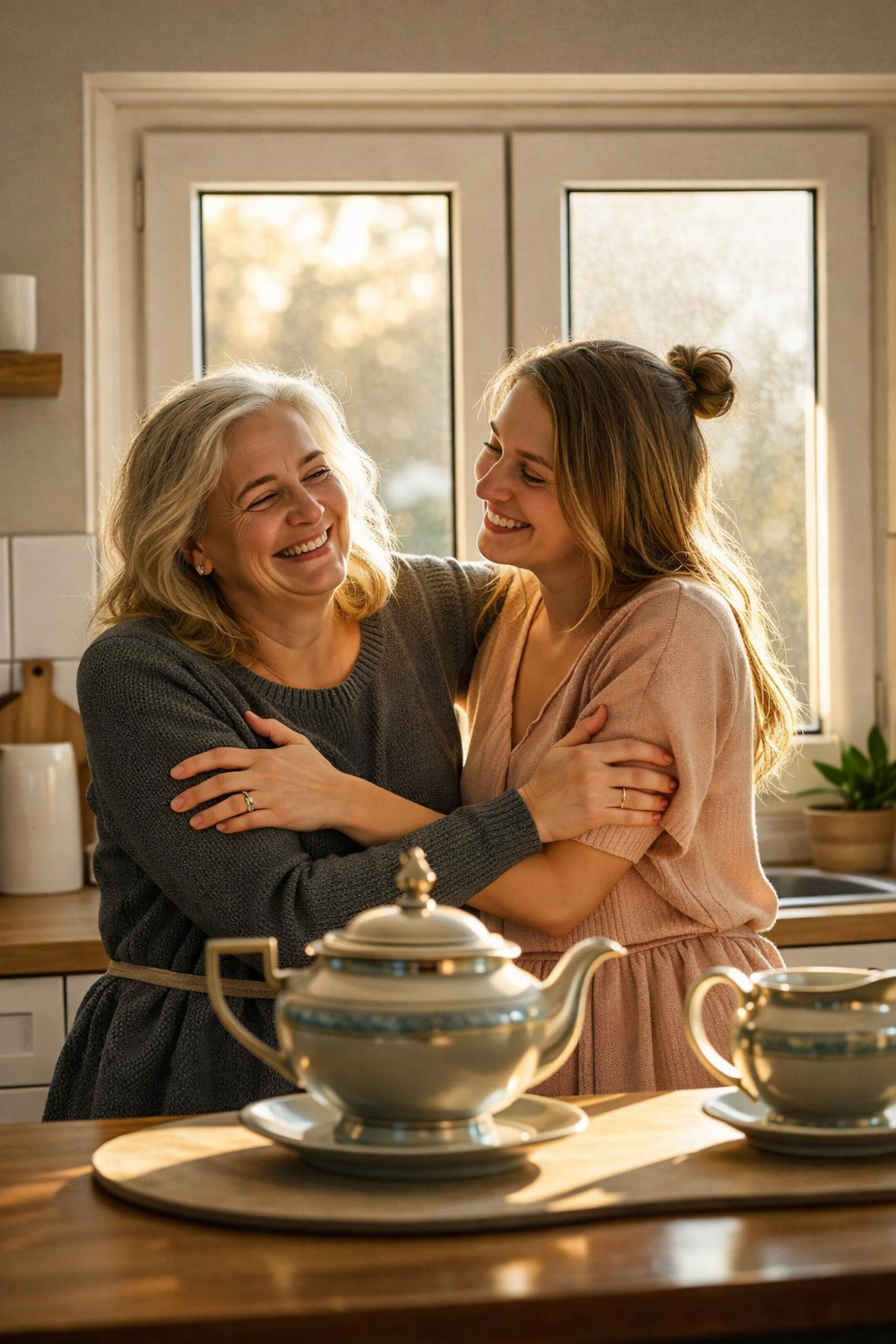
The kitchen light flickered as I descended, and I could hear Meredith’s soft laughter mixed with my brother’s voice as he worked on his homework. They sounded so… normal. Like the world hadn’t just shifted beneath me.
I stood in the doorway, holding the letter out in front of me, my hand trembling. Meredith didn’t notice me at first. She was bending over the kitchen table, helping my brother with his algebra homework, her hair pulled back into a loose ponytail, her lips pursed in concentration.
The smell of soup simmering on the stove mixed with the quiet hum of the refrigerator. It felt like any other evening, but it wasn’t. Not anymore.
I cleared my throat.
Meredith looked up, her face brightening at the sight of me, but her smile faltered when she saw the expression on my face. Her eyes immediately flicked to the letter in my hand, and something in her posture stiffened.
“What’s wrong?” she asked, her voice small.
I couldn’t bring myself to answer at first. Instead, I stepped forward, my feet feeling heavy with each step. My throat felt tight, but I forced the words out.
“I found it,” I whispered, my voice barely audible. “I found his letter.”
Her face drained of color as she slowly stood up, her hands shaking as she pushed my brother’s homework aside.
“Where?” she asked, the panic barely hidden beneath her calm façade.
“In the photo album,” I said, my voice growing stronger with each word. “The one you hid. The one you said had to be put away.”
I held out the letter, my hand still trembling, but I couldn’t stop myself from letting it go. She took it from me slowly, her eyes never leaving mine as she unfolded it.
I watched her face change as she read, her lips pressing into a thin line. Her breath caught at one point, but she didn’t make a sound. She just kept reading, like she had no choice but to finish it. Like the weight of the truth was finally catching up with her.
When she finished, she folded the letter back into its creases, her hands shaking.
“Meredith…” I started, my voice cracking. “Why didn’t you tell me?”
She closed her eyes for a moment, like she was preparing herself to face something unbearable. Then, she took a deep breath and looked at me, her expression heavy with regret.
“I didn’t know how,” she whispered. “I didn’t know how to tell you the truth without breaking you.”
I shook my head, the confusion and hurt flooding my chest. “But why? Why keep this from me? Why let me believe it was just an accident?”
She stood there, speechless for a moment, and I could see the years of guilt she had carried with her. Years of protecting me from a truth that she thought would shatter me.
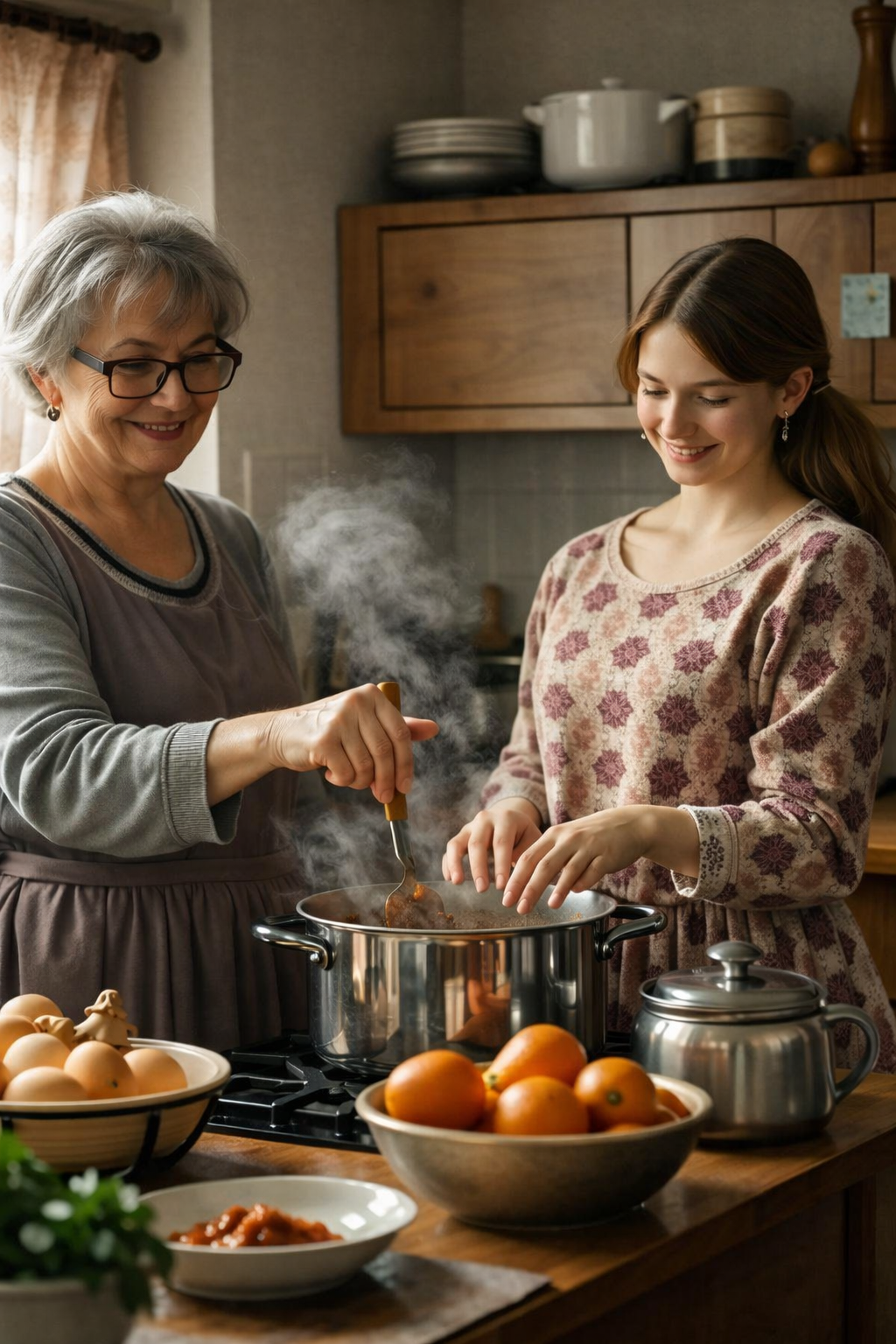
“You were only six,” she said quietly. “You’d already lost one parent. What was I supposed to do? Tell you your dad died because he couldn’t wait to get home to you? You would’ve carried that guilt for the rest of your life.”
The words hit me like a punch to the stomach. I stumbled back, almost losing my balance, and for a moment, I thought I might collapse right there in the kitchen.
I had been carrying that guilt for years, but it wasn’t mine to carry. It was never mine. It had always been his choice.
I took a deep breath, steadying myself, and looked at her with eyes that felt too old for my age.
“I was a child,” I said, my voice quiet but firm. “You didn’t trust me enough to know that I could handle it.”
Meredith’s eyes welled with tears, but she didn’t cry. Instead, she reached out and gently cupped my face in her hands. “I wasn’t protecting you from the truth. I was protecting you from a burden you didn’t need to carry.”
I looked at her, my emotions swirling like a storm. I wanted to shout, to scream at her for keeping something so important from me. But instead, I stayed silent, feeling the weight of everything that had been said—and unsaid—between us.
“I didn’t know how to tell you that your father loved you so much that he couldn’t wait to get home. I didn’t know how to explain that to a six-year-old. And I didn’t know how to tell you that I would never replace him,” she whispered, her voice cracking.
I took a step back, the truth settling over me like a heavy blanket, and for the first time, I saw Meredith for who she truly was: not just the woman who raised me, but the woman who had protected me from a world that had broken both of us.
And despite everything, despite the lies and the secrets, I knew that I still loved her.
I knew she had done everything she could to keep me safe, even if it meant hiding pieces of the past. I didn’t understand it all, but I understood the love that had fueled her decisions.
“I don’t know what to say,” I whispered, feeling the weight of the letter in my hands. “I just don’t know what to do with all of this.”
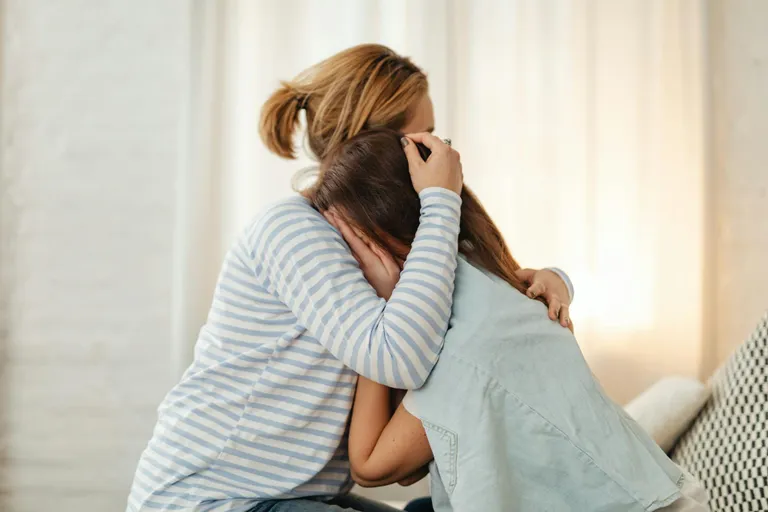
Meredith reached out and pulled me into her arms, and for the first time, I didn’t pull away. I let her hold me, and I let the tears come, not just for the father I had lost, but for the woman who had given me a home when I thought there was no room left.
“I’m sorry,” she whispered. “I should have told you sooner.”
“I know,” I whispered back.
And for the first time, I believed it wasn’t too late to heal.
The days following that conversation felt like a blur. Everything in the house had shifted in a way I couldn’t quite explain. We were still the same family in many ways, but the truth hung between us now, a silent presence we could no longer ignore.
Meredith was different too. She was more fragile in a way. She had always been the steady one, the calm in the storm, but now, there were moments when I could see the cracks in her armor. When she thought I wasn’t looking, her eyes would drift to the letter, still tucked safely in the drawer where I’d left it. She never spoke of it again, but I knew it was always on her mind.
I tried to act like everything was normal, like nothing had changed. But every time I looked in the mirror, I saw the same question reflected back at me: Why hadn’t I known? Why hadn’t she told me sooner?
I had always been the kid who asked too many questions, but this time, I didn’t know what questions to ask anymore. I didn’t know if I wanted answers. Part of me was still clinging to the idea that I was better off not knowing the truth. It was easier that way.
But life didn’t wait for you to be ready. It didn’t give you time to sort through your emotions before throwing more challenges at you.
A week after that conversation, I came home from college for the weekend. As soon as I walked through the door, I knew something was wrong.
The house was eerily quiet, the usual hum of conversation and activity missing. I found Meredith sitting on the couch, her hands folded tightly in her lap, staring at the wall. Her face was pale, and there was a heaviness in her eyes that made my stomach twist.
“Mom?” I asked softly, my voice hesitant. “What’s going on?”
She didn’t answer immediately. Instead, she looked at me with a mixture of sadness and fear. I didn’t need her to say anything. I already knew.
“I’m going to the doctor,” she said, her voice barely a whisper. “I’ve been having some tests, and they found something… they think it’s cancer.”
The word hit me like a slap to the face. I had heard it before, of course—read about it in books, seen it on TV, but never thought it would come for someone I loved. Someone so full of life. Someone who had always been the pillar of strength for our family.
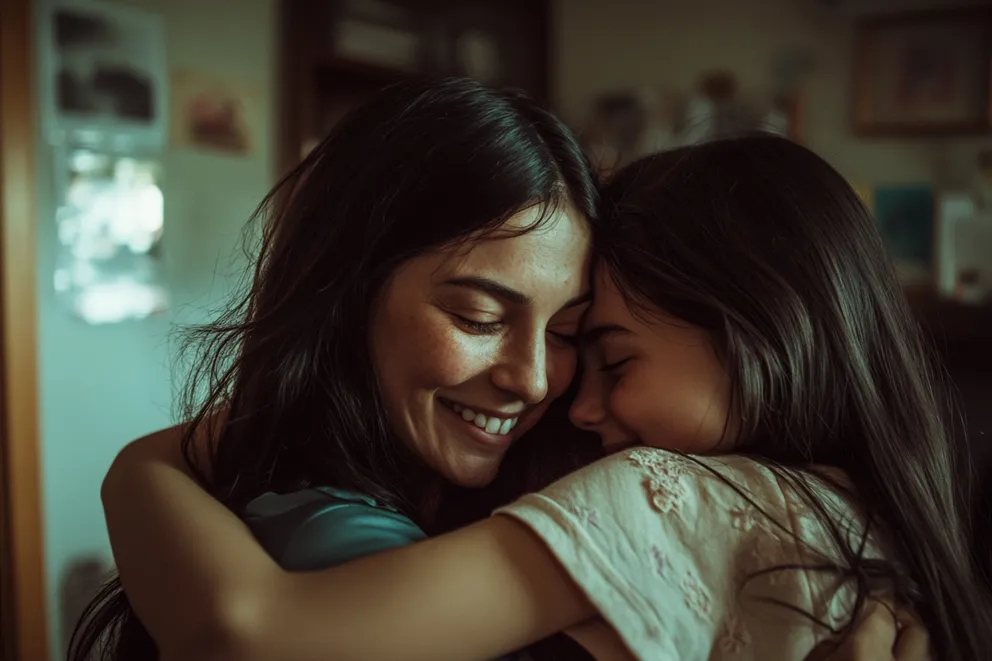
I couldn’t speak for a long moment. All I could do was stare at her, trying to make sense of the words she had just said. Cancer. Meredith, the woman who had taken me in, who had raised me when I needed her most. Cancer. It was so impossible, so unfair.
“I’m so sorry,” I finally managed to say, my voice thick with emotion. “Why didn’t you tell me sooner?”
She gave me a sad smile, but there was no humor in it. “I didn’t want you to worry. You’ve been through enough.”
“But I want to be here for you,” I insisted, stepping closer to her. “You’re my mom. I—”
“I know,” she interrupted gently. “But I didn’t want you to have to face this too. I’ve been dealing with it on my own for so long. I didn’t want to drag you into it.”
I knelt down beside her, taking her hands in mine, feeling the coldness of her skin. “You don’t have to face this alone. I’m here, Mom. I’m not going anywhere.”
She squeezed my hands, her eyes brimming with tears. “I’m so sorry. I should have told you sooner. I’ve always tried to protect you from everything, but this… this is something I can’t protect you from.”
For the first time in years, I felt like I had to be the strong one. I had to be the one to hold her together when she was falling apart. I had spent so many years leaning on her, and now it was my turn to carry the weight.
The rest of that weekend passed in a blur of doctor’s appointments and test results. The doctors had told Meredith that the cancer was in its early stages, and they were optimistic about treatment, but there was still a long road ahead. She had a plan now, a treatment plan, and we would all rally behind her, but I couldn’t shake the fear that had settled in my chest.
The woman who had been my rock, the woman who had raised me from the ashes of my own grief, was now facing a battle I couldn’t shield her from. And it hurt in a way I couldn’t describe.
As we sat together that evening, the weight of it all hanging in the air between us, I felt something shift. For the first time, it wasn’t just about me. It wasn’t just about the pain of losing my dad. It was about this woman who had loved me fiercely, even when she had every reason to turn away. It was about her vulnerability, about her strength despite everything she had been through.
“I don’t know what to say,” I whispered, my voice breaking again.
“You don’t have to say anything,” Meredith replied softly. “Just be here.”
And I promised I would be.

A few days later, Meredith started her first round of chemotherapy. The treatment was grueling, and she spent most of the next few weeks in and out of the hospital. There were days when she could barely get out of bed, and other days when she pushed through with the same determined smile that had kept our family afloat for years.
But I could see the toll it was taking on her. The woman who had never once let me see her cry was now fragile, and her once bright eyes had grown dim.
I spent as much time with her as I could, cooking meals, keeping her company, holding her hand through every treatment. I had to be strong for her, but it wasn’t easy. There were moments when I wanted to scream at the unfairness of it all. Why was this happening to her? She had been the one to save me when I had no one else, and now I couldn’t even save her.
The more time passed, the more I realized that I had never truly appreciated the depths of her love for me until this moment. She had given me so much, and now I had the chance to give back, even if it wasn’t enough.
One evening, as we sat together in the living room, I looked at her and felt a lump form in my throat. She was so tired, so worn down by everything she had been through, but she still smiled at me when I made a joke about the terrible TV show we were watching.
“I love you, Mom,” I said softly, my voice full of emotion. “I don’t know how I can ever thank you for everything you’ve done for me.”
Her hand trembled as she reached out and brushed a strand of hair from my forehead. “You don’t have to thank me, sweetheart. I’ve always done it because I love you. You’ve always been my daughter.”
I closed my eyes at her words, the familiar ache in my chest returning, stronger than ever. For so many years, I had clung to the memories of my dad, trying to piece together a story that made sense. But now, I realized that the story I had been looking for wasn’t just about my father. It was about both of them. My dad and Meredith.

Both of them had loved me with everything they had. And that was enough.
“I’m so lucky to have you,” I whispered, my heart full of gratitude.
Meredith smiled, but this time, there was something new in her eyes. A peace I hadn’t seen before.
“I’m lucky to have you too,” she said, her voice steady, despite everything she was going through.
And for the first time in a long time, I felt like everything was going to be okay.
The days bled into weeks, and with each passing moment, I could feel the weight of everything I had learned and experienced pressing on my chest. Meredith’s treatments were harsh, and she was more exhausted than I had ever seen her, but still, she fought. She had always been the strongest person I knew, and even now, she clung to that strength, refusing to let the illness define her.
But I could see it in her eyes—the fear. The uncertainty. The feeling of being at the mercy of something she couldn’t control.
It scared me. It scared me more than I ever let on, more than I ever told her. I didn’t want to add to her burden. She had carried so much for so long, and I wasn’t about to let her feel like she was burdening me.
One afternoon, after her chemo treatment, I sat with her on the porch. The sun was setting, painting the sky in shades of pink and orange, and a warm breeze ruffled the leaves of the trees around us. It was a peaceful moment, but there was an unspoken heaviness between us, a quiet acknowledgment that things had changed.
She was quiet for a long time before she spoke, her voice hoarse from the treatment. “Do you ever wonder what it would have been like if things had been different?” she asked softly, her eyes fixed on the horizon.
I turned to look at her, unsure what she meant. “What do you mean?”
She paused, as if searching for the right words. “If your dad hadn’t died. If I hadn’t come into your life.”
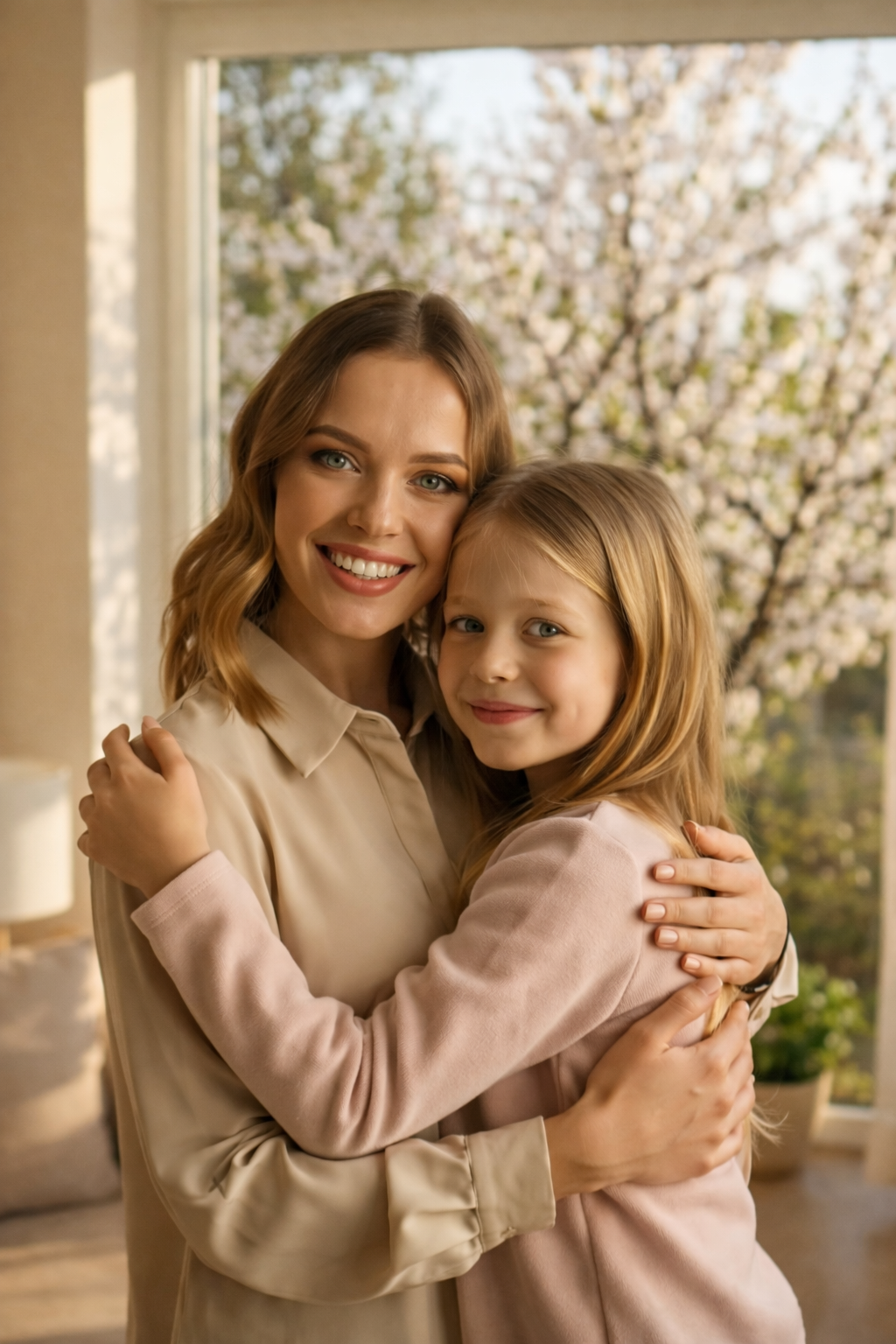
I felt a pang in my chest at the thought, but I shook my head. “I don’t think I’d change a thing,” I said, my voice firm. “You’ve been my mom. Even when I didn’t know how to call you that, you’ve always been there.”
Her eyes softened at my words, and I saw a tear slip down her cheek, which she quickly wiped away. “I just wish I could’ve done more for you. I always felt like I was playing catch-up, trying to fill a space that was already taken.”
I reached out, placing my hand gently on hers. “You didn’t need to fill anyone’s space. You created a new one. And you’ve loved me like no one else ever could. You’ve been more than enough.”
For a moment, she didn’t speak, just looked at me with that same mix of tenderness and sadness that had always defined her. “I’ve always wanted to be the mom you needed,” she whispered. “Even if it meant sacrificing my own heart to protect yours.”
I squeezed her hand tighter, feeling my heart swell with love for the woman who had been my mother in every way that mattered. “You’ve been everything I needed. And more. You gave me a family when I thought I had none.”
She smiled softly, but I could see the sadness lingering in her eyes. She was still carrying the weight of the past, of everything she had done for me, and the fear that somehow it wasn’t enough.
But I wanted to remind her that it was. It always had been.
The next few weeks were filled with small victories and setbacks. Meredith’s health was up and down, but she never gave up. Even on days when she was too weak to get out of bed, she would smile at me and insist that she was fine. It was like she didn’t want to admit to herself how fragile she had become.
I did my best to be strong for her. I helped with the housework, made meals, and tried to make her laugh when I could. I even took her to a few of her appointments, sitting beside her, holding her hand as the doctors talked in their technical language about treatments and timelines.
But there were still moments when the fear would creep in, when the reality of what we were facing would hit me like a wave, and I would feel completely helpless. I had been through so much already in my life, but watching Meredith fight this battle felt like a whole new kind of pain.
One evening, as I was helping her get settled into bed after a particularly rough day of treatment, she looked at me with a strange expression. It was a mixture of gratitude and something else—something I couldn’t quite place.
“I know I’ve always been the strong one,” she said, her voice soft but serious. “But sometimes, I wish I had someone to lean on too.”
I paused, my heart aching at the vulnerability in her voice. “You have me,” I said firmly. “I’m here. You don’t have to carry this alone.”
She gave me a tired smile. “You’ve always been here, haven’t you? Even when you didn’t have to be.”
I nodded, feeling the weight of her words settle in my chest. “I’m not going anywhere, Mom. I promise.”
She reached out, pulling me into a tight hug. It was a small moment, but it meant everything. For the first time in months, I could feel the weight of everything between us lift, even if just a little.
The months that followed were filled with more treatments, more good days and bad days, more moments of uncertainty. But there was a quiet sense of peace that had settled between us. Meredith’s health was improving, slowly but surely. She had her good days, where she laughed and joked, and her bad days, where she was too tired to even get out of bed.
But through it all, I had learned to appreciate her in a way I never had before. I had always known she was strong, but now, I saw her as someone who had given everything to make sure I never felt alone. She had fought for me when I didn’t even know how to fight for myself.
I also realized something else: my dad’s love, his memory, and the way he had fought to come home to me, was never something to carry as guilt. It was a gift. He had loved me so fiercely, and his love had not ended with his death. It had lived on through me, through everything I had become, through everything I had learned from both him and Meredith.
And now, as I stood beside Meredith, watching her fight with everything she had, I knew that I wasn’t just fighting for her. I was fighting for both of them.
That night, after the treatments and the long, exhausting day, I sat down at the kitchen table and began to write. I wrote a letter to my dad, one that I had never thought I’d need to write, but one I finally felt ready to write.
I told him about Meredith, about the woman who had loved me without hesitation, about how she had been my mom when I didn’t know how to call her that.
And I told him that I was no longer carrying the weight of his death on my shoulders. That I had finally understood that he had loved me until the very end, and his love had never truly left me.

When I finished, I folded the letter and tucked it into the drawer where I had found his. It felt like I was finally letting go of the last of the ghosts that had haunted me.
I had the family I needed. And it was enough.
The final stretch of Meredith’s treatment felt like the hardest one yet. Her body had fought through so much, and it seemed like every inch of her strength was being tested. Some days, she would wake up and smile, determined to face whatever came next. Other days, she barely had the energy to lift her head from the pillow.
But I never left her side.
I spent my days by her bedside, sitting in the quiet spaces where she would rest, and in the moments when she needed to talk, I listened. I had never fully appreciated just how much she had carried until I was the one who had to bear witness to her struggle. She was stronger than I had ever realized, not because she never faltered, but because she kept going, even when every part of her wanted to give up.
And in those moments when she was too tired to speak, I would talk to her. I would tell her stories about our family, about my dad, about the memories I had collected over the years. I found that in sharing those pieces of our past, I could give her a piece of my heart—just as she had given me hers when I was young.
The cancer, as much as it had taken from her, hadn’t been able to take away her spirit. The woman who had loved me and fought for me was still there, fighting for herself.
But as the treatments continued, we began to feel a shift. Meredith’s doctors started to use words like “remission,” though they were cautious, careful not to give false hope. Still, for the first time in a long while, we allowed ourselves to believe that maybe, just maybe, this would end differently than we had feared.
One evening, as the sun dipped below the horizon, Meredith and I sat on the porch together again. The air had a crispness to it, and the sky was streaked with purple and orange, just like the evening my dad had come home early for pancakes. I couldn’t help but think about that memory, about the love my father had shown me in his final moments. I could feel his presence, as if he were sitting beside us, quietly watching over us.
Meredith looked at me with a softness in her eyes, a quiet peace that had been absent for so long. “You know,” she said, her voice calm, “I’ve always been proud of you. From the moment you handed me that drawing all those years ago, I knew you were going to be someone incredible.”
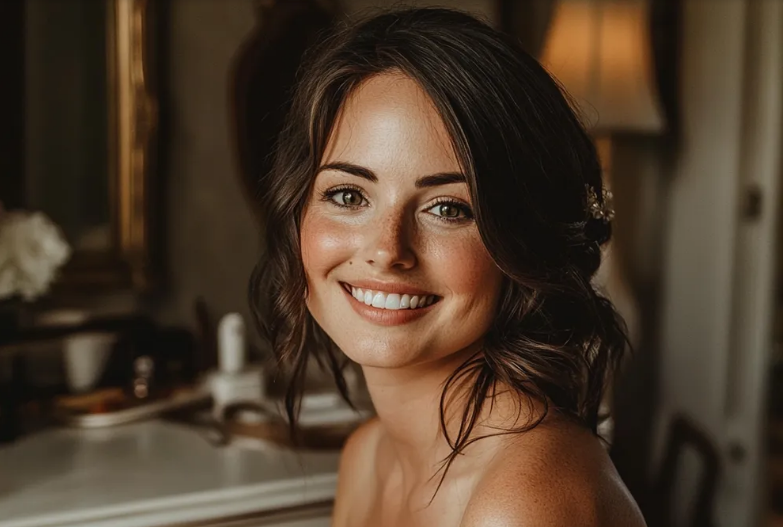
I smiled at her, feeling the weight of her words in my chest. “I didn’t always think I was going to be someone incredible. There were a lot of years when I didn’t know where I fit in. But you… you helped me find that.”
She reached for my hand, squeezing it gently. “I only helped you see what was always there. You’ve always had that strength, sweetheart. I was just the one who got to be there to watch you grow.”
I felt a lump form in my throat. I had spent so many years wrestling with the idea of belonging, of feeling like I was missing something. But now, sitting beside her, I realized that I had never truly been lost. I had always belonged. I belonged with her, with my father’s love, and with the family we had created together.
For the first time, I felt like I could breathe fully. The weight of the past, of the questions and the unknowns, was finally lifting.
Over the following weeks, Meredith’s health continued to improve. The doctors were cautiously optimistic, and she began to regain some of her strength. There were still hard days—days when she had to rest and when the pain seemed unbearable—but we celebrated the small victories. Each day she felt stronger was a day worth celebrating.
One evening, as I was tucking her into bed, she looked at me with a smile, her face more vibrant than it had been in months. “I’m going to get through this,” she said, her voice full of conviction. “I’m going to be here for a long time.”
I kissed her forehead gently. “I know you will, Mom. You’ve always been a fighter.”
She reached up and touched my face, her hand warm against my skin. “You’ve always been my fighter too, sweetheart. You don’t ever have to worry about me. I’ve got this.”
And in that moment, I knew she did.
I sat by her side as she drifted off to sleep, my heart full of gratitude. The journey we had been on together had been hard, but it had also been filled with more love than I had ever imagined possible.
I didn’t have all the answers to the questions that had haunted me for so long. But I knew that I had something far more precious: the love of two incredible people. My dad’s love, his final act of trying to come home to me, had shaped who I was. And Meredith’s love—her unwavering support and devotion—had shown me what it meant to truly belong.

I had the family I needed. And it was enough.
As I sat there in the quiet of the night, I thought about everything we had been through. The loss of my father, the secrets that had been kept, and the way we had learned to love each other in spite of it all. I realized that the story of my life wasn’t about the things I had lost. It was about the people I had found along the way, the people who had never given up on me, even when I had doubts about myself.
I whispered a quiet thank you to my father, wherever he was. And I whispered one to Meredith too.
The two of them had given me the greatest gift of all: a home, a family, and a love that would never fade.