When Dawn’s concerned son helps a blind man in a shop, she is shocked to see a black SUV pull up outside their house. What follows is a heart-wrenching story of guilt, growing up and quiet grace. A story of second chances, small acts of kindness and the fierce love between a mother and her son.
It was just me and Malik.
No husband. No family to call when things go wrong. The two of us struggle through life with scraped knees, overdrawn bank accounts, and prayers muttered into old pillowcases.
I gave birth to Malik when I was 22. His father left before I even saw the second line on the test. I remember holding that tiny bundle in my arms and feeling terror wash over me. He was so small. I felt so incapable of all this.
Thirteen years later, I still don’t know what I’m doing half the time. I work two jobs: waitressing during the day and cleaning offices at night. I come home smelling of deep-fry grease and industrial bleach and collapse into bed for five hours before starting work again.
Malik grew up in this chaos. I know he’s angry. I know he feels cheated. I can see it in the way he slams doors, the way he talks back, and the way his shoulders stay tense even when he laughs.
He’s not a bad kid. But he makes the wrong choices.
Lately, he’s been skipping school. Getting into fights. He’s got a smart mouth that doesn’t know when to shut up. Just last month, the headmaster called me and said he’d pushed another kid down the stairs.
And three weeks ago, the police showed up at our house.
They sat in our tiny kitchen with their coffee breath and warning voices and told me, ‘You need to get your son under control. He’s heading for trouble.’
When they left, I sat down on the floor in the hallway and cried. I cried until my throat hurt and my chest felt empty. I cried for the little boy who used to climb into my bed when he had nightmares.
I cried for the teenager who looked at me like I was the enemy. And I cried for myself, for every time I tried and failed. I cried because nothing worked out for me. I cried because I didn’t know how to fix it.
I didn’t hear Malik come out of his room. But I felt him sit down next to me.
He was silent for a long time. Then quietly, as if it cost him everything:
‘I’m sorry, Mum. I didn’t mean to make you cry.’
I wiped my face with my shirt sleeve and didn’t answer.
‘I’ve never seen you cry like that before…’ he muttered.
I sighed deeply.
‘I want to be better, Mum,’ he said. ‘I want you to be proud of me. This time I mean it. Really.’
I didn’t sleep that night. Not because I didn’t believe him, but because I did believe him, and that scared me, making me hope again.
The next few days were strange. He got up early, made the bed and washed the dishes without being asked. I caught him walking Mrs. Hutchins’ dog, and later he was raking leaves in front of the Robinsons’ house.
He said he was just helping out, trying to be useful.
At first, I didn’t trust it. I thought maybe it was guilt — a temporary feeling. But then the third week came. He was still helping, working, trying.
Still, I held my heart in check. Too many false starts. Too many late nights waiting for a phone call or a knock on the door with bad news.
Once, he even came home with a bag of rolls, a few pieces of fried chicken, and a dented can of soup.
‘What’s that?’ I asked.
‘Lunch. I got it from the discount store. I’m learning.’
It was little, but it meant everything.
‘I’m saving money,’ he told me one evening, drying his hands with a towel after washing the dishes.
‘What for, baby?’ I asked, sipping tea from my cup.
‘For your birthday,’ he shrugged. ‘This time I want to give you something real.’
I stared at him, my heart overflowing. But I didn’t say anything. I just nodded and walked away until I started crying again.
Then this morning happened. And it shocked me.
It was a rare day off. I was still in my bathrobe, holding a cup of coffee, when there was a knock at the door. It wasn’t the usual knock from the postman. It was something else, deliberate, heavy… important.
I peeked through the blinds and froze.
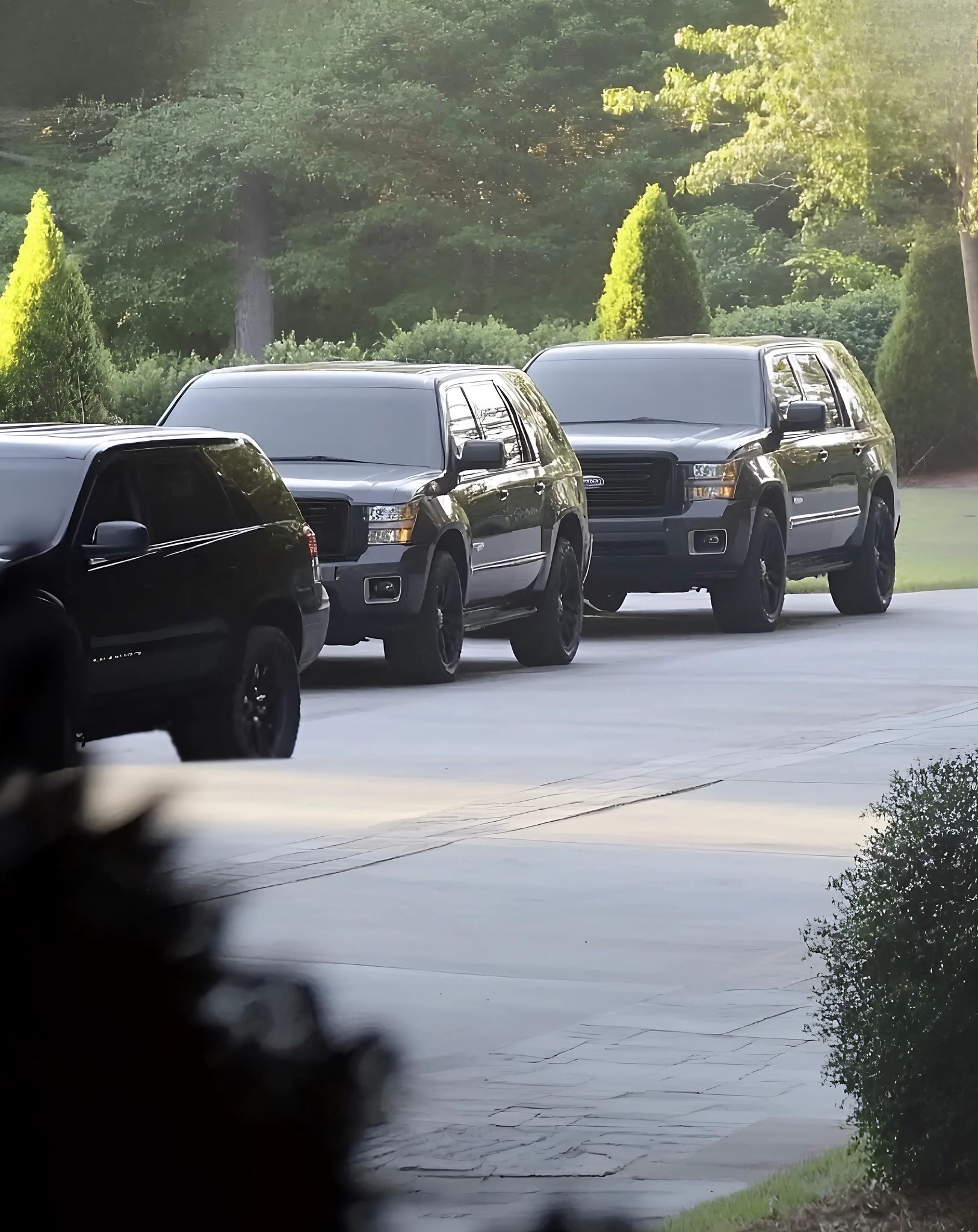
Three men in black suits were standing on the porch of our house. Behind them, a line of SUVs stretched down our small street, like a scene from a political thriller.
One of the men stepped forward, holding out a photograph.
‘Is this your son?’ he asked in a low, abrupt voice.
My mouth went dry. My fingers tightened around the mug.
‘What happened?’ I said, already spinning. ‘Is he okay? Did he hurt anyone? Please, he tried so hard. He worked, he stayed out of trouble. Please, if he did something…’
‘You misunderstand,’ came a calm voice from behind them.
An elderly man stepped forward, carefully guided by a woman in an elegant navy-coloured suit. He was blind, his eyes pale and sightless, but his presence was compelling. He stood tall, shoulders square, accompanied by a security guard who said almost nothing.