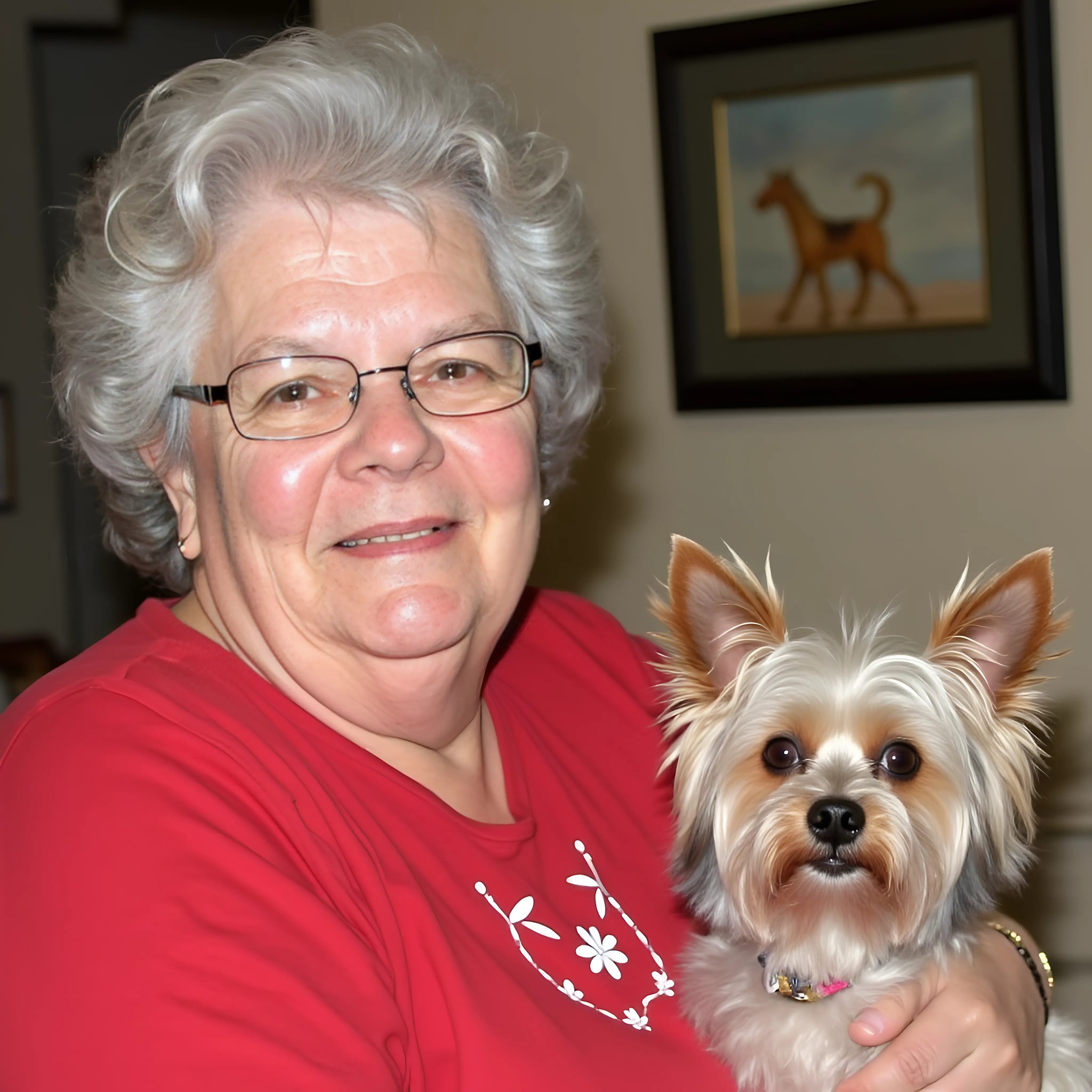
When I first met my mother-in-law, Elena, she seemed quite nice to me. A little distant, of course, but polite. And then I met her dog, Boris — a fluffy little creature who apparently had a higher status in the family than I did.
At first, I thought I was imagining things. But then the little things started to add up. When we came to visit, she would greet Boris first, pick him up, coo affectionately, and barely acknowledge me with a nod. She cooked him fancy meals—chicken, rice, stewed carrots—and told me dryly, “Help yourself to whatever you find in the fridge.” If I sat down on the couch, she would immediately call Boris over: “Go to Mommy, baby,” and sit him between herself and my husband.
But the most hurtful thing was the Christmas presents. Last year, she gave me a regular candle, while Boris unwrapped a personalized cashmere blanket with his monogram on it. “Only the best for my boy,” she said proudly, scratching his ears.
I tried to take it with humor, but it started to annoy me. I talked to my husband about it, but he just shrugged: “She’s always been like that. Boris is like a child to her.”
Okay. But I’m her son’s wife. Shouldn’t that mean something?
Last weekend, the situation reached its peak. Elena invited us over for dinner, and I was even happy about it. Until it turned out that she hadn’t prepared anything for us.
Last weekend, the situation reached its peak. Elena invited us over for dinner, and I was even happy about it. Until it turned out that she hadn’t prepared anything for us.
“I’ve been so busy,” she said, placing a beautifully decorated dish in front of Boris. “But of course, I made a special dinner for my baby.”
That’s when I broke down. I looked at my husband, hoping he would say something. Protect me. Recognize the absurdity of what was happening. But he just stared at his phone.
That’s when I made my decision — I’d had enough.
I’m not the type to make a scene or slam doors. Conflict isn’t my strong suit. But when Elena stood there in front of us, adoring her dog as if he were a king, my throat tightened. I felt useless, and it hurt.
In the car on the way home, I turned to my husband:
“Did you see what happened there? She made a fancy dinner for the dog and told us to figure it out ourselves. Tell me you understand that this isn’t normal.”
He sighed heavily as he put his phone away.
“I’m sorry,” he said quietly. “It’s just… she’s always treated Boris that way. I’m used to it.”
“But I’m not,” I replied, crossing my arms over my chest. “I married you, not your mother, but she’s part of our life. And she makes me feel like an outsider. You have to help me.”
He nodded, keeping his eyes on the road.
“You’re right. I’ll talk to her. I promise.”
“You’re right. I’ll talk to her. I promise.”
I appreciated his willingness to intervene, but deep down I doubted it would help. Elena was too devoted to her dog. But maybe talking to her would at least make her think. If she had even a shred of empathy, she would try to understand me.
A few days later, my husband called his mother. I was sitting nearby and could hear his side of the conversation.
“Mom, listen, I know you adore Boris, but you have to understand — my wife doesn’t feel welcome in your house,” he said.
I could hear her muffled voice, imagining her defensive tone.
“Yes, I know he’s important to you. But… Well, maybe you could try to include her more in family matters?”
When he hung up, he sighed wearily:
“She said she’d think about it.”
“I think that’s some progress,” I replied, not too confidently.
The following week, Elena invited us to a family barbecue in the garden. I took it as a good sign, an attempt to mend relations.
When we arrived, Boris was strutting proudly in a small plaid vest and bow tie. I have to admit, he looked funny. Elena beamed with pride:
“Isn’t he handsome?”
“Yes, he looks very smart,” I smiled politely.
Elena nodded enthusiastically:
“I had this suit made to order for him. He’s the star of the party!”
Then she turned to my husband:
“Son, check on the meat on the grill.”
He obediently left, and I felt a pang of hurt. Elena hardly spoke to me directly, as if I were invisible.
I took a glass of lemonade and walked over to the drinks table. Soon her sister, Marina, came up to me. She had always been kind to me.
“How are you?” she asked.
I shrugged:
“Honestly? Just trying to figure out how to fit in here.”
Marina sighed, glancing at Elena:
“Listen, she wasn’t always like this. As a child, Elena was the middle of three sisters and always sought attention. When she was twelve, her parents gave her a dog, and she became very attached to it. Since then, she has always had dogs. Boris is now her fourth. She pours all her love into them. That’s not an excuse, just an explanation of the situation.
I nodded. That explained a lot.
In the middle of dinner, when Elena was once again giving Boris her full attention, treating him to an exquisite dog dessert, I couldn’t take it anymore:
“Elena,” I said quietly but firmly. “I need to say something.”
She looked at me in surprise.
“I understand how important Boris is to you. But I’m also part of this family, and it hurts me when I feel like I’m second best. Maybe we can try to find a happy medium?”
After an awkward pause, she nodded:
“I didn’t think it bothered you that much… I’ll try to change.”
It wasn’t perfect, but it was a first step.
A few months later, at a family dinner, Elena made dessert especially for me for the first time. Placing a plate of cakes on the table, she said:
“This is for my wonderful daughter-in-law. Because she’s important to me too.”
They were just cookies, but for me, they were a real confession.
So yes, relationships are complicated. But honest conversation and mutual understanding can change them.
If this story touched you, share it with those who might recognize themselves in it.