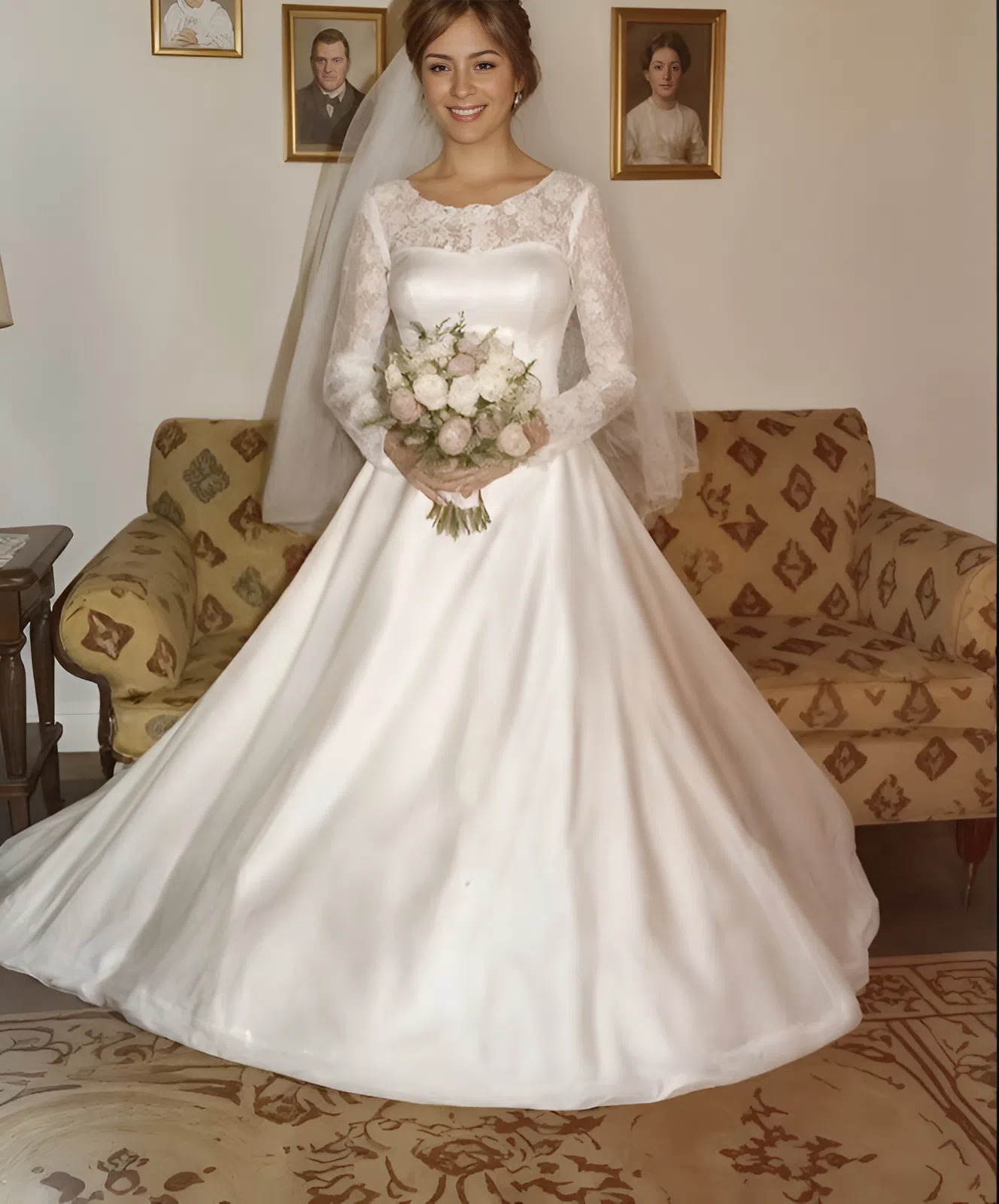
He hesitated.
“I borrowed it to finalise the divorce. I wanted to pay it back. But when she asked, she was furious. She said she didn’t trust me anymore.
He lowered his eyes.
‘That morning, she left. I asked her to stay, but she had already made up her mind.’
There was pain in his voice—but guilt too. And I didn’t know what to believe.
‘Why didn’t you ever tell me?’ I whispered.
‘Because I wanted to protect you,’ he said. ‘You were a child. You’d already lost too much.’
Then he looked at me, his eyes slightly glistening.
‘I loved your mother, Lilly. I never touched her. I don’t know what happened after she left, and I will regret that for the rest of my life.’
When I left him, I felt both lighter and heavier at the same time. Lighter because I finally understood that my mother hadn’t disappeared out of selfishness. Heavier because there were still questions that no one could answer.
A few weeks later, I decided what to do with the dress. I couldn’t keep it — it held too much pain and too many ghosts of ‘what could have been.’
I had it cleaned and donated it to an organisation that gives wedding dresses to girls who cannot afford them. It seemed like the right thing to do. My mother always believed in second chances and in helping people start over.
On my wedding day, I didn’t wear her dress — but I put her letter in my bouquet.
As I stood at the aisle, ready to walk down to the altar, I felt her presence — not as a woman who had disappeared, but as a mother who loved me, tried to do the right thing, and still found a way to reach me after decades of silence.
The story of her disappearance haunted me for most of my life, but that dress brought me something I never thought I would have: peace.
Because, even though I will never know for sure what happened, I finally understood what she wanted to tell me: that love, honesty and courage are more important than any perfect wedding or fairy-tale ending.
And I think that’s the ending she would have chosen.