“A remarkable medical breakthrough,” the news anchor was saying. “An experimental brain surgery performed locally.”
A caption appeared: rare neurological disease, groundbreaking procedure.
The camera zoomed in.
The woman’s name appeared on screen.
Rachel.
“That’s impossible,” I whispered.
Then Arthur spoke.

“When we heard the cost, I didn’t know how we’d manage,” he said. “But when it’s your child’s life, you find a way. You don’t hesitate—you just act.”
I rewound the clip and watched it again.
Rachel. Alive. Sick. And with my husband.
I didn’t sleep that night. By morning, I had booked a flight.
At the hospital, I told the receptionist, “I’m looking for my husband and my daughter.”
She checked the system and pointed me to the neurology floor.
I saw Arthur before he saw me. Slumped in a plastic chair, asleep, exhausted. Unshaven, worn down.
“Arthur,” I said.
He woke instantly. The moment he recognized me, the color drained from his face.
“Ellen… what are you doing here?”
“I saw you on the news,” I said. “What do you think I’m doing here?”
“You shouldn’t have come,” he said. “It’s complicated.”
“Complicated?” I repeated. “You disappeared with $91,000. This is far beyond complicated.”
He nodded toward the hallway. “She’s here. Surgery was four days ago. They think it worked.”
A nurse came in. “She’s asking for you,” she said, then looked at me. “You must be her mother.”
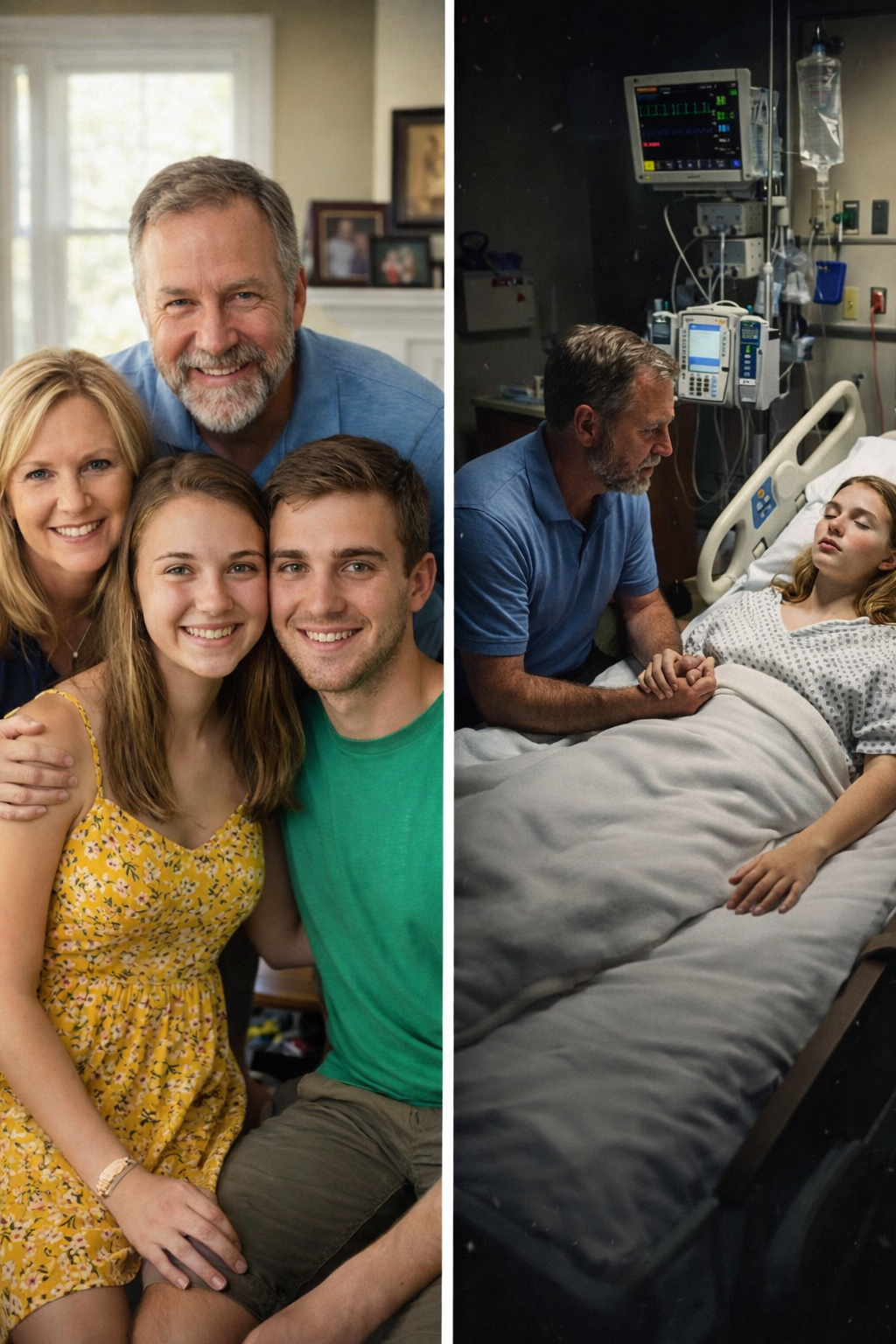
Rachel looked fragile—smaller than I remembered. Pale, with a shaved patch beneath her bandage.
“Mom,” she whispered.
I took her hand carefully.
“I told Dad not to tell you,” she said weakly.
I looked at Arthur.

He explained everything. She had called him a year earlier from rehab. She was sober then. He kept it from me because he thought I couldn’t handle going through it again.
When she got sick, the surgery was her only chance—and insurance wouldn’t cover it.
“You should have told me,” I said.
“I thought it would break you,” he replied. “I chose to carry it instead—even if it meant losing you.”
It wasn’t simple. It was selfish and loving at the same time, and I hated that both things could be true.
“I’m furious with you,” I told him. “I don’t know if I’ll ever trust you again.”
“That’s fair,” he said.
To Rachel, I said, “I can’t forget the past. The lies. The nights I waited for terrible news.”
“I know,” she whispered.
“But I’m here,” I said. “I came.”
For two weeks, my world became hospital visits and cheap motel rooms. Rachel improved slowly. Arthur and I spoke carefully, choosing words that wouldn’t ignite arguments.
He admitted he rushed everything because he was afraid I would stop him. I admitted I had imagined the worst—that he had died, betrayed me, or started a new life. All of those versions haunted me.
A week before Rachel was discharged, he said quietly, “If you want a divorce, I won’t fight it.”
“I thought you left me for someone else,” I told him. “Do you know what that does to a person?”
“Yes,” he said. “I thought about it every day.”
“I believe you,” I said eventually. “But I don’t forgive you. Not yet.”
Both things were true.
“I’m not making promises,” I added. “You’re not just coming back like nothing happened.”
“I understand.”
“But I’m also not going to lie about you,” I said. “That would be easier. Just not honest.”

Months later, back home, our savings were still gone. We both worked more. Rachel stayed in recovery—and this time, she kept showing up.
I placed a new photo on the mantle: Rachel in her wheelchair, hair growing back, eyes clearer. Arthur beside her. Me on the other side.
All three of us smiling—awkwardly, tired, but together.
Some nights, the anger still burned. Other nights, I remembered the look on Arthur’s face in that hospital—terrified, exhausted, never letting go of our daughter’s hand.
And slowly, piece by piece, something began to rebuild.