
My husband invited me to an important business dinner with a Japanese client. I smiled, nodded, and seemed to play the role of the perfect trophy wife.
But he didn’t know that I understood every word of Japanese.
After I heard what he said about me to this client, everything changed forever.
Let me start from the beginning.
My name is Sarah, and for twelve years I thought I had a good family. Not perfect, but good enough. My husband, David, worked as a senior manager at a technology company in the Bay Area. I worked as a marketing coordinator at a small firm. Nothing spectacular, but I liked it.
We lived in a nice townhouse in Mountain View, took a holiday once a year, and from the outside, we probably looked like we had everything under control.
But somewhere along the way, something changed.
It’s hard for me to pinpoint when it started. Maybe it was David’s last promotion three years ago. Maybe it was a gradual change, so slow that I didn’t notice it until I found myself in a marriage that was completely different from what I had imagined.
David became much busier, more important. At least, that’s what he said. He worked late, travelled to conferences, and when he came home, he was either on the phone or too tired to talk.
Our conversations became monotonous.
‘Did you pick up my clothes from the dry cleaners?’
‘Don’t forget we’re having dinner with the Joneses on Saturday.’
‘Can you take care of the lawn? I don’t have time.’
I convinced myself that this was normal. That’s how it is after a decade of marriage. The passion fades, routine sets in, and you just work to keep things running smoothly.
I suppressed the loneliness that crept in during the evening silence when he locked himself in his home office and I sat alone on the sofa watching television that didn’t really interest me.
About fifteen months ago, I stumbled upon something that changed my path.
I was scrolling through my phone on a sleepless night when an ad for a free trial of a language app caught my eye: Japanese.
I had studied it for one semester in college when I was a completely different person with different dreams. I liked it—all the complexity, the elegance, the whole new way it opened up to view the world around me. But then I met David, got married, started working, and that dream ended up in a box labelled “unacceptable youthful pursuits”.
That night, lying in bed while David snored beside me, I installed the app out of curiosity. Just to see if I remembered anything.
I remembered more than I expected.
The hiragana characters came back easily, then katakana. Within a few weeks, I was hooked. Every night, while David worked late or watched the financial news, I sat at the kitchen table with my headphones on, studying my lessons.
I subscribed to a podcast for language learners. I started watching Japanese dramas with subtitles, and then without them.
I didn’t tell David. Not because I was hiding it, but because I had learned not to share things that he would reject.
Three years ago, I mentioned that I wanted to take a photography course.

He laughed — not cruelly, but in a way that made me feel small.
‘Sarah, you take pictures with your iPhone like everyone else. You don’t need a course for that. Besides, when would you even find the time?’
I learned to keep my interests secret. It was easier that way.
So Japanese became my secret, my inner world. And I was really good at it. Very good.
I practised every day, sometimes for two or three hours. I communicated with tutors on italki, joined online groups, and even started reading simple novels.
After a year, I could understand spoken Japanese quite freely. Not perfectly, but enough to follow films, understand podcasts, and have decent conversations with tutors.
It was like recovering a part of myself that I had buried. Every new word, every grammatical construction gave me the feeling that I was still capable of growth, that I was still more than just David’s wife.
One day in late September, David came home earlier than usual.
He looked really excited, full of a vitality I hadn’t seen in months.
‘Sarah, great news,’ he said, untying his tie as he walked into the kitchen where I was preparing dinner. ‘We’re close to finalising a partnership with a Japanese technology company. This could be huge for us. The CEO is coming next week, and I’m taking him to dinner at Hashiri. You should come with us.’
I looked up from the vegetables I was chopping.
‘To a business dinner?’ I asked.
‘Yes,’ he replied. ‘Tanaka-san specifically asked if I was married. In Japanese business culture, they want to know that you’re stable and family-oriented. It’s a good move.’
He opened the fridge and took out a beer.

‘You just need to look good, smile and be charming. You know, the usual.’
Something in his words bothered me, but I put it aside.
‘Sure, sure. When?’ I asked.
‘Next Thursday. At seven in the evening,’ he said. ‘Wear a dark blue dress, the one with sleeves. Conservative but elegant. And Sarah,’ he looked at me directly for the first time, “Tanaka doesn’t speak much English. I’ll be speaking mostly Japanese. You’ll probably be bored, but just smile, okay?”
My heart skipped a beat.
‘You speak Japanese?’ I asked.
‘I learned it while working with our Tokyo office over the years,’ he replied proudly. ‘I’m quite fluent now. It’s one of the reasons I’m being considered for the vice-president position. Not many executives here can negotiate in Japanese.’
He didn’t ask if I spoke it. He didn’t consider whether I had any interest or knowledge of it.
Why should he? In his mind, I was just a wife who would smile and look pretty while important people talked.
I went back to the chopping board, my hands moving automatically.
‘That sounds wonderful, darling. I’ll be there,’ I said.
After he left the room, I stayed at the table, my head spinning.
An opportunity had just fallen into my lap—a chance to really understand the conversation David considered private. To hear how he really spoke. How he presented himself. How he talked about our life when he thought I couldn’t understand.

Part of me felt guilty for even thinking about it. But a much bigger part of me, the part that was becoming increasingly invisible in my own marriage, wanted to know.
Needed to know.
The week dragged on like a month.
I spent every free minute refreshing my business Japanese vocabulary, practising polite phrases so that I would be ready to follow a professional conversation. I didn’t know what to expect. Maybe nothing important. Maybe I was worrying too much, being paranoid, looking for problems that didn’t exist.
Thursday arrived.
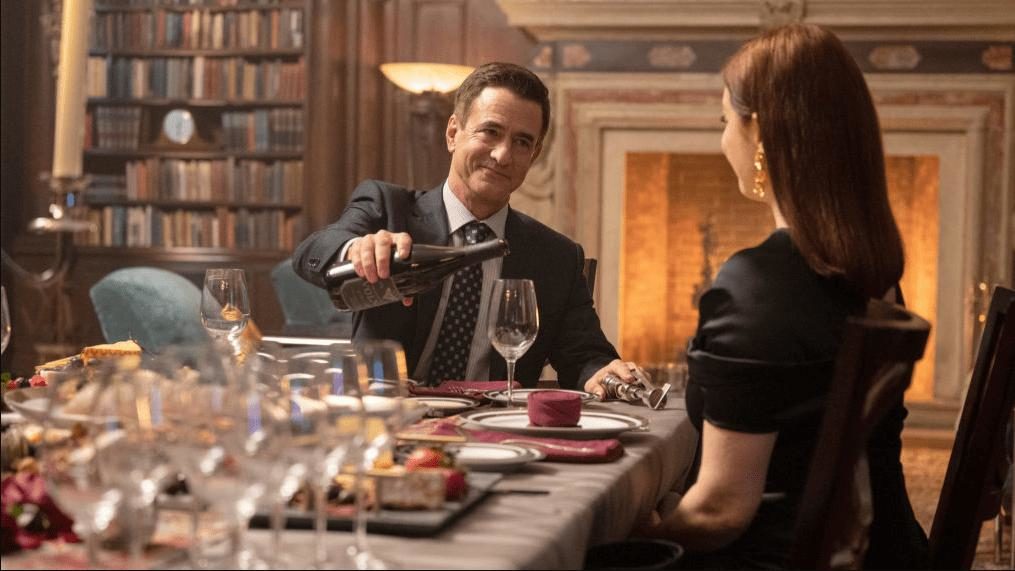
I wore a dark blue dress, as requested, complemented by modest heels and simple jewellery. I looked at myself in the mirror and saw exactly what David wanted: a presentable wife who would not embarrass him in front of important clients.
The restaurant was in San Francisco. Modern and expensive, it was a place with a waiting list of several months. David used his company account to reserve a table.
We arrived fifteen minutes early. David checked his appearance in his phone camera and straightened his already straight tie.
‘Remember,’ he said as we entered, ‘just be pleasant. Don’t try to participate in business conversation. If Tanaka-san addresses you in English, keep your answers short. We need him to focus on the partnership, not get distracted by small talk.’
I nodded, swallowing the bitter taste in my mouth.
Tanaka-san was already seated when we arrived. He stood up to greet us—a man in his fifties with silver-rimmed glasses and an impeccably tailored suit.
David bowed slightly. I followed suit.
They exchanged greetings in Japanese—formally and politely. I smiled, looking lost, and sat down in the chair David pulled out for me.
The conversation began in English. Superficial pleasantries. Tanaka praised the choice of restaurant, mentioned his hotel, asked if this was the first time we had hosted international partners. His English was actually quite good—better than David had expected—just a little accented.
Then, when the menu arrived, they naturally switched to Japanese.
I must admit, David was impressive. He spoke smoothly and confidently, clearly comfortable with the language. They discussed business forecasts, market expansion strategies, technical specifications. I only partially understood the technical jargon, but I grasped the structure and tone.
I sat quietly, sipping water, smiling occasionally when they looked my way, playing my part.
Then Tanaka turned slightly towards me and asked in Japanese what I did for a living.
David answered for me, not even giving me a chance to pretend I didn’t understand.
In Japanese, he said, ‘Oh, Sarah works in marketing, but it’s just a small company. Nothing serious. More of a hobby to keep her busy. She mainly takes care of our home.’

I kept a neutral expression on my face, but inside something stung.
A hobby.
I had worked in marketing for fifteen years, managed successful campaigns, built client relationships, but he had just characterised my entire career as a way to keep myself ‘busy.’
Tanaka nodded politely and did not pursue the matter.
Dinner continued. Several dishes were brought out, each one artfully arranged. I ate slowly, remained quiet, and listened.
I listened carefully, though.
David changed in Japanese—he became more aggressive, more boastful. He exaggerated his role in projects, took credit for team efforts, and presented himself as more central to the company’s success than he really was. It wasn’t crazy, but it was noticeable.
David, speaking Japanese, was a slightly inflated version of the David I knew.
Then the conversation changed.
Tanaka mentioned working life, the importance of family support in demanding careers.
David laughed, a sound that made my stomach clench.
‘To be honest,’ David said in Japanese, and I heard the everyday dismissiveness in his tone, “my wife doesn’t really understand the business world. She’s content with her simple life. I make all the important decisions—finances, career planning. She’s just there for appearances. In fact, she maintains the home and looks good at events like this.

‘It’s good for me because I don’t have to worry about a wife who demands too much attention or has her own ambitions that get in my way.’
I gripped the glass so tightly that I thought it might break.
Tanaka said something vague. I noticed his face, saw a flash of something—discomfort, perhaps—but he didn’t speak out against David. Instead, he changed the subject slightly, asking about David’s long-term goals.
‘The vice-president position is almost mine,’ David continued in Japanese. “And after that, I’m looking at the C-suite in five years. I’m advancing carefully, building the right connections.
‘My wife doesn’t know this yet, but I’ve moved some assets by opening offshore accounts. It’s just smart financial planning. If my career requires relocation or major changes, I need the flexibility to move quickly without having to deal with joint accounts and give her the opportunity to sign everything.’
My blood ran cold.
Offshore accounts. Moving assets without notifying me.
I sat there, smiling indifferently, while my husband casually disclosed financial manoeuvres that clearly sounded like he was preparing for a future that did not include me, or at least one where I would not have access to marital funds.
But he hadn’t finished his speech.
Tanaka asked how David coped with the stress of his job, whether there were ways to manage it.
David’s laugh was more ugly this time.
‘I have my outlets,’ he said. “There’s someone at work—Jennifer. She’s in finance. We’ve been seeing each other for about six months. My wife doesn’t know anything about it.
“To be honest, it’s been good for me. Jennifer understands my world, my ambitions. She’s moving forward too. We discuss strategy, make plans. It’s refreshing to come home to someone who can discuss more complex things than ‘what’s for dinner?
I kept myself still.
My face seemed frozen. Inside me was a whole world that was shattering into a thousand pieces. But years of training to remain small, quiet and pleasant kept me in place, keeping a smile on my face and preventing my hands from shaking visibly.
Roman. Offshore accounts. Reducing me to a mere object that supported his lifestyle and looked attractive.
Twelve years of marriage, and that was how he saw me. That was what he said, thinking I couldn’t understand.
Tanaka was definitely uncomfortable now. I could see it in the way he changed the subject, in the way he refocused on business matters. He was too polite to call David out on it, but his answers became shorter and more formal.
Dinner was over.

We said goodbye in the restaurant lobby. Tanaka bowed to me and said in cautious English, ‘It was a pleasure to meet you, Ms. Sarah. I wish you luck.’
Something in his eyes, a softness, made me wonder if he understood more than he let on. Was he as concerned about David’s words as I was?
The drive home was quiet. David seemed pleased with himself, whistling along to the radio.
‘It went well,’ he said. ‘I think we’ll close this deal. Tanaka seemed impressed.’
‘That’s great,’ I replied, my voice sounding hollow to my own ears.
At home, David kissed me casually on the cheek, said he needed to catch up on emails, and disappeared into his office.
I went upstairs to our bedroom, closed the door, and stood in silence.
Then I took out my phone and did something I never thought I would do.
I called Emma.
Emma was my roommate in college, my best friend before life and distance—and David’s silent disapproval of my friendships—pulled us apart. She became a family lawyer and went through a divorce herself five years ago. We had recently reconnected on social media, exchanged a few messages, but I hadn’t told her anything about my real life.
‘Sarah?’ she answered on the second ring, surprise in her voice. ‘I haven’t heard from you in years!’
‘Emma,’ I said, my voice faltering on the last word. ‘I need a solicitor.’
We talked for two hours.

I told her everything—the dinner, the conversation in Japanese, the offshore accounts, the affair, the years of humiliation and disgust.
She listened without interrupting, her legal mind clearly working on what I was telling her.
‘First,’ she said when I finished, ‘I need you to relax. Can you do that for me?’
I took a slow breath in and out.
‘Second,’ she continued, ‘you need to understand that whatever he’s doing with these offshore accounts may be illegal. It’s definitely unethical. If he’s hiding marital assets in anticipation of a divorce or simply to maintain control, that’s financial fraud. We can use that.’
‘I don’t have any proof,’ I said. ‘It’s just talk.’
‘Did you write down dinner?’ she asked.
I felt stupid.
‘No. I didn’t think of it. I just wanted to process what I heard.’
‘It’s okay,’ Emma said. “Here’s what we’ll do. Don’t tell him yet. I know you want to, but we need to be strategic.
‘Start gathering documentation—bank statements, tax returns, any financial records you can get your hands on. Take photographs. Forward emails to yourself. Anything. If he’s moving money, there will be a trail we can follow.’
‘Emma, I’m scared,’ I said.
‘I know, darling,’ she said. ‘But you’re also smart and capable—and you just proved that by learning a whole language without him knowing. You can do this. You’re not alone anymore.’
After we hung up, I sat on the edge of the bed and allowed myself to feel everything I had suppressed in the restaurant.
Rage. Betrayal. Sadness. Fear.

But beneath it all, something else was growing—a cold, clear determination.
I was no longer going to be a trophy wife. I was no longer going to be humiliated and deprived and manipulated.
I would take back control of my life, even if it meant burning down everything I had built to do so.
The next morning, I called work and told them I wouldn’t be coming in.
David barely noticed, just muttering a greeting as he left for work.
As soon as his car drove away, I started searching.
David kept his files in his home office, organised and tidy. I found bank statements for the last three years, tax returns, information on investment accounts. I took photos of each document with my phone and uploaded everything to a private cloud storage account that Emma had set up for me.
And there they were.
Two accounts I had never seen before, both showing regular transfers: fifty thousand dollars transferred over the last eight months to a bank in the Cayman Islands.
Our joint savings account was slowly being drained without my knowledge.
I felt uneasy, but I continued to take photos, continued to document.
Emma told me to be thorough, so I was thorough.
I also found emails, printed out and filed away. Correspondence about investments I didn’t know we owned, or rather, that he owned. Everything was in his name only.
And then I stumbled upon letters to Jennifer.

He had been careless, printing out some of the correspondence, probably to refer to figures or dates. But the content was incriminating—romantic, sexual, with plans for a future that clearly did not include me.
‘Once I sort things out with Sarah,’ one of the letters said, “we can stop hiding. “
Sarah—the situation.
That’s what I had become. A problem to be sorted out.
I spent six weeks quietly gathering evidence, living with a man I now saw clearly for the first time. Every smile was a lie. Every accidental touch made my skin crawl with disgust.
But I played my part.
I cooked dinner, asked about his day, pretended nothing had changed.
Emma built the case. I met with her twice a week at her office, bringing new documentation, discussing strategy.
We were going to file for divorce and at the same time notify his company’s ethics department about his financial violations. Offshore accounts were a violation of corporate policy. She found out that he could lose not only our marriage, but also his career.
‘Are you sure you want to go this far?’ Emma asked me during one of our meetings. ‘This will be a nuclear event. He will lose everything.’
‘He was already planning to leave me with nothing,’ I said. ‘He said so himself. He was preparing for it. I’m just taking the first step.’
We decided on Friday.

Emma filed for divorce on Thursday afternoon. On Friday morning, I got dressed for work as usual, but instead of going to the office, I drove to Emma’s.
David’s HR department was supposed to receive our evidence package at nine in the morning. At 9:30, the divorce papers were to be delivered to him at his office.
I sat in Emma’s conference room, drinking coffee that I couldn’t taste, and watching the clock. My phone was turned off. I didn’t want to see his calls or messages when he realised what was happening.
At eleven, Emma received confirmation.
The documents had been handed over. The evidence had been obtained.
David’s employer immediately placed him on administrative leave pending investigation.
‘How are you feeling?’ Emma asked.
‘Terrible,’ I admitted. ‘But right.’
I stayed at Emma’s that night. She had a guest room, and she had already told me I could stay as long as I needed to. She helped me write emails to my company explaining that I would be taking FMLA leave for personal reasons.
We ordered food, drank wine, and for the first time in years, I felt like I could breathe.
David tried to call fourteen times on the first day alone. He left voicemails ranging from bewilderment to rage, from pleading to desperate.
I didn’t listen to them. Emma listened, documenting everything for the case.
On Saturday, accompanied by Emma and a police officer—who was there just in case—I returned home to pack my things.

David was there, looking terrible. Unkempt, dishevelled, his eyes red.
‘Sarah, please,’ he began when he saw me.
I raised my hand.
‘Don’t,’ I said.
‘Just let me explain,’ he pleaded.
‘Explain what?’ I asked. ‘That you cheated on me? That you hid money? That you called me too simple to understand your world? I heard every word at that dinner, David. Every boring word.’
His face turned white.
‘You… you don’t speak Japanese,’ he stammered.
‘I’ve been speaking it fluently for over a year,’ I said. ‘It’s funny you never asked. Never wondered what I was doing when you were too busy with work—or with Jennifer.’
He slumped onto the sofa.
‘I’ve been put on leave,’ he said. ‘They’re investigating. Sarah, I could lose my job.’
‘That’s not a problem for me anymore,’ I replied.
I started up the stairs to our bedroom, where I needed to pack my things.
‘Wait,’ he said, his voice full of despair. ‘We can fix this. Couples counselling. I’ll end things with Jennifer. We can work this out.’
I turned back to look at him.
To really look at him.
At the man I had spent twelve years with. At the man I believed loved me.
‘You don’t want to fix this,’ I said. “You want to fix your career, your image, your financial situation.
‘You don’t regret hurting me. You regret getting caught.’
‘That’s not true,’ he protested.
‘At that dinner, you told Tanaka-san that I was just for show,’ I said. ‘That I was too simple. Too unambitious. That I was really just a housewife who looked good at events. Do you even remember how it was?’
His silence was answer enough.
‘I’m tired of being insignificant to you, David,’ I said. ‘I’m tired of being the convenient wife who doesn’t ask for much. File your counterclaims if you want. Fight the divorce. But you won’t win. And you won’t get away with hiding our assets.’
I packed my things within two hours.
He didn’t try to stop me anymore, just sat on the sofa staring into space.
The divorce took eight months.
California law required a six-month waiting period after filing, and we spent those months negotiating the division of property.

An investigation into David’s company found sufficient evidence of ethical violations. He was fired. He eventually found another job, but at a lower level and with a smaller salary.
The offshore accounts had to be disclosed and divided. Real estate that I didn’t know about became part of the marital property.
In the end, I walked away with half of everything he had tried to hide, plus alimony for three years while I rebuilt my career.
But the best thing, which I never expected, happened about two months after the divorce proceedings began.
Tanaka contacted me through LinkedIn.
His message was short but warm.
He had heard about the divorce and wondered if I might be interested in a position at his company. They were opening an office in the US and looking for someone who understood both American marketing and Japanese business culture.
My unique skills, he wrote, would be invaluable.
I met with him and his team. This time, I started speaking Japanese from the very first minute.
His eyes lit up with sincere respect—and something else. Perhaps a little curiosity about how I had fooled everyone at that dinner.
‘I knew,’ he said in Japanese at the end of my interview. ‘At the restaurant. How you held yourself when David spoke about you. I saw understanding in your eyes, just for a moment. I’m glad you found your strength.’
They offered me the position. Senior Marketing Director. The salary was three times what I was earning.

I accepted the offer.
I am now sixty-three years old.
All this happened more than twenty years ago, but I remember every detail.
The divorce, though painful, gave me my life back.
I managed that marketing department for fifteen years before retiring. I visited Japan a dozen times, made true friends, and became someone who existed beyond being someone’s wife.
I never remarried. I dated occasionally and had one serious relationship that lasted five years before we parted amicably. But I never again made my life small to fit someone else’s vision of who I should be.
David sent me an email once, about three years after the divorce was finalised. He had remarried and apologised for how things had ended. He said he hoped I was doing well.
I never replied.
Some chapters don’t need an epilogue.
I am still studying Japanese, although now it is purely for pleasure. I read novels, watch films, and sometimes mentor young professionals who want to learn the language. The language that once became a secret escape became what saved me, what showed me that I was capable of more than I allowed myself to believe.
Dinner at Hashiri was the worst and best night of my life.
The worst because I heard the truth that shattered my reality.
The best because it finally pushed me to take action. To stop accepting less than I deserved.
So if you’re listening to this and you’re in a marriage where you feel invisible, where your interests are denied, where you’re made to feel small, pay attention to that feeling.
Learn the language. Gather evidence. Find your Emma.
And when you’re ready, take back your life.
It won’t be easy. It will be painful. There will be nights when you doubt everything.
But on the other side of that pain is a life where you can be yourself. Where your voice matters. Where you are not just a prop, but necessary.
And that kind of life is worth fighting for.