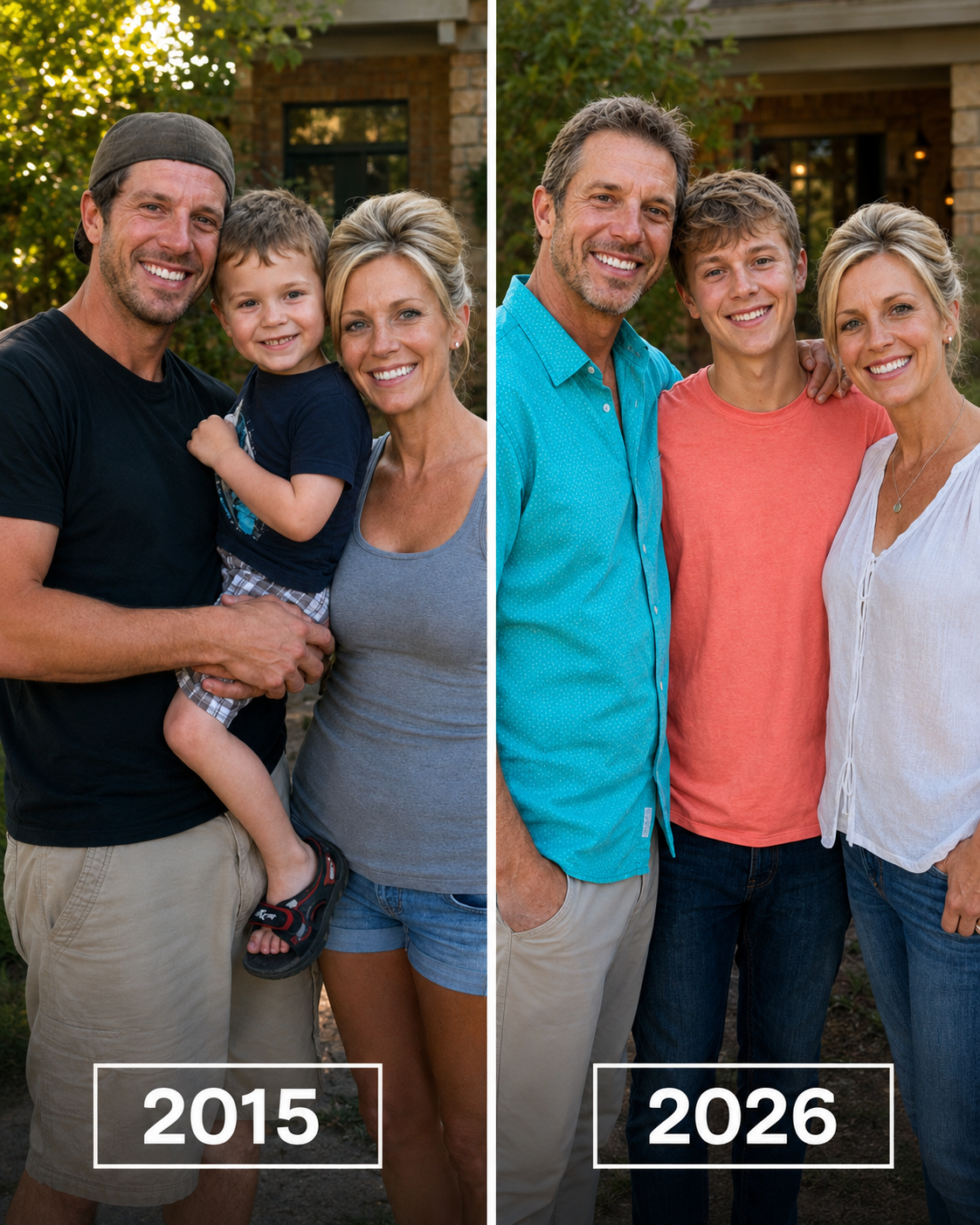
I was standing in the kitchen preparing dinner when I heard the front door creak open. A moment later, my sixteen-year-old son, Rick, stepped inside. My husband, Will, followed close behind.
The atmosphere between them felt heavy. Their faces were tense, their expressions guarded, as if they were carrying news neither of them wanted to deliver.
My stomach tightened immediately.
“What happened?” I asked, setting down the dish towel.
Neither answered.
Rick slowly approached me and extended a large envelope.
“Mom… just read it,” he said softly.
The envelope had already been opened. That was the first thing that caught my attention.
The second was that Will refused to look me in the eye.
A feeling of dread settled in my chest.
I slid the document from the envelope and glanced at the heading.
My pulse instantly quickened.
“A DNA test?” I looked up sharply. “You did this without telling me?”
“Good thing I did,” Will replied, his voice cold and distant. “Otherwise we never would have discovered the truth.”
Confused, I lowered my eyes back to the report.
Then I froze.
“This… this has to be wrong.”
“It’s perfectly clear,” Will said, folding his arms across his chest. “Now I finally understand what you’ve been hiding from me all these years.”
His accusation hit me like a slap.
But the truth was that this nightmare had begun more than a decade earlier.
Eleven years ago, when Rick was only five years old, Will had first voiced the suspicion.
“He doesn’t look anything like me.”
At the time, I laughed.
“Children change constantly,” I told him. “You can’t judge that at five years old.”
But Will wasn’t joking.
Over the following weeks, he kept returning to the same topic.
Every family gathering.
Every old photograph.
Every random observation.
“He has your eyes.”
“He has your father’s smile.”
“He doesn’t have any of my features.”
At first I assumed he was stressed. We had been under pressure for years.
Then one evening he finally said what he had really been thinking.
“I don’t think he’s my son. I want a DNA test.”
The words stunned me.
For years we had struggled to become parents.
Doctors.
Specialists.
Medical procedures.
Disappointments.
Failed attempts.
Heartbreak after heartbreak.
Then finally IVF worked.
I became pregnant.
After everything we had endured, it felt like a miracle.
And now my husband was questioning whether the child was even his.
“You seriously think I cheated on you?” I shouted through tears.
“He doesn’t look like me!” Will fired back.
We argued deep into the night.
Neither of us gave an inch.
Finally, exhausted and devastated, I made a decision.
“No DNA test,” I told him. “If you don’t trust me after everything we’ve been through, then our marriage means nothing.”
Somehow we survived that fight.
At least on the surface.
Will eventually stopped mentioning it.
Life moved forward.
Rick grew older.
The years passed.
But standing there in my kitchen with that DNA report in my hands, I realized something painful.
Will had never truly let it go.
The doubt had simply gone underground.
“No,” I repeated. “There has to be another explanation.”
Will shook his head in disgust.
“You’re unbelievable. For years you made me feel guilty for questioning you, and now you’re still refusing to accept reality.”
I looked again at the report.
The result was unmistakable.
Will was not Rick’s biological father.
“Mom…” Rick whispered.
His voice trembled.
“Is it true?”
I immediately turned toward him.
“No.”
My answer was firm.
“I have never betrayed this family.”
“Then why does the report say that?” he asked.
His eyes were full of confusion and fear.
“I don’t know,” I admitted honestly. “But I promise you I’m going to find out.”
That evening I pulled every fertility clinic record I could find from storage boxes and filing cabinets.
Appointments.
Medical notes.
Invoices.
Consent forms.
Laboratory paperwork.
Years of documents covered the dining room table.
For hours I searched through everything.
At first nothing seemed unusual.
Then I noticed something.
A correction made by hand.
An identification number that had been crossed out and rewritten.
Another form with conflicting information.
A memory suddenly resurfaced.
The day of the IVF procedure had been chaotic.
Staff members had been rushing around.
Patients were waiting everywhere.
And I distinctly remembered overhearing someone say:
“No, that sample belongs to the other couple.”
At the time I thought nothing of it.
Now the memory hit me like lightning.
The next morning I called the clinic the moment it opened.
“My husband recently completed a DNA test,” I explained. “The results say he is not our son’s biological father. Our child was conceived through IVF at your facility, and I need answers immediately.”