
The transition into motherhood is often painted as a blur of exhaustion and newborn wonder—a period when life shrinks to the steady rise and fall of a baby’s chest and the slow work of physical recovery. For Claire, she assumed the hardest parts would be sleepless nights and learning how to care for a fragile new life.
She never imagined that the most life-altering moment would come not in the delivery room, but during a quiet hospital visit—one that would shatter the illusion of her marriage and expose a betrayal so deep it rewired her understanding of trust.

That revelation arrived through her grandfather, Edward. Known for his calm dignity and steady warmth, Edward had always been Claire’s anchor through every major milestone. When he stepped into her hospital room holding a bouquet of daffodils, the air briefly felt safe again. He admired his new great-granddaughter, kissed Claire’s forehead, and then asked a single question that cracked the ground beneath her: “My sweet Claire, haven’t the two hundred and fifty thousand I send you each month been enough? I made sure to instruct your mother to see that it reached you.”
The amount was staggering, but the implication was worse. For three years, Claire had lived in relentless financial stress throughout her marriage to Mark. She worked two jobs while pregnant, skipped meals to stretch grocery money, and weighed every purchase—every onesie, every diaper—as if it could ruin them. Learning that $250,000 had been sent every month, adding up to more than $8 million since her wedding day, created a kind of mental whiplash she could barely process. When she admitted she had never received a single cent, the warmth drained from the room and Edward’s shock hardened into cold fury.
Then the moment turned almost cinematic. The door opened and in walked Mark—Claire’s husband—beside his mother, Vivian. They didn’t arrive with baby supplies or comfort. Instead, their arms were loaded with designer shopping bags. The contrast between luxury labels and Claire’s years of scraping by wasn’t just insulting—it was proof. Those bags weren’t symbols of success; they were physical evidence of a long-running theft.
Edward confronted them with a terrifying calm. He explained that he had been transferring the money into an account Mark had opened in his own name—an account Claire was never allowed to see. The betrayal was bigger than dollars. Mark hadn’t simply taken money; he had engineered a life where Claire felt poor, afraid, and guilty for basic needs while he and Vivian quietly lived in comfort. He watched her cry over bills. He watched her exhaust herself working. And he did it while sitting on a fortune meant for her safety and stability.
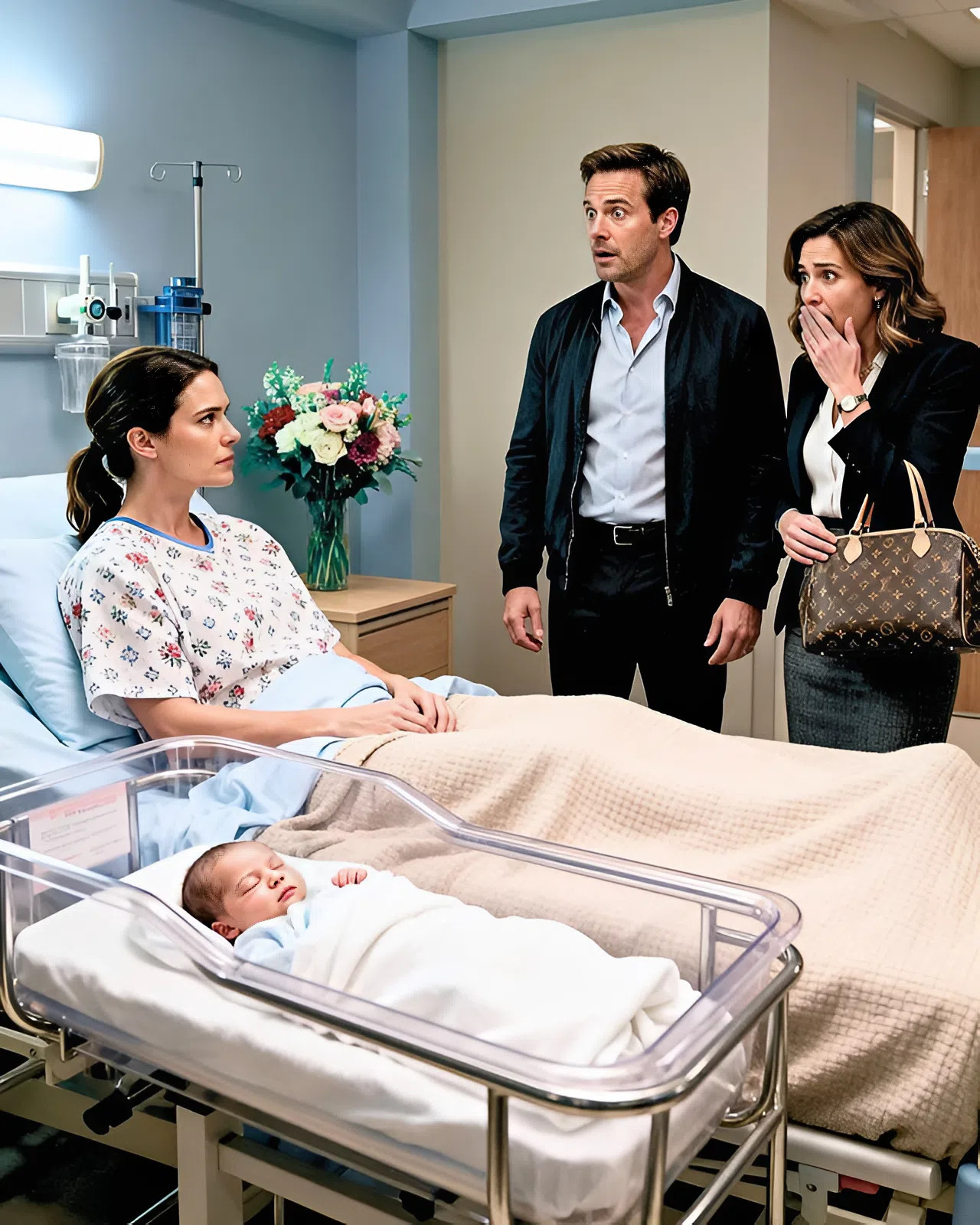
Mark tried to defend himself with familiar half-truths, claiming things were “tight” and that they had “expenses.” But it collapsed under the obvious evidence. When Vivian attempted to justify it by insisting Mark needed to “maintain a professional image,” the logic of their family dynamic became unmistakable: Claire wasn’t treated as a partner, but as a supporting character whose suffering was an acceptable price for their status.
The confrontation peaked when Mark’s “provider” persona splintered into raw entitlement. He shouted that he “deserved” the money and that Claire would never understand success. In that instant, something in Claire clarified. She wasn’t looking at a misguided husband who made a mistake—she was looking at someone who had exploited her trust deliberately, month after month, for years. It was not a lapse in judgment. It was a lifestyle built on her deprivation.
Edward acted decisively. With the resolve of someone who had built empires, he told Mark he would be held legally accountable for every stolen dollar. He did not force Claire to decide her next steps in that moment, but he gave her what she had not had in years: protection and breathing room. He stood like a shield as Claire gathered her hospital essentials, preparing to leave not only the room—but the life she had believed was hers.
This story highlights financial abuse, a form of domestic mistreatment that can be just as devastating as physical violence and is often harder to recognize from the outside. It can look like controlling access to resources, withholding money for necessities, or redirecting assets meant for the victim’s well-being—exactly what happened to Claire. By controlling money, the abuser creates dependency, fear, and shame, making it profoundly difficult for the victim to leave.

When Claire stepped into the crisp air outside the hospital, the weight of the last three years began to shift. The pain was still sharp, but underneath it was something new: self-reliance. She was no longer a woman made to feel guilty for buying groceries. She was a mother with a primary responsibility—to protect her child from the toxicity that had nearly swallowed her whole.
Leaving a marriage the day after giving birth is a logistical and emotional nightmare, but Claire understood that staying would be the greater danger. She had discovered a version of herself she didn’t know existed—a woman who could look at a man she once loved and see him clearly. With Edward beside her, she stepped into a new chapter where her worth would never again be measured by someone else’s greed. Her heart was bruised, but for the first time in years, it belonged entirely to her.