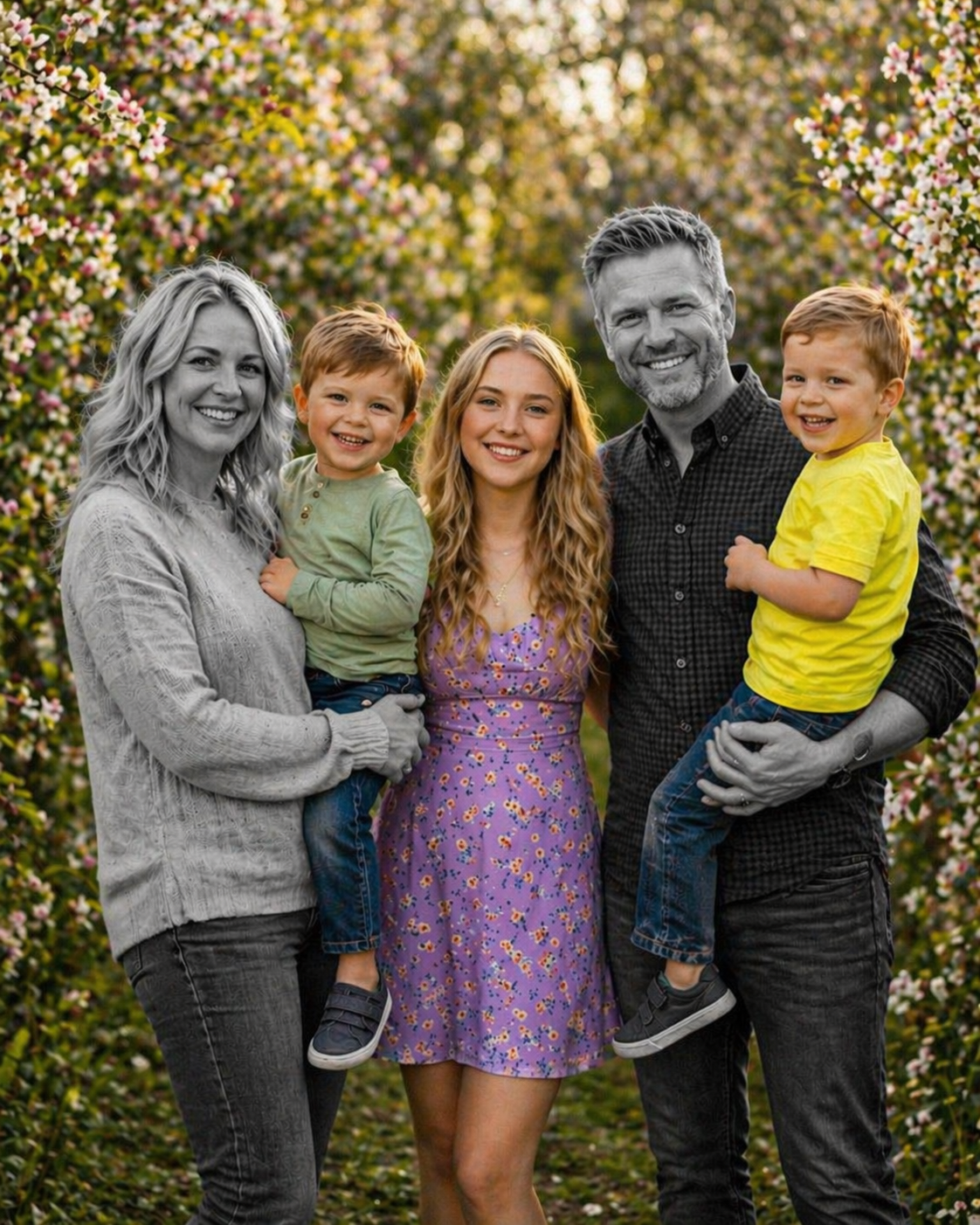
After losing our parents in a devastating house fire, I became everything my six-year-old twin brothers had left in the world. My fiancé stood by us and loved them as his own—but his mother harbored a level of resentment toward them that I never imagined possible. I didn’t realize just how far she would go until the day she crossed a line that could never be undone.
Three months ago, everything changed.

I woke in the middle of the night to the sound of fire tearing through our home—heat pressing against my skin, smoke filling my lungs. I stumbled toward my bedroom door, heart racing, disoriented.
Then I heard them.
Caleb and Liam. Calling for me.
That sound cut through everything. Fear, confusion—none of it mattered. I had to reach them.

I remember wrapping fabric around the door handle to protect my hand. After that, my memory fractures into pieces.
What I do remember is standing outside afterward, holding them as tightly as I could while firefighters battled the flames behind us. Their small bodies clung to me like I was the only solid thing left in their world.
And in that moment, I was.

From that night on, they became my entire focus.
I stepped into a role I had never prepared for—parent, protector, everything.
I don’t know how I would have managed without Mark.
He didn’t hesitate. He showed up—for me, for them. He attended grief counseling sessions with us, reassured me constantly, and made it clear that the moment we could legally do so, we would adopt the boys.
The twins adored him. They called him “Mork,” unable to pronounce his name when they first met, and the nickname stuck.
We were slowly trying to rebuild something resembling a family.

But not everyone wanted that.
Mark’s mother, Joyce, made her feelings painfully clear.
She didn’t just dislike the situation—she resented my brothers.
To her, they weren’t grieving children. They were an inconvenience.
A burden.
She accused me of taking advantage of Mark, despite the fact that I supported myself financially. She insisted he should “save his resources” for his “real future family.”
Her words were always wrapped in polite smiles—but they cut deeply.
“You’re fortunate he’s so generous,” she once said at dinner. “Most men wouldn’t take on so much… baggage.”

Baggage.
That’s what she called two children who had just lost everything.
Another time, she was even more blunt.

“You should focus on having children of your own,” she said. “Not wasting your time on charity.”
I told myself she was just bitter. That her words didn’t matter.
But they did.
At family gatherings, she ignored the boys completely.
She would dote on her other grandchildren—offering them sweets, gifts, affection—while acting as if Caleb and Liam didn’t exist.
The moment that made everything undeniable happened at a birthday party.
Joyce was serving cake.

She gave a slice to every child—except my brothers.
“Oh, looks like we ran out,” she said casually.
The boys didn’t understand what had happened. They just looked confused.
But I knew.
I handed them my portion without hesitation. Mark did the same.

And in that moment, we both realized something important:
This wasn’t passive dislike.
This was intentional cruelty.
A few weeks later, during a family lunch, she leaned forward with a smile that didn’t reach her eyes.
“Once you have children of your own,” she said, “you won’t have to stretch yourselves so thin.”
“We already have children,” I replied firmly. “We’re adopting my brothers.”

She waved it off dismissively.
“Paperwork doesn’t change blood.”
Mark shut it down immediately.
“Love matters more than blood,” he said. “And you need to stop treating them like they don’t belong.”
As usual, she played the victim and stormed out.

But she wasn’t finished.
The breaking point came when I had to leave town for work—just two nights.
Mark stayed home with the boys. Everything seemed fine.
Until I returned.
The second I walked through the door, Caleb and Liam ran to me, sobbing uncontrollably.

I dropped everything.
“What happened?”
It took time for them to calm down enough to explain.
Joyce had come over.
She brought them gifts—suitcases. One blue, one green.

Inside were clothes, toiletries, small toys.
Like someone preparing them to leave.
Then she told them something unforgivable.
“These are for when you go to your new family,” she said. “You won’t be staying here much longer.”
She also told them I only cared for them out of guilt.
That Mark deserved a “real family.”
Two six-year-olds.
Already grieving.

And she made them believe they were being abandoned again.
That was the moment everything changed.
Mark called her immediately. At first, she denied it.
Then she admitted it without remorse.