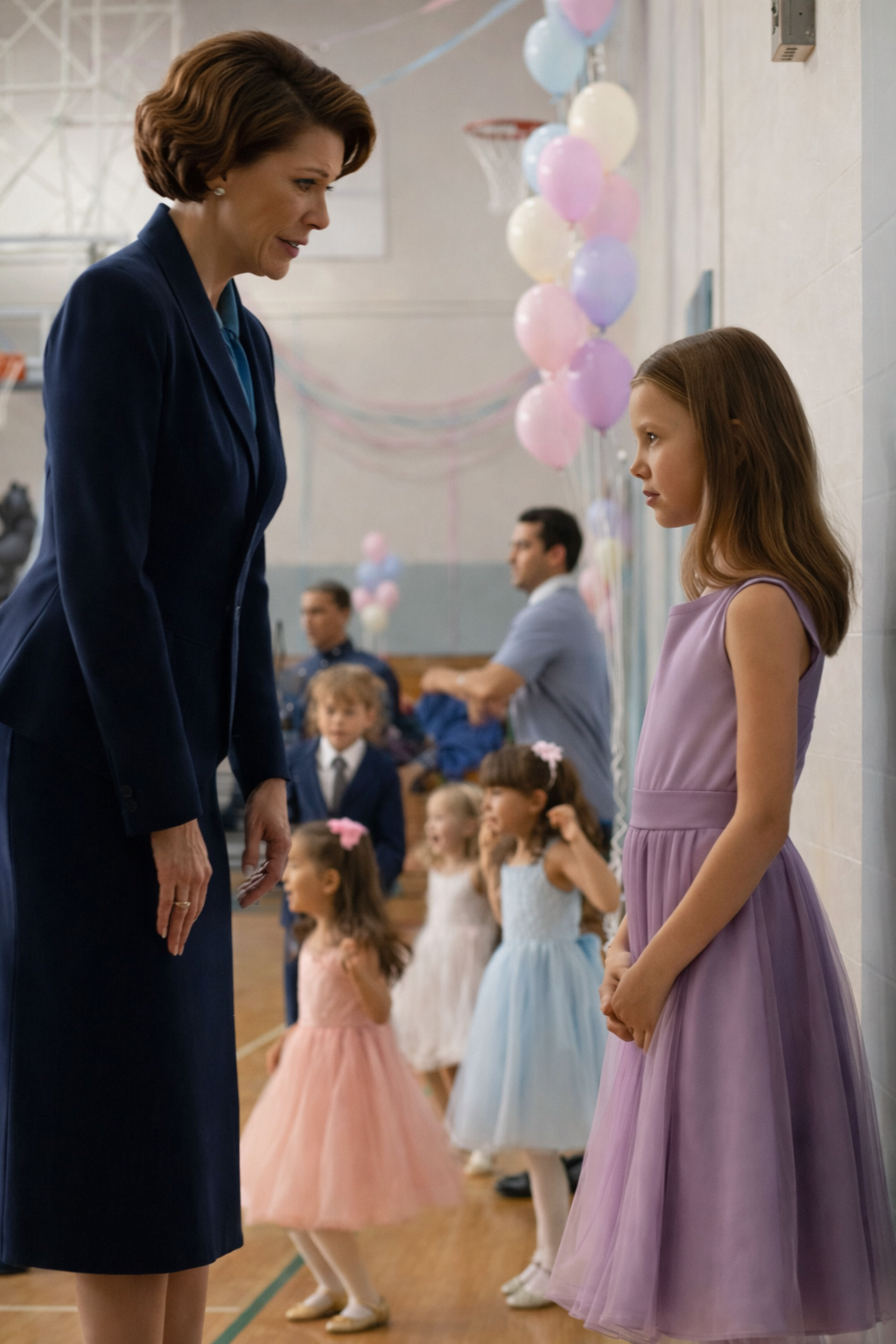
Then she leaned closer and whispered:
“Like mother, like daughter. Cheap fabric. Cheap work. Cheap standards.”
She straightened, smiling as if nothing had happened.
Then she walked away, muttering that Ava wasn’t as capable as the other students.
I watched her go.
Then I looked at my daughter—standing there, staring down at something she had worked so hard to create.
And something inside me—something I had carried for twenty years—refused to stay silent any longer.
Someone had just set down a microphone after making an announcement.
Before I could hesitate, I picked it up.
“I think everyone should hear this,” I said.
The room quieted.
“Because Mrs. Mercer,” I continued, “seems very concerned about standards.”
People turned toward her.
“When I was thirteen,” I said, “this same teacher told me that girls like me would grow up to be ‘broke, bitter, and embarrassing.’”
A ripple moved through the crowd.

“And today, she said something very similar to my daughter.”
Now everyone was looking.
At me.
At Ava.
At the table.
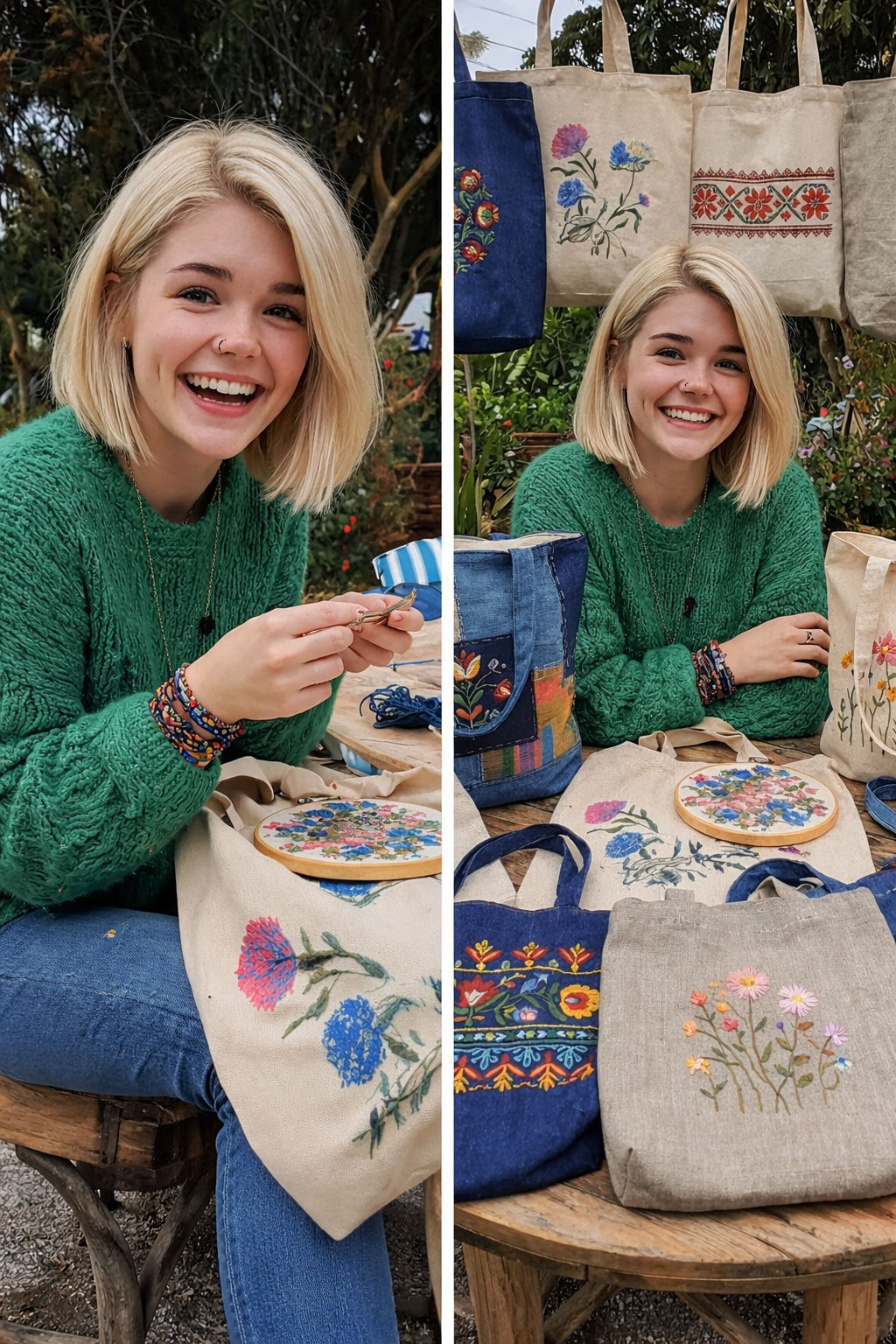
I walked over, picked up one of the bags, and held it up.
“This was made by a fourteen-year-old girl who spent two weeks working late into the night… using donated materials… to help families she’s never even met.”
Silence.
“She didn’t do it for praise. She didn’t do it for grades. She did it because she cares.”
Then I asked:
“How many of you have heard Mrs. Mercer speak to students like that?”
At first—nothing.
Then one hand rose.
Then another.
Then more.
Students. Parents.
Voices, one by one.
Mrs. Mercer stepped forward. “This is inappropriate—”
“No,” a parent interrupted calmly. “What’s inappropriate is how you speak to children.”
“She told my son he’d never succeed,” another added.
“She said I wasn’t worth the effort,” a student spoke up.
This wasn’t chaos.
It was truth.
And it was finally being heard.
“I’m not here to argue,” I said. “I’m here so the truth is no longer ignored.”
I looked directly at her.
“You don’t get to decide who children become.”
She said nothing.
“You once told me what my future would be,” I continued. “You were wrong.”
Soft murmurs spread.
“I may not be rich. But I raised my daughter with strength. I worked for everything I have. And I didn’t do it by tearing others down.”
I held up the bag again.
“This is what I raised.”
I looked at Ava.
She stood taller now.
Stronger.
“You don’t define her,” I said firmly. “You never defined me.”
For a second, the room held its breath.
Then applause broke out.
I lowered the microphone.
Ava wasn’t shrinking anymore.
She stood proud.
And right then—karma arrived.
The principal was already walking toward Mrs. Mercer.
“We need to talk,” he said.
No one defended her.
The crowd parted.
And she walked away—without the authority she once carried.
By the end of the fair, every one of Ava’s bags had sold.
People praised her work. Parents thanked her. She sold out before anyone else.
That night, as we packed up, Ava looked at me.
“Mom… I was really scared.”
“I know,” I said softly.
She hesitated. “Why weren’t you?”

I thought about my younger self.
“I was scared of her once,” I said. “I’m just not anymore.”
She leaned into me.
I held her close.
Mrs. Mercer tried to define me once.
She doesn’t get to define my daughter