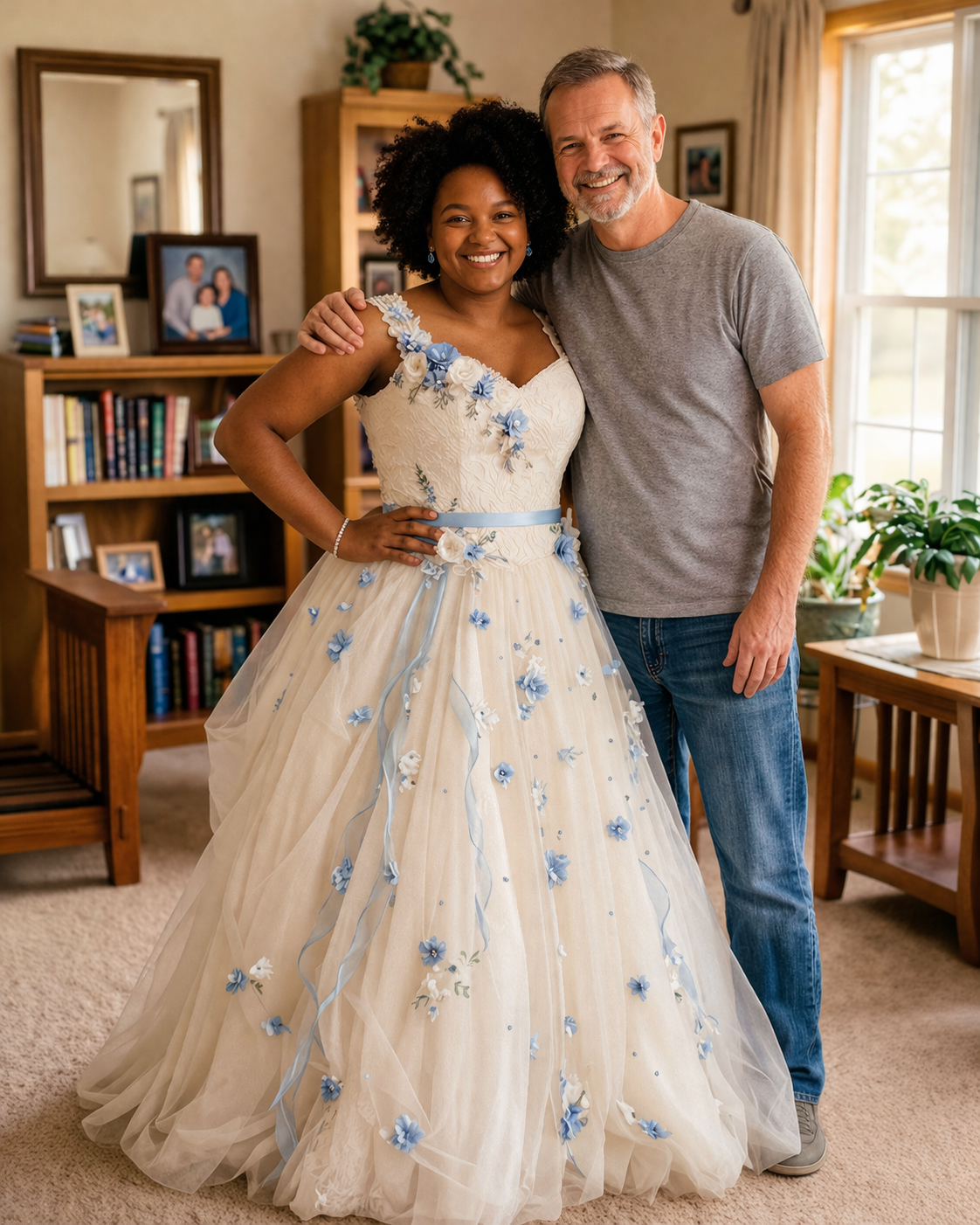
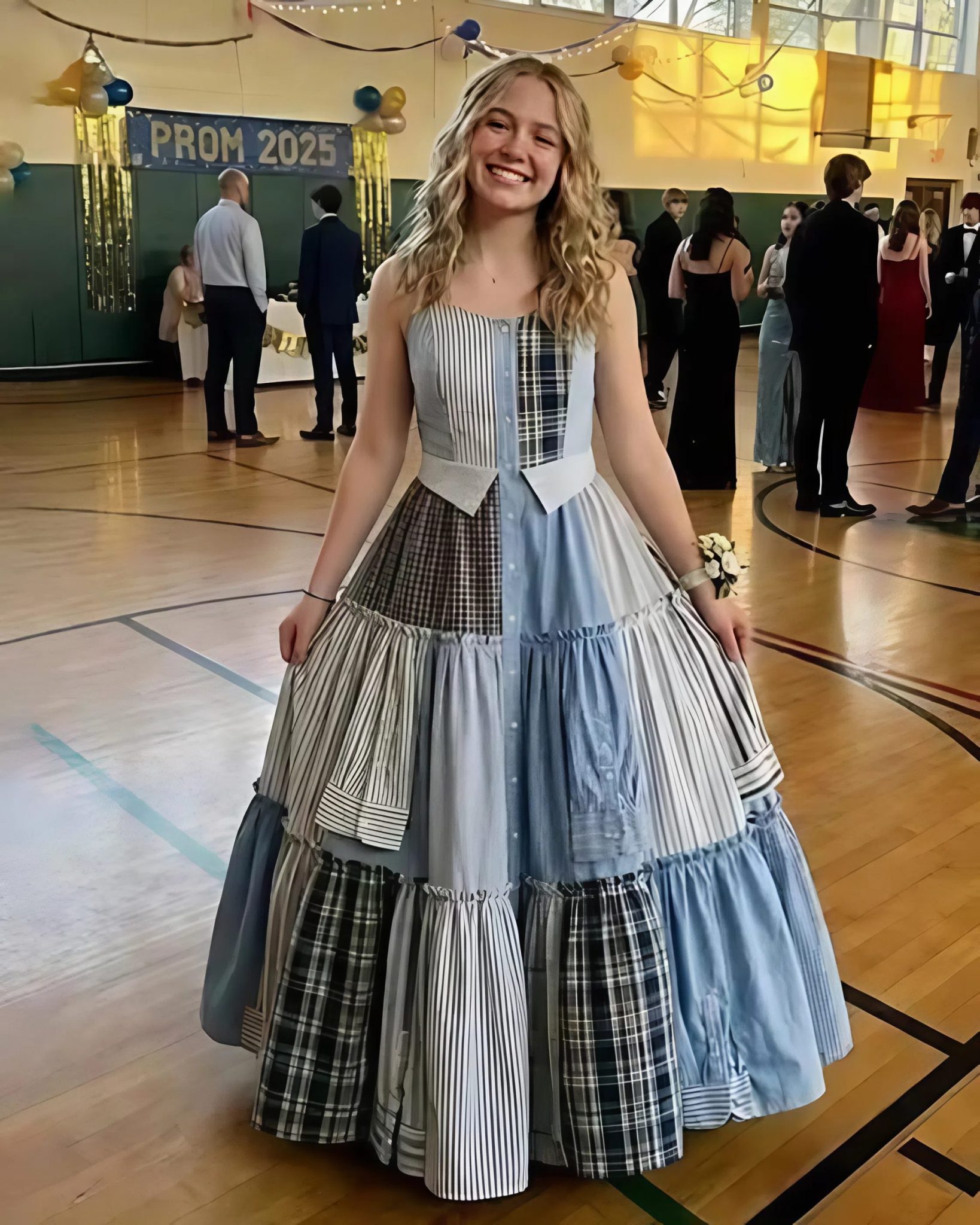
I showed up to prom in a gown my father had lovingly crafted from my late mother’s wedding dress—and for one fleeting, magical moment, it felt like she was right there beside me. But that fragile happiness was shattered when the cruelest teacher I had mocked me in front of everyone… until an officer stepped in and turned the entire night around.
The first time I caught my dad sewing in the living room, I genuinely thought something had snapped.
He was a plumber—hands rough and scarred, knees worn down, boots older than half the kids at my school. Sewing? That wasn’t just unusual. It was absurd.
And secrecy? Definitely not his strength. Which made the closed hallway closet and the mysterious brown paper packages even more suspicious.

“Go to bed, Syd,” he muttered, bent over a stretch of ivory fabric.
At that moment, I had no idea he was creating the most meaningful thing I would ever wear.
I leaned against the doorframe.
“Since when do you even sew?”
Without looking up, he replied, “Since YouTube tutorials and your mom’s old sewing kit decided to educate me.”
I snorted. “That somehow makes me more nervous, not less.”
He finally glanced back. “Bed. Now.”
That was my dad—John.
He could fix a pipe in minutes, stretch one meal into three, and crack a joke out of almost anything. He’d been doing that ever since I was five, when my mom passed away and it became just the two of us against the world.
Money was always tight. He worked extra shifts. I learned early not to ask for things we couldn’t afford.
By senior year, prom had taken over everything.
Girls talked nonstop about limos, manicures, heels, and dresses that cost more than our monthly groceries.
One night, while I rinsed dishes and he sorted through bills, I said casually,
“Lila’s cousin has some old dresses. I might borrow one.”
He looked up. “Why would you need to borrow one?”
“For prom,” I said.
What I didn’t say—but we both understood—was: we can’t afford one.
“It’s fine,” I added quickly. “I don’t really care.”
That was a lie.
He folded a bill slowly. “Let me handle the dress.”
I laughed. “That’s a wild statement coming from a man who owns three identical work shirts.”
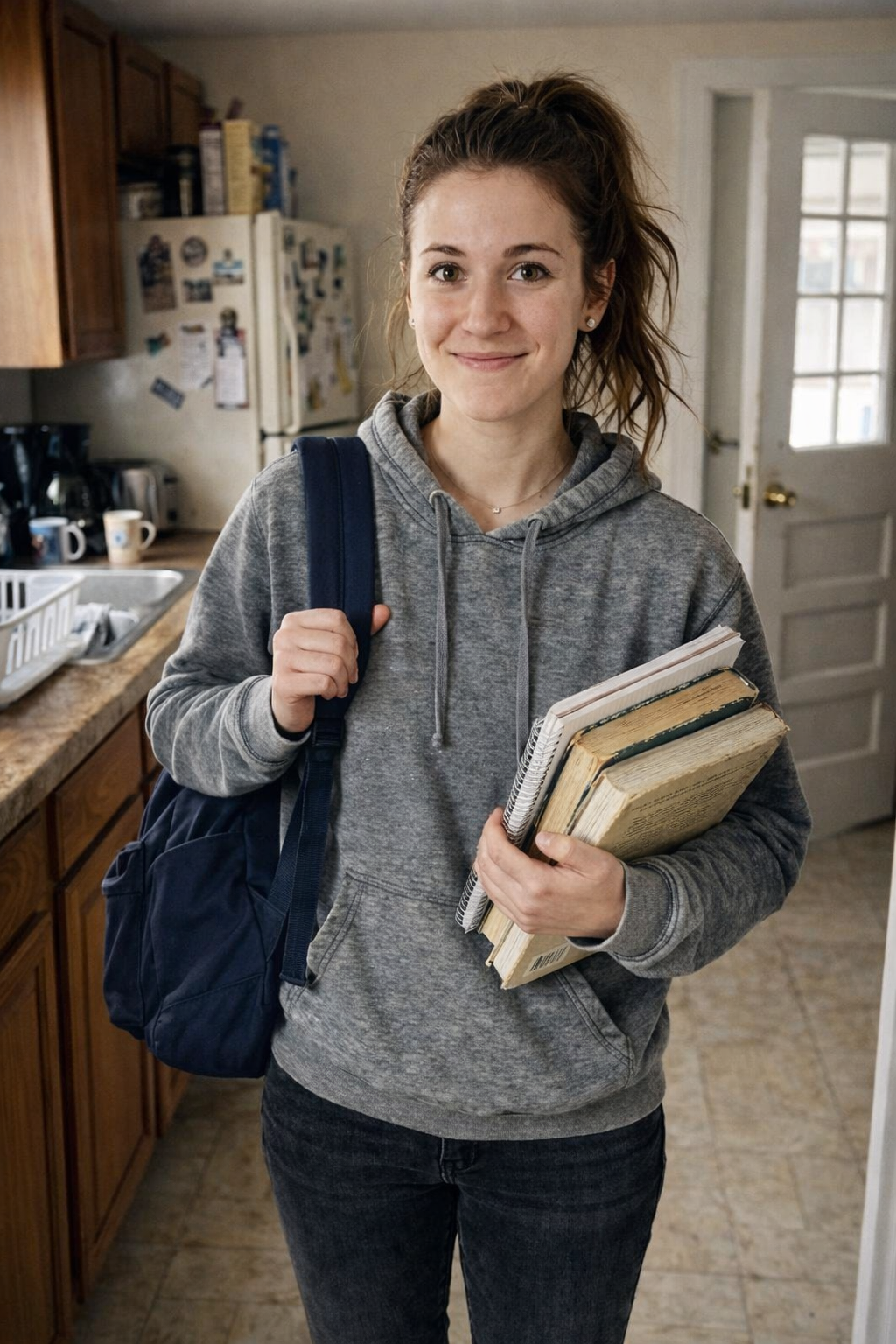
“Finish the dishes before I start charging you rent,” he shot back.
That should’ve been the end of it.
But it wasn’t.
After that, I started noticing things.
The hallway closet stayed shut.
He came home with brown paper packages he quickly hid.
And late at night, after I’d gone to bed, I’d hear the quiet hum of a sewing machine.
One night, curiosity got the better of me. I crept down the hall.
There he was—bent over ivory fabric under a lamp, glasses sliding down his nose, face tight with concentration. One hand steady, the other guiding the cloth carefully—like he was handling something precious.
“Since when do you sew?” I whispered.
He jumped so hard he nearly stabbed himself.
“Syd! Good grief.”
“Sorry. I heard noise.”
“Go to bed.”
“What are you making?”
“Nothing you need to worry about.”
“That doesn’t look like ‘nothing.’”
He raised a finger. “Out.”
“You’re being weird.”
“Go on, kid,” he said gently.
For nearly a month, that became routine.
Threads on the couch. Burnt dinners. A bandage on his thumb one night.
“What happened?” I asked.
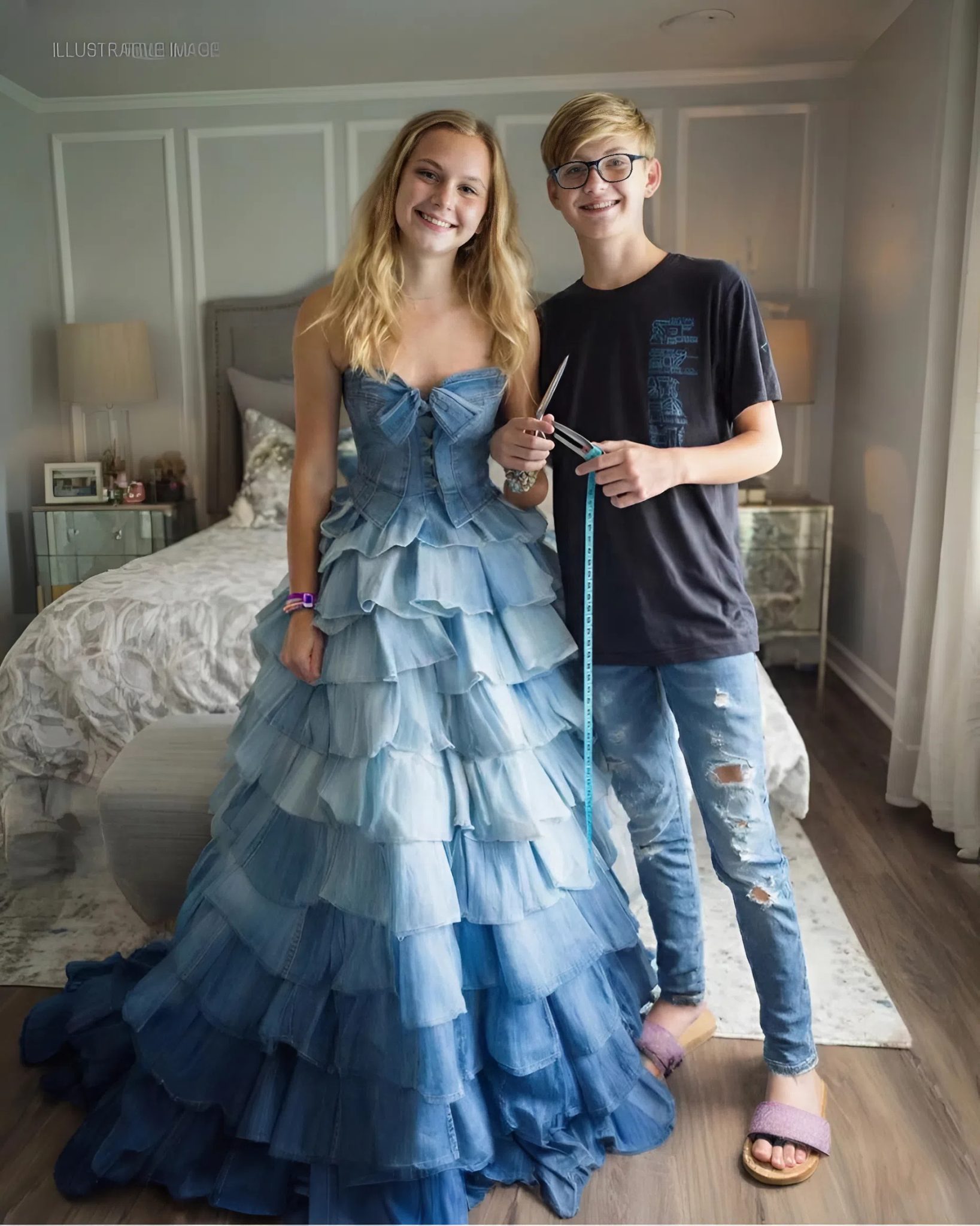
“The zipper won,” he said dryly.
“You injured yourself over a dress?”
He shrugged. “Different battles ask different things from different people.”
I laughed—but something in my chest tightened.
Meanwhile, school wasn’t exactly easy.
My English teacher, Mrs. Tilmot, had a talent for cruelty disguised as calm.
“Sydney, try to appear conscious.”
“This reads like a greeting card.”
“Oh, you’re upset? How exhausting.”
At first, I thought I was imagining it.
Then Lila whispered one day, “Why is she always picking on you?”
“Maybe my face annoys her,” I joked.
“Your face is just existing,” Lila said.
I laughed it off. That was my specialty—pretending things didn’t matter.
It worked on everyone except my dad.
One evening, he found me rewriting an essay for the third time.
“Didn’t you already finish that?” he asked.
“She said it was lazy.”
“Was it?”
“No.”
“Then stop bleeding for someone who enjoys watching it.”
I looked up. “I don’t know why she hates me.”
“I’ll talk to the school,” he said firmly.
A week before prom, he knocked on my door holding a garment bag.
“Before you react,” he said, “two things: it’s not perfect… and the zipper and I are no longer speaking.”
I was already crying.
He hadn’t even shown it yet.
Then he unzipped the bag.
And I just stared.
The dress was soft ivory, glowing under the light, with delicate blue flowers sweeping across it and tiny hand-stitched details near the hem.
“Dad…”
He suddenly looked nervous. “Your mom’s dress had potential. Needed adjustments. She was taller. And very opinionated about sleeves.”