At my mother’s table.
In my mother’s house.
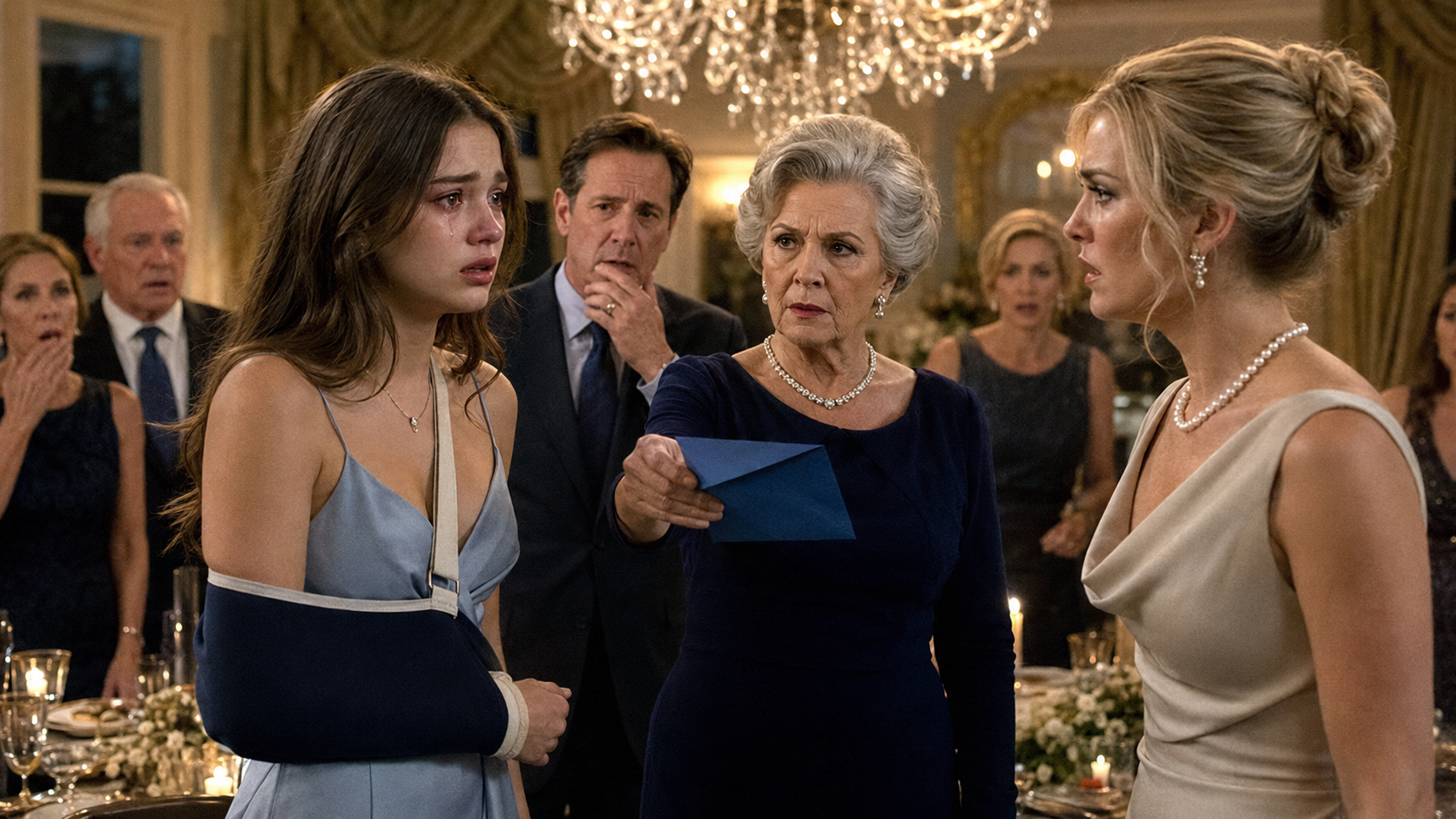
Grandma Ruth walked toward me first.
She touched my shoulder gently.
“Are you in pain?”
I nodded once.
My father finally looked at me.
“Lila said she was fine.”
I laughed before I could stop myself.
It came out sharp and small.
Serena’s eyes flicked toward me.
“Sweetheart, you insisted on helping.”
I lifted my head.
“No. You said if I really wanted this family to heal, I’d stop acting like a guest in my own home.”
The room became quiet enough that I could hear ice melting in someone’s glass.
My father’s jaw tightened.
“Lila.”
There it was.
The warning voice.
The same voice he used when I was eight and spilled juice on legal papers. The same voice he used when I was fifteen and came home late. The same voice he had used after Mom died whenever I cried too loudly, asked too many questions, or said Serena’s name with too much truth in it.
But I was nineteen now.
My mother was dead.
And my father’s warning voice no longer scared me as much as his silence did.
Serena stepped forward.
“I think this is grief talking.”
Grandma Ruth turned to her.
“No, Serena. Grief is honest. This is what happens when everyone else has been lying.”
My father moved quickly then, coming around the table with his palms open.
“Mom, enough. We are not doing this here.”
Grandma’s hand went into her handbag.
“I agree.”
For one strange second, relief crossed my father’s face.
Then Grandma took out the blue envelope.
“We should have done it months ago.”
Serena stopped touching the pearls.
My father’s eyes dropped to the envelope.
Something changed in his face.
Not confusion.
Recognition.
Fear.
Grandma held the envelope against her chest.
“Marian gave this to me eight days before she died.”
The air left the room.
My fingers curled around the edge of the table.
My mother’s name had become something people handled carefully, like antique glass. Serena avoided it unless she wanted sympathy. My father only said it when he needed to sound wounded. But Grandma said it like my mother was still standing somewhere nearby, listening.
Serena swallowed.
“Ruth, Marian was very sick near the end.”
“She was dying,” Grandma said. “She was not blind.”
My father’s voice dropped.
“Don’t.”
Grandma looked at him.
“You should have thought about that before you gave another woman your wife’s pearls.”
The pastor lowered his eyes.
A woman near the fireplace whispered, “Oh my God.”
Serena’s hand flew to her necklace.
“These were a gift.”
“No,” Grandma said. “They were stolen.”
My father snapped, “That is a disgusting accusation.”
Grandma opened the envelope.
Her fingers did not tremble.
Mine did.
Inside was a folded letter on pale blue paper.
My mother’s paper.
She had used that stationery for thank-you notes, birthday letters, grocery lists when she felt fancy. The sight of it hit me harder than I expected. Suddenly I was ten years old again, watching her write my name on a lunch bag with a purple pen. Suddenly I was seventeen, sitting beside her hospital bed while she wrote slowly because her hands had begun to shake.
Grandma unfolded the letter.
“My darling Lila,” she read.
My lungs forgot how to work.
Across the room, my father shut his eyes.
Serena stared at the pearls in her own hand as if they had turned hot.
Grandma continued.
“If this letter is being read aloud, it means the thing I feared has happened. It means your father has tried to move forward so quickly that people have mistaken his speed for healing. It means Serena is still standing close enough to my life to pretend she was invited into it.”
Serena made a broken sound.
“That’s cruel.”
Grandma did not look up.
“I have known for months that something was wrong. I knew when your father stopped coming home on time. I knew when Serena began answering questions before I asked them. I knew when she touched my things like she was practicing.”
The guests were frozen.
Not polite frozen.
Trapped frozen.
My father gripped the back of a chair.
“She was paranoid. The medication—”
Grandma lowered the letter.
“She wrote this before the stronger medication started.”
He said nothing.
That silence said more than any confession.
Grandma looked back at the page.
“Lila, I am sorry. Not because I am leaving you. I fought to stay. I am sorry because I saw what they were doing, and I still hoped love would shame them into stopping.”
Something inside me cracked.
I had spent eleven months wondering if I was cruel for hating Serena.
Wondering if grief had made me unfair.
Wondering if my father was just lonely.
Wondering if I was the problem because I could not clap for the woman who had moved into my mother’s life before the sheets were cold.
But my mother had seen it too.
She had seen everything.
Grandma read on.