They say weddings unite families, but mine nearly split ours apart. I thought the hardest part would be watching my daughter marry my ex-husband—until my son pulled me aside and told me something that changed everything.
I never imagined I’d live to see my ex-husband marry my daughter. I certainly didn’t expect the truth to crash down on their wedding day—delivered by my own son—in a way so public my knees actually shook.
But none of it makes sense without how it all began.
I married my first husband, Mark, when I was twenty. It wasn’t some sweeping romance. It was… expected. Our families were old-money, country-club types. Reputation was currency, appearances were law, and “suitable matches” were treated like a sport.
Our parents vacationed together, served on the same charity boards, appeared in glossy gala spreads, exchanged carefully curated Christmas cards, and spoke about our future as if it had already been scheduled. When Mark slipped a ring onto my finger, it felt less like a proposal and more like a formal confirmation of what had been planned for years.
I walked down the aisle in a gown my mother chose, in a venue my parents adored, surrounded by people who thought they knew us. We were the polished couple everyone expected—gliding into the life our families had mapped out.
For a while, we played our parts. I had Rowan the year we married, and our son Caleb two years later. We mailed holiday cards in matching outfits, hosted tasteful dinner parties, and smiled for photos in front of a home with trimmed hedges and carefully selected art.
On paper, we looked perfect.
Inside, we were slowly suffocating.
We didn’t even fight, which somehow made it worse. We never learned how. Conflict felt dangerous, like it might stain the family name. So instead of arguments, we had silence. Instead of honesty, we performed. You can’t fix what you refuse to face, and we never looked directly at the empty space where love was supposed to live.
After seventeen years, we signed divorce papers with less emotion than a PTA vote. Our parents were horrified. We were relieved. It wasn’t dramatic—it was numb. But at least it was real.
Five years later, I met Arthur.
He felt like oxygen after years spent in a sealed room. He was thirty-eight, divorced, raising three children. A high school teacher who loved poetry and classic cars—not portfolios or board seats. He listened when I spoke—truly listened. We sat over coffee for hours, trading stories about parenting, regrets, and the absurdity of dating in our forties.
He wasn’t polished. He wasn’t perfect. And that, more than anything, pulled me in.
We married quickly—maybe too quickly. It felt like falling into something soft after years of walking on glass. For six months, we tried to blend lives, children, and histories. There were no explosions, no affairs, no scandal. Just a slow, confusing unraveling.
Arthur started pulling away—not emotionally at first, but practically. Fewer date nights. Less talk about the future. Plans that simply… disappeared. I told myself it was the strain of blending families. I told others the divorce was mutual. I even half-believed it.
Then, two years later, my daughter sat me down and told me she was in love.
We were in my living room. Rowan—twenty-four then—looked lit from within. She’d always been ambitious and stubborn in both the best and worst ways: MBA, fast-track marketing job, the kind of young woman who set a goal and bulldozed anything in her path.
“I’m in love,” she said, eyes shining.
I smiled automatically. “That’s wonderful, sweetheart. Who is he?”
“It’s Arthur,” she said.
For a moment, my mind refused to accept the name.
“Arthur… who?” I asked, even though I already knew.
She gave me a pointed look. “You know who.”
“My Arthur?” I managed.
She nodded, cheeks flushed. “It just happened. He reached out. We talked. He always understood me. And now that you’re not together…”
Her voice kept going, but it felt distant, like I was hearing it through water. All I could grasp was the reality: my twenty-four-year-old daughter was dating my forty-year-old ex-husband.
Sixteen years older than her.
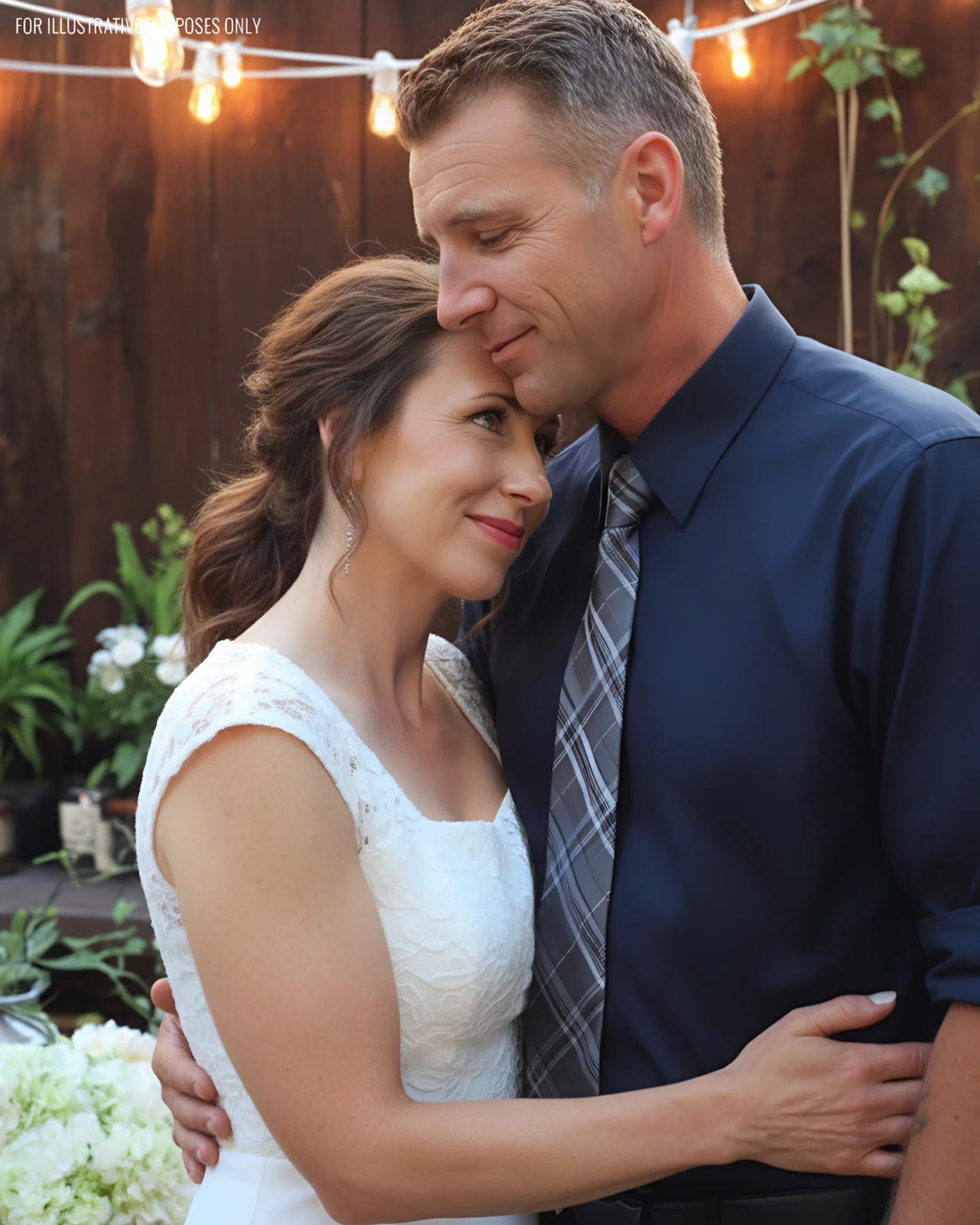
A man who had been my husband.
Every instinct in me screamed to stop it—to forbid it, to pull her away from whatever she thought this was.
Instead, she cut through me with one clear threat.
“You either accept this,” she said, eyes hard, “or I cut you out of my life.”
I could have argued. I could have pleaded. But I knew what I couldn’t survive: losing my daughter.
So I did something I still don’t fully forgive myself for.
I swallowed my horror, my unease, and I lied.
“I support you,” I told her.
A year later, I stood in a beautifully decorated venue—eucalyptus garlands draped overhead, soft jazz floating from hidden speakers—watching my daughter walk toward the man I had once promised forever.