I stood.
Walked past him.
Walked down the hall.
Walked into the small office where he kept his desk.
In 12 years of marriage, I had never gone through his drawers.
I opened the top one.
Appointment cards.
Medical pamphlets.
A folded lab report.
I unfolded it.
The final line was highlighted.
“No evidence of malignancy. Recommend routine follow-up in 12 months.”
My stomach dropped.
The report was dated three weeks earlier.
I stared at it.
Then I stared at the date again.
Three weeks.
Three entire weeks.
My husband appeared in the doorway.
“You got the results.”
His shoulders slumped.
“I was going to tell you.”
“Three weeks ago.”
“I wanted a second opinion.”
“And?”
“And Mom kept saying you were overwhelmed already. She kept saying even good news would stress you out. She said to let things settle down first.”
I looked at him.
Really looked at him.
“Your mother convinced you not to tell your wife that your cancer scare was over.”
He dropped his eyes.
“I know.”
“Meanwhile, she was telling relatives you were dying.”
His head snapped up.
“What?”
The doorbell rang.
I already knew who it was.
Grandma stood on the porch holding a casserole dish and wearing her church smile.
The one she wore when she wanted everyone to believe she was helping.
“I thought I’d bring dinner.”
“Come in.”
She stepped inside.
Set the dish on the counter.
Then, immediately turned to her son.
“How are you feeling today, sweetheart?”
He stared at her.
“Mom.”
She ignored the warning.
“I’ve been so worried about you.”
I watched her.
For the first time, I was not seeing concern.
I was seeing performance.
“I think it might be best if I stay here for a while,” she continued. “Just until everything settles down.”
There it was.
The thing underneath everything else.
The thing I had been missing.
Every casserole.
Every folded towel.
Every whispered phone call.
Every crisis.
Every tragedy.
Every emergency.
Grandma needed to be needed.
If there was no problem, she created one.
If there was no victim, she found one.
If there was no crisis, she built one.
Because being the rescuer was how she stayed important.
I looked at her.
“You wanted everyone to need you.”
Her smile faltered.
“What?”
“You wanted to be the one holding the family together.”
“That’s ridiculous.”
“You couldn’t stand the idea that everything was fine.”
Her expression tightened.
“I was trying to help.”
“No. You were trying to matter.”
The room went silent.
My husband stared at his mother.
For once, she had no immediate response.
I stepped into the hallway and called the clinic.
The receptionist confirmed the results.
Clear.
Three weeks earlier.
Then, I asked one more question.
“Has anyone besides my husband called regarding his file?”
A brief pause.
“His mother called twice last week.”
I thanked her and hung up.
When I returned to the kitchen, Grandma was rearranging our spice rack.
Like she lived there.
Like she belonged there.
“You called the doctor.”
She froze.
“I was worried.”
“You called twice after his results came back clear.”
“I don’t know what you’re talking about.”
“Really?”
I looked at my husband.
Then back at her.
“You told relatives he was dying.”
“I never said that.”
“You told Linda he had months.”
The blood drained from her face.
That was all the answer I needed.
“You let Nicole believe her father was dying.”
Grandma’s hand flew to her chest.
“I would never hurt that child.”
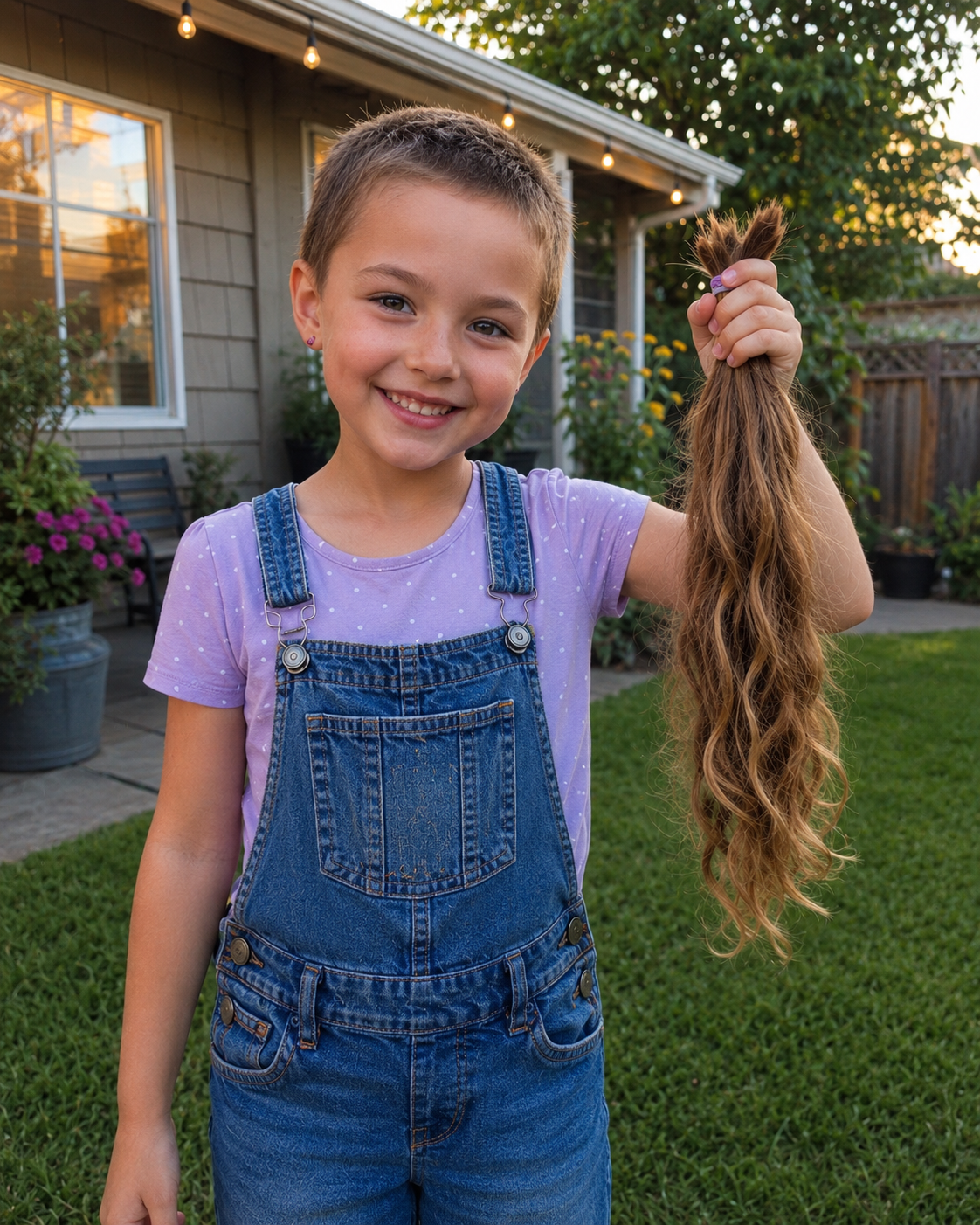
“Our six-year-old cut off her hair because she thought she was saving her father.”
The room went still.
For the first time all afternoon, Grandma had nothing to say.
She looked at her son.
Waiting.
Expecting rescue.
The way she always had.
But this time, he didn’t move.
He didn’t defend her.
He didn’t explain for her.
He didn’t soften the truth.
He simply looked tired.
“Mom.”
His voice was quiet.
“You need to go.”
Her eyes widened.
“Sweetheart.”
“No.”
“Please.”
“You don’t come back until you can tell the truth about what you did.”
She tried to cry.
She tried to explain.
She tried to make herself the victim.
None of it worked.
She left without another word.
The next morning, Linda called.
Not because Grandma called her, but because my husband did.
For the first time, he told everyone the truth.
By the end of the week, every relative who had spent weeks worrying about a terminal illness knew the scans had been clear all along.
And they learned exactly who had started the rumors.
Something changed after that.
People still loved Grandma, but they stopped treating her like the authority she had spent years pretending to be.
For the first time, nobody automatically believed her version of events.