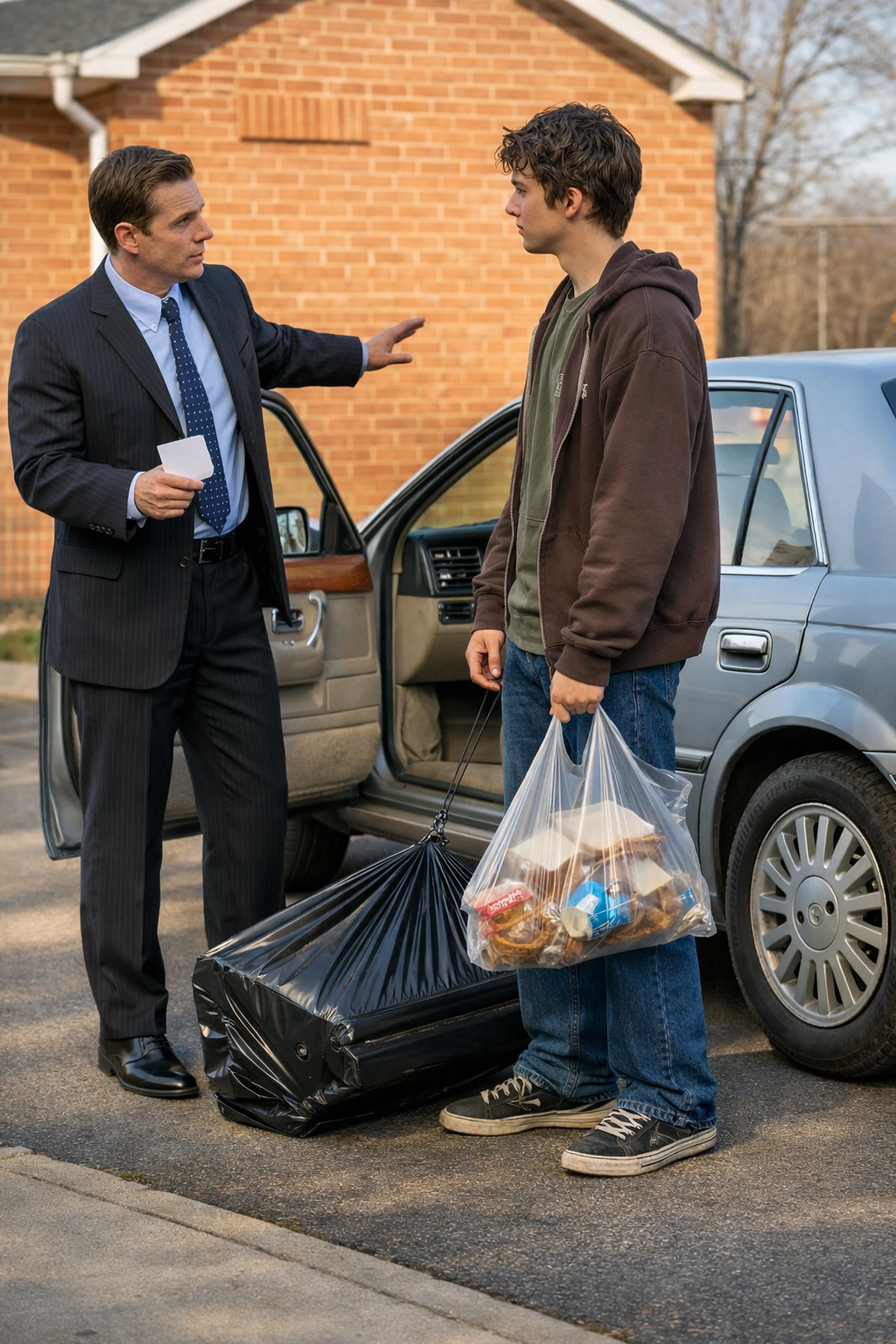
“Her name is Eleanor Vance. She was James’s closest friend for thirty years. A retired teacher, now seventy-three. She lives in the house you’ll be inheriting and has agreed to stay for the year to help you settle in.”
“And if I don’t agree?”
“Then the estate goes to charity. Every penny.”
It wasn’t really a choice. I was homeless, broke, desperate. Even if I’d had reservations about living with a stranger for a year, the alternative was going back to that parking lot, to sleeping in my car, to digging through dumpsters.
“Where do I sign?”
The house was a Victorian mansion on three acres with a wraparound porch and more rooms than I could count. When we pulled up the long driveway, a small silver-haired woman stepped out onto the porch, her bright eyes and warm smile radiating the kind of genuine kindness I’d almost forgotten existed.
“You must be Nathan,” Eleanor said, coming down the steps to meet me. “I’m Eleanor, but you’ll call me Ellie. Your grandfather talked about you constantly for the last six months. I feel like I already know you.”
“He talked about me?” I asked, stunned.
“Every day,” she said, her eyes glistening. “He was so proud of you, Nathan. So proud of the young man you were becoming despite everything. Come inside—you need a proper meal, a hot bath, and about twelve hours of sleep. You look like you need all three.”
She was right. I needed all three.
The year that followed was the strangest, most healing, most transformative period of my life. Eleanor—Ellie—wasn’t the clinical guardian I’d imagined. She was warm, present, endlessly kind. She treated me like family from the first day, making sure there was always food in the kitchen and clean sheets on my bed, sitting with me in the evenings to talk about everything and nothing.
The first few weeks were disorienting. I didn’t know how to behave in a house where someone actually cared about me. I would flinch when Ellie walked into a room, expecting criticism. I would apologize constantly for existing, for taking up space, for eating food.
“Nathan,” she said one evening after I’d apologized for the third time for sitting in the living room, “you live here now. This is your home. You don’t need to apologize for being in your own home.”
She told me stories about my grandfather—about growing up poor in rural Pennsylvania, building his construction company one house at a time, his marriage to my grandmother Ellen, who’d died fifteen years ago.
“He never got over losing her,” Ellie said. “Just like he never got over losing your father. He spent his last years with two holes in his heart, wondering what he’d done wrong, why the people he loved had left him.”
“My father left him,” I said slowly. “Not the other way around.”
“No, dear,” she confirmed. “Your father cut him off completely. James tried everything to reconnect—letters, phone calls, even showing up once. Your father called the police and had him removed from the property.”
She squeezed my hand. “Your grandfather spent years wondering if he’d done the right thing, whether he should have just kept giving money, kept the peace at any cost. But he believed that enabling destruction wasn’t love. That sometimes the most loving thing you can do is say no.”
I thought about that constantly—about my grandfather drawing a line and losing his son because of it, about my father choosing his pride over his family, about all the choices that had led to me sitting in this mansion with a stranger who felt more like family than anyone I’d ever known.
I finished high school with honors that spring. Ellie sat in the front row at graduation, crying happy tears, holding a sign that said “Congratulations Nathan” in glittery letters. She threw me a small party afterward—just us and a few friends from school—with a cake and candles I actually got to blow out. It was the first graduation celebration anyone had ever thrown for me.
I enrolled in community college that fall, planning to transfer to a university later. I took the financial literacy course my grandfather had specified, learning about investments and budgeting and wealth management from an instructor who’d known my grandfather personally.
“Your grandfather believed that wealth was a tool, not a goal,” the instructor told me. “He said money should be used to build things, help people, create opportunities—that hoarding it was a waste of the gift you’d been given.”

I took those words to heart.
At the end of the year, Ellie signed the papers certifying I’d met all the conditions.
“You’ve grown so much,” she said, hugging me tight. “Your grandfather would be so proud.”
“Thank you,” I whispered. “For everything. For not giving up on me.”
“Oh, sweetheart,” she said, pulling back with wet eyes. “You’re the one who didn’t give up. You survived everything they threw at you and came out stronger. I just provided a soft place to land.”