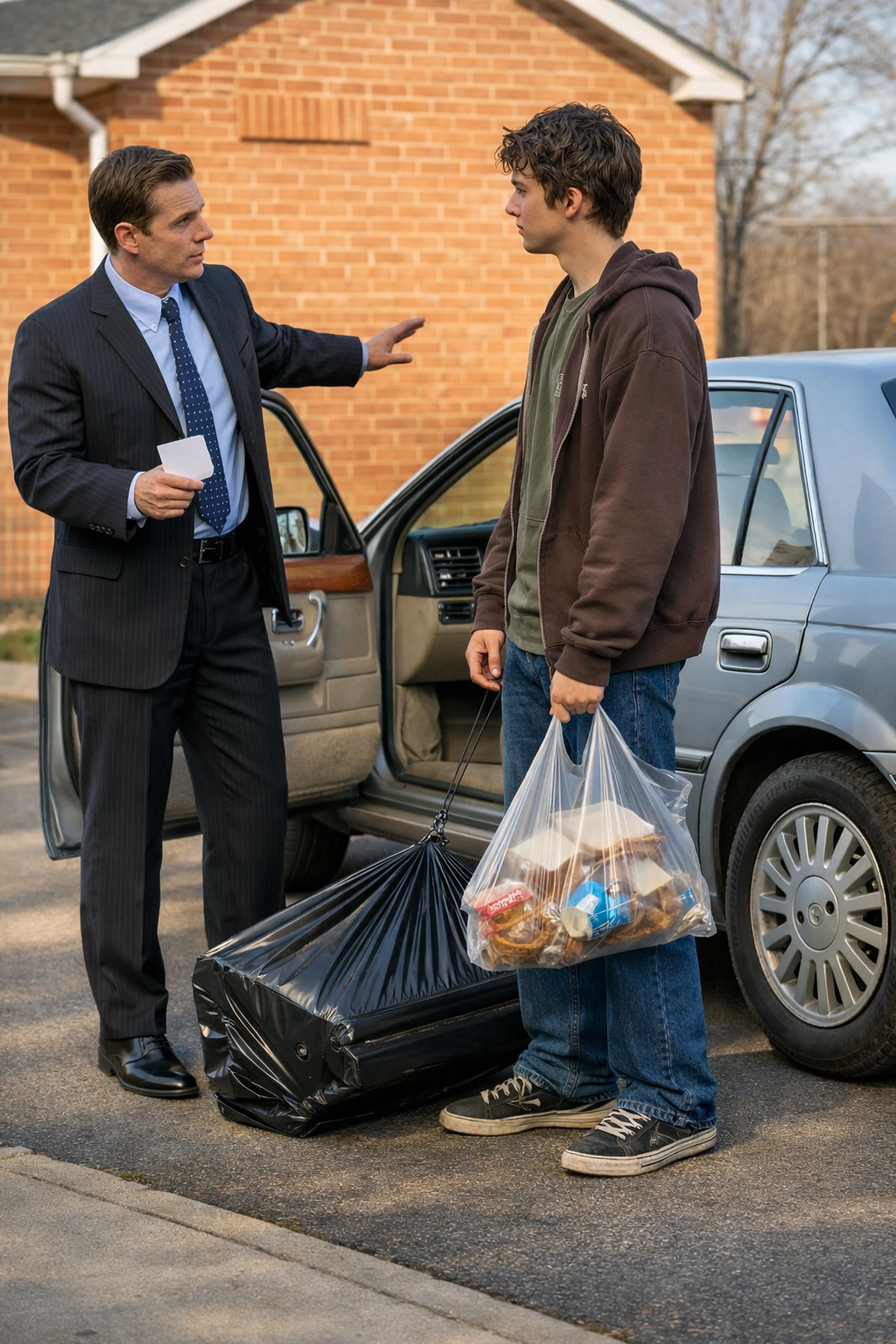
“Garbage bags,” I repeated, the detail somehow more devastating than the eviction itself.
“We didn’t see the point in wasting good luggage,” Patricia said, her voice carrying that particular tone of false reasonableness she’d perfected over the years.
I sat there, trying to process what was happening. Eighteen years of being unwanted, and it was finally official. They were throwing me away like trash, right down to the garbage bags they’d packed my belongings in.
“What about my money?” I asked, thinking about the box under my bed, the three thousand dollars I’d earned and saved and protected. “I have savings.”
Patricia’s smile widened like she’d been waiting for this question. “We needed that for Tyler’s college applications. You understand—he has such a bright future ahead of him. Consider it back rent for all the years we’ve supported you.”
They had stolen my money. Three thousand dollars I had worked for, saved for, built my entire escape plan around—gone. Taken to fund the future of the boy who’d tormented me for thirteen years.
“That was my money,” I said, my voice shaking. “I earned it.”
“You earned it while living under our roof, eating our food, using our electricity,” my father said, his voice cold and final. “We’re being generous by not charging you more.”
I wanted to scream. I wanted to throw things, to make them understand the magnitude of what they were doing. But I’d learned long ago that showing emotion in this house only made things worse, that revealing pain gave them ammunition.
So I stood up. I walked to the front door. I picked up the three garbage bags that contained everything I owned in the world.
And I walked out.
“Happy birthday, Nathan!” Tyler called after me, laughing.
The door slammed shut behind me with a finality that echoed in my chest.
I stood on the porch for a long time, holding those garbage bags, trying to figure out what to do next. I had no money. I had no family. I had nowhere to go. The morning sun was painting the suburban neighborhood in soft gold light, and everyone else was probably still sleeping, dreaming normal dreams about normal lives.
I had never felt more alone.
Eventually, I walked to school because it was the only routine I had left. I hid the garbage bags in my locker, cramming them into a space never designed to hold a person’s entire life. I went to classes and pretended everything was normal, taking notes, answering questions when called on, acting like this was just another Tuesday.
After school, I retrieved my bags and walked to my car—a fifteen-year-old sedan I’d bought two years ago with my own money. It barely ran, with a transmission that ground and an engine that knocked, but it was mine. The only thing in the world that was truly, legally mine.
I sat in the driver’s seat and cried for the first time in years. Great, heaving sobs that seemed to come from somewhere deep inside me, somewhere I’d kept locked away for so long I’d forgotten it existed.
When the tears finally stopped, I started the car and drove away from everything I’d ever known.
The next nine days were a brutal education in how quickly a life could fall apart.
I slept in my car, moving to different locations each night—Walmart parking lots, highway rest stops, quiet residential streets where nobody would notice a teenager sleeping in a beat-up sedan. I learned that you couldn’t stay in one place too long, that police officers would knock on your window at two in the morning and tell you to move along, that some neighborhoods called the cops on anyone who looked like they didn’t belong.
I showered at the school gym before classes, arriving at six in the morning before anyone else was there, standing under hot water until it turned cold, trying to feel human again. I ate whatever I could find, which wasn’t much. The free lunch program helped on weekdays, and I would save half of it for dinner. On weekends, I went hungry.
I applied for jobs everywhere—fast food restaurants, retail stores, warehouses, anywhere that might hire an eighteen-year-old. But nobody wanted to hire a homeless teenager with no permanent address, no phone number that worked reliably, no references except teachers who didn’t know I was living in my car.
I looked into shelters, but they were full. I looked into social services, but the waiting lists were months long. The systems designed to catch people like me had too many holes, and I fell through all of them.
By day nine, I was desperate. My car had run out of gas two days earlier, stranding me in that strip mall parking lot. I’d walked to school from there—over an hour each way—but I was too weak now to make the trip. I hadn’t eaten in almost forty-eight hours. The world felt like it was tilting, colors too bright and sounds too loud.
That’s when I found myself behind that restaurant, digging through the dumpster, looking for anything with calories. Bread that was only slightly stale. Vegetables thrown out because they weren’t pretty enough to sell. Anything that would keep me going for one more day.