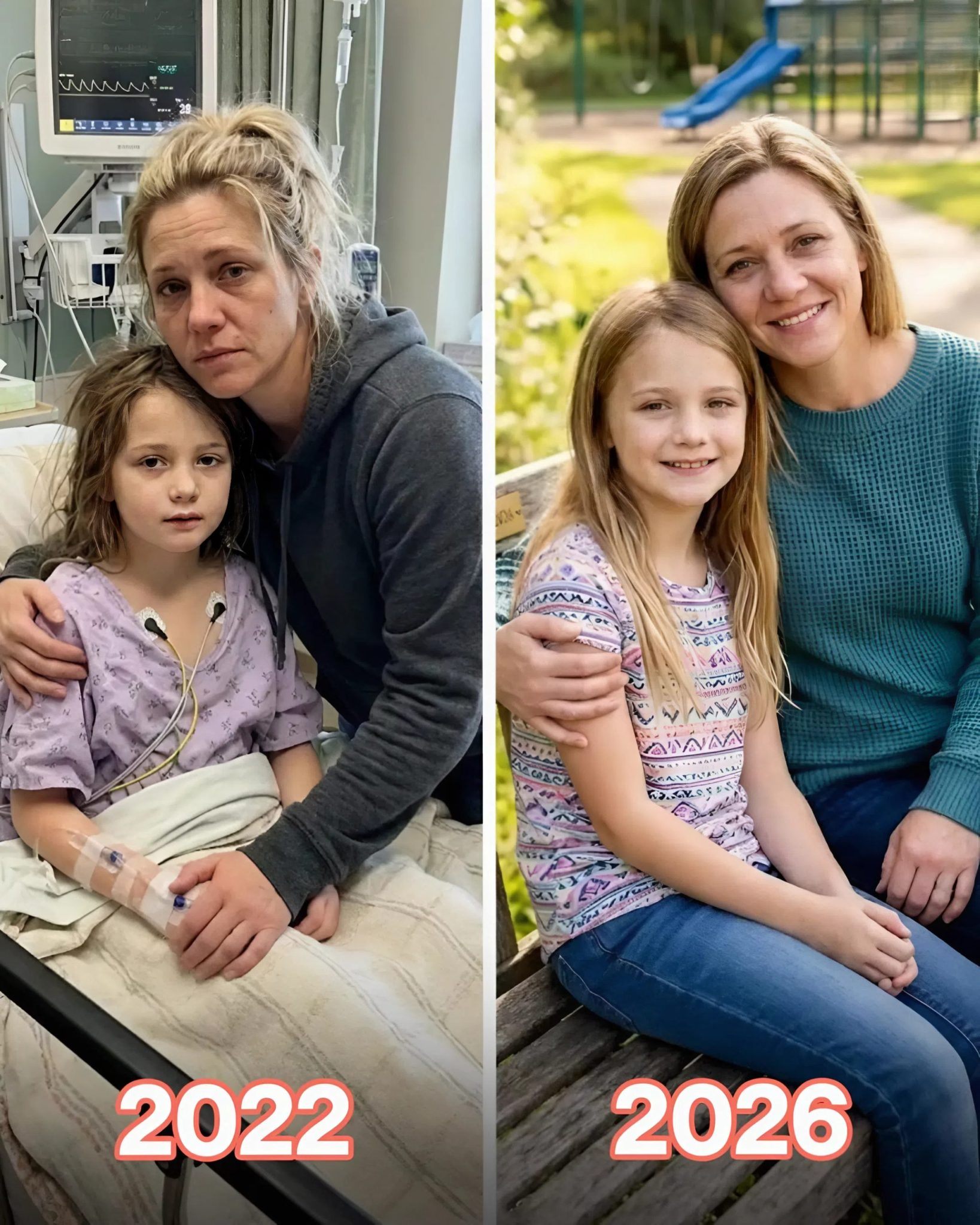
I nearly scrolled past it. Then I looked at the background.
I nearly scrolled past it.
On the left side of the frame, barely in focus, a man in a dark suit was sitting in one of the waiting area chairs with his hands resting on his knees.
On the right, at the billing counter, a woman was bent over the desk with her forehead on her arms.
That woman was me.
Brad had been there. He had watched the whole thing, and then he’d walked out and wired $140,000 before lunchtime.
Brad had been there.
After leaving Jenny at school the next morning, I requested the payment documentation from the hospital’s billing department. It took two days and a formal records request, but they confirmed it: the anonymous wire came from a trust account created the same morning as Jenny’s surgery.

One authorized signer. Funds sourced from a liquidated investment account.
The trust was named after a woman I didn’t recognize. Brad was the only name on the authorization.
Why would he help me? Who was this man? And why did he think he owed me anything?
I needed answers.
Why would he help me?
Brad’s company occupied the top two floors of a glass building when I drove there immediately. The receptionist called up to his office and came back looking mildly surprised.
“He said to send you up.”
Brad was standing when I walked in, jacket off, sleeves rolled to the elbows, and he had the expression of a man who had been expecting this visit and had decided to be glad it finally came.
“You found me!”
“You weren’t that hard to find,” I replied, and set the hospital documents on his desk.
Brad’s company occupied the top two floors of a glass building.
He looked at them without touching them. Then he looked at me.
“Will you come somewhere with me, Laurel? I’ll explain everything. But I need to show you something first.”
Every sensible instinct I had said to stay in that office, in a building full of people, and demand answers across a desk like a normal person.
“Okay,” I agreed. Because four years is a long time to wait for an explanation, and I was done waiting.
“Will you come somewhere with me, Laurel?”
Brad drove us to a cemetery on the north edge of the city. A quiet, well-kept place that felt like it existed slightly outside of ordinary time.
He stopped beside a grave with a small granite marker and stood there for a moment with his hands in his pockets.
“My father. He died last year.”
Brad told me that four years ago, his mother had been admitted to the hospital with a cardiac episode. His father visited every day. Brad came as often as he could between meetings.
He’d watched me in the waiting area.
And during that week, he’d watched me in the waiting area, not because he was paying close attention, but because I was hard to miss.
“You talked to people,” he revealed. “Families who were scared and sitting in those plastic chairs at 10 at night. You’d sit down next to them and just talk. You cared.”
“I barely remember that week.”
“My father remembered it. And he remembered you from somewhere else, too.”
He told me the rest slowly, as if he’d been carrying it for a long time and was being careful not to drop it.
“He remembered you from somewhere else.”
Almost a year before Jenny’s surgery, Brad’s daughter, Maisie, had been riding her bike at the local park when a car coming out of a side lot didn’t see her. Someone pulled her out of the way at the last second.
That someone had refused any kind of thanks, waved off his father’s offered reward, and walked away before anyone got her name.
“It was you, Laurel,” Brad added. “My father tried to find you for months. He never could. And then he saw you in a hospital waiting room.”
Someone pulled her out of the way at the last second.
The memory arrived slowly at first, and then all at once: a little girl, a red bike, and the sudden, hard sound of tires. I’d acted before I’d thought about it.
The girl’s grandfather had been shaking when I handed the girl back to him, and I remembered being uncomfortable with his gratitude and just wanting to leave.
And then Jenny had gotten sick, and that whole year had compressed into something I could barely see.
“I didn’t remember,” I told Brad. “I genuinely didn’t remember.”

He nodded like that was exactly what he’d expected me to say.
I remembered being uncomfortable with his gratitude.
“I was with my father when he saw you at the hospital billing counter. He recognized you immediately. He told me you were the woman who had saved my daughter. Then he looked at me and said, ‘Find out what she needs and fix it.’ I promised him I would.”
“So you paid $140,000 because your father recognized me.”
“Yes, I did. Because the day someone saves your child, you don’t just say thank you and move on. You protect their child, too.”
Brad looked down at his father’s grave. “He believed that kindness always finds its way back.”