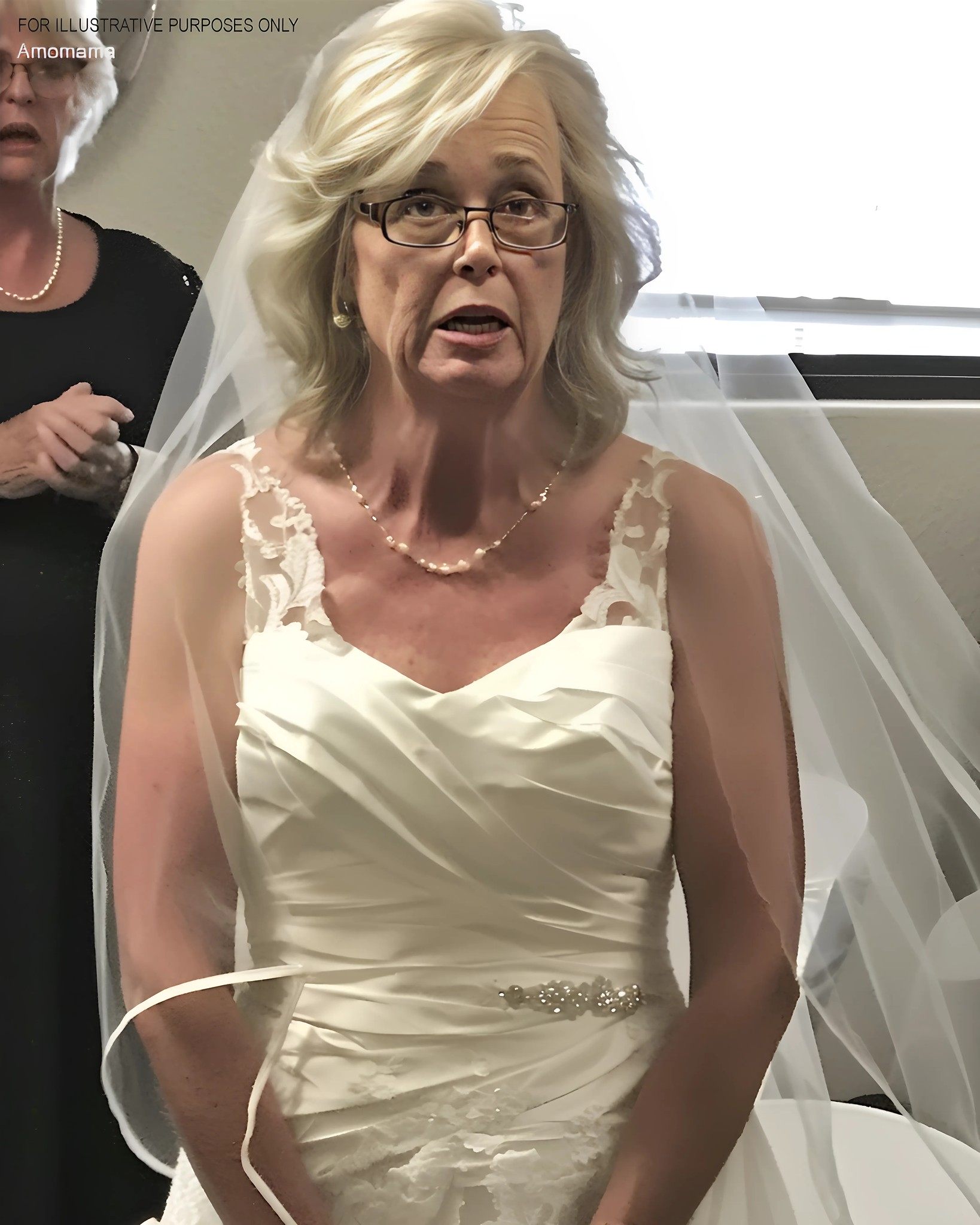

Leona and the rest of the family never bothered to learn anything about my culture. They assumed the wedding would be a traditional ceremony, but Jeremy and I planned to combine traditions. So when all the women, including Diana, arrived in white, I smiled and complimented their outfits. It didn’t go unnoticed.
Meanwhile, my outfits were every color imaginable, and I outshone them in all the photos. There’s even one photo of Leona with the most sour expression I’ve ever seen. It was a wonderful day.

But an unspoken feud flared up last Christmas when Leona asked me to be the host. Of course, I agreed, even though I knew she only offered because she hoped I would be in high demand. Fortunately, she didn’t take into account that I cook often, and have done so since childhood. So my dishes were quite a surprise.
Mashed potatoes, macaroni and cheese, turkey, glazed ham, Brussels sprouts, green bean casserole, roasted carrots and potatoes, freshly baked bread, cornbread, and a whole assortment of pies. Even I was impressed. But, of course, when her plan fell apart, Leona did the next thing. She started yelling at me.

“You must be kidding! How could you do this?! I know you hired a catering company, Alea! Just to make me look bad. Admit it!”
Surprised by her undisguised anger, I looked at her, then at Jeremy. Fortunately, he intervened.
“Mom, Alea worked for two days to make sure we had a great Christmas dinner. I don’t think you’re being very mature or fair. She was just being a good hostess, and you’re accusing her of being petty, like a child who hoped to outdo someone. I think you should apologize to her, or you’d better leave.”
“Mom, Alea worked hard for two days to make sure we had a wonderful Christmas dinner. I don’t think you’re acting very mature or fair. She was just being a good hostess, and you’re accusing her of being petty, like a child who wanted to outdo someone else. I think you should apologize to her, or you’d better leave.”

There was a long pause. Everyone wondered what would happen next, holding their plates in their hands.
Leona sighed deeply and looked at me. “You win,” she muttered and sat down dejectedly. Before Jeremy could say another word, I walked over to my mother-in-law, knelt in front of her, and took her hands in mine. “Leona, this isn’t a competition. I love your son very much and don’t want this cold war between us.”

She looked at me with newfound respect, and I knew the hatchet had been buried. The war between us ended with a big hug and a great dinner, and although we still disagree on many things, we have grown very fond of each other over the past few months.
Here’s a similar story about a woman who tested her mother at Christmas.

Am I wrong to test my mother-in-law at Christmas?
When navigating the complex tapestry of family relationships, it sometimes feels like walking through a minefield blindfolded. My story—a chapter from my life diary—is connected to Christmas, which was unique in its own way and opened my eyes and my heart. My name is Sue, and this story is not only about family ties, but also about the silent battles we fight in the name of love and acceptance.
I married Richard, the love of my life, in a secret ceremony. It was just the two of us, exchanging vows in the most intimate setting. Richard comes from a privileged background, which contrasts sharply with my modest origins. As a black woman, I have faced difficulties and prejudice, which makes my achievements even more gratifying, as I have built a successful career despite all the obstacles.
Richard’s mother, Diana, remained a mystery to me. We were not acquainted due to our quiet wedding, and while Richard shared stories, I longed to form my own impression. The opportunity arose during our first Christmas as a married couple. Wanting to understand the woman who shaped the man I love, I came up with a plan: I would give Diana two gifts—one sentimental and one luxurious—to reveal her true nature.
The sentimental gift was a hand-painted stone with an image of her beloved cat, a sign of care and attention. The luxurious gift was a luxurious Gucci handbag, a symbol of the material wealth she was accustomed to. My hypothesis was simple: her reaction to these gifts would reveal the depth of her character.

Christmas Eve arrived, and with it, anticipation and nervous excitement. Diana’s reaction to the painted stone was polite indifference, thinly veiled contempt for its simplicity and apparent cheapness. The moment was awkward, a reminder of the invisible barriers that still stood between us.
Then it was the turn of the Gucci handbag. Diana’s eyes lit up at the sight of this item, a glimmer of approval appeared in them, until skepticism crept in: she was checking the bag for authenticity. Her remarks to Richard, who assumed that the bag had been bought with his money, stung with hints of my inadequacy and dependence.

Richard defended me quickly and firmly, asserting my financial independence and challenging his mother’s prejudices. It was a moment of solidarity, but also of revelation. Diana’s reaction reinforced my suspicions, but at the same time highlighted the difficulties we would face as a family.
That Christmas taught me valuable lessons about love, acceptance, and the complexity of family dynamics. It highlighted the prejudices we carry within us, sometimes subconsciously, and the need for open hearts and minds. Richard’s support became an anchor for me, a reminder that together we could weather any storm.
As for Diana, I hope that the Gucci handbag will serve as a constant reminder of the day she underestimated her sister-in-law. And somewhere, I can’t help but wonder about the fate of the painted stone, a silent witness to the unfolding drama of our lives.
Was I right in my approach? Perhaps not entirely. But it was a step toward understanding and, I hope, acceptance. After all, family is not only the bonds we are born into, but also those we choose to nurture and develop, despite the difficulties we may encounter.