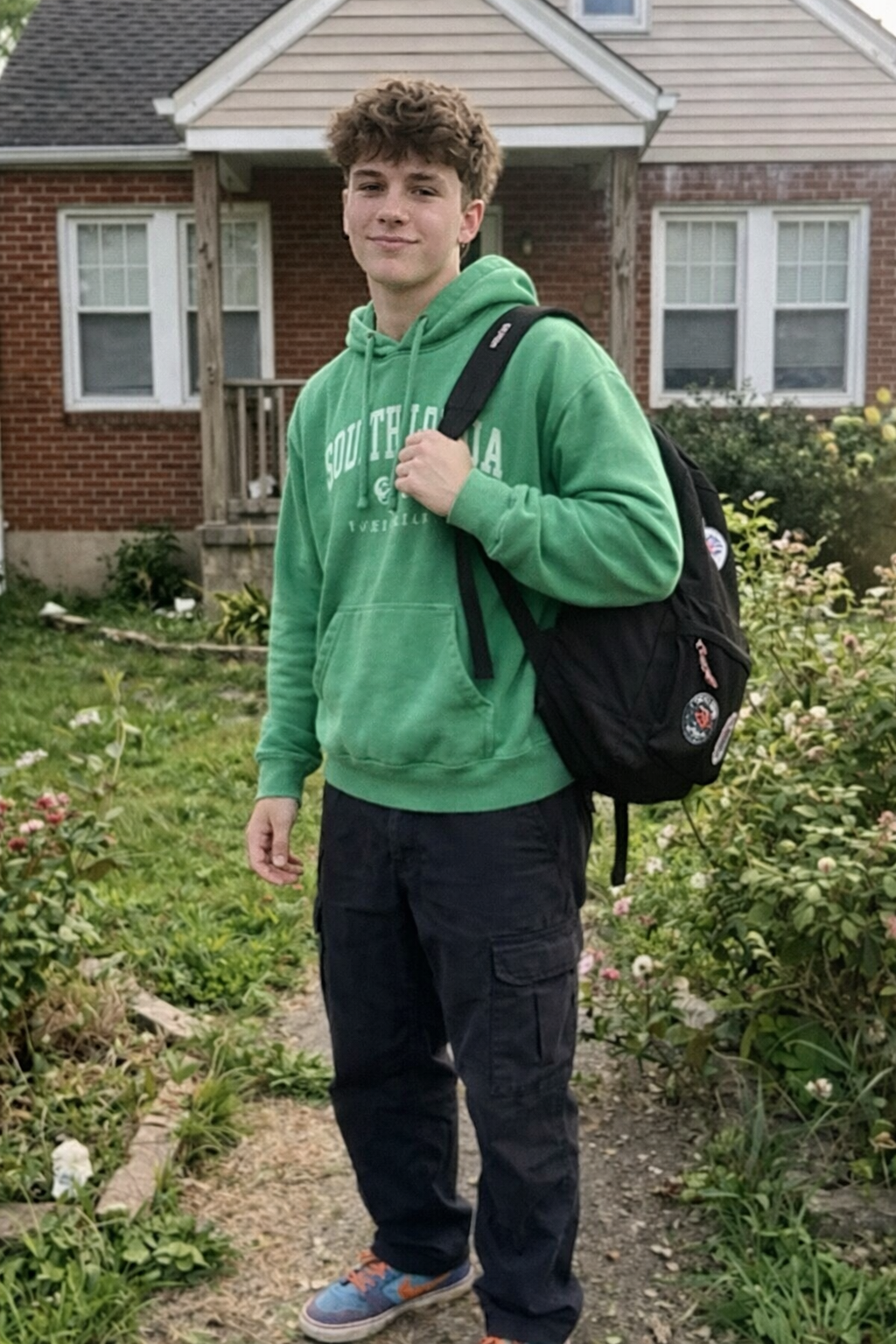
When my nineteen-year-old son sent me a message saying, “I’m so sorry, Mom,” and then his phone went silent, I tried to convince myself not to spiral. He was away at college. Technically an adult. But ten minutes later, when a call came through from a number I didn’t recognize, everything changed. By the time that conversation ended, I was already grabbing my keys, my hands shaking, my eyes burning with tears.
Tom had always been the kind of child who understood the true cost of things. Not just money — he noticed effort, time, quiet sacrifices. Even the ones people tried to hide.

When he was younger, I’d suggest grabbing pizza on a Friday night, and he’d gently refuse. “We’ve got food at home, Mom. It’s fine.”
I used to think that meant I had raised a kind, considerate boy. I didn’t realize that beneath that kindness was something heavier — guilt, carefully disguised as politeness.
That was who Tom had always been.
His father left when Tom was five. Not dramatically, not loudly — just… selfishly. As if he wasn’t breaking a family, just rearranging his own comfort. He insisted the woman from work was “just a colleague” until suddenly she wasn’t.
After some time, I stopped waiting for apologies from grown men. Instead, I poured everything I had into the one person who stayed.
My son.
Tom never demanded much. And that, in its own way, became a problem.
At fourteen, when he needed a new laptop, he first insisted the old one “still kind of worked,” only later admitting the screen blacked out every twenty minutes. When he got accepted into college, he apologized before he allowed himself to feel proud. Deep down, he never believed he could be someone’s happiness without also being their burden.
I thought things had gotten better once he left for college. He called often, sent pictures of questionable cafeteria meals, told me about professors he liked.
He sounded lighter.

But that message… it hit before I could even process it.
No explanation. No follow-up. Just five words:
“I’m so sorry, Mom.”
Tom had never apologized without a reason. Not when he broke a window at twelve. Not when he failed a chemistry test. Those words didn’t sit right — no matter how much I tried to dismiss the feeling.
I called him. Straight to voicemail. Again. Then his phone shut off completely.
I tried to stay calm. Maybe his battery died. Maybe he was in class.
But something deeper, sharper, older told me this wasn’t nothing. I knew my son too well.
I typed a message. Deleted it. Typed again. Deleted. Finally sent: “Call me right now.”
Ten minutes later — the call.
Unknown number.
“Hello… are you Tom’s mother?”
My chest tightened. “Yes. What happened?”
A pause. The kind that carries weight.
“Ma’am, I’m calling from your son’s college,” the man said. “He left something for you.”
“Left… what do you mean?”
“He asked me to contact you today. Said it was important.”
My pulse spiked. “Where is my son?”
“I don’t know,” he admitted. “He just left a box.”
That was enough.
I was already on my feet. If this were simple, Tom would’ve called me himself.
I grabbed my keys and left before doubt could catch up.
The campus looked painfully ordinary. Students walked around with coffee, laughing, living their lives — completely untouched by the panic clawing at me.

I parked crookedly and rushed toward the building.
A thin young guy in a gray hoodie was waiting outside.
“You’re Tom’s mom?” he asked.
“Yes. Where is he?”
“I don’t know. He just asked me to give you this.” He held out a box. “Said I had to make sure you got it today.”
“When did you last see him?”
“About a week ago… He hasn’t been coming to class.”
My stomach dropped.
“I thought you knew,” he added quietly.
That hurt more than anything else. I didn’t know. I was already behind in a story my son had been writing without me.
I took the box and hurried back to my car. I couldn’t open it there.
Inside, I locked the doors and placed it on my lap.
At the top was a watch. A simple women’s watch — new, carefully chosen.
Underneath, an envelope.
“MOM.”
My hands trembled as I opened it.
“Mom, thank you for everything you’ve done for me. You gave me everything — especially your time. So I’m giving it back. You need to forget about me and the past. Just live.
Please don’t try to find me.
— Tom”
I read it once. Then again. Then again.
And slowly, painfully, I understood.
The watch wasn’t a gift.
It was repayment.
He thought he was freeing me.
That was the moment confusion turned into anger — not at him, but at everything that had taught my son his worth was measured by how much he sacrificed.
If he believed I wouldn’t look for him, then he didn’t understand who raised him.
I drove to his apartment. He had moved out a week ago.
Planned.
Organized.
Gone.