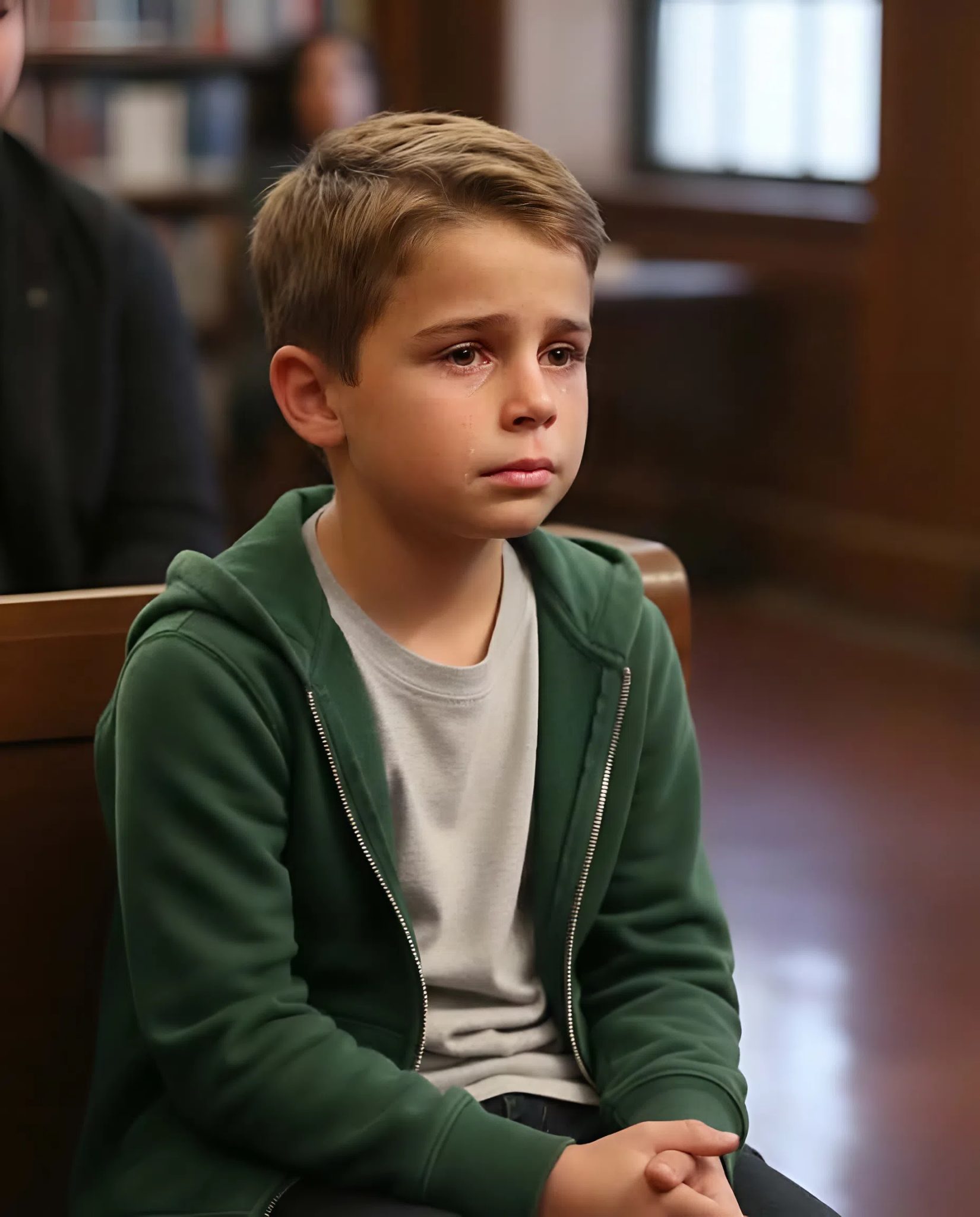
Mój mąż próbował zostawić mnie z niczym – wtedy mój dziesięcioletni syn powiedział w sądzie coś, co sprawiło, że w całej sali zapadła cisza

For years, I fought to keep my marriage intact. I kept telling myself that if I just held on a little longer—if I worked harder, sacrificed more—things would eventually get better. I never imagined how quickly everything I had built could be turned against me.

My name is Melissa. And just three weeks before my life fell apart, I paid off my husband Aidan’s $300,000 debt.

It took me years to get there. Years of believing that by helping him, I was protecting our family. I worked extra hours, sold anything of value, and cut back on every nonessential expense. I kept repeating the same thought in my mind: this is temporary.

That once it was done, we’d finally have peace.
The day I made the final payment, I sat alone at the kitchen table, staring at the confirmation email. My hands were shaking—but for the first time in a long while, I felt lighter.

That evening, when Aidan came home, I told him the news, expecting relief—maybe even gratitude.

Instead, he looked at me and said coldly,
“Well… FINALLY. I’m divorcing you. I’m so SICK of you.”

I froze, waiting for him to explain, to soften it, to take it back.

He didn’t.

He walked past me, grabbed a suitcase, and began packing as if he had already rehearsed this moment.

“Are you serious?” I asked, my voice barely steady.

“I’ve been serious for a long time,” he replied without even looking at me.

That same night, he walked out.

By the next morning, I learned from a mutual friend that he had already moved in with another woman. The speed of it made one thing clear—this hadn’t been sudden. It had been planned.

Two days later, while I was still trying to process everything, a legal notice arrived.

Aidan wasn’t just filing for divorce.

He was asking for everything.

The house we had bought together. The car. Even the jewelry he had once given me—things I had always seen as part of our shared life.

And then I saw the part that made my chest tighten.

He was seeking full custody of our son, Howard.

It didn’t make sense.

He had barely been present for years. Always “busy.” Always somewhere else.

And now—suddenly—he wanted our child?

That was the moment something inside me shifted.

Aidan hadn’t just left.

He had been preparing for this while I was exhausting myself trying to clean up his mess and save our marriage.

Most of my savings were gone—spent fixing problems I hadn’t created.

The weeks leading up to the court hearing felt heavy, almost suffocating.

I managed to find a lawyer willing to take my case pro bono. We went through every document we could find, searching for anything that might reveal the truth. But compared to Aidan’s resources, it felt like nothing.

“He’s hired one of the top attorneys in the state,” my lawyer, Steve, told me. “We’ll have to stay focused.”

Focused didn’t feel like enough.

Every night, after Howard went to bed, I sat alone surrounded by paperwork, trying to build a defense out of what little remained.

But nothing felt strong enough.

The night before the hearing, Howard came into my room.

I hadn’t heard him enter. He just climbed into bed beside me, like he used to when he was younger.

I held him tightly—and broke down.

Not because of the house. Not because of the money.

Because of him.

“I’m so sorry you have to go through this,” I whispered.

“Don’t worry, Mom,” he said softly. “I won’t let him hurt you.”

I swallowed hard.

He was only ten.

There was nothing he should have to do.

Still, I held him closer, even though deep down I knew—it would take something extraordinary to change what was coming.

The next morning, we walked into court.

Aidan was already there—calm, composed, almost confident, like the outcome was already decided.

His lawyer stood beside him, flipping through documents with quiet assurance.

Howard sat behind me, silent.

Aidan’s lawyer began.

His voice was smooth, controlled. He painted a version of me that didn’t exist—unstable, irresponsible, incapable of providing a healthy environment. He suggested I had damaged the marriage and failed as a mother.

I sat there, listening to my life being rewritten in real time.

I wanted to interrupt.

I didn’t.

And then—something unexpected happened.

A small voice broke through the room.

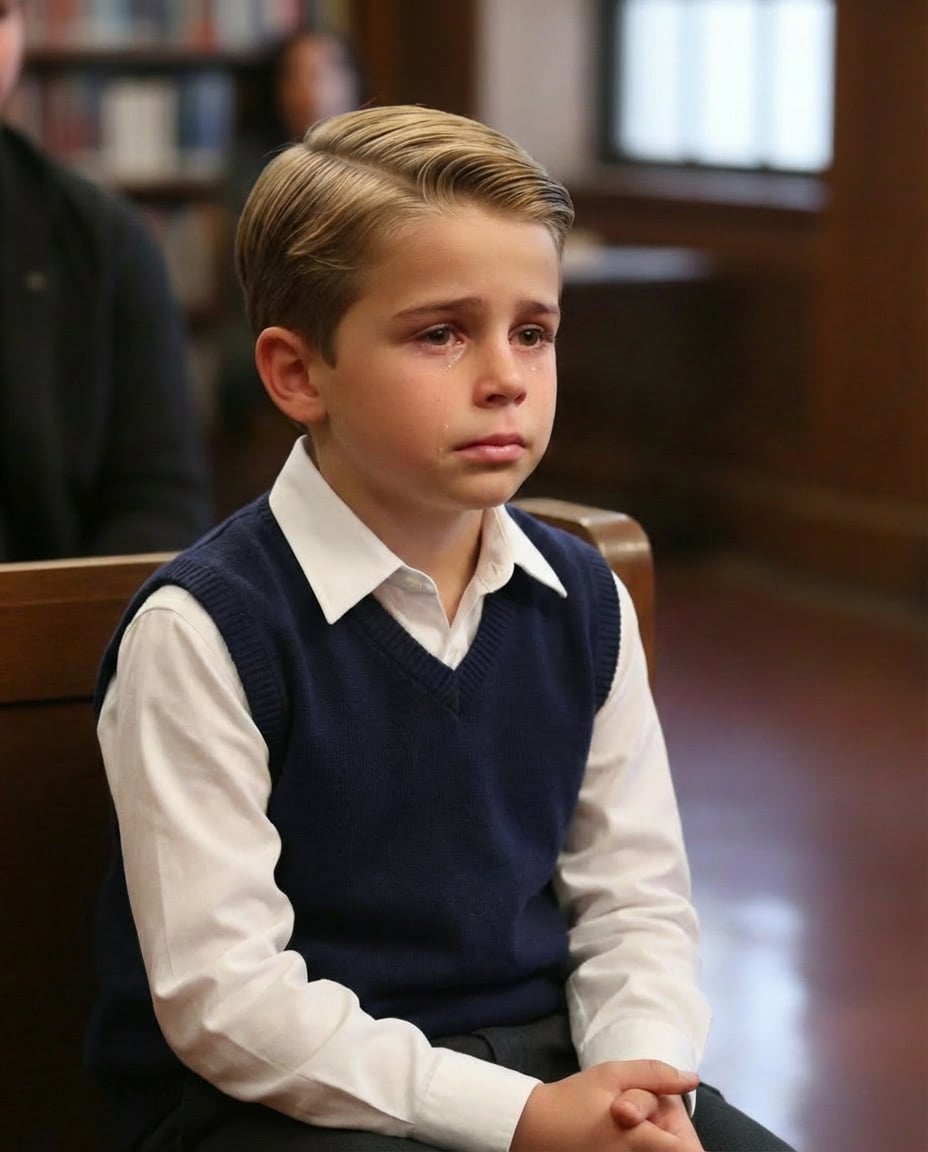
“Your Honor… may I defend my mom?”

I turned.

Howard was standing.

A soft murmur spread through the courtroom. Aidan gave a short, dismissive laugh.

The judge leaned forward slightly. “Only if you understand how serious this is.”

Howard nodded and handed a sheet of paper to the bailiff.

“Your Honor, my parents think I’m too young to understand what’s happening,” he said. “But I know my dad’s secret. And I want to tell the truth.”

As the paper was unfolded and projected, Aidan and his lawyer immediately stood, trying to interrupt, asking to stop the process.

But I couldn’t look away.

It was simple.

A sheet of paper drawn in pencil.

A timeline.

The judge turned back to Howard. “Would you like to explain this?”

Howard stepped forward and pointed.

“This is when Dad started having money problems,” he said. “They argued about it a lot. Dad told Mom things would get better if she helped fix it.”

Then he moved his finger.

“This is when Mom fixed everything.”

My throat tightened.

He pointed again.

“This is when Dad left.”

For the first time, Aidan shifted uncomfortably.

“And this,” Howard continued, “is when Dad said Mom was the problem.”

The room fell completely silent.

When he finished, I stood.

“Your Honor, what my son said is true,” I said calmly. “The debt was paid on March 3rd. Aidan left that same evening. And two days later, he filed legal documents claiming I was unstable.”

I didn’t need to say more.

Howard looked at the paper one last time.

Then he asked quietly,
“If Mom was the problem… why did everything change only after she helped Dad?”

The silence that followed was different.

Not confusion.

Understanding.

The judge looked from the screen to Aidan.

“Would you like to explain that?”

“With respect, Your Honor,” his lawyer quickly said, “this is a child’s interpretation—”

The judge raised a hand.

“I didn’t ask you.”

Aidan cleared his throat. “It’s more complicated than that. There were issues long before—”

“Then explain the timing,” the judge said.

Aidan hesitated.

Just for a moment—but it was enough.

“There were deeper problems,” he said finally. “Paying the debt just made it clear.”

The judge glanced back at the timeline.

“And yet, the sequence your son presented aligns with your wife’s account.”

There was no clean way out of it.

No explanation that didn’t contradict what everyone could now see.

The judge turned back to Howard.

“Did anyone help you with this?”

“No,” he said. “I just wrote what happened.”

“Why?”

Howard shrugged slightly. “My counselor told me to draw my feelings. This is how I understood everything.”

The judge nodded.

“You can sit down.”

Howard returned to his seat. I reached back, took his hand, and held it tightly.

After that, everything shifted.

My lawyer spoke next—calmly, without exaggeration. He walked through the timeline, emphasizing facts: I had resolved a major financial burden, maintained stability, and no concerns about my parenting had been raised until after the debt was gone.

Then he stopped.

The judge reviewed his notes.

“Custody decisions are based on stability and consistency,” he said. “In this case, concerns about instability appear only after a significant financial issue was resolved.”

Aidan said nothing.

“The timeline presented,” the judge continued, “raises valid questions about motive.”

Then he looked at me.

“You have clearly been the consistent parent.”

The decision came shortly after.

I was granted primary custody.

Aidan received limited, structured visitation.

Not what he wanted.

But enough for the court to remain balanced.

The rest—property, assets—would be decided later.

But the most important thing had already been determined.

Howard would stay with me.

Outside the courtroom, I didn’t realize how tightly I had been holding everything in until I finally exhaled.

Howard stood beside me.

“Mom… did we win?”

I smiled softly. “Yeah. We did.”

He nodded, satisfied.

Aidan stepped out a few minutes later. He paused, looking at us.

For a moment, I thought he might speak to Howard.

He didn’t.

Instead, he looked at me. “This isn’t over.”

“I know,” I said.

Because I did.

There would be more—more hearings, more decisions.

But the most important part had already changed.

And he knew it.

That evening, Howard sat at the kitchen table doing his homework—like it was just another ordinary day. I stood in the doorway, watching him quietly.

“You okay?” I asked.

“Yeah,” he said without looking up.

I sat across from him.

“You know… what you did today wasn’t easy.”

“I just told the truth.”

I smiled.

“Yes. You did.”

He looked up at me then.

“I didn’t like how he talked about you. That’s not what I see.”

That hit me harder than anything else.

Later that night, after he went to bed, I found his timeline still lying on the table.

I picked it up.

Simple lines. Simple words.

But undeniable truth.

In the days that followed, things slowly began to settle into a new rhythm.

I met with Steve again, and we started working through everything else.

But this time, it felt different.

Because I wasn’t standing on unstable ground anymore.

Looking back now, I understand something I couldn’t see before.

While I was trying to fix everything—trying to survive—Howard had been watching.

That simple piece of paper didn’t just change the outcome of a hearing.

It changed everything.

Because it showed the truth in a way no argument could distort.

And it reminded me of something I’ll never forget:

Even when everything feels like it’s falling apart, someone is still paying attention.

And sometimes—

that’s enough to make everything fall back into place.

Mój mąż próbował zostawić mnie z niczym – wtedy mój dziesięcioletni syn powiedział w sądzie coś, co sprawiło, że w całej sali zapadła cisza
Science confirms that 45-year-old Kelly Brook has perfect body proportions