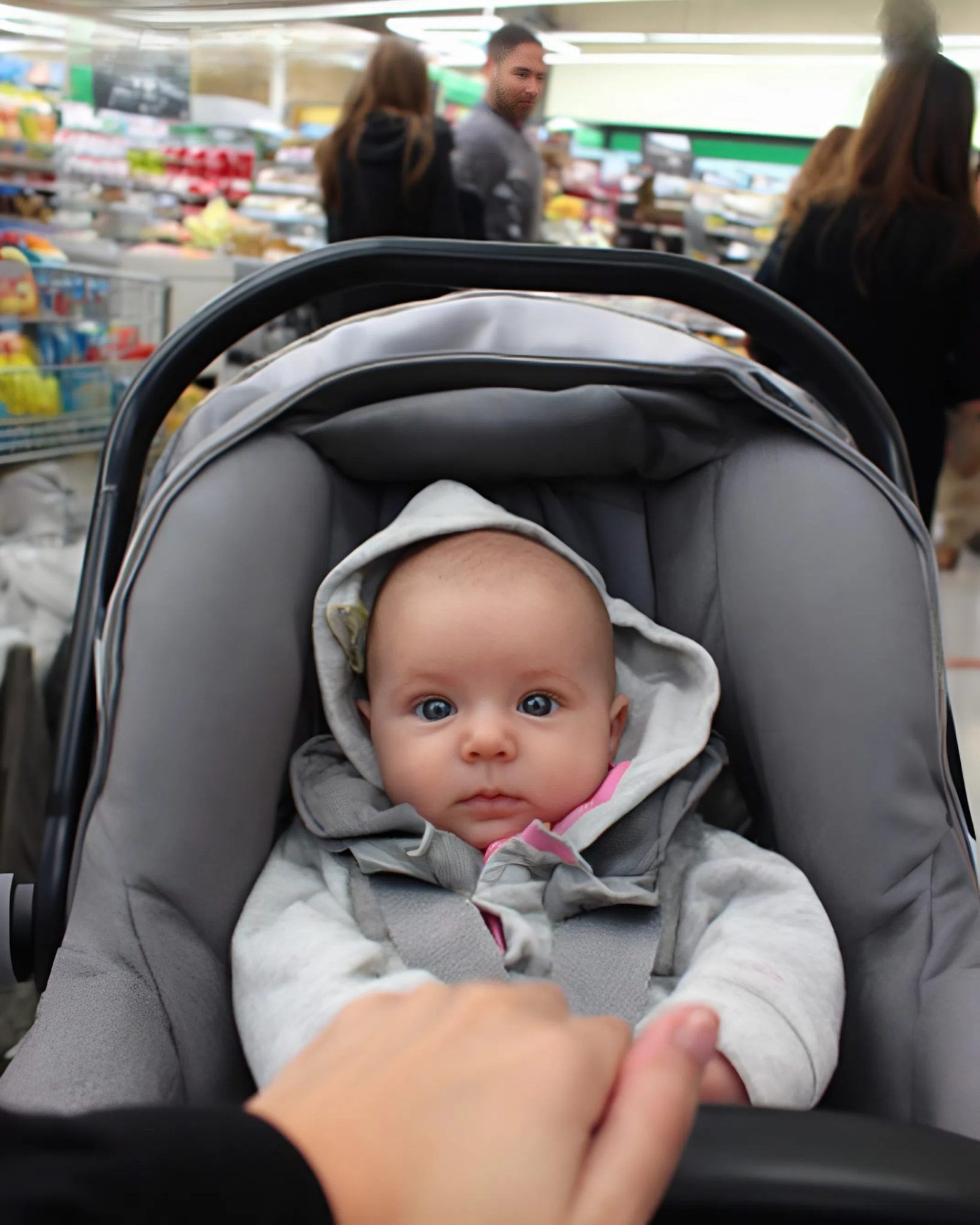
My throat tightened, and I held Grace a little closer, as if I could protect her.

“Shh, darling,” I whispered to her while coins slipped through my fingers. “Just a little longer.”
“Are you serious?!” a younger man barked from farther back. “It’s not that hard to add up a few groceries!”
Grace’s cries grew sharper and louder, bouncing off the high ceilings of the store until it seemed like every pair of eyes was burning into me. My cheeks flushed hot, my hands shook so badly I could barely gather up any other coins.
And in that moment, I felt the walls of shame closing in.
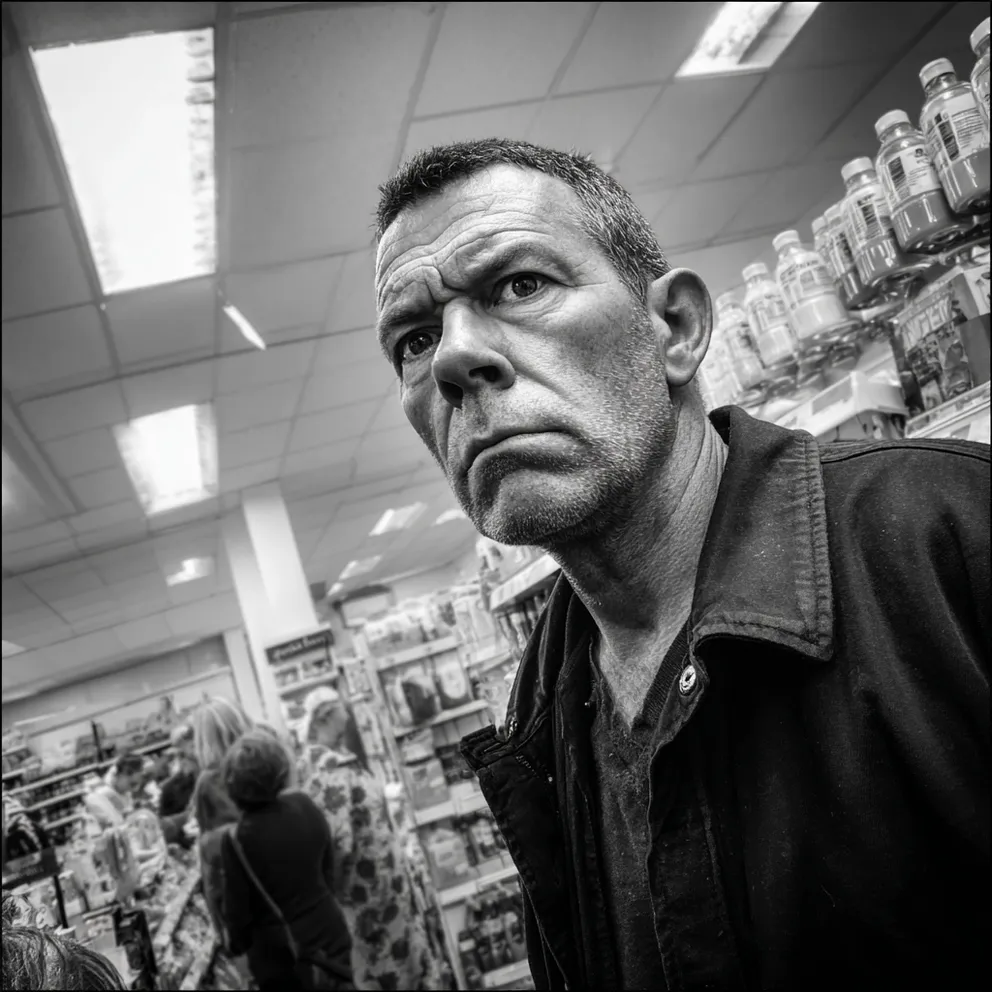
“Please,” I told the cashier, my voice thin. “Let’s take off the cereal and the fruit. Just keep the formula and the diapers. I think we can leave the wipes behind, too.”
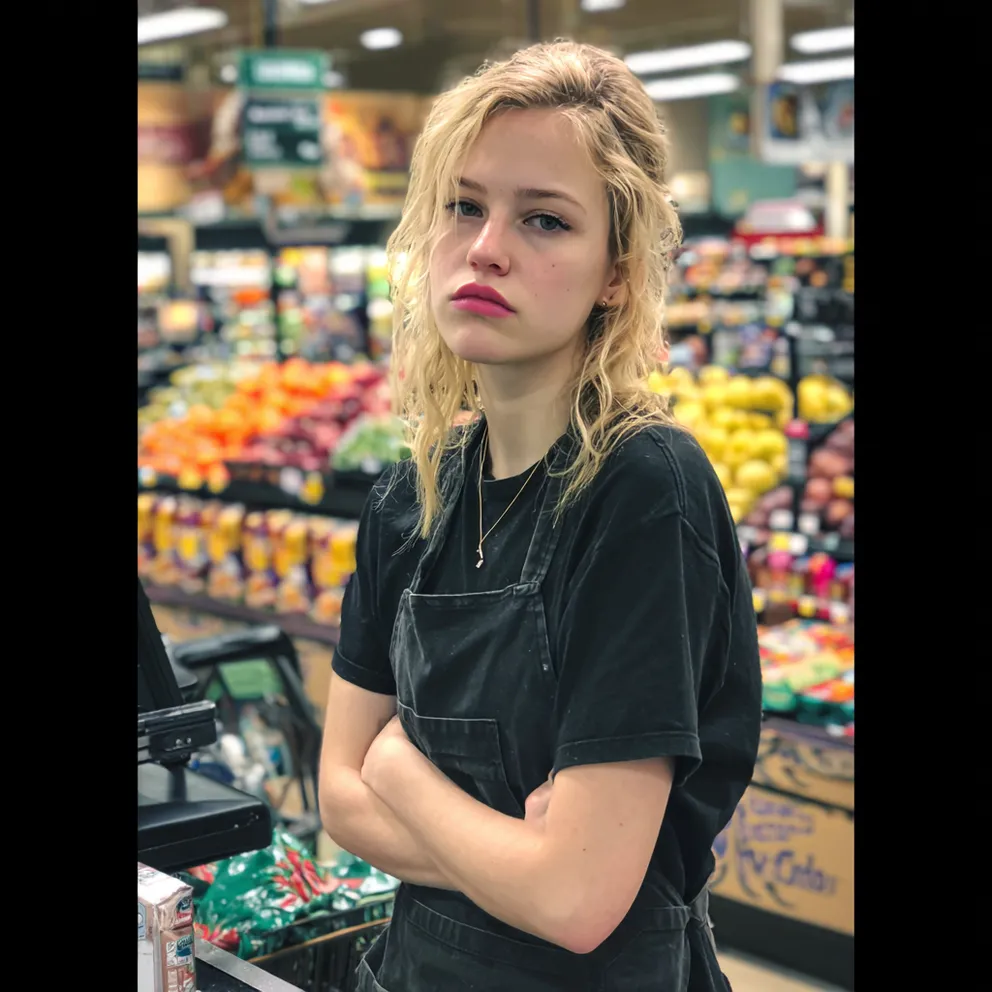
The cashier rolled her eyes and sighed loudly as she began removing items one by one, the sharp beep of the scanner echoing in my ears. Each sound felt like judgment, as if the machine itself were announcing my failure to the line of strangers behind me.
“Honestly, ma’am,” she said, her lips pursed in irritation. “Didn’t you check the prices before you loaded your cart? How much longer are you going to hold up this line?”

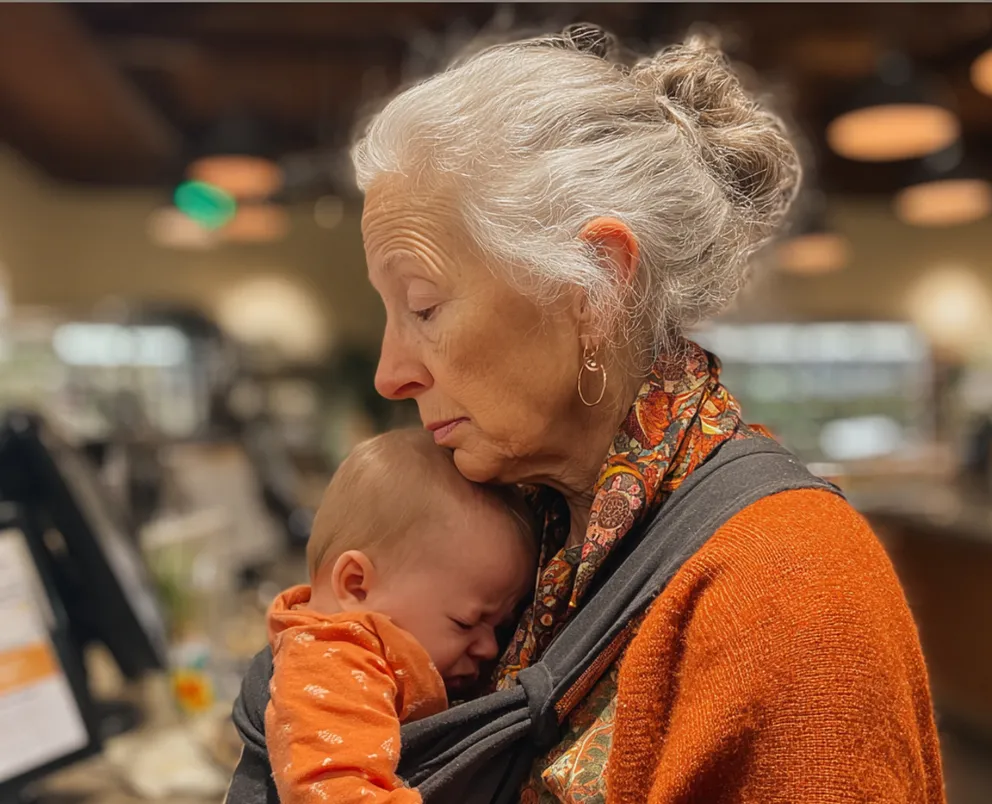
I opened my mouth to answer, but no words came out. My throat was tight, my cheeks burned, and I wanted to cry. Meanwhile, Grace’s cries grew louder, her little fists balled against my chest as if she could feel every ounce of my shame.
“We’ve been waiting forever! That kid is screaming her lungs out! Someone get them out of here. This isn’t a daycare, it’s a supermarket,” someone snapped.
“If you can’t pay for groceries, maybe you shouldn’t be raising kids,” another voice followed, sharp and bitter.

Tears stung my eyes. My hands shook so badly I nearly dropped the bill I was holding, the paper damp where my palm pressed against it. My heart pounded, my vision blurred, and I thought for one terrifying moment that I might faint right there in the checkout line.
“Please,” I begged again, my voice breaking as I tried to rock Grace against my chest. “Just the baby items. Please. That’s all she needs.”
And then, suddenly, Grace stopped crying.
The sudden silence startled me; her sobs, which had filled the store for endless minutes, vanished, and when I looked down at her small face, damp with tears, my eyes followed the direction of her tiny hand.
She was pointing behind me.
I turned and saw a man standing there. He was tall, maybe in his late 30s, with kind eyes that softened as they fell on Grace. Unlike the others, he wasn’t glaring or sighing.

His expression was calm, and he had a soft smile on his face. He seemed almost protective of us.
“Please ring up everything she picked,” he said, stepping forward and speaking clearly. “I’ll cover it all.”
“Sir, she doesn’t have enough…” the cashier blinked. “I don’t want it coming out of my salary.”
“I said ring it up,” he demanded. “I’ll pay.”
Heat rushed to my cheeks. I shook my head, holding out the crumpled bill.
“No, no, sir, you don’t have to do that,” I said, stammering. “I just miscalculated. I thought —”
“Keep it. You’ll need it. She’ll need it,” he said, shaking his head gently.
Grace’s tiny fingers reached out toward him again, and he smiled down at her.
“She’s beautiful,” he said softly. “You’re doing an incredible job.”

Something inside me broke. Tears blurred my vision until the shelves around us melted away.
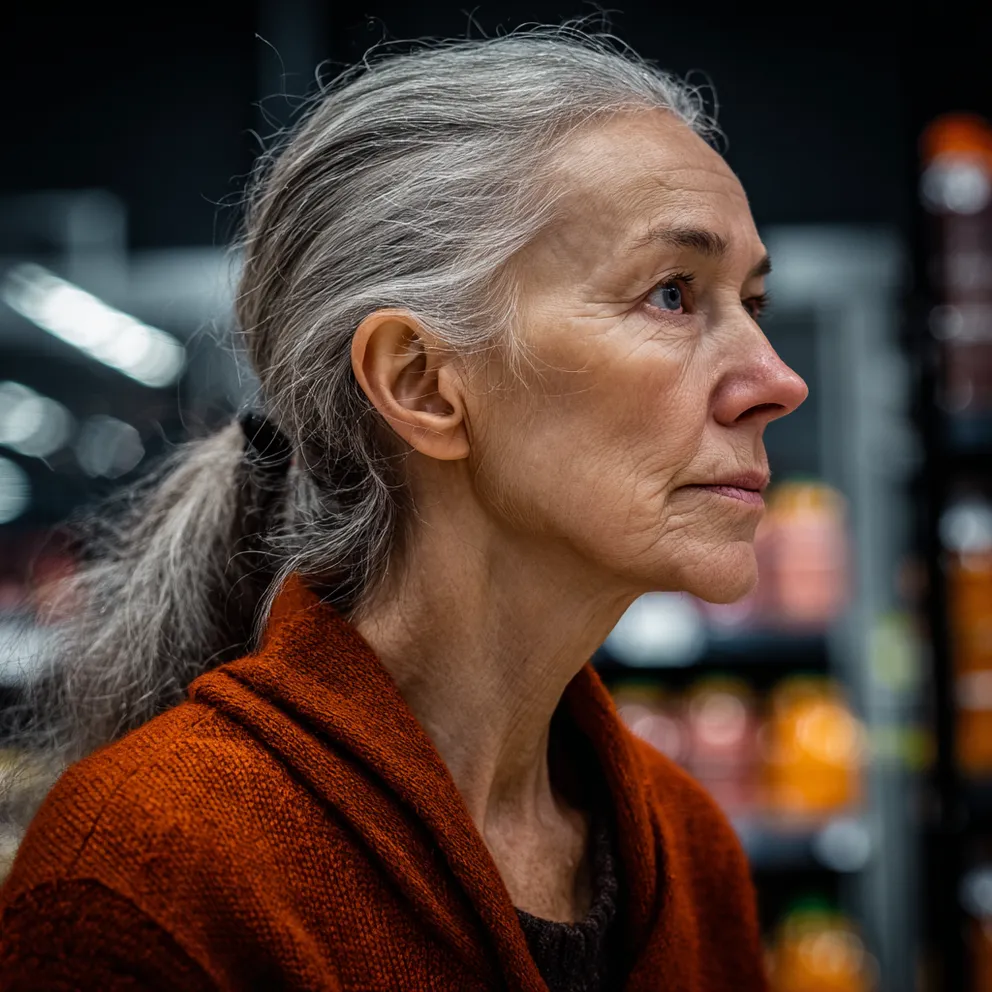
“Thank you,” I whispered. “Thank you so much. She’s my grandbaby, and I’m doing everything I can. We’re the only two left now.”
The line fell silent. People who had mocked me moments earlier shifted uncomfortably, some looking away. The man slid his card across the counter.
“It taps,” he said simply. In seconds, the transaction was finished. The cashier, suddenly meek, bagged the items without another word.
When he handed me the bags, my hands trembled. Without asking, he lifted the heavier ones himself, carrying them as though it was the most natural thing in the world.
Outside, I could breathe again.
“My name’s Michael,” he said, walking me toward the bus stop.

“I’m Helen,” I managed.
“She’s a precious little thing, Helen,” he said. “I have a daughter, Emily. She’s two. I’m raising her alone, too. My wife passed from cancer last year. I recognized that look in your face.”
“What look?” I asked.
“The hopelessness, the guilt, the anxiety… the list is endless,” he said. “That’s how I felt, too.”
“I’m so sorry,” I said, my chest tightening with empathy.
“I know what it’s like,” he said, nodding. “The sleepless nights, the fear of not having enough, and wondering if you’re enough. You’re not alone, Helen.”
Before I could respond, he slipped a small card into my hand.

“I run a support group,” he said. “It’s for single parents, grandparents, widows… all of us. We help each other — with food, with babysitting, and sometimes with just listening. Come by sometime. You’ll always be welcome.”