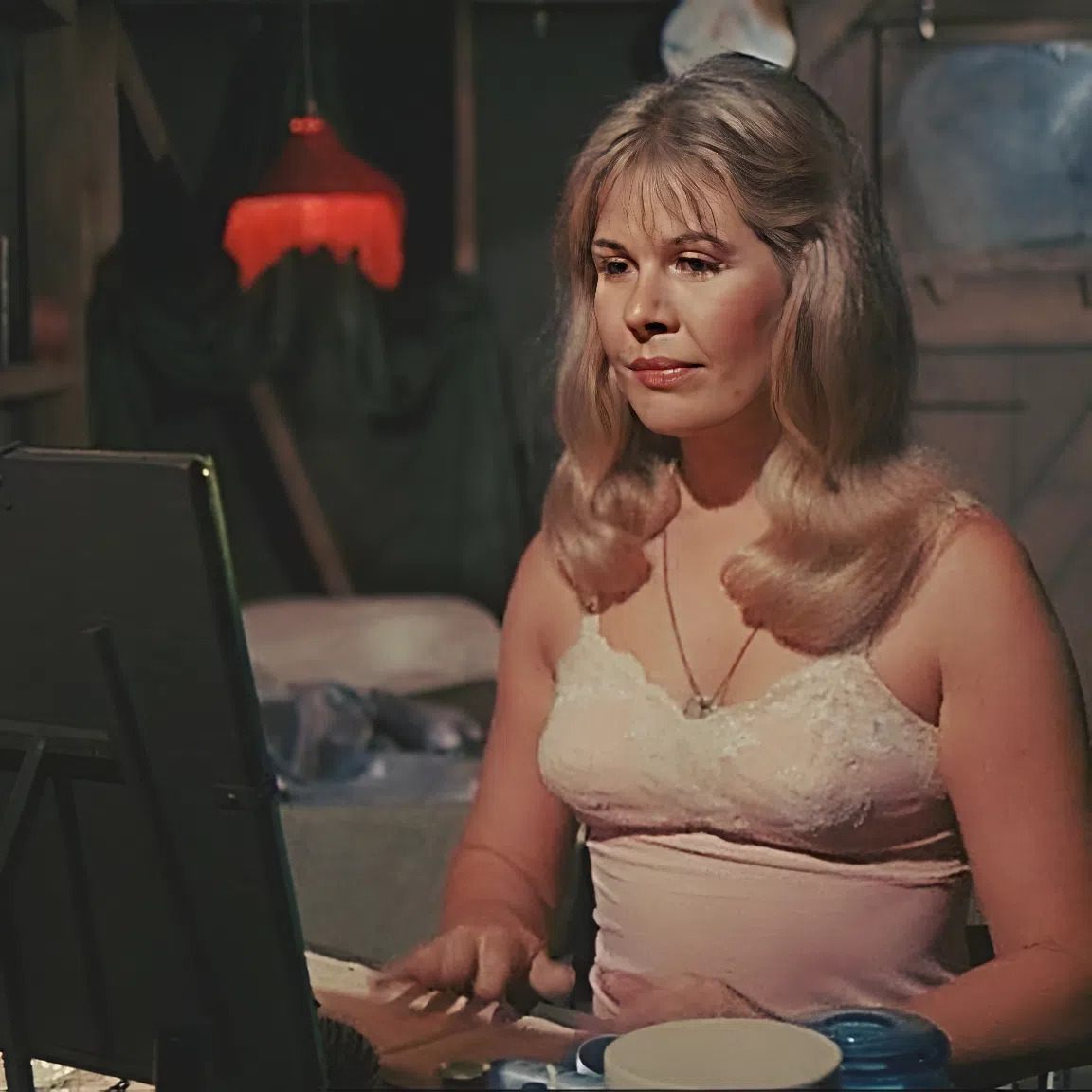
The producers reached a tacit agreement
But the story surrounding Colonel Blake did not end there.
Following a huge number of angry letters sent to the creators after Blake’s death, the writers and producers came to an agreement amongst themselves.
They decided that they would never again send off departing actors in such a tragic manner. The negative reaction from viewers proved so strong that it influenced how characters were subsequently written out of the series.
The mystery of Radar’s left hand
Gary Berghoff starred in the series for over seven seasons, from 1972 to 1983, playing the charming Corporal Walter ‘Radar’ O’Reilly — a naive country lad who served as a clerk and, at times, a bugler.
But have you ever noticed that Gary had a physical trait he went to great lengths to hide from the audience? He was born with Poland syndrome—a condition in which the pectoral muscle is underdeveloped, and webbed fingers are sometimes present. That’s why he tried to hide his left arm during scenes.
He would either hold a clipboard in it or tuck it into his pocket so that the audience’s attention would be focused on the acting rather than on his physical condition.
Why Radar left MAS*H
After Berghoff had appeared in every episode of the first three seasons, it became clear that the demanding schedule was taking too heavy a toll on his family life. Consequently, the character’s role was reduced to thirteen episodes instead of the previous twenty-four.
In the seventh season, Radar left the series for good. His departure was explained in the two-part farewell episode ‘Good-Bye Radar’, which reported his discharge from the army.
When Berghoff left MAS*H, he did not leave as a wealthy man.
‘I didn’t leave MAS*H a wealthy man,’ he said in an interview with People. ‘I could have renegotiated the contract, but money wasn’t the main thing for me… Either you want to be rich and famous, or you want to be a father. You can’t have both.’
A cure for rabies for Radar
In the 1974 episode ‘Mad Dogs and Servicemen’, Radar is in bed with a suspected case of a rare form of rabies.
To cheer him up, Margaret reads him a letter that mentions two well-known songs: ‘Diddy Wah Diddy Bo Diddley’ and ‘The Wayward Wind’ by Goga Grant. The problem is that both songs were released in 1956, several years after the end of the Korean War.
Too fashionable for the front line
Not all the characters in MAS*H sport hairstyles that would actually have complied with army regulations of the 1950s. As the series progresses, it becomes clear that only Colonel Potter and Major Winchester look as though they could genuinely have served in an army unit of that era. The rest are, to put it mildly, far too stylish for military regulations.
Hawkeye’s ever-changing backstory
Hawkeye’s backstory in MAS*H changes quite noticeably. At first, he’s from Vermont, both his parents are alive, he has a married sister who sends him a huge homemade jumper, and even a nephew.
But then the details start to shift. Suddenly, he’s from Crabapple Cove, Maine, the only child in the family, and his mother died when he was just ten years old. It seems the facts of his backstory were rather fluid. Alan Alda himself, however, had no objection to such changes. He liked the fact that the character could develop and change, even if this sometimes meant sacrificing accuracy.
Hawkeye’s sarcasm and Alda’s talent
Did you know that Alan Alda made history as the first person to win Emmy Awards for acting, writing and directing in the same TV series? That’s a truly impressive achievement.
When Winchester grumbles in the episode ‘Comrades in Arms’ about Hawkeye and BJ singing in the shower, Hawkeye replies:
‘Don’t blame me, I didn’t write it.’
The irony is that it was Alan Alda, who played Hawkeye, who wrote that scene. This moment perfectly illustrates how he was able to combine humour with a precise portrayal of the character.
The truth about Loretta Sweet and Alan Alda
To those who prefer the early seasons of MASH and are less keen on the later ones, and to those who, conversely, favour the later period, one thing can be said: the early MASH was a brilliant comedy, whilst the later series evolved into a powerful blend of drama and humour.
Now, about the series’ iconic duo — Hawkeye and Margaret Hulihan, played by Alan Alda and Loretta Sweet. Their relationship adds an important touch to how the series shifted from a comedic tone to a dramatic one.
In the early seasons, there was a sense of mutual respect between them, as between strong professionals, seasoned with a hint of hidden attraction. Over time, their bond deepened, and their witty banter gave way to a more emotional and serious relationship.
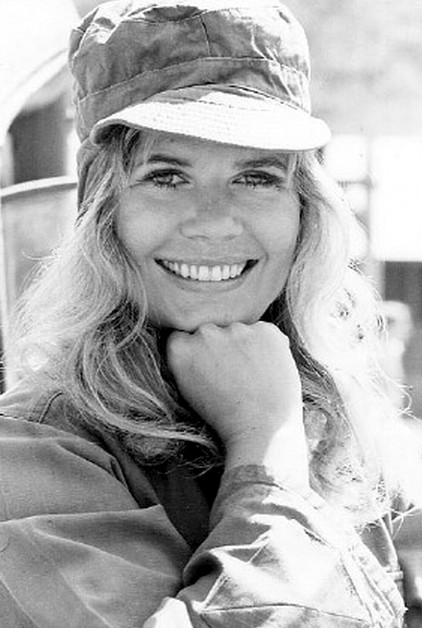
The turning point in the story of Hawkeye and Margaret