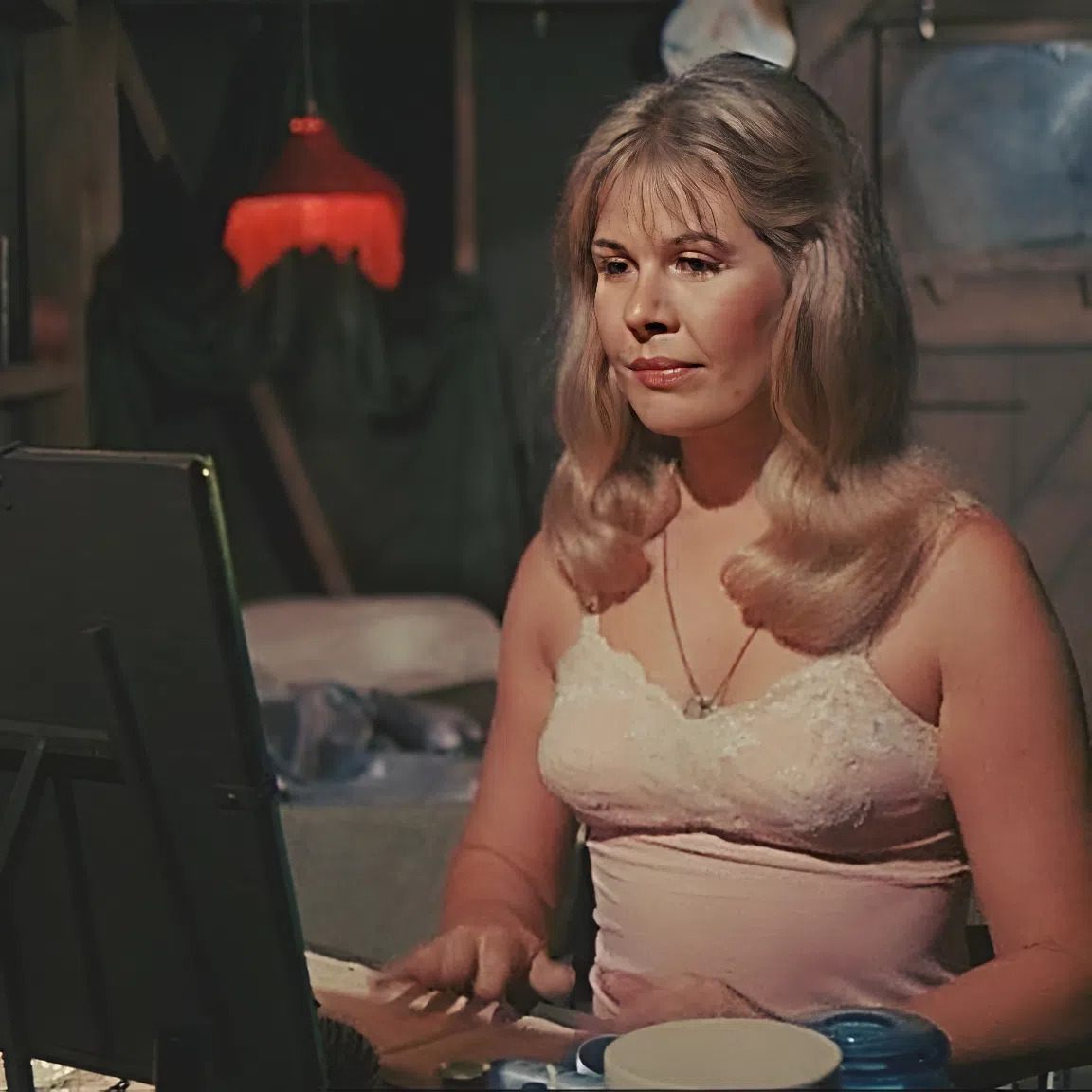
Little-known mistakes and bloopers in the TV series MASH*

If, like me, you love MASH, you probably feel as though you’ve already seen everything the series has to offer: the funny scenes, the touching moments and the unforgettable characters.

Renowned for its witty scripts, emotional depth and biting satire, MAS*H very quickly became a beloved cultural phenomenon and an important part of American television.

But behind the scenes, the series also had its fair share of errors, anachronisms and plot holes — and for years, many of them simply went unnoticed by loyal viewers…

I’m a child of the eighties, and MAS*H was almost always on in the background at our house, with its theme tune playing just before bedtime. Back then, I rarely even watched the opening credits to the end, because it was already time to switch off the telly. But years later, I finally gave the series a proper chance — and have genuinely loved it ever since.
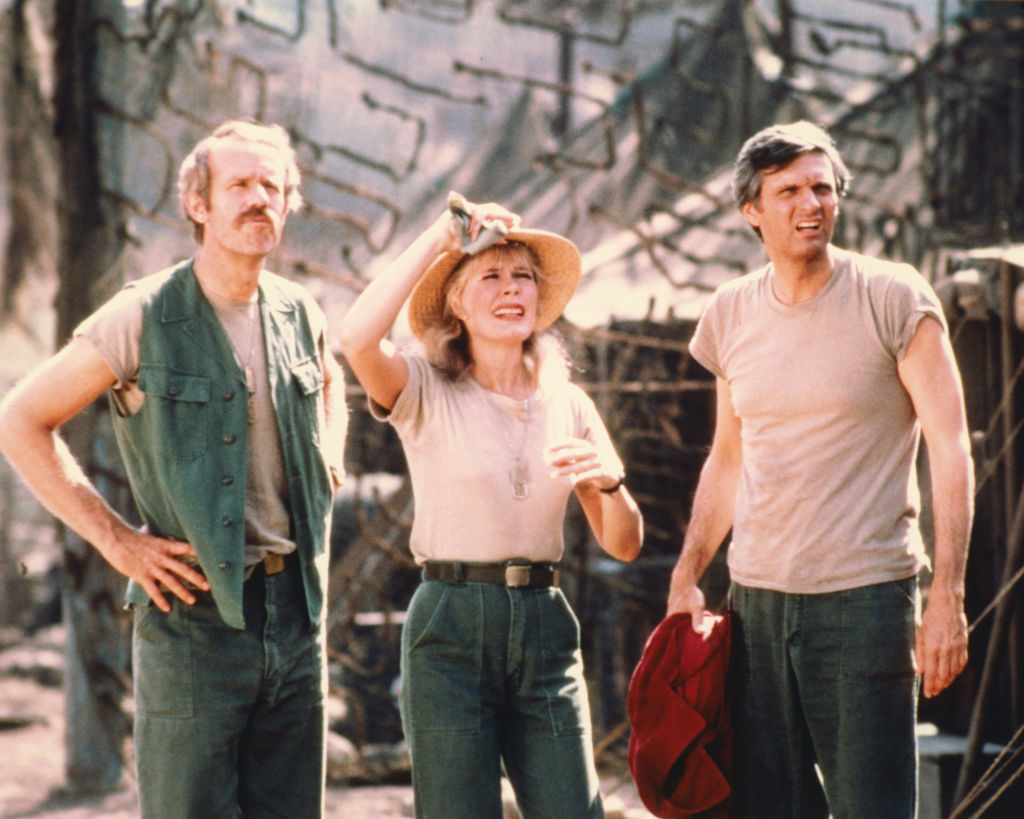
MAS*H wasn’t just a TV show, but a genuine cultural phenomenon that brought families together in front of the screen. The final episode in 1983 was watched by almost half the population of the United States, and to this day it holds the record as the most-watched episode in the history of prime time.

As you probably know, MAS*H is set during the Korean War and follows the doctors and nurses of a mobile army hospital. They face the horrors of war, the complexities of medicine and tangled personal relationships, trying to survive all this chaos with humour and humanity.

This is one of those TV series that stays with you for a long time. And now, as I rewatch individual episodes, I’m increasingly noticing little-known mistakes and amusing bloopers that actually make it even more interesting to watch. Did you know about them?

A life-threatening case of hepatitis

Did you know that William Christopher, who played the good-natured father Malkahi, fell seriously ill with hepatitis himself during the fifth season?

The situation was so serious that the actor was almost written out of the series for good. The producers even seriously considered removing the character from the story. But that’s when Alan Alda stepped in. He understood perfectly how important a steady job was for Christopher, especially given that his son suffered from autism.

Alda then wrote an entire episode titled ‘Hepatitis’, in which the actor’s illness was seamlessly woven into Malkahi’s storyline. A true act of friendship — and a very wise decision that allowed Malkahi’s father to remain in the series.

The prophecy about Frank Burns’ tumour

Here’s another curious fact about MAS*H that sends a shiver down your spine.

In the episode ‘Hepatitis’, the caustic Hawkeye, played by Alan Alda, examines Frank Burns, who casually remarks:
‘I’ve got a tumour the size of a pea under my breastbone.’

The most chilling thing is that years later, Larry Linville, who played Frank, did indeed die from a malignant tumour under his breastbone. Sometimes life strangely echoes fiction.

From a one-off character to a audience favourite

Not every actor would have agreed to appear on screen in dresses and skirts the way Jamie Farr did in the role of Klinger. But he pulled it off with incredible charm and humour. His Max Klinger turned out to be such a standout character that it is now hard to imagine the series without him.

But few people know that Farr was originally only supposed to appear in a single episode. However, viewers loved the character so much that he was made a regular cast member.

The truth about army dog tags

And the dog tags that Jamie Farr wore on screen were not props, but his real army dog tags, left over from his service before his acting career.

Farr himself recounted in an interview for the Medicine and Martinis collection that the dog tags bore his personal details: name, number and even his religious affiliation. That level of authenticity is truly impressive.
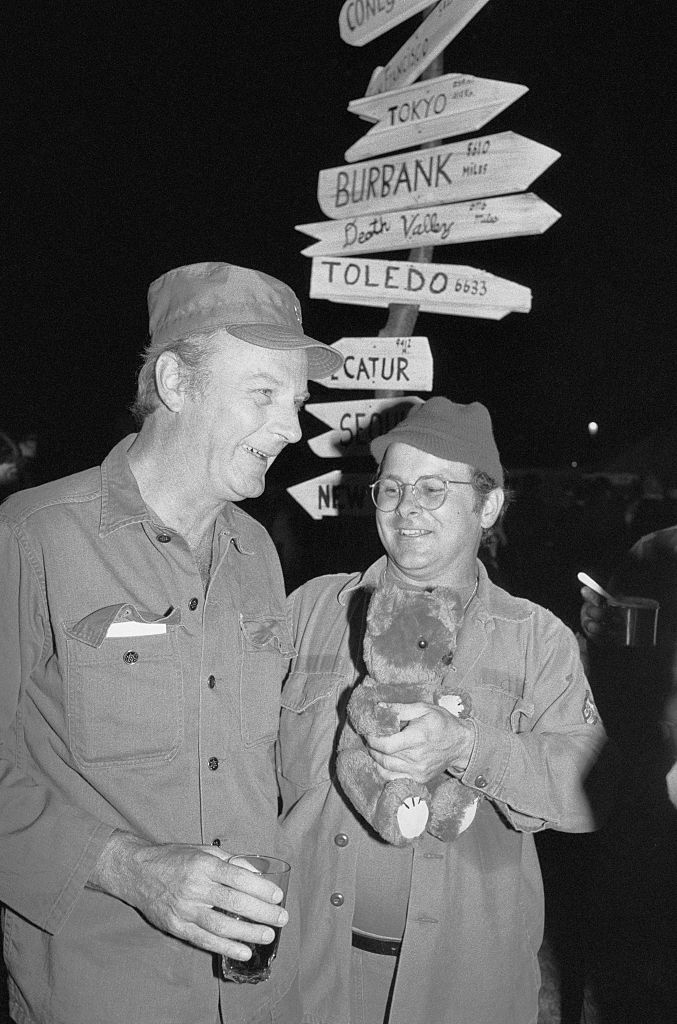
Did you spot any military inaccuracies?

In the classic second-season episode ‘For the Good of the Outfit’, viewers were treated not only to several memorable scenes but also to some noticeable errors in terms of military accuracy. The most obvious of these is the model of a Bell Huey UH-1 helicopter hanging in Henry Blake’s office. The problem is that the Huey’s maiden flight did not take place until 1956, i.e. after the end of the Korean War, during which the events of MAS*H are set. So this item clearly does not fit into the timeline.

The Death of Lieutenant Colonel Blake

The death of Lieutenant Colonel Blake became one of the most shocking and talked-about events in the history of television. When MacLain Stevenson left the series in 1975, his character was unexpectedly and dramatically written out of the plot—his plane crashed on the way home to the United States.

At the time, such a twist for a major character in a prime-time series was almost unthinkable. And although the public reaction was fierce, the writers and producers insisted that this move was intended to serve as a reminder of the merciless reality of war.

The producers reached a tacit agreement

But the story surrounding Colonel Blake did not end there.

Following a huge number of angry letters sent to the creators after Blake’s death, the writers and producers came to an agreement amongst themselves.

They decided that they would never again send off departing actors in such a tragic manner. The negative reaction from viewers proved so strong that it influenced how characters were subsequently written out of the series.

The mystery of Radar’s left hand

Gary Berghoff starred in the series for over seven seasons, from 1972 to 1983, playing the charming Corporal Walter ‘Radar’ O’Reilly — a naive country lad who served as a clerk and, at times, a bugler.

But have you ever noticed that Gary had a physical trait he went to great lengths to hide from the audience? He was born with Poland syndrome—a condition in which the pectoral muscle is underdeveloped, and webbed fingers are sometimes present. That’s why he tried to hide his left arm during scenes.

He would either hold a clipboard in it or tuck it into his pocket so that the audience’s attention would be focused on the acting rather than on his physical condition.

Why Radar left MAS*H

After Berghoff had appeared in every episode of the first three seasons, it became clear that the demanding schedule was taking too heavy a toll on his family life. Consequently, the character’s role was reduced to thirteen episodes instead of the previous twenty-four.

In the seventh season, Radar left the series for good. His departure was explained in the two-part farewell episode ‘Good-Bye Radar’, which reported his discharge from the army.

When Berghoff left MAS*H, he did not leave as a wealthy man.

‘I didn’t leave MAS*H a wealthy man,’ he said in an interview with People. ‘I could have renegotiated the contract, but money wasn’t the main thing for me… Either you want to be rich and famous, or you want to be a father. You can’t have both.’

A cure for rabies for Radar

In the 1974 episode ‘Mad Dogs and Servicemen’, Radar is in bed with a suspected case of a rare form of rabies.

To cheer him up, Margaret reads him a letter that mentions two well-known songs: ‘Diddy Wah Diddy Bo Diddley’ and ‘The Wayward Wind’ by Goga Grant. The problem is that both songs were released in 1956, several years after the end of the Korean War.

Too fashionable for the front line

Not all the characters in MAS*H sport hairstyles that would actually have complied with army regulations of the 1950s. As the series progresses, it becomes clear that only Colonel Potter and Major Winchester look as though they could genuinely have served in an army unit of that era. The rest are, to put it mildly, far too stylish for military regulations.

Hawkeye’s ever-changing backstory

Hawkeye’s backstory in MAS*H changes quite noticeably. At first, he’s from Vermont, both his parents are alive, he has a married sister who sends him a huge homemade jumper, and even a nephew.

But then the details start to shift. Suddenly, he’s from Crabapple Cove, Maine, the only child in the family, and his mother died when he was just ten years old. It seems the facts of his backstory were rather fluid. Alan Alda himself, however, had no objection to such changes. He liked the fact that the character could develop and change, even if this sometimes meant sacrificing accuracy.

Hawkeye’s sarcasm and Alda’s talent

Did you know that Alan Alda made history as the first person to win Emmy Awards for acting, writing and directing in the same TV series? That’s a truly impressive achievement.

When Winchester grumbles in the episode ‘Comrades in Arms’ about Hawkeye and BJ singing in the shower, Hawkeye replies:
‘Don’t blame me, I didn’t write it.’

The irony is that it was Alan Alda, who played Hawkeye, who wrote that scene. This moment perfectly illustrates how he was able to combine humour with a precise portrayal of the character.

The truth about Loretta Sweet and Alan Alda

To those who prefer the early seasons of MASH and are less keen on the later ones, and to those who, conversely, favour the later period, one thing can be said: the early MASH was a brilliant comedy, whilst the later series evolved into a powerful blend of drama and humour.

Now, about the series’ iconic duo — Hawkeye and Margaret Hulihan, played by Alan Alda and Loretta Sweet. Their relationship adds an important touch to how the series shifted from a comedic tone to a dramatic one.

In the early seasons, there was a sense of mutual respect between them, as between strong professionals, seasoned with a hint of hidden attraction. Over time, their bond deepened, and their witty banter gave way to a more emotional and serious relationship.

The turning point in the story of Hawkeye and Margaret

In an interview with Yahoo, Sweet explained it this way:
‘They became loving friends. Love comes in many forms, and there was a very strong bond between them. If you follow the series as it unfolds, their relationship grew ever deeper. At first, Margaret regarded him as a brilliant surgeon, and that in itself was a form of respect.’

The real turning point came in the two-part episode ‘Comrades in Arms’ in season six, when they spent the night together whilst under fire from North Korea. After a frank conversation, they gave in to their feelings and shared a passionate night.

Although that night did not develop into a full-blown romance, Sweet considered it a decisive moment for both characters.

‘Alan wrote “Comrades in Arms” for us several seasons before the episode was actually filmed, because the creators weren’t sure the audience would accept it,’ Sweet explained.

“But it was a crucial turning point, and it had everything that MAS*H is all about: tears, laughter, absurdity and the struggle for survival. That’s exactly why viewers tuned in to the series.”

Loretta Sweet’s nails

If you look closely at Loretta Sweet as Margaret Hulihan, one detail catches the eye — her nails.

In the episode ‘Comrades in Arms’, they’re over an inch long. And it really stands out. No nurse, let alone a head nurse in a war zone, would likely have allowed herself nails that long. Perhaps Margaret simply liked the dramatic look, but for a military medic, it didn’t look very plausible.

Loretta Swit never liked the nickname ‘Hot Lips’

Loretta Swit was not at all keen on the famous nickname given to her character – Major Margaret ‘Hot Lips’ Hulihan.

In an interview with Fox News Digital, she explained her feelings as follows:
“I understand that nicknames often arise out of affection, but to me it sounded like an insult. She wasn’t just a body part. She was a major in the United States Army and deserved respect.”

Looking back, Sweet admitted that she herself had persistently pushed for the nickname to be phased out of the series.

“I think my persistence probably annoyed a lot of people,” she said. “But I felt it was important for all the women who served and supported our country. I kept telling the writers: ‘She’s so much more than that.’”

Loretta Sweet’s cosmetic surgery

When people look at recent photographs of Loretta Sweet, many notice changes in her appearance that might suggest the effects of cosmetic surgery. The actress herself has not spoken publicly about this, but some photos do raise questions. And some fans have even wondered: did these changes begin back in the days of MAS*H?

One Reddit user, going by the username bettinafarichild, shared the following observation:

‘I’ve watched every episode of MASH* countless times, but this was the first time I’d rewatched the series in strict chronological order, and I noticed lots of little details I’d never seen before. Maybe I just didn’t pay attention to them before, or are they really such subtle details? For example, Loretta Sweet has cosmetic surgery somewhere in the middle of the sixth season. She develops a dimple on her chin, and it’s a very noticeable change. Also, it seems she had a nose job at some point, though I’m not sure in which season exactly – perhaps the ninth.”

This has sparked quite a bit of curiosity among fans, although it all remains at the level of speculation.

The longest kiss

And finally, one more interesting fact — MAS*H fans know full well that the series was short on emotional scenes, but in the finale, viewers witnessed one of the longest kisses in the history of television.

Wrapping up the storyline that began in ‘Comrades in Arms’, Hawkeye bids farewell to Margaret with a kiss that turns out to be so awkward and drawn-out that the other characters standing nearby clearly feel uncomfortable.

Recalling the conclusion of Margaret’s story, Sweet said with a smile:
‘It’s the longest kiss in the history of television.’

Alda, who directed the final episode, and Sweet were the only two main actors to appear in both the first and last episodes. This emphasised the special bond between them that ran throughout the series.

‘The finale was primarily intended to bring all the characters together and give viewers a sense of closure, as everyone had their own favourite character. After the series ended, Alan wrote me a note saying how wonderful it had been to have the chance to properly conclude Margaret’s storyline and show just how much she had grown as a person.’

If you love MAS*H, why not share this with your friends and family? It’s a great excuse to reminisce about your favourite characters, have a laugh, chat about the series and take a trip down memory lane. Tag someone who’s sure to love this little blast from the past.

Little-known mistakes and bloopers in the TV series MASH*
My Husband Said He Needed $18,000 for His Child’s Chemo — But the Truth About Where It Went Left Me Speechless