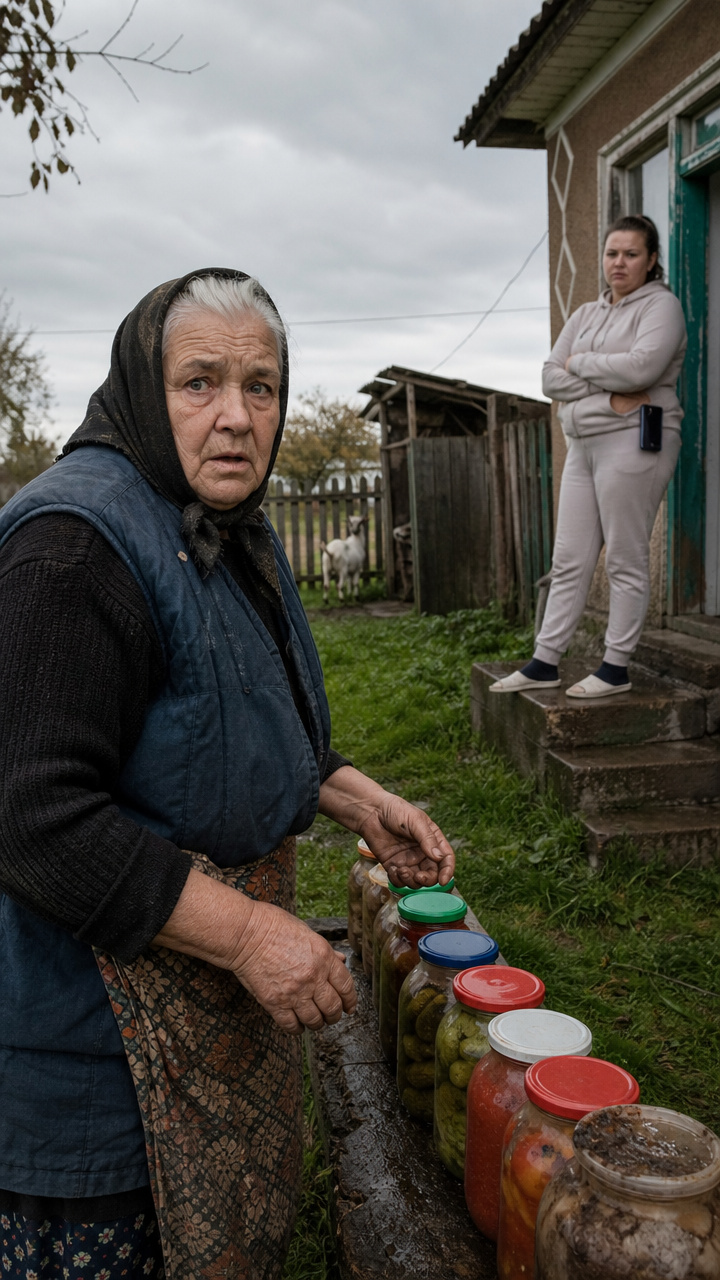
Her hands were shaking. Claire came down from the porch.
“Don’t make a tragedy out of this. I didn’t throw anything away.”
Margaret slowly straightened. There were no tears left in her eyes.
“You didn’t throw anything away?”
“No.”
“Then where did you throw my work, Claire? Where did you put your respect for me?”
Claire looked unsettled.
“What does respect have to do with this?”
“Everything. These jars aren’t just glass. They are my summer. My aching back. The nights I stood sterilizing jars until one in the morning. They are my hands burning from hot peppers. They are the money from my pension that I spent on sugar so you would have something homemade to put on the table during winter.”
Claire folded her arms.
“We can easily buy all of this at the store.”
“Then buy it.”
The yard fell so quiet that even Daisy stopped chewing hay beside the shed.
“Starting today,” Margaret said evenly, “not a single jar from this house will go home with you again. No cheese, no milk, no eggs. If everything here belongs to the last century, then it can all stay here.”
Claire’s face flushed.
“Are you serious?”
“For the first time in many years,” Margaret replied, “I am.”
After lunch, Margaret’s son came into her room. He sat on the edge of the bed and turned his car keys over and over between his fingers.
“Mom, you know what Claire is like. She can be sharp, but she never means any harm.”
Margaret looked at him.
Once, this grown man had run barefoot across the same yard and begged, “Mom, can I have one more pastry?”
Once, he had carried water from the well and told her, “You sit down. I’ll do it.”
Now an exhausted adult sat before her, too afraid to say a single word against his wife.
“Son,” Margaret said softly, “have you ever told her she cannot speak to me that way?”
He lowered his eyes.
“Please don’t start.”
“I’m not starting anything. I’m ending something.”
He looked up at once.
“What does that mean?”
“If Claire cannot enter my home without humiliating me and treating me with contempt, then she should stop coming here. And you can visit when you remember that you are not only your wife’s husband. You are also my son.”
He said nothing. Claire had already appeared in the doorway.
“So?” she asked coldly. “Did you have your conversation?”
Margaret’s son stood. He looked at his mother as though he wanted to say something. In the end, he remained silent once again.
Then he followed his wife outside.
Before they left, Daniel approached his grandmother alone. He wrapped his arms around her tightly, almost like a little boy, although he had been a full head taller than her for years.
“Grandma, I’ll come back. I promise.”
“Come whenever you want,” she answered, stroking his shoulder.
He gave her a sad smile.
“And don’t scold Daisy too much. Maybe she only wanted to make sure my diploma was real.”
Margaret laughed. It was the first time she had smiled all day.
Three months passed. Autumn had turned bitterly cold. Thick fog often settled over the village, and silver frost covered the grass each morning. Margaret lived quietly. She cared for the house, milked Daisy, and stacked firewood beneath the shelter.
Her son called from time to time. Their conversations were brief.
“How are you, Mom?”
“Alive.”
“Do you need anything?”
“I need you to remain a decent human being. I have everything else.”
After that, he would fall silent for a long time.
Then, one Saturday morning, the gate creaked.
Margaret stepped onto the porch and saw Daniel standing there. He wore an old jacket, carried a backpack over one shoulder, and held a bag of treats in his hand.
“Grandma, I came for two days. May I stay?”
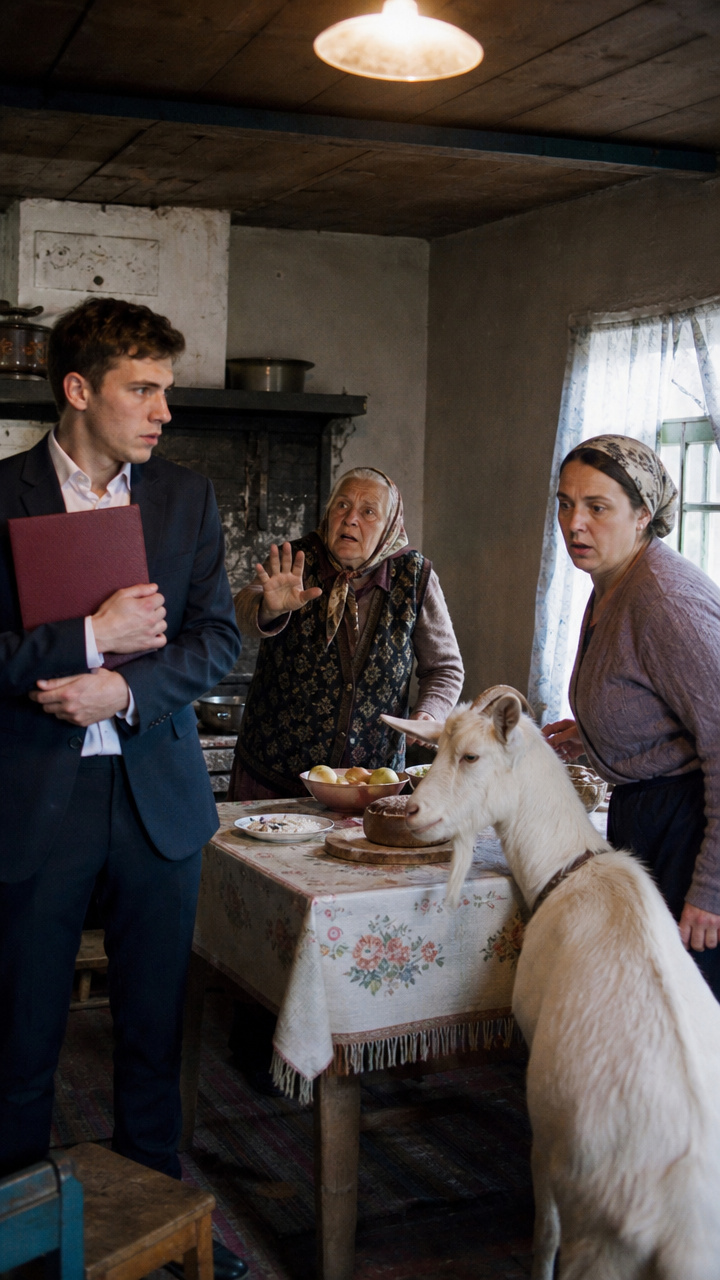
She threw up her hands.
“Good heavens, why are you asking? Come inside before you freeze.”
He repaired the gate, straightened the crooked picket fence beside the garden, and carried the firewood under the shelter. That evening, they sat together in the kitchen.
On the table were potatoes boiled in their skins, pickled cucumbers, herring, and tea with raspberries.
Daniel picked up a cucumber, bit into it with a loud crunch, and said, “Grandma, you could never buy anything like this in a store.”
Margaret turned toward the window so he would not see her eyes shining.
“That’s because a store doesn’t put a soul inside a jar,” she answered softly.
Outside, Daisy bleated so loudly that she seemed to agree.
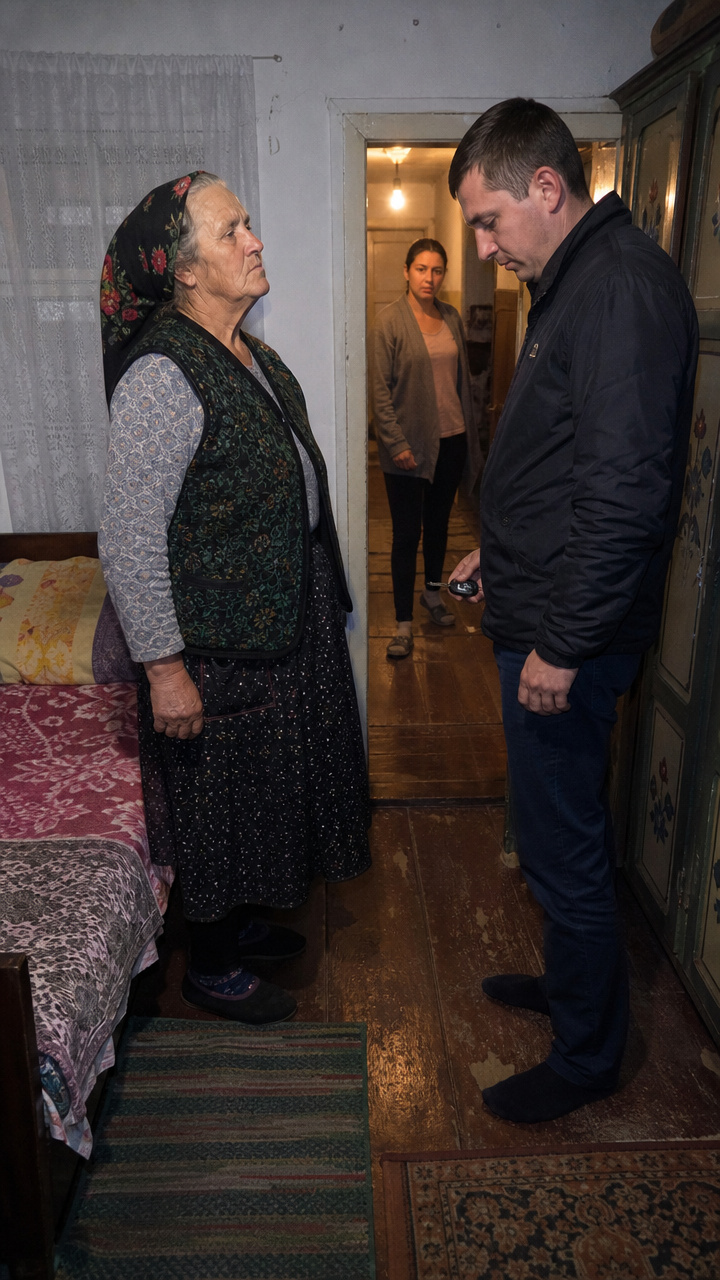
Daniel laughed.
“Tell her she’s the most educated goat in the whole county.”
Margaret smiled too. Perhaps she really was.
Because if Daisy had not bitten the corner of that diploma, Margaret might have continued enduring everything. She might have kept quiet. She might have gone on giving her warmth to people who had grown used to taking it for granted without ever offering thanks.
Now her house was quieter.
But it was honest at last.
And every jar on the shelf had returned to its rightful place—not as some embarrassing relic of the past, but as proof that love can smell of tomatoes, dill, and cherries, and taste exactly like the warmth of home.