But the following Saturday, she would find the same money inside the sugar bowl.
“Kate, why do you keep doing this?”
“Mom, what kind of pension do you have? Use it to buy something for yourselves. I work. I have money.”
And Oliver…
Oliver usually called on holidays.
For his father’s birthday, he sent a picture through the messaging app—a glittering cake, flowers, and some ordinary greeting.
He came once a year in the summer, usually for no more than two days.
Emma, his wife, would step out of the car in spotless white sneakers and ask first, “Do you have decent Wi-Fi here?”
That spring, Thomas decided to paint the fence and the shutters.
His back hurt constantly, and he could no longer manage the work alone.
Margaret called her son.
“Oliver, come this weekend and help your father. If you work together, it will take only a day.”
“Mom, I don’t know. I need to talk to Emma. We may already have plans.”
“What plans, sweetheart? Your father is seventy-two.”
“Mom, I said I’ll talk to her. I’ll call you back.”
He called that evening.
His voice sounded almost apologetic, but every word had the polished quality of something prepared in advance.
“We can’t make it, Mom. Emma already booked a resort, and we’ve paid the deposit. Maybe you could hire someone? I can transfer some money.”
“You don’t have to,” Margaret said quietly.
Then she ended the call.
On Saturday, precisely at eight in the morning, Kate was already standing by the gate.
She wore old jeans and carried two new paintbrushes she had bought on the way.
She and her father painted the fence until evening.
Sophie carried cans of paint back and forth and sang songs from cartoons under her breath.
After dark, Thomas sat on the porch and stared at the freshly painted green fence for a long time.
Then he said quietly, making sure Kate could not hear him from the kitchen, “Margaret… did we ever ask her what she wanted for herself?”
Margaret gave no answer.
She only nodded slowly.
The apartment in the city—the same one they had once rented to students to pay for Oliver’s education—had been regarded for years as their son’s future property.
That was simply the way things had been in their family.
“Oliver will have it. He has a son growing up,” Thomas used to say, even ten years earlier.
Kate heard him.
She never said a word.
In July, Oliver and Emma arrived without warning.
They came on an ordinary Wednesday.
They brought a cake and expensive coffee beans, although his parents had never owned a coffee machine.
After the second cup of tea, Oliver began to approach the subject carefully.
“Mom, Dad, we’ve been thinking. The apartment will be mine eventually anyway. Why not transfer it to me now, so we don’t have to deal with the notary later? We need to sell it, add some money, and buy a larger place in the capital. Arthur will finish school soon, and then he’ll want to get married.”
Thomas slowly set his cup down.
“And when are you planning to visit your mother and me? Before we sign it over, or afterward?”
“Dad, why are you putting it that way? I do visit.”
“Once a year.”
Emma placed her hand on her husband’s knee and offered the familiar smile that always made Margaret feel uneasy.
“Thomas, surely you understand. We have jobs, the capital, an entirely different pace of life.”
The conversation ended there.
Thomas said he would think about it.
Oliver shrugged.
Emma went outside to make a phone call.
Near evening, Margaret went to the summer kitchen for a jar of cherry preserves to send home with them.
The door stood slightly open.
On the bench beneath the grapevine sat her son and daughter-in-law.
Margaret stopped when she heard her own name.
“They have nowhere else to go,” Emma was saying. “Your father is stubborn, but he’ll sign eventually. The important thing is that your sister doesn’t get into their heads first.”
“Kate won’t put anything into their heads,” Oliver answered lazily. “She’s the good one, the saint. Let her keep coming here and taking care of them, digging their potatoes. It’s not as if she has anything better to do. The apartment is mine. They promised it to me back when I was still in school.”
“And what happens if they become too frail to manage? Someone will have to look after them.”
“Kate will. I’m not going to drive here from the capital every time. If it comes to that, we’ll find them a decent care home. There are plenty of them now.”
Margaret placed the jar on the windowsill with extreme care, making sure the glass did not make a sound.
Then she returned to the house just as quietly.
That night, she and Thomas barely slept.
Margaret repeated the conversation word for word.
He listened without speaking, his eyes fixed on the ceiling.
At last, he said only, “So that’s it. Kate will take care of them.”
Oliver and Emma left the next morning.
Margaret carried preserves out to the car.
She hugged her son as she always did.
He did not notice how calmly and steadily she stood.
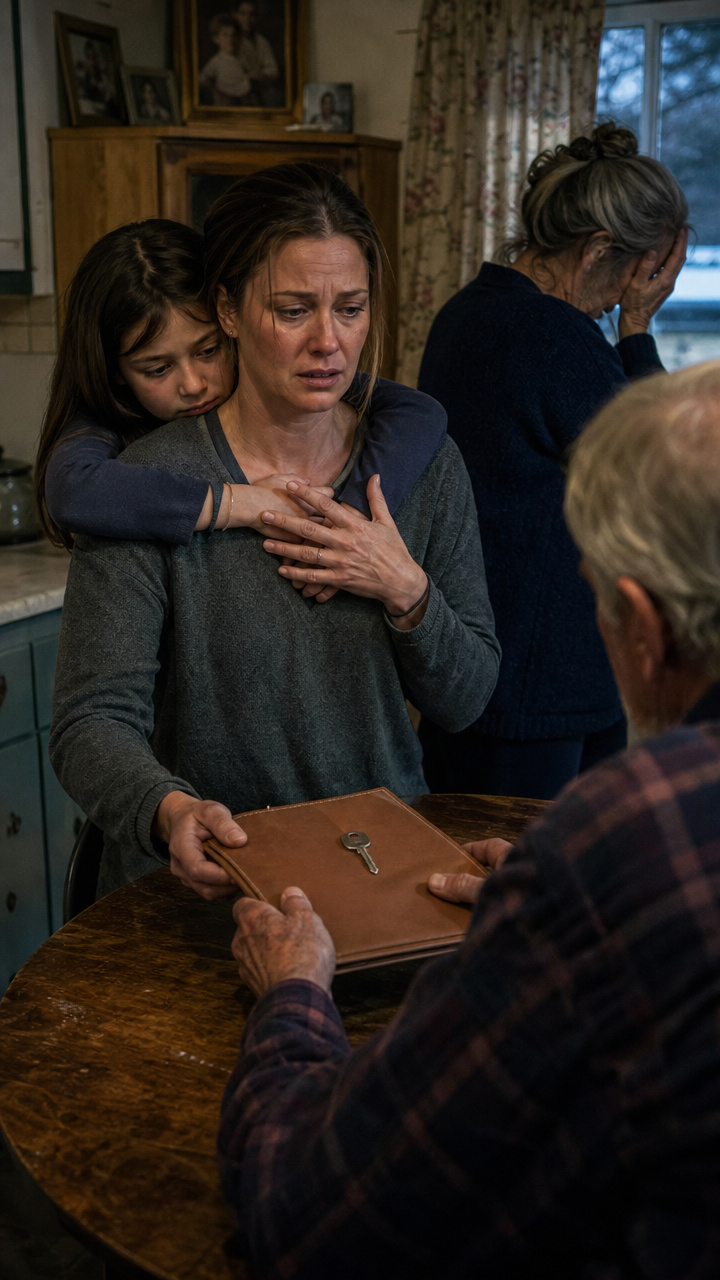
That Monday, Thomas put on a freshly ironed shirt, shaved carefully, and drove with his wife to the city to see a notary.