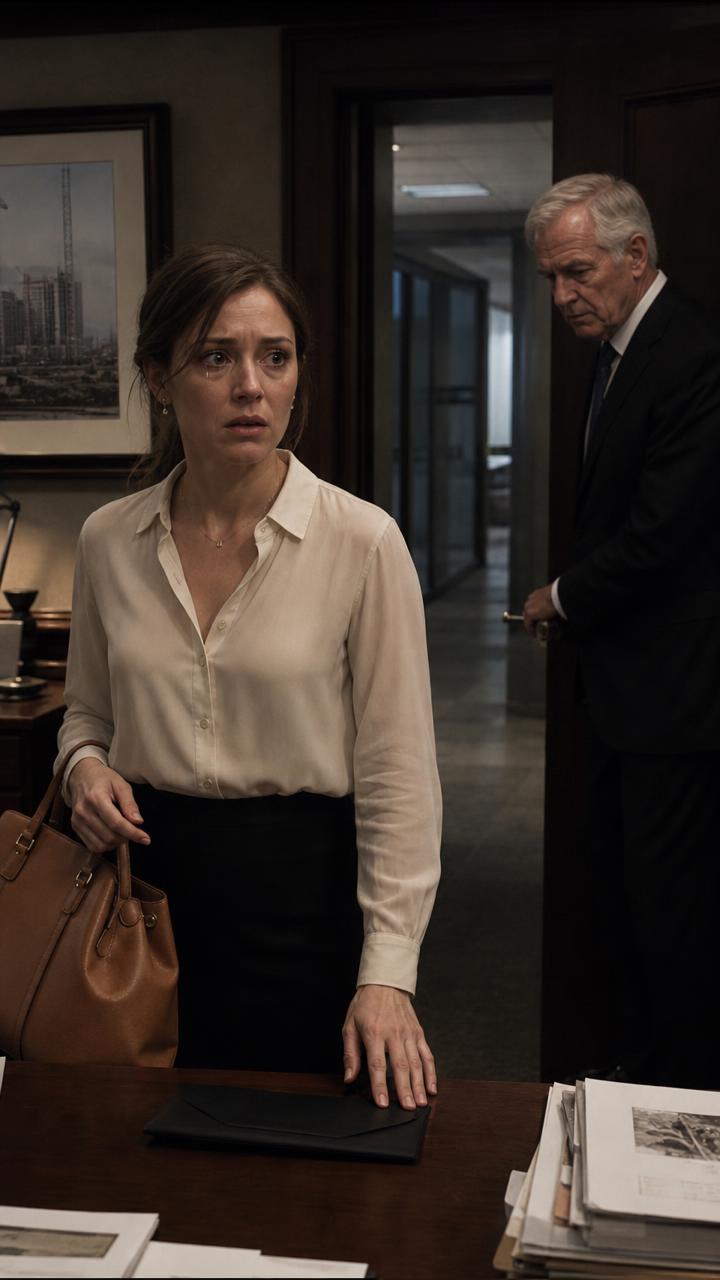
When I first accepted a job working for Richard Mercer, nearly everyone in the office told me the same thing:
“You won’t last long.”
At first, I treated those warnings as harmless workplace jokes.
Richard Mercer was seventy-four years old. He had founded one of the largest construction companies in the city and had remained its chief executive for decades. Almost everyone in town recognized his last name.
That did not mean his employees liked him.
Richard was a demanding man.
He spoke very little.
He had no patience for anyone who questioned his instructions or challenged his authority.
During the previous year alone, three personal secretaries had resigned.
I had just turned twenty-nine, and I was desperate for a stable job with a decent salary. Stories about the difficult temperament of the company’s leader were not enough to make me walk away.
For the first few months, Richard barely seemed to notice that I existed.
My responsibilities were ordinary enough.
I prepared his morning coffee.
I coordinated his business meetings.
I organized his emails.
I gathered the documents he needed.
Sometimes he issued short, direct instructions.
“Claire, don’t give this file to anyone.”
Or:
“This phone call does not need to be entered into the log.”
At the beginning, none of it disturbed me.
I assumed that protecting confidential information was simply part of being a personal secretary to a powerful executive. Anyone in my position would have access to private business matters.
About five months into the job, however, something gradually began to change.
Richard started asking me to stay late more and more often.
The other employees would leave.
The lights in the corridors would go out.
And I would remain alone in the enormous executive office with an elderly man who was old enough to be my grandfather.
One evening, he suddenly put down the papers he had been reading and studied me with unusual intensity.
“Claire, are you married?”
The question immediately struck me as inappropriate.
“No, Mr. Mercer.”
“Do you have any relatives in this city?”
“No. My mother lives in another state.”
He nodded slowly, as if considering an important detail.
“So no one is really waiting for you at home.”
A wave of discomfort moved through me.
I disliked the way he had said it.
A week later, Richard unexpectedly ordered dinner for me from one of the most expensive restaurants in the city.
I politely refused.
He did not even look in my direction.
“I didn’t ask whether you wanted it.”
That night, on my way home, I made myself a firm promise.
If Richard Mercer crossed my personal boundaries even once more, I would submit my resignation immediately.
Soon, however, something much more frightening happened.
It was Friday.
The workday had ended hours earlier, and everyone else had already gone home.
At around seven in the evening, Mr. Mercer appeared in the doorway of his office.
“Claire, come in here.”
I automatically reached for my notebook.
“You won’t need that,” he said, stopping me.
His voice was unusually quiet.
I followed him inside.
Richard waited until I had crossed the threshold.
Then he shut the door.
A second later, I heard the lock turn.
My heart began to pound.
“Mr. Mercer, why are you locking the door?”
He did not answer.
He walked calmly to a large cabinet, opened the bottom drawer, and removed a thick black envelope.
Then he turned toward me.
“Remember this, Claire. From now on, you must not tell anyone anything.”
That was when I became truly afraid.
“I’m sorry, but what exactly do you mean?”
He moved toward his desk.
“Sit down.”
“Thank you, but I’d rather stand.”
For several long seconds, the older man silently examined my face.
Then he said, “You’re a very intelligent young woman. That is why I chose you.”
By then, I was almost certain that this had nothing to do with my normal duties.
“Chose me for what?”
Richard placed one hand over the envelope.
“You don’t need to know that yet.”
I took an involuntary step backward.
“If this conversation isn’t about my work, I’m leaving now.”
His expression hardened.
“If you walk out of that door, you may not have a job to return to tomorrow.”
I froze.
Tears filled my eyes, but not because I was frightened.
I was furious.
“You have no right to speak to me like that!”
Richard drew a deep breath.
“You may be absolutely right.”
Then he walked over to the door and unlocked it.
“You can go home.”
I did not say another word.
I picked up my purse and hurried out of the office.
That night, sleep would not come.
Anxious thoughts kept circling through my mind.
Should I contact the police?
Should I resign immediately?
Or should I wait until Monday and try to understand what had really happened?
I could not figure out what the elderly executive had wanted from me, or why he had chosen a moment when the entire building was empty to hold such a disturbing conversation.
The next morning, at exactly 9:10, my phone rang.
An unfamiliar number appeared on the screen.
“Ms. Bennett?”