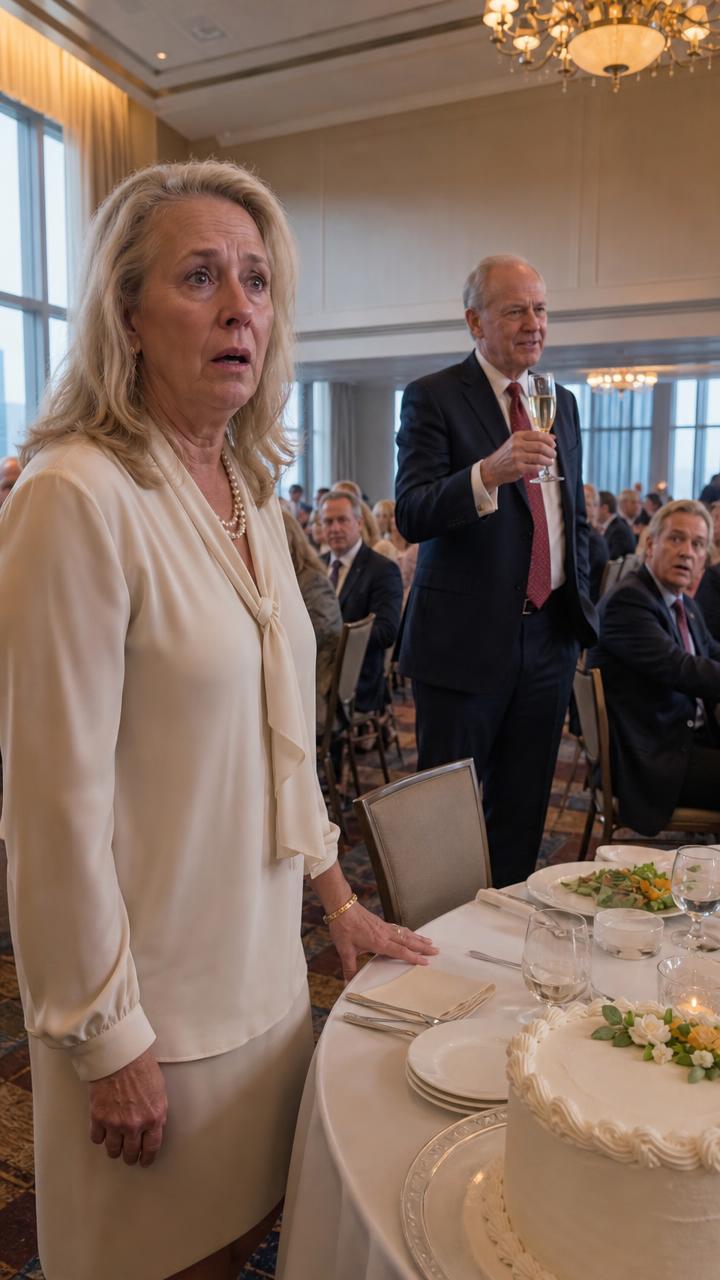
He smiled.
“After retiring, Claire agreed to stay on as a consultant. Tonight, now that the project has received final approval, I want to ask her publicly to lead it.”
My stunned mind was still trying to catch up when he added one more sentence.
“And the program will carry her name.”
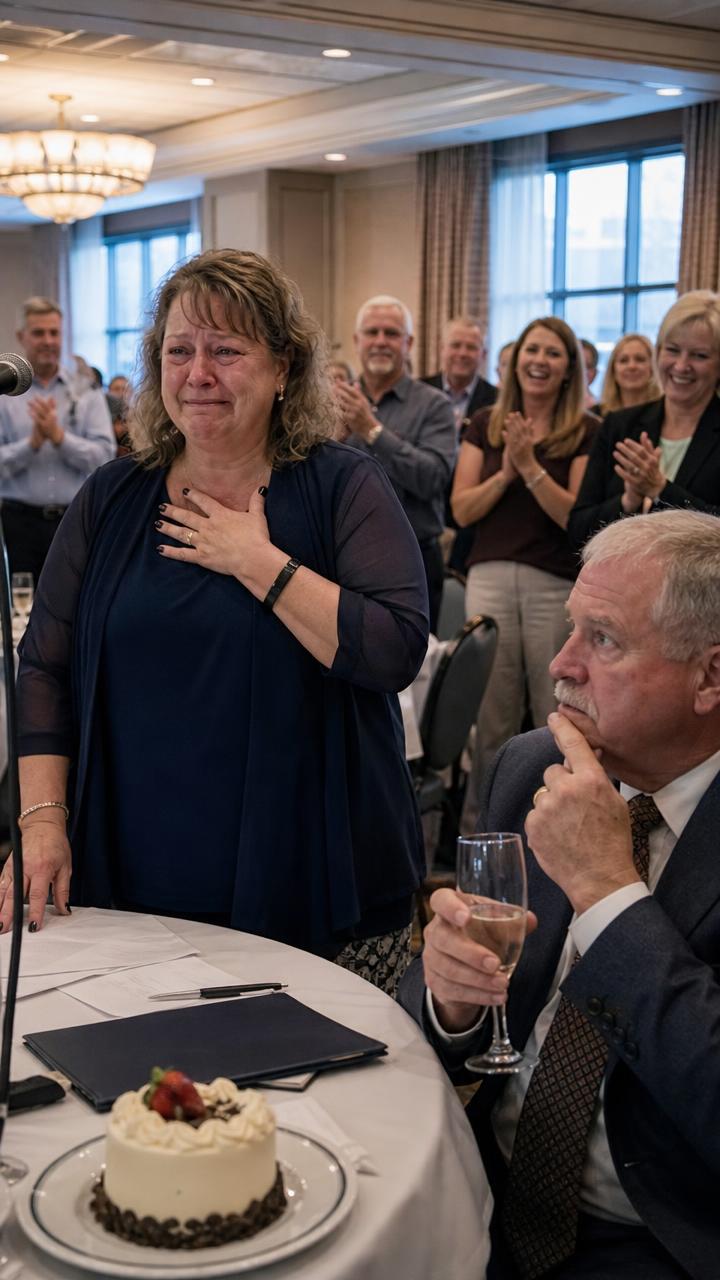
He had barely finished speaking before the entire room rose.
The applause was deafening.
I turned toward Daniel.
His expression had changed.
He was not angry—not yet. He was not even openly embarrassed.
He looked frightened.
At once, I understood why.
For years, he had tried to become an important man.
He attended social events, joined clubs, handed out business cards, posed for photographs with influential people, and constantly chased the recognition he believed he deserved.
And now, in less than a minute, I had been given the public role he had wanted his entire life.
The difference was that I had never chased it.
I had earned it through my work.
And the surprises were not over.
Mr. Bennett said, “Someone else should speak tonight.”
A woman stood from the front row.
It took me a moment to recognize her.
“Hannah?”
She smiled.
“Hello, Claire.”
Then she turned toward the audience.
“Eight years ago, my husband became seriously ill. The medical bills arrived faster than I could understand our insurance policy. I was exhausted, terrified, and nearly ready to give up.”
I remembered her.
The folder resting in her lap.
The way her hands had trembled.
How she apologized every time she asked another question.
Hannah continued.
“I had already spoken to three different employees, and each one gave me a different answer. Eventually, they sent me to Claire.”
She looked at me.
“She stayed after hours. She called several departments. She sat with me while I cried over a cup of terrible coffee and told me, ‘We’ll go through it one step at a time until it makes sense.’”
I covered my mouth with one hand.
Hannah paused before continuing.
“She helped me receive everything I was entitled to. Because of her, I later became a volunteer myself and began helping other families facing similar situations.”
Then she added, “Some professions only seem important when the day comes that you need someone who knows how to do them. Claire was important long before tonight.”
That was when I began to cry.
Not because Daniel had humiliated me.
I cried because I had allowed him to define the value of my life for far too long.
Mr. Bennett handed me the microphone.
At first, I was certain I could not speak.
Then I looked at Daniel.
He sat rigidly, still waiting for me to break apart.
This time, however, he was wrong.
I took the microphone.
“This is definitely not the speech I expected to give tonight.”
A soft ripple of laughter moved through the room.
I drew in a deep breath.
“Hannah, thank you. And yes, I remember that coffee. It was even worse than ours, which I had previously believed was impossible.”
This time, people laughed out loud.
The tension in the room began to loosen.
I looked around at the faces gathered before me.
“Throughout my career, I explained the things people were afraid to ask about. Coverage. Claims. Deadlines. Complicated language that should have been simple. I thought I was only doing my job.”
I stopped for a moment.
“Now I understand that helping someone make sense of a system while they are frightened or overwhelmed is not a small accomplishment. It has real meaning.”
Then I invited everyone to the first seminar of the new program.
The guests stood and applauded again.
Within minutes, Daniel’s attempt to disgrace me publicly had become the announcement of the next chapter of my life.
After the evening ended, he found me in the parking lot.
“Claire, wait.”
I turned around.
“You let them humiliate me,” he said.
I almost laughed.
“You announced our divorce at my retirement party.”
He rubbed his face.
“I didn’t expect things to turn out this way.”
“They turned out exactly as they did,” I replied.
At last, he admitted the truth.
“I couldn’t stand it.”
Then he finally said what had been underneath everything.
He was jealous.
“I couldn’t watch everyone looking at you. Applauding you. Telling stories about you.”
I met his eyes.
“I am somebody, Daniel.”
He took a step back.
After a long silence, he whispered, “I felt invisible.”
“You confused love with the belief that everything has to be about you,” I told him.
The next day, I packed my suitcase, met with a lawyer, and began building a new life.
A few weeks later, the first seminar took place.
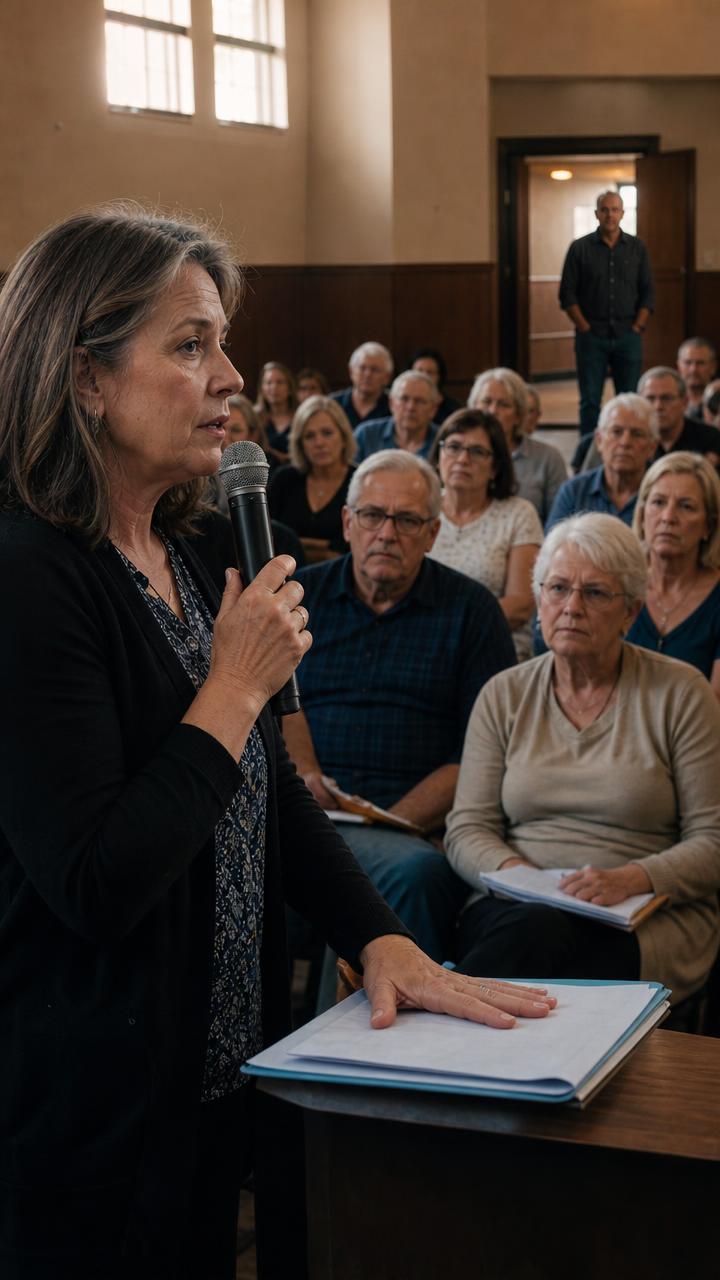
The auditorium was full.
Older adults, business owners, families, widows, and young couples filled the seats, listening carefully and taking notes.
I stood at the front with the microphone in my hand, and for the first time in a long while, I felt calm.
This was not a performance.
It was work I knew how to do.
Halfway through the presentation, I noticed Daniel sitting in the last row.
Of course he had come.
Perhaps some part of him was still hoping I would fail.
I did not.
When the seminar ended, many people stayed behind to ask questions about their own problems.
That was the best part.
Daniel was still waiting by the door as the hall slowly emptied.
“So you really don’t need me?” he asked.
There was no pride or superiority left in his voice.
Only regret that had arrived too late.
I looked around at the people we had helped—the folders in their hands, the conversations continuing around us, the relief beginning to replace their uncertainty.
Then I looked back at him.
“I needed respect, Daniel. You were the one who decided it was optional.”
He had no answer.
I turned away and walked back into the auditorium.
Not toward the applause.
Toward work that truly mattered.