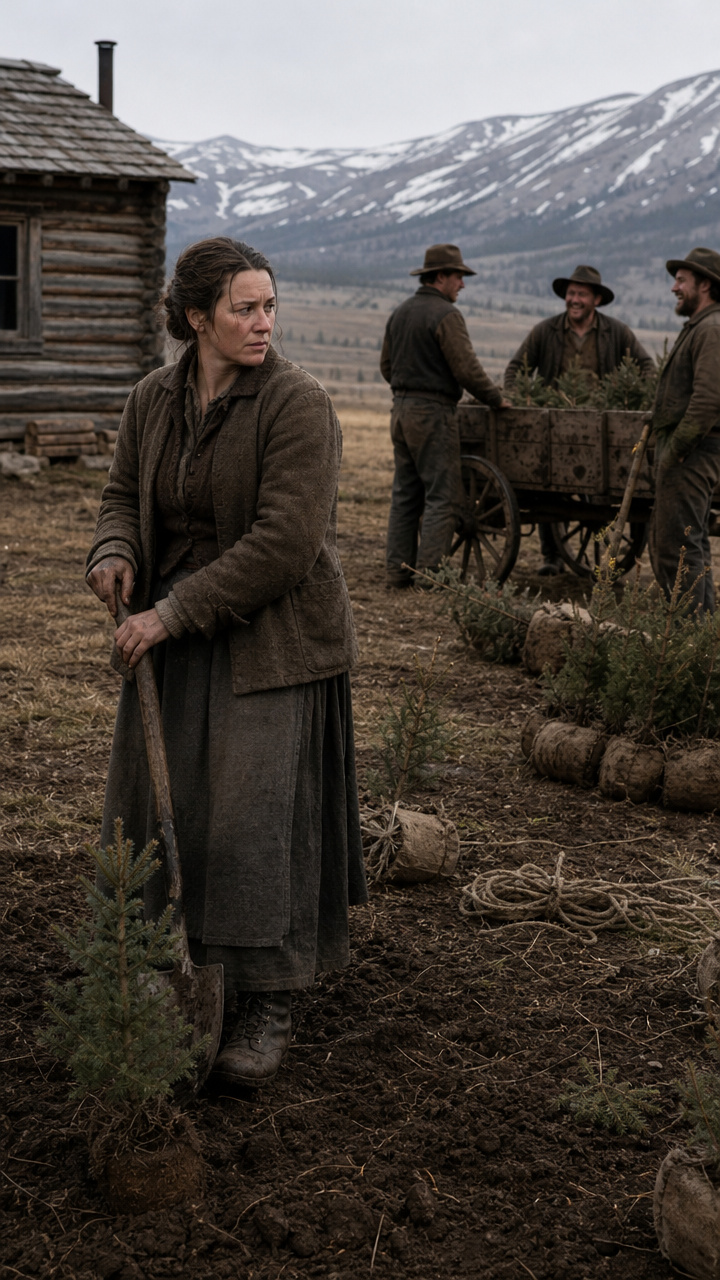
When the first snow arrived, people watched the land differently.
They looked not only at the sky, but at the ground beneath it.
Where the wind ran freely.
Where the snow collected.
Where shelter stood.
High on the northern rise, Hannah stood on her porch as the young trees darkened against the white world.
Just before dusk, Caleb came up the road with a sack of flour over one shoulder and a crooked little pine tree tucked beneath his other arm.
Hannah opened the door.
“What is that?”
“A tree.”
“I can see that.”
“It’s for the southern side.”
“The southern side doesn’t need a windbreak.”
“No,” Caleb said. “But someday you may want shade.”
She looked at the little pine, then at him.
“Shade isn’t survival.”
“No,” he replied. “It’s something that comes afterward.”
Hannah took the tree from him.
For a long moment, neither spoke.
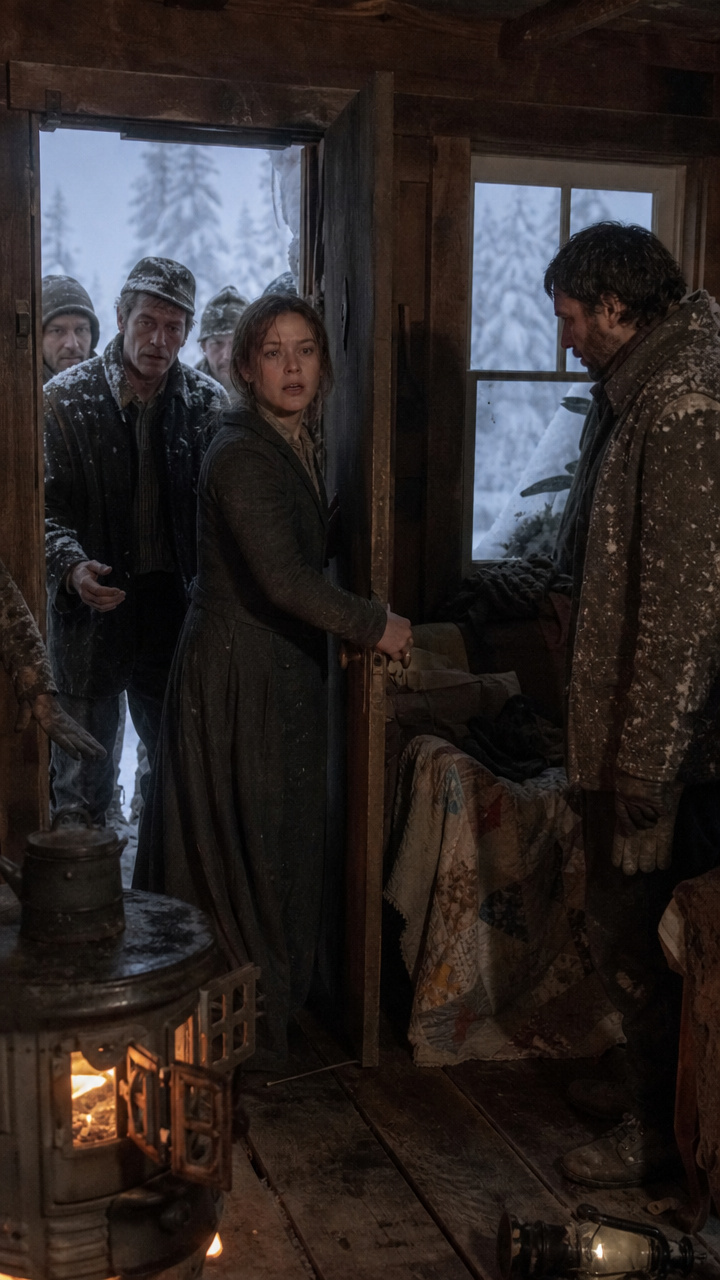
Then a boy’s voice rang from the road below.
“Mrs. Reed! My pa says your trees saved half the valley!”
Hannah turned and saw Roy’s youngest son waving from a sled.
She raised one hand.
The boy shouted, “He says we’re planting more in the spring!”
Caleb leaned against the doorframe. “What will you tell him?”
Hannah looked at the shelterbelt.
The trees were still young. Still uneven. Still scarred by the storm. But they stood in their broad, stubborn curve, holding space against the north.
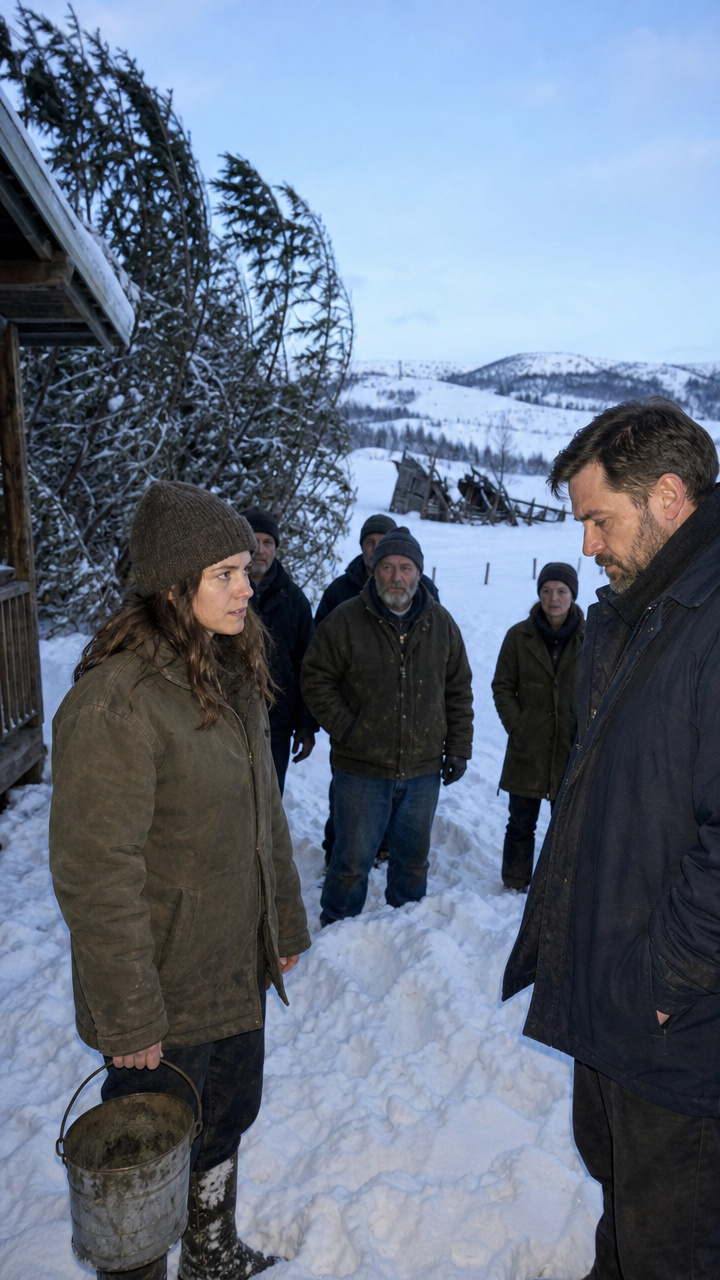
She smiled.
“Tell your father,” she called, “to dig deep holes.”
The boy laughed and disappeared down the road.
Hannah stepped back into the warmth of the cabin. Caleb followed and closed the door behind him.
Outside, winter gathered its breath.
Inside, the stove burned steadily.
And around the little house on the rise, the trees everyone had called useless took the first blow, bent beneath it, and held.