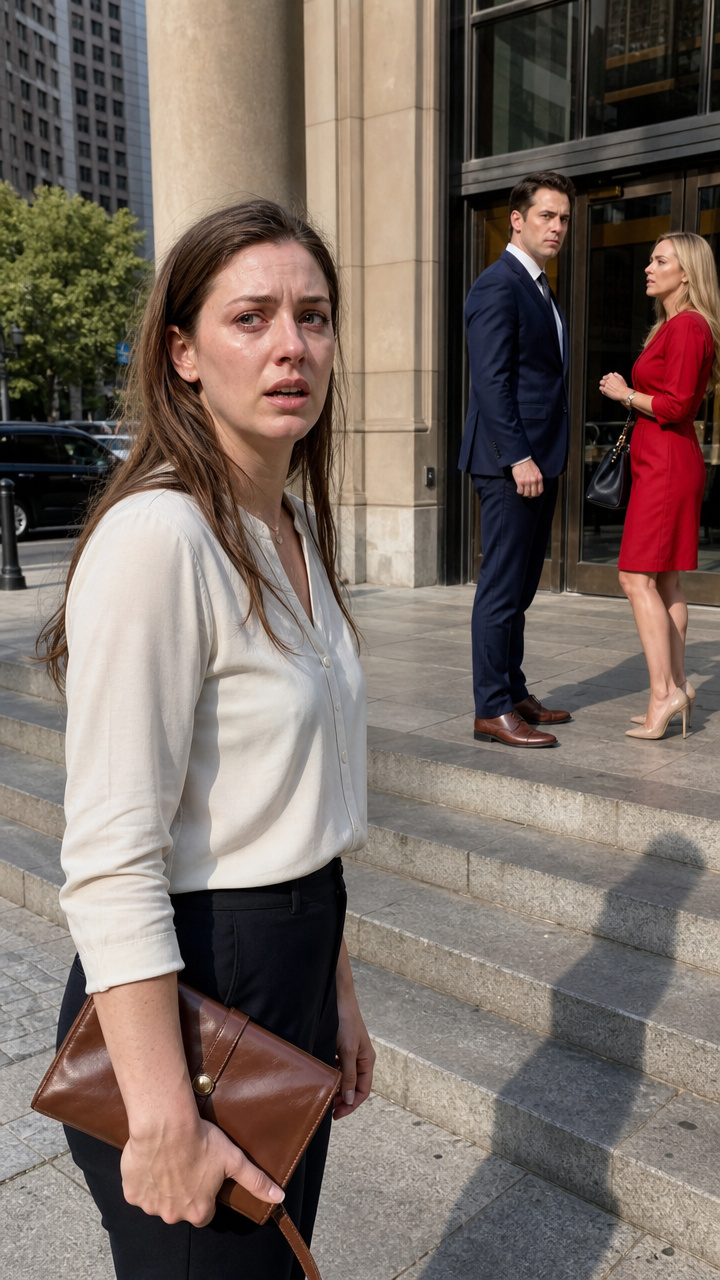
The tired father disappeared.
The chairman returned.
“Richard Ashford’s daughter does not fall because of people like this,” he said.
I wiped my face with my sleeve.
“I don’t know how bad it is.”
“I do.”
I sat completely still.
“What?”
“I’ve known enough for some time,” he said. “Contracts. Vendor payments. Inflated invoices. Access logs. Shell companies. At first I didn’t have every piece, but I had enough to know there was a problem.”
“You knew?”
“Yes.”
“Why didn’t you tell me?”
His silence was heavier this time.
“Because you would have defended him,” he said. “And if I moved too early, you would have believed I was destroying your marriage. I needed you to see him without my shadow in the room.”
The truth hurt because it was fair.
I would have defended Daniel.
I would have called my father cruel.
I would have said Margaret was misunderstood. I would have accused him of punishing the Miller family because they were not Ashfords.
I had been that blind.
Through the windshield, beyond the traffic and summer glare, I could see the glass tower of Ashford Holdings rising over Midtown. Forty floors of steel, glass, salaries, contracts, employees, history, risk, and my father’s life.
For years, I had treated it as his world.
Not mine.
That ended in the courthouse parking lot.
“Dad,” I said, and even to my own ears my voice sounded different, “I’ll be at the main office at two.”
“I’ll be ready.”
“Have Martin from HR there. Robert from security too. I want legal standing by. Before I enter the boardroom, every access card connected to Daniel and his relatives is to be disabled. Email, databases, banking permissions, vendor portals, executive elevator access, company devices—everything.”
My father didn’t hesitate.
“Done.”
“And, Dad?”
“Yes?”
“Don’t warn them.”
There was a pause.
Then came a low, approving breath.
“Your mother would recognize that tone.”
I closed my eyes for one second.
Then I started the car.
The engine came alive with a low growl.
Daniel had been right about one thing.
The roots were deep.
But he had forgotten who owned the ground.
At exactly two o’clock, I stepped out of my SUV in front of Ashford Holdings.
The building rose above Midtown with a polished glass face that reflected the city in clean silver lines. Near the entrance, the American flag moved gently in the hot wind beside the company flag. Beyond the revolving doors, the lobby gleamed with marble, steel, and money old enough not to need to shout.
For five years, I had entered that building mostly as Daniel’s wife.
That afternoon, I walked in as Claire Ashford.
I wore black trousers with sharp shoulders and a narrow waist. My hair was pulled back. My heels struck the granite floor in a clear rhythm that made conversations fade before I reached the reception desk.
The receptionist looked up and froze.
“Ms. Ashford,” she said quickly.
Not Mrs. Miller.
Ms. Ashford.
Security straightened.
An assistant near the coffee bar lowered her phone. Two analysts by the elevators stopped in the middle of a conversation.
Silence followed me through the lobby like a change in weather.
Martin Gray, the head of human resources, waited beside the private elevator. He had worked with my father for nearly thirty years. His hair had gone gray and his back was slightly bent, but his eyes remained clear behind thin glasses.
Beside him stood Robert Hayes, the chief of security, along with six officers in dark suits.
Martin held a thick folder.
“Everything is ready,” he said.
I took it.
“Has Daniel noticed?”
“His account began returning errors twelve minutes ago. We expect him to call any moment.”
“Good.”
The elevator doors opened.
We stepped inside.
No one spoke as the numbers climbed.
Thirty-four.
Thirty-five.
Thirty-six.
With every floor, something inside me became colder and calmer.
Forty.
The executive floor opened onto a corridor lined with framed photographs of the company’s milestones. First breakthroughs. Ribbon cuttings. Charity events. My father shaking hands with governors, mayors, union leaders, and employees who had spent their lives building something real.
Near the end of the corridor, behind double-pane glass, I saw the boardroom.
Margaret Miller sat in the vice chairman’s leather chair.
Not beside it.
Not near it.
In it.
She wore a red velvet dress and a pearl necklace so large it looked theatrical beneath the recessed lights. One hand held a coffee cup. The other moved through the air while she laughed with the people gathered around the table.
Thomas Miller, her brother and head of procurement, sat with his jacket open and his legs stretched beneath the glass table.
Laura Miller, her sister and chief accountant, scrolled through a tablet.
Two nephews occupied seats reserved for senior directors.
A cousin connected to the vendor relations department had a plate of pastries in front of him.
They looked comfortable.
That was the part that quieted my chest.
They were not sneaking.
They were not nervous.
They had lived inside my family’s company long enough to believe the room belonged to them.