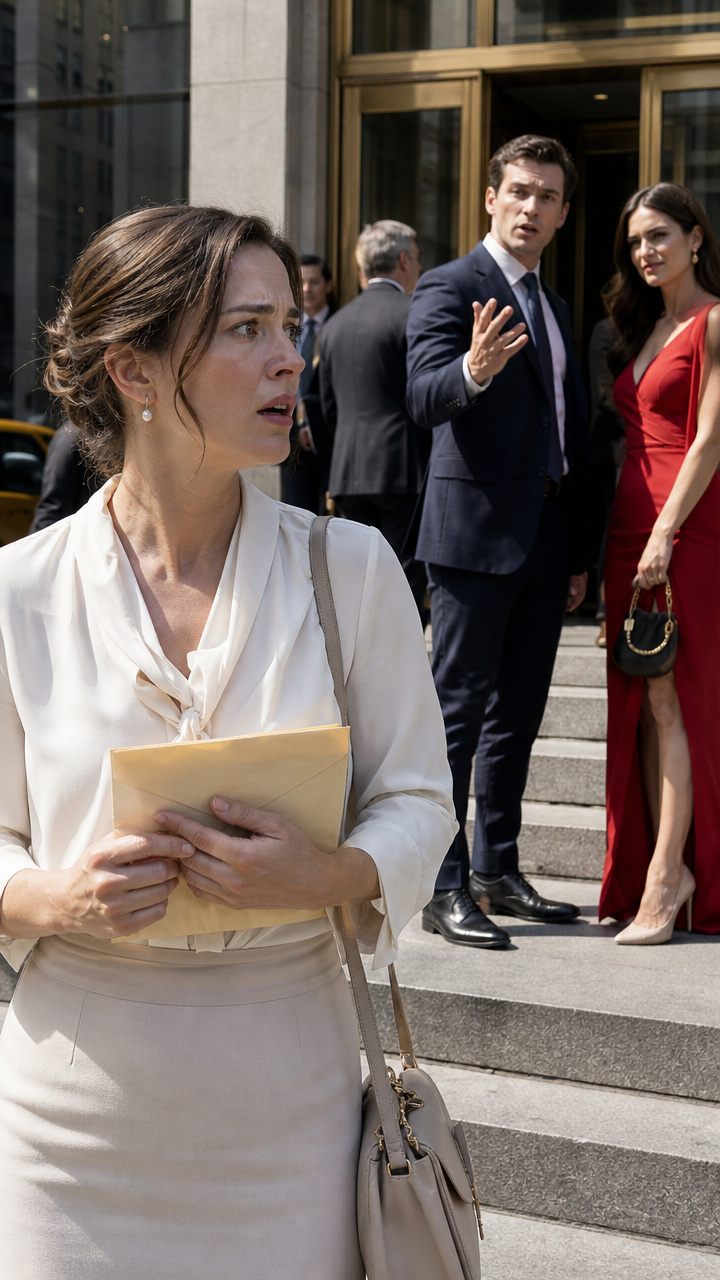
After everything, Nathan still believed there was something left to steal.
“What happens now?” I asked.
“Legal consequences are likely,” Thomas said. “Serious ones.”
I thanked him and ended the call.
I thought I would feel satisfied.
Instead, I felt exhausted.
Nathan had been educated. Charming. Welcomed. Trusted. Given opportunities people spent entire lifetimes trying to earn.
But greed had a way of convincing people that every door belonged to them—even the doors that had been locked.
That afternoon, another call came.
Unknown number.
I nearly ignored it.
Then I answered.
“Claire,” a trembling voice said, “this is Peter Carter.”
Nathan’s father.
Unlike Margaret, Peter had always been quiet. A retired elementary-school teacher who valued reputation above almost everything. During the scandal, he had disappeared. No public statement. No apology. No attempt to reason with his wife or son.
Now his voice carried careful shame.
“I wanted to apologize to you and your father,” he said. “I never imagined my family could become involved in something like this.”
I remained silent.
He continued quickly.
“This morning, I filed for divorce from Margaret. I can’t remain connected to what she and Nathan have done. I’m only asking that my old school not be dragged into this. I would like to preserve some dignity in my old age.”
There it was.
Not remorse.
Distance.
When the benefits were flowing, they had all enjoyed the same table. When consequences arrived, each person reached for a separate exit.
“Peter,” I said calmly, “the law will distinguish the guilty from the innocent. I have no interest in harming people who did nothing wrong. But dignity is not protected by abandoning responsibility at the last possible moment.”
He had no answer.
I ended the call gently.
Then I blocked the number.
That weekend, my father and I drove to the cemetery outside the city.
We took my mother’s old silver station wagon, the one she had loved because it felt less like a luxury car and more like a family memory. The road curved through dark pines. Morning air moved through the cracked window carrying the scent of rain, grass, and evergreens.
For once, neither of us needed to speak.
My mother, Helen Whitmore, was buried beneath an old pine on a quiet hill. Her name was carved into the gray stone, simple and elegant, exactly as she had lived.
My father knelt slowly and brushed a few dry needles from the gravestone with his handkerchief. His hand trembled, but the tenderness remained steady.
I placed white carnations at the base and lit a small candle.
“Mom,” I whispered, “I’m back.”
The flame shifted in the wind but did not go out.
My father stood beside me, one hand resting on his cane.
“Claire,” he said after a while, “did you ever blame me?”
I looked at him.
“For what?”
“For knowing enough to worry. For not stopping you more forcefully. For making you learn through pain.”
I turned toward my mother’s grave, then back to him.
“No,” I said. “If you had dragged me away from Nathan, I would have defended him forever. I would have called you cruel. I would have believed I was a victim of your control instead of a victim of his manipulation.”

My father’s eyes shone.
“I lost five years,” I continued. “But I found my backbone.”
He smiled then, sadly and proudly.
“Your mother would have liked that answer.”
We stood beneath the pine branches, two people who had both been lonely inside the same family for far too long.
Then my father placed a hand on my shoulder.
“The past is closed now,” he said. “Walk forward with your head held high.”
Wind moved through the trees.

For a moment, it felt almost like a blessing.
Not because everything had been repaired.
Not because the damage had disappeared.
But because the door behind me had finally closed.
For the first time in years, I was not standing in front of it, begging someone to come back.
I was walking away.
And this time, I carried the company, my father, my mother’s memory, and my own name with me.