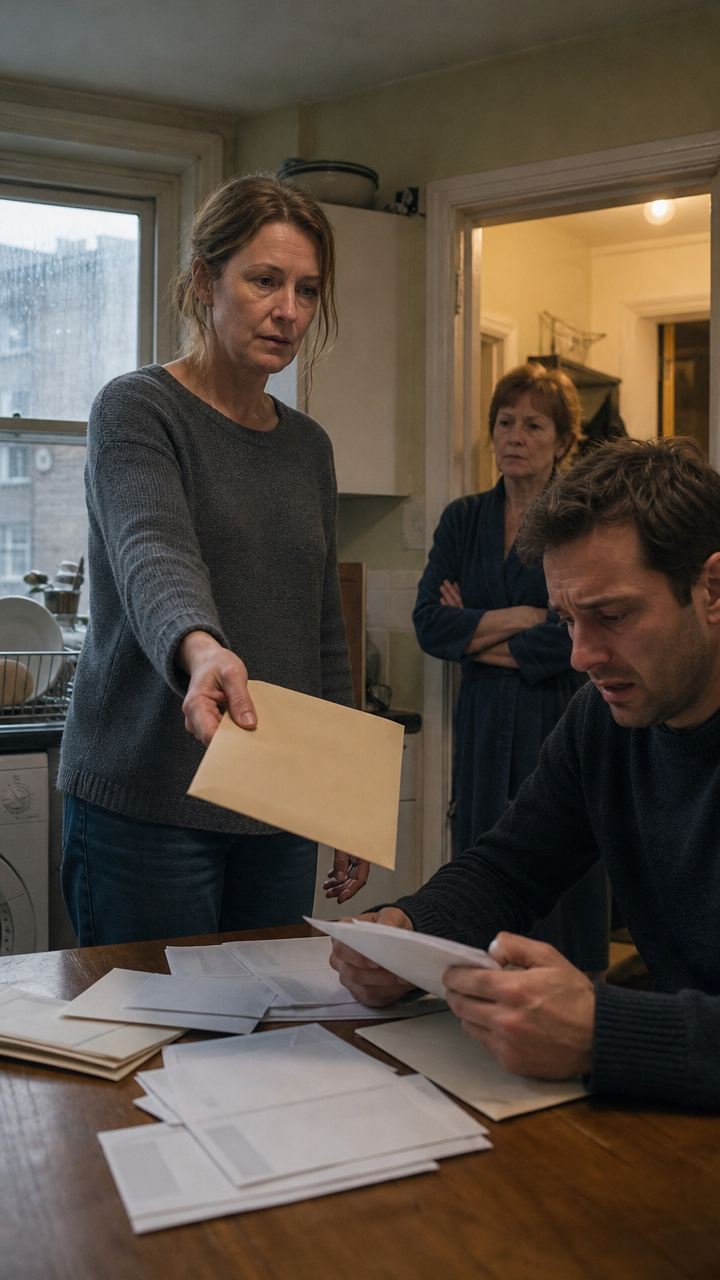
“The bills are here. The amount is pretty high. Have you paid your share of the utilities yet?”
His voice held no concern about their household expenses. It carried a sharpness he barely bothered to conceal, as though he expected to discover that Claire could not manage without him.
She did not raise her voice. She only set her cup on the table and gave him a small, almost pleasant smile. Her composure was so complete that Daniel’s confidence faltered for a moment.
“Yes, I paid it,” she said. “Give me a minute. I’ll bring you the documents.”
The envelope that made everything clear
Claire left the kitchen, crossed the hall, and took a thick envelope from her bag. She had prepared it in advance. Inside were printed bank transfers, receipts, and detailed calculations covering the past two years, all arranged by date and amount. On top lay another official document bearing a stamp.
Daniel accepted the envelope without concern. He clearly expected to find an ordinary utility receipt and perhaps a few shopping slips. But the longer he studied the papers, the more his expression changed. His self-satisfied smile disappeared, replaced by unmistakable unease.

“Claire… what is all this?” he asked at last. “Why did you collect these documents?”
“These are the results of our little financial experiment,” she answered without anger. “They show exactly how much each of us has contributed to our shared life over the past two years. I paid for nearly everything—from the major bills to your personal obligations, which somehow became ‘family expenses’ whenever it suited you.”
The housing payments during the months when Daniel had no income.
The household purchases that always came with the same line: “It’s not difficult for you to cover it.”
The financial help Claire had given his relatives willingly, out of respect for her husband.
Daniel tried to object, but his words came out broken and uncertain. For the first time in years, he looked like a man who had no idea what he was supposed to say.
“You thought separate finances would allow you to spend less,” Claire continued. “And they did. Only I was the one who started saving. In two weeks, I finally saw how much money, time, and energy had been going into things you had long considered automatic.”
She fell silent briefly. Then she said, with the same calm determination, what she had gathered the documents to say.
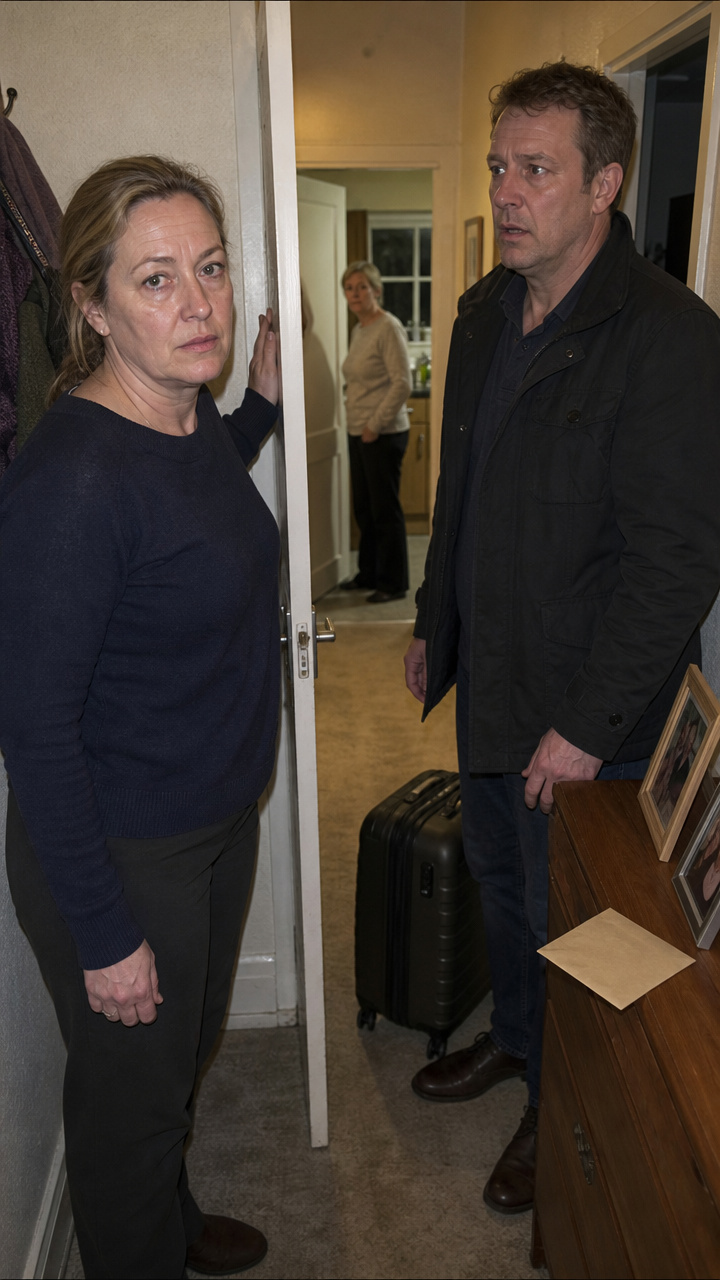
“There is one more thing. This apartment belongs to me. I bought it before we were married, and it is registered solely in my name. So you have plenty of time to pack your belongings and decide where you’ll live next. There is no need for shouting or a scene.”
When “But we’re family” came too late
Daniel looked lost. Almost immediately, he reached for the argument he had always relied on.
“Claire, why are you doing this? Are you really going to destroy everything over money? We’re a family…”
But Claire no longer wanted to argue or prove anything. There was no need for a dramatic confrontation, accusations, or a long explanation. Two weeks of living separately had revealed more than years of conversations ever could. When respect is gradually replaced by calculation, and care is treated as nothing more than one person’s convenient obligation, the word “family” eventually loses its true meaning.
The conclusion was simple. Separate finances do not, by themselves, destroy a strong relationship. What destroys it is an arrangement in which “separate” means responsibilities and expenses for one person, while comfort and privileges remain available to the other.
At last, Claire chose calm clarity over endless patience. And with that decision, a different life began for her—more honest, more peaceful, and finally free.