“With me?” Rachel’s voice burst from the phone. “I have two children and a one-bedroom apartment!”
“You also have the money from the sale of your mother’s house. She gave you roughly two hundred thousand dollars four years ago. Use it to solve the housing problem. There is no room for her here anymore.”
I ended the call.
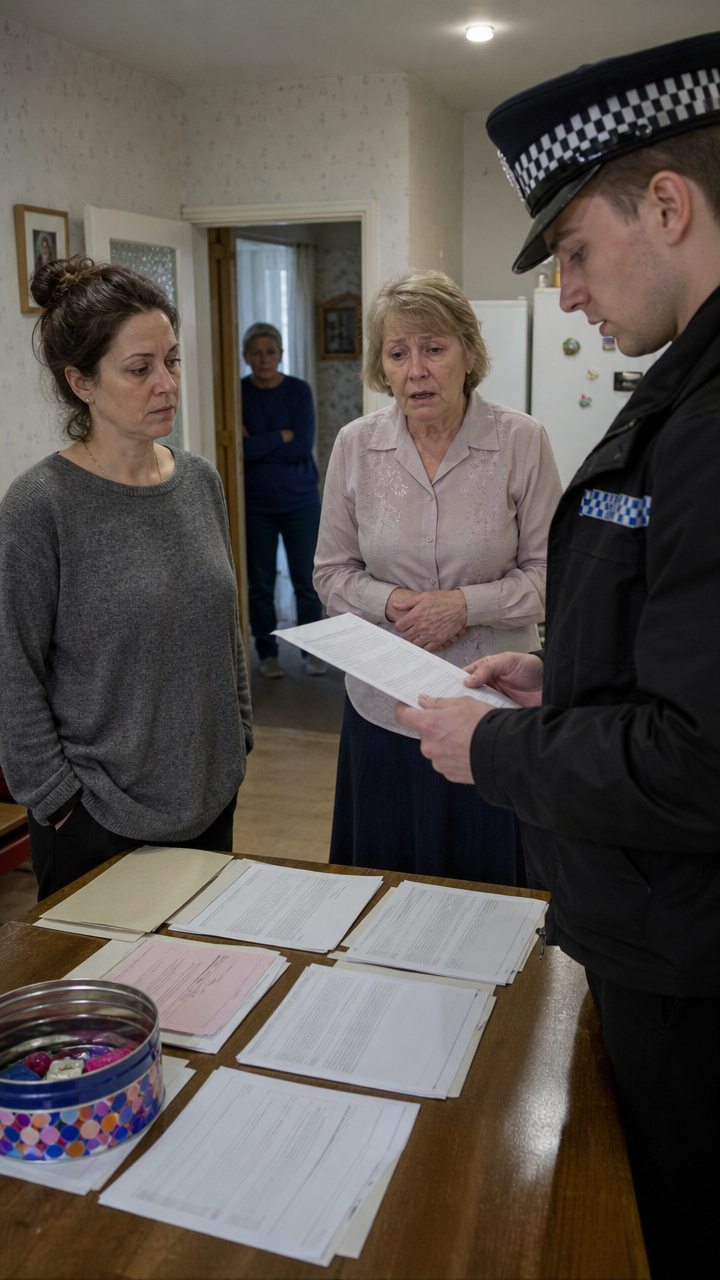
Officer Miller left about ten minutes later. He gave me his number and advised us to try to settle the situation peacefully if possible.
Helen disappeared even sooner, carrying the latest news back upstairs.
Margaret shut herself in her bedroom.
My grandfather’s sideboard stood along the wall beside her.
Its doors still opened only halfway.
I remained alone in the kitchen.
I gathered the papers.
Placed them in order.
Put them back in the tin.
Closed the lid.
It made its familiar little crackle.
Then I simply sat there for five minutes.
My shoulders dropped unexpectedly.
Only then did I realize that I had apparently held them tense for four entire years.
I never turned on the kettle.
I poured myself a glass of tap water and drank it standing up.
The way I did after a long shift.
Daniel called at nine that night.
His mother had reached him first.
She had cried.
She had told him they were putting her out onto the street.
“You gave her a written notice?” he asked.
His voice was strained and strangely unfamiliar.
“Yes. She signed it.”
“In front of the officer? In front of the neighbor? Claire, she’s sixty-six. Do you understand what you’ve done?”
“I understand. She called the police to throw me out of my own apartment. You’re away, and you heard everything from her first.”
“I’m not that far away,” he corrected automatically.
“It doesn’t matter.”
He was silent.
“I’ll be home Sunday,” he said at last. “And we’ll cancel all of this.”
“Come home. But we won’t cancel anything.”
That night, for the first time in four years, I slept until the alarm and did not wake once.
A month and a half passed.
Margaret moved out on the twenty-sixth day.
Five days before the deadline.
While I was at work, she packed her things over two days, hired a moving van, and left the key on the dresser in the hallway.
No note.
No goodbye.
She now lives with Rachel in that same one-bedroom apartment.
Margaret still has not removed herself from the registration record.
So I filed the lawsuit anyway.
I paid the court fee.
I attached the notice bearing her signature.
I included a copy of the officer’s report.
The hearing was scheduled for the fourteenth.
Daniel lives at home now.

Every Saturday, he visits his mother alone.
On those days, we barely speak.
He believes that because she has already moved out, I should withdraw the case.
Margaret has never called me.
But she tells relatives that her daughter-in-law threw her out of her home with the police.
Half the family believes her.
My grandfather’s sideboard is back in the living room.
In its old place.
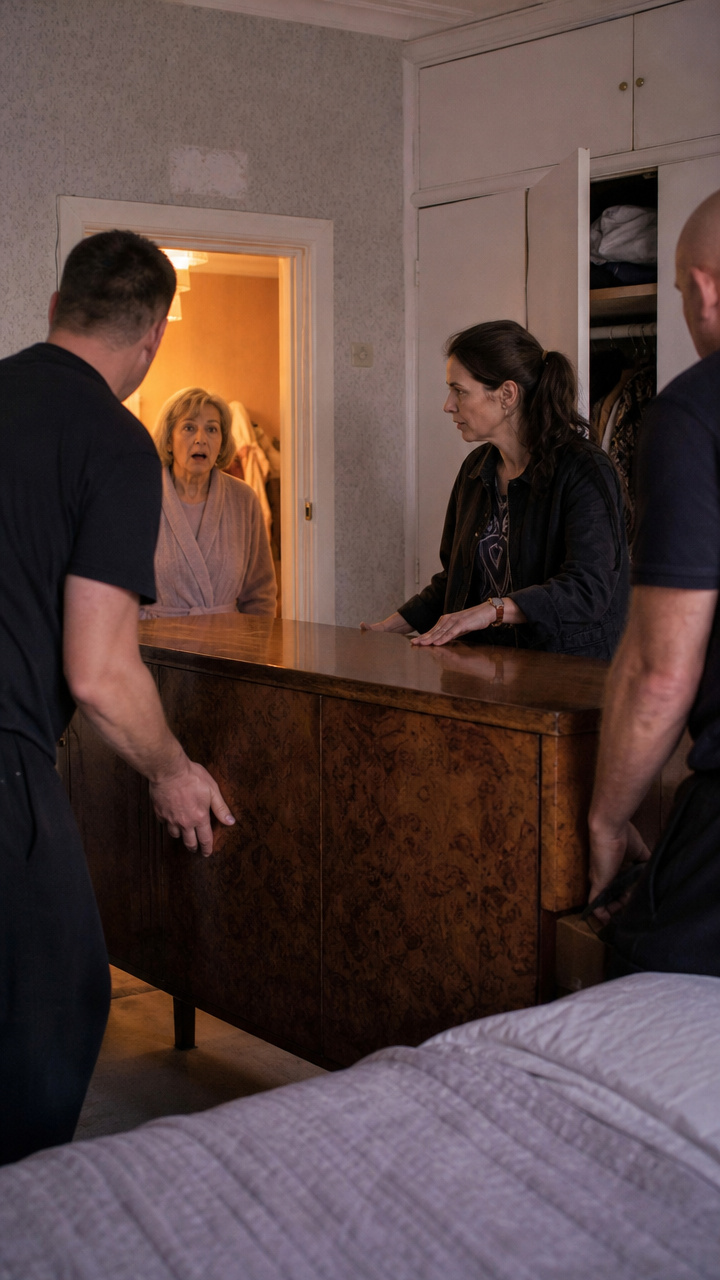
The same movers carried it back in about half an hour.
The pale rectangle on the wallpaper disappeared behind it perfectly.
Millimeter for millimeter.
She was the one who took the matter to court.
And I still have not withdrawn my claim.
Did I go too far?
Or once a boundary has been drawn, must you follow it all the way to the end?