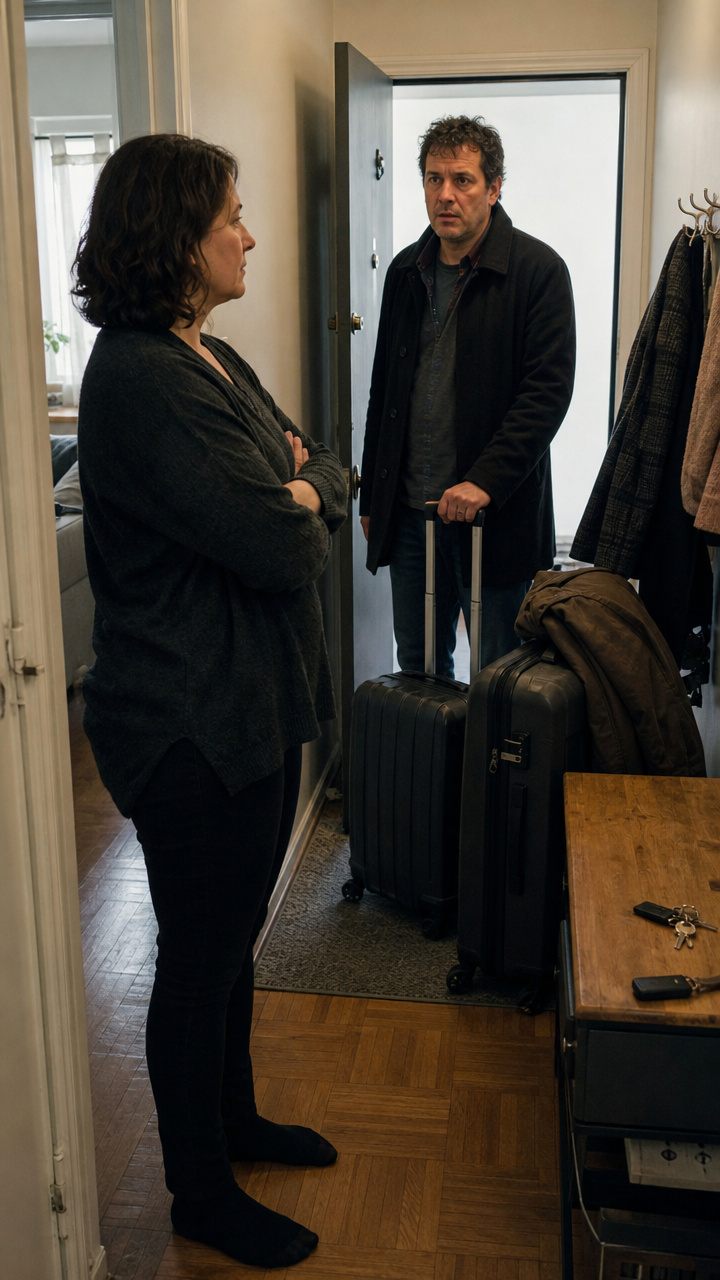
“I know. You put up the curtain rods in the bedroom and called a plumber twice. I paid for everything else. If you’d like, we can go through the receipts. They’re in a folder in the cabinet.”
He fell silent.
Not because he was hurt.
Andrew was used to thinking of this life as his own.
Not legally—emotionally.
He lived in my apartment, drove my car, and invited his friends into my kitchen.
At some point, he had stopped noticing that none of those things actually belonged to him.
Victoria probably didn’t know that either.
The phone in his pocket gave a short chime.
He pulled it out automatically and glanced at the screen. I saw one of his eyebrows twitch almost imperceptibly.
He kept the display turned away.
But I didn’t need to see it.
His face told me everything.
“She’s texting you?”
Andrew put the phone away.
“Olivia, I don’t want this to end like this.”
“Like what?”
“With bags by the door. As though I’m some guilty little boy being thrown out of his own house.”
“And how did you imagine it would happen? You spent three weeks seeing another woman, and I was supposed to wait patiently until you found a beautiful way to announce that we needed to ‘take a break’?”
His mouth opened, but no words came.
Because I had guessed correctly.
That was exactly the scene Andrew had planned.
He would come home, sit on that very stool, and say something like:
“Olivia, I have to be honest with you.”
Then I would cry and beg him not to leave.
And he would walk away generously, convinced he was a complicated man forced to make a painful choice.
A beautiful story.
At least from his point of view.
I decided to write a different ending.
“Does Victoria know this apartment is mine?” I asked.
Andrew said nothing.
But his gaze shifted away immediately.
She didn’t know.
“And the car?”
Again, silence.
“What exactly have you told her?”
He rose so abruptly that the stool scraped across the floor.
“That’s none of your business.”
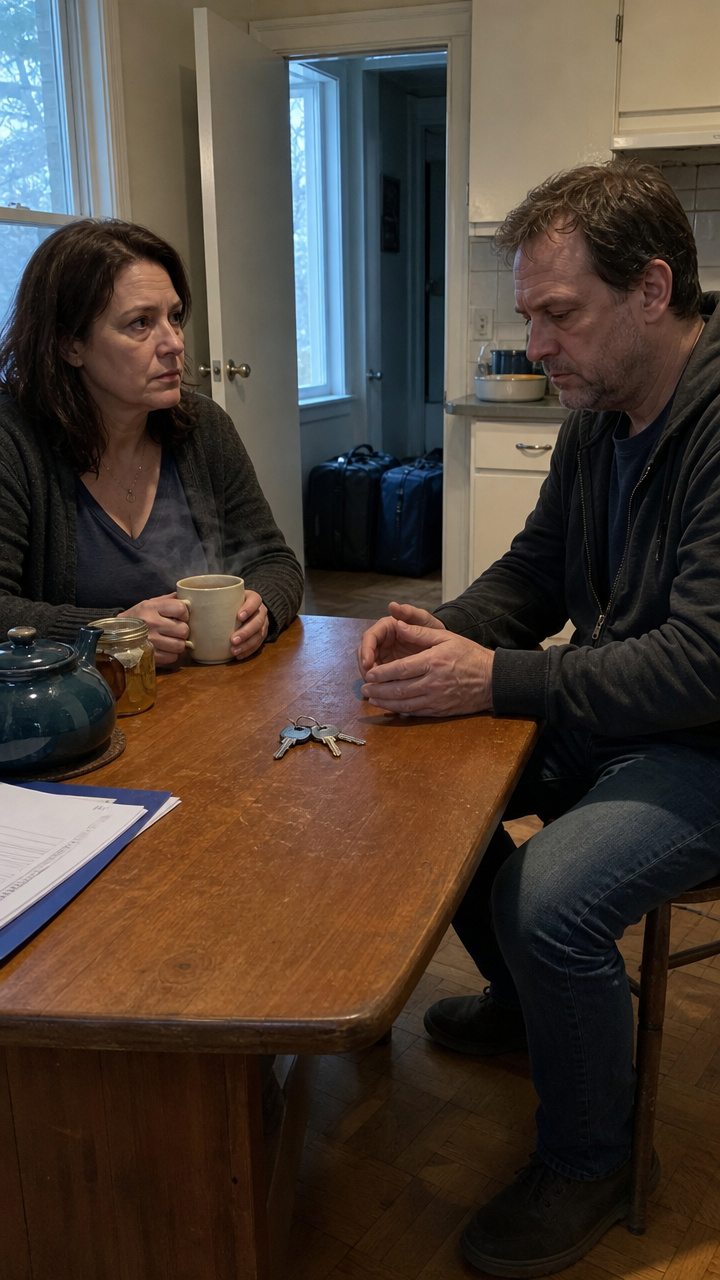
“I agree. It isn’t my business anymore. So put the keys on the hall table.”
The phone chimed again.
This time, Andrew didn’t even take it out.
He went back into the entryway.
I stayed in the kitchen, drank my tea, and listened.
There was a rustle, followed by the sharp sound of a bag being unzipped. Apparently, he had decided to inspect what I had packed.
Then everything went quiet.
The silence lasted nearly twenty seconds.
“Did you pack my blue jacket?”
“It’s in the right-hand bag. All four ties are there too.”
More silence followed.
I imagined Andrew standing beside the hall table, the keys in his hand, thinking.
Not about me.
About how he would appear in front of Victoria.
Without a car.
In a taxi.
With two heavy bags.
At work, she had seen him in expensive clothes and behind the wheel of my car.
She had heard him talk about how “we were remodeling” and how “I need to stop by the parking garage.”
To Victoria, he was a successful man who had everything.
Now all he had left were two bags, his phone, his wallet, and a blue jacket.
“Olivia.”
“Yes?”
“Could I stay here for a little while? Just one week, until I find a suitable apartment.”
I set my cup down.
“No.”
“I’ll sleep on the couch.”
“Andrew, I said no.”
He was quiet for a moment.
“You’ve become very hard.”
“I haven’t become anyone else. I was always this way. You simply never had to notice before.”
He didn’t answer.
The lock clicked.
I heard Andrew lift the bags. Judging by the sound, they were heavy.
I had packed everything.
Even the old sneakers he had once worn for his morning runs.
Back when he actually ran in the mornings.
My phone rang.
It was Irene.
“Is he gone?”
“Yes.”
“How are you?”
“Fine. I’m drinking tea.”
“Did you add honey?”
“I did.”
“Then you did the right thing.”
For the first time that evening, I smiled.
Not out of anger.
Not even from relief.
My closest friend simply knew that I always put honey in my tea when I needed to feel a little warmth.
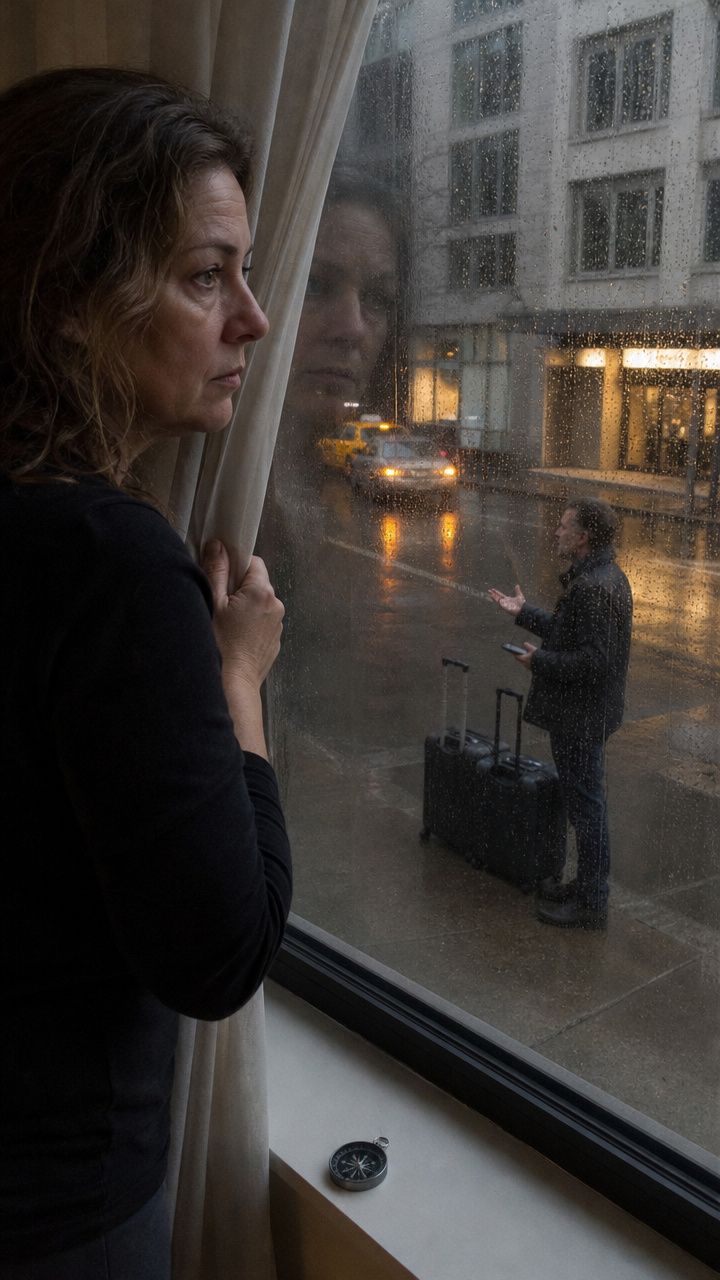
Twenty minutes later, I looked out the window.
Andrew stood outside the building with his two bags. The taxi had not arrived yet.
He was speaking on the phone.
I couldn’t hear the words, but his gestures were unmistakable.
With his free hand, he kept spreading his fingers and moving his arm outward, the way people do when they’re trying to explain:
“It’s not that simple.”
Victoria was probably asking why he was late and where the car was.
I drew the curtain closed.
The keys lay on the hall table.
Two for the apartment.
One for the car.
And a key ring with a small compass—the gift I had given Andrew for our fifteenth wedding anniversary.
Later, I removed the compass from the ring and placed it in a drawer.
Not because I was sentimental.
It was simply a good little object, and there was no reason to throw it away.
The tea had gone cold.
Outside, a fine rain drizzled against the glass.
Somewhere below, the door of the waiting taxi slammed shut.
And that was the end.