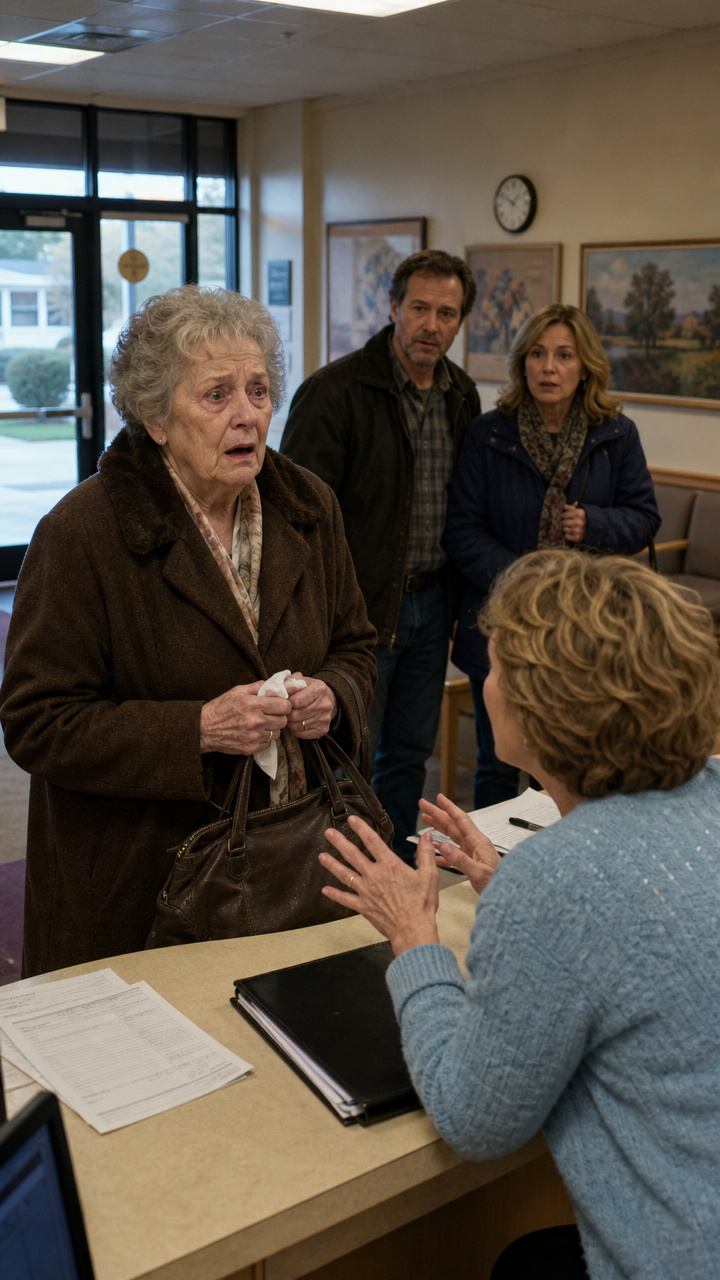
But Eleanor understood too well by then what a son’s weakness could cost when he chose his own comfort over the person who loved him most.
“You know, Daniel,” she said quietly, “betrayal rarely happens in a single day. People walk toward it gradually, one step at a time. And you followed that path all the way to the end.”
She did not shout. She did not drive him away.
But she did not allow him to move back into her house.
A month later, Eleanor made her own decision about how she wanted to spend the years she had left. She refused to return to the facility where her family had tried to abandon her like an unwanted object.
With Olivia’s help, she chose a comfortable private care home in the nearby regional center. It was clean and peaceful. The staff treated the residents with respect. The people around her spoke kindly and never made her feel guilty for every bite of food she ate.
Her daughter visited from time to time. Not often, and much later than she should have, but she came. She brought the grandchildren, sat beside her mother for long stretches, and said very little.
For what seemed like the first time in her life, she appeared to understand how much she had lost—and how ashamed she ought to feel.
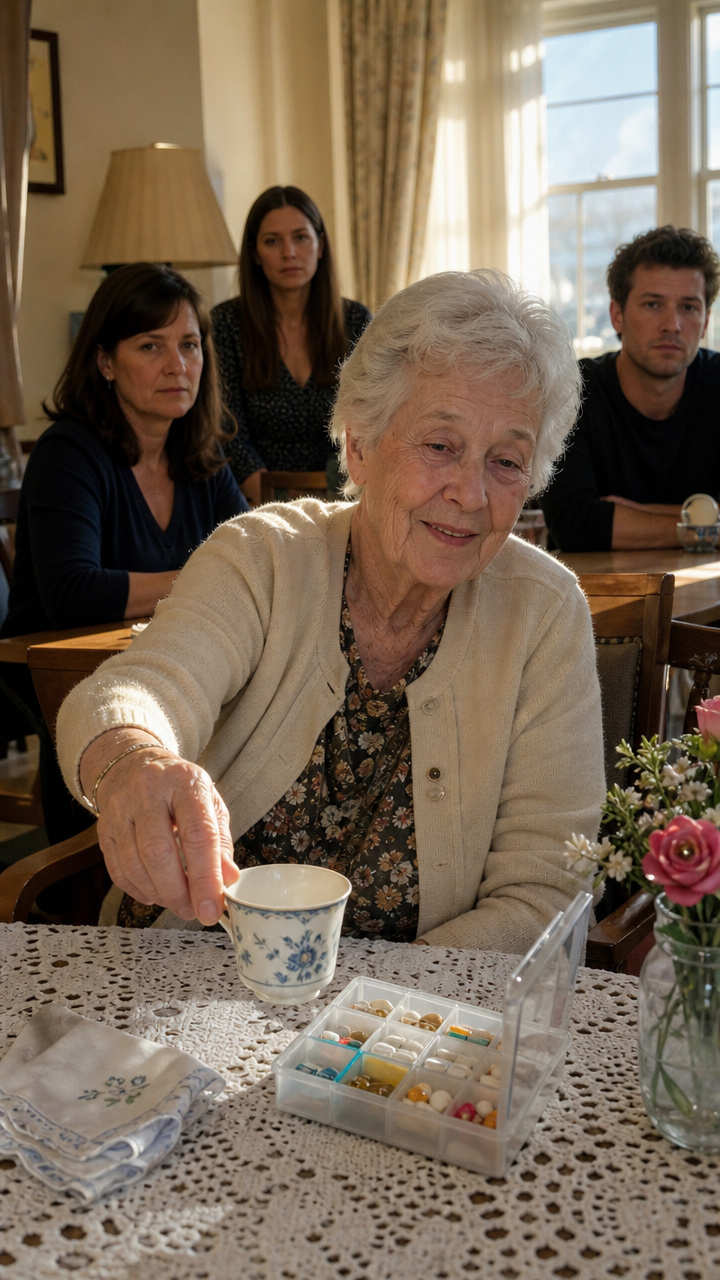
One morning, Eleanor sat at the communal table and poured herself a cup of tea. As sunlight rested quietly across the room, she realized something simple.
She no longer feared leaving her bedroom.
She no longer flinched at footsteps behind her.
She could reach for a cup whenever she wanted, eat when she was hungry, take her medicine without hiding, and live without asking anyone’s permission.
Perhaps that was the true miracle of the day her own children brought her to a place where they expected her to quietly disappear from their lives.