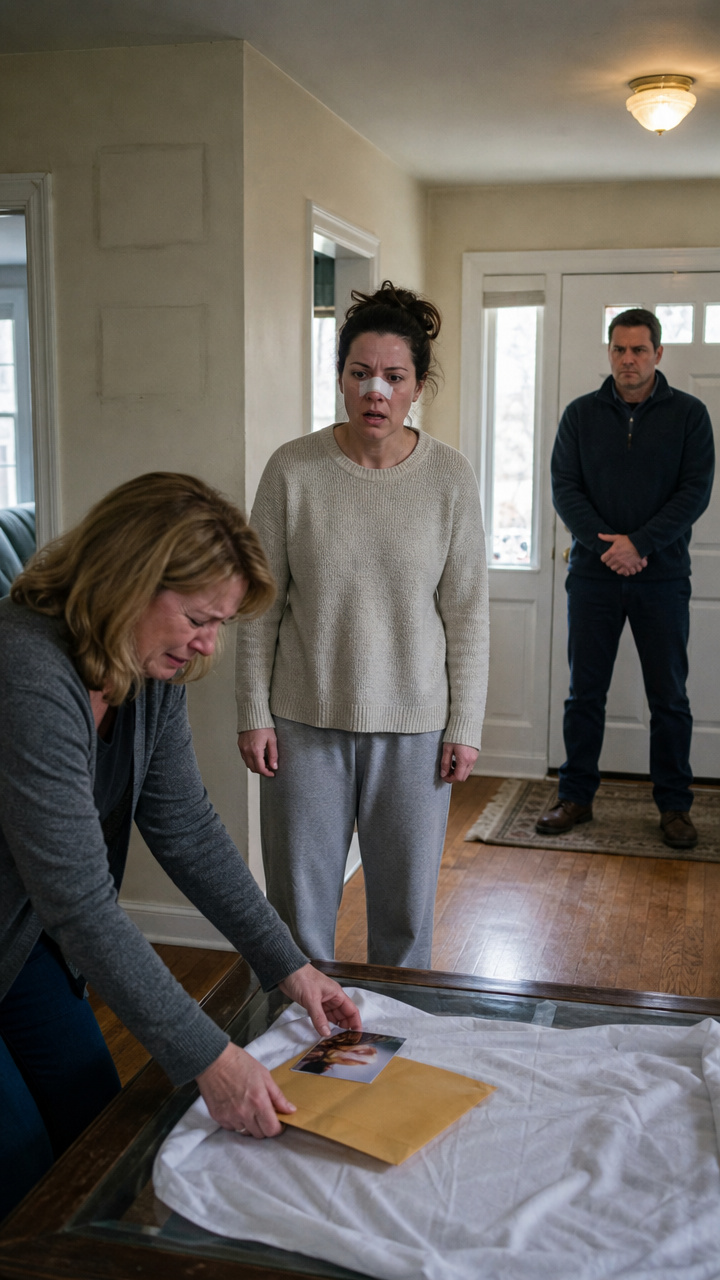
A few days later, I gave the recording, the old medical documents, and the school photograph to a lawyer.
I did not know what legal action could still be taken after so many years.
But I knew one thing with absolute certainty.
From that moment on, no one would decide how much of the truth I was allowed to know.
Three weeks later, Dr. Morgan removed the final bandage.
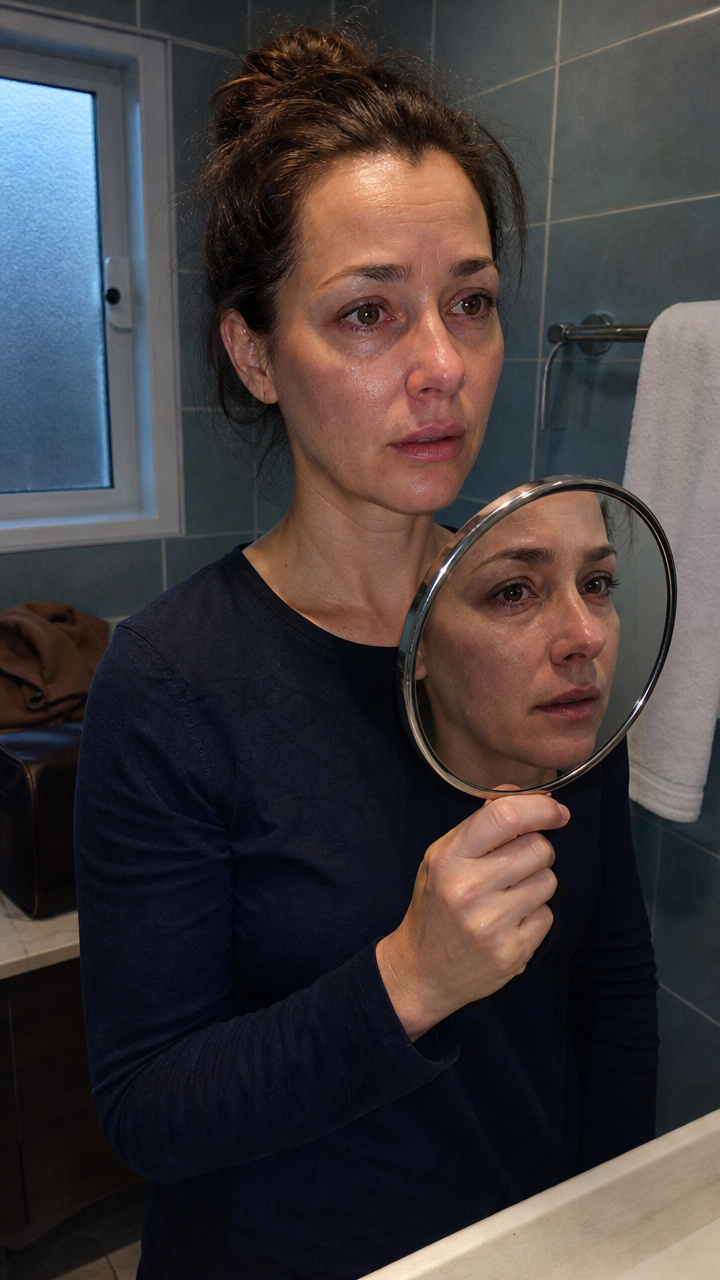
Then he placed a small mirror in my hand.
For several seconds, I held it without looking.
I was afraid.
At last, I slowly lifted it toward my face.
My nose was straight, natural, and perfectly suited to the rest of my features.
But it was not the first thing I noticed.
I looked into my own eyes.
For the first time, I saw a woman who no longer wanted to hide.
The divorce took almost a year.
Daniel did not fight me.
He signed the necessary papers and submitted a written confession describing everything that had happened at school.
My mother called me over and over.
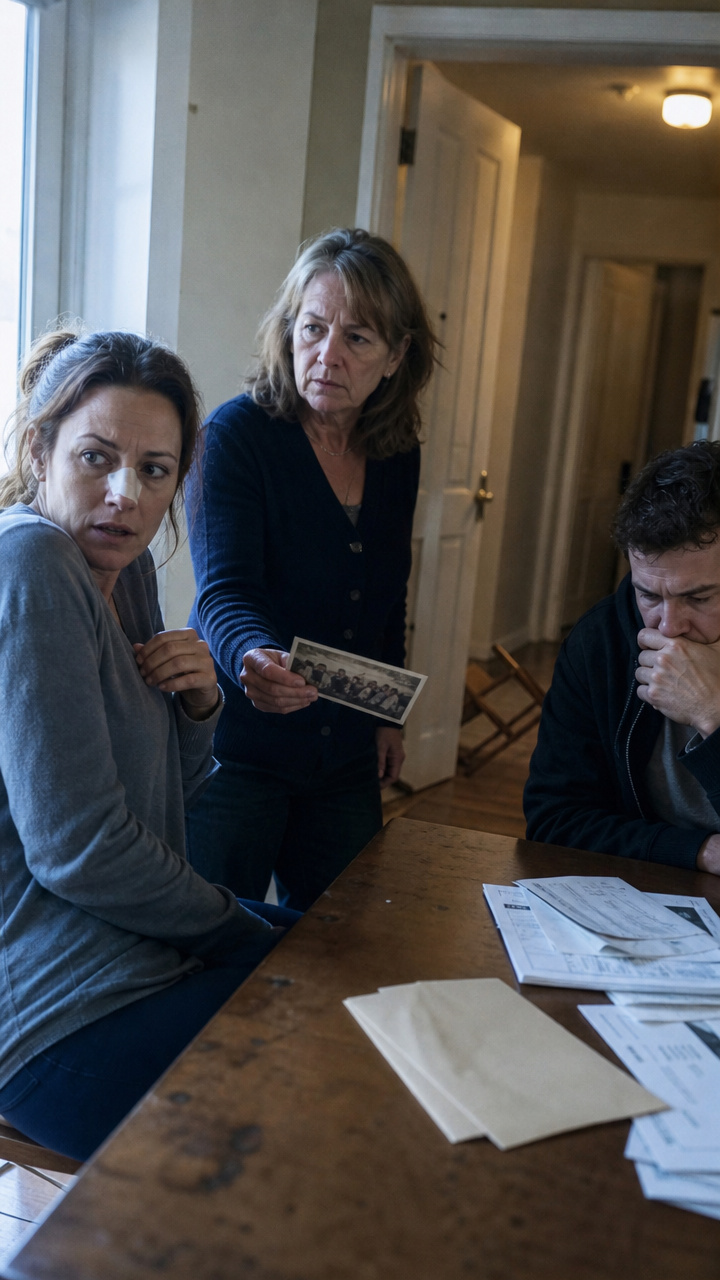
I was not ready to forgive her.
Later, I began visiting schools and speaking with teenagers about bullying.
At every meeting, I told them that one cruel sentence spoken for the sake of a laugh could remain inside another person’s memory for decades.
But I always added something else:
No insult from another person should become a sentence that defines an entire life.
The last time I saw Daniel was in the hallway of the courthouse.
He watched me for a long moment before saying quietly:
“You’re beautiful.”
I stopped.
“I was always beautiful,” I replied calmly. “You were not the first person to notice. But you were one of the first to make me doubt it.”
Then I turned and walked out of the building without trying to hide my face.
A cool breeze touched my nose, which was still sensitive after the surgery.
This time, I did not turn away or cover it with my hand.
At last, I understood that the nose I had hated for almost my entire life had never been my true flaw.
It was only the visible trace of an old injury left by a boy who later became my husband—and lived beside me for eight years.