At first, the ritual seemed almost tender.
Every evening, Daniel poured two drinks and placed one in front of his wife, as though they were quietly marking the fact that they had survived another day together.
“One drink for every day of our life side by side,” he would say, without fail.
But as the years passed, the custom changed.
It stopped feeling like an invitation.
It became an obligation.
It did not matter whether she was exhausted, ill, or struggling with pain. Daniel would set the glass before her and wait.
Silently.
Patiently.
With a calm persistence that gradually began to frighten her.
The drink had a sharp smell. Sometimes it left a strange metallic taste on her tongue, followed by a burning sensation that lingered long after the last swallow.
And there was something else she could never ignore.
Daniel never offered that drink to anyone else.
Whenever friends or relatives visited, the bottle vanished from sight.
It would return only after the guests had gone and the front door had been locked behind them.
The Night Her Doubts Became Real
One evening, their daughter Sophie, still a teenager at the time, reached toward the bottle and asked if she could smell what was inside.
She had barely extended her hand when Daniel snatched it away.
His reaction was so sudden and harsh that everyone in the room fell silent.
No one had ever seen him behave that way before.
That was the moment something deeper than suspicion took root inside her.
Several days later, she decided to test the drink herself.
Instead of swallowing what was in her glass, she waited until Daniel was not looking and poured it into the soil of a houseplant.
By morning, nearly every leaf had turned black.
She stood in front of the ruined plant for a long time, unable to look away.
Then her hands began to tremble.
For hours, she searched for information about substances capable of harming a person gradually rather than all at once.
She thought about the dizzy spells.
The unexplained weakness.
The constant fatigue she had always blamed on age, work, or the ordinary burdens of life.
And one terrible question kept returning:
What if Daniel had been trying to poison her for years?
The Truth He Took to His Grave
She learned the answer too late.
Or almost too late.
During the thirty-fifth winter of their marriage, Daniel suffered a massive heart attack.
He was taken to the hospital.
Even there, he called her every night at exactly nine o’clock.
And every time, he asked the same thing:
“Did you drink it?”
She always answered, “Yes.”
By then, she had not touched the drink in several days.
Perhaps Daniel knew she was lying.
He never confronted her.
A few hours before he died, he motioned for her to come closer.
His voice was weak, and every word seemed to cost him effort.
“Promise me you’ll keep taking it,” he whispered.
She closed her fingers around his hand.
“Daniel, please. Tell me what’s really in that bottle.”
Tears gathered in his eyes.
For a long while, he said nothing.
Then he spoke so softly that she almost missed the words.
“It’s the one truth I never found the courage to tell you.”
She wanted to demand an explanation.
But Daniel only tightened his grip around her fingers.
It was the last time they ever held hands.
A few hours later, he was gone.
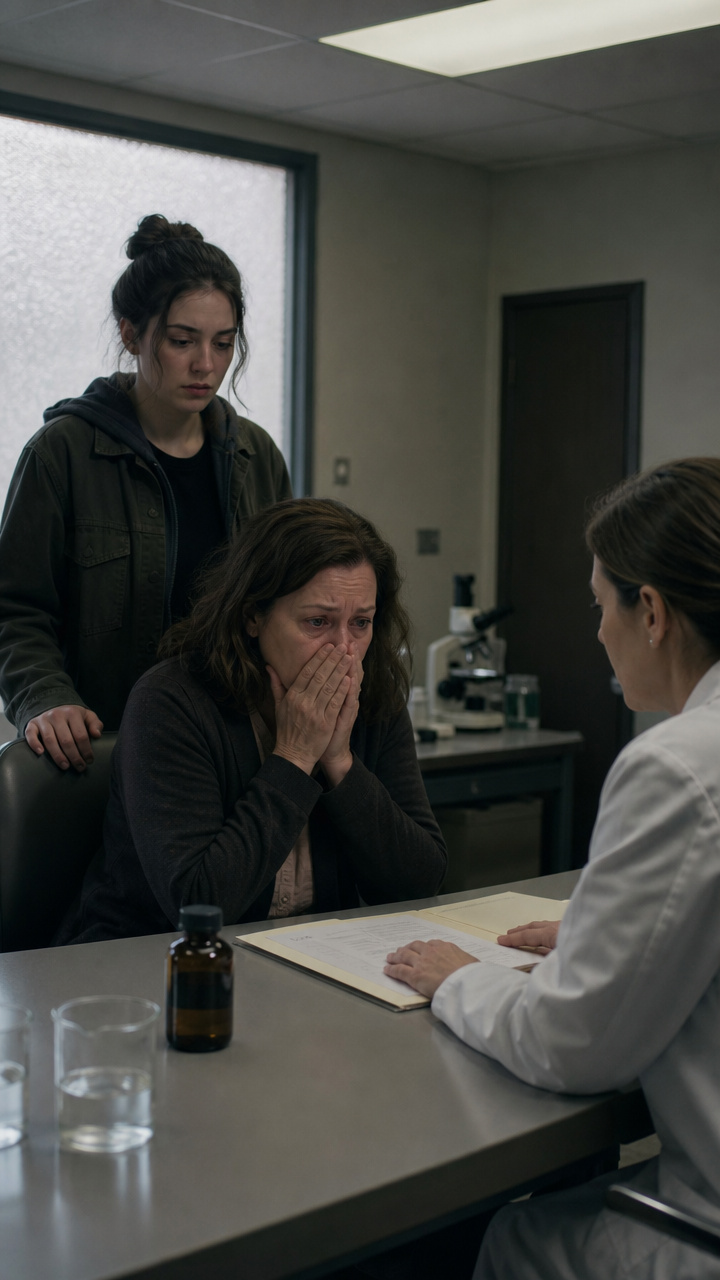
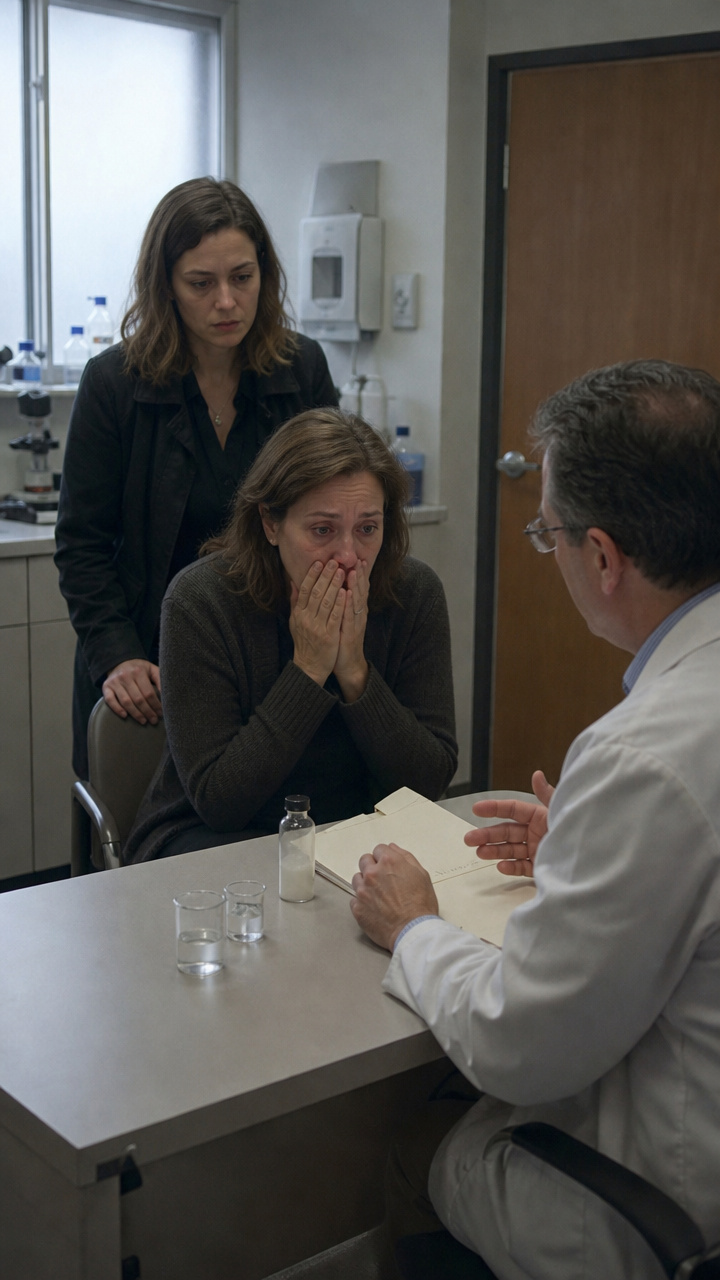
After the funeral, she took the bottle to a private laboratory.
They told her the results would be ready in a few days.
On the third day, the laboratory called and asked her to come in person.
They also suggested that she not come alone.
She brought Sophie with her.
Inside the doctor’s office, the physician closed the door, placed a folder on the desk, and remained silent for several seconds.
She braced herself for the worst.
Instead, his first words left her completely stunned.
“It isn’t poison.”
She stared at him.
“What?”
“The bottle contains a specially prepared medication. It is prescribed for an extremely rare inherited disorder.”
Sophie turned toward her mother before the doctor had even finished speaking.
The woman could not understand.
The physician continued.
During the first year of her marriage, she had collapsed without warning.
After a series of examinations, doctors had discovered that she suffered from a rare hereditary illness—the same illness that had eventually killed her mother.
At the time, the diagnosis had devastated her.
She had refused treatment outright.
She did not want pills.
She did not want appointments.
She did not want to discuss the disease at all.
As the years went by, she had pushed the entire episode so far out of her mind that it felt as though it had never happened.
Daniel had not forgotten.
He remembered every detail.
He had found a specialist.
He had spoken with doctors.
For decades, he had arranged for the medication to be prepared and supplied.
Then he had secretly mixed it into their nightly drink, convinced that if he told her the truth, she would refuse treatment all over again.
“But why did he drink it with me?” she asked, barely able to make her voice heard.
The doctor looked at her with quiet sadness.
“There was no medication in his glass.”
“Then what was he drinking?”
“Plain bitter fruit juice.”
She covered her face with both hands.
Thirty-five years.
Every evening.
Two matching glasses.
Daniel had drunk beside her only because he could not bear for her to feel sick, different, or alone.
Along with the laboratory report, Daniel had left behind a letter.
It was given to the family after his death.
There was only one sentence in it, but she read it again and again:
“I was willing to let you hate me someday, as long as you were still alive when that day came.”
For a long time afterward, she could not bring herself to look at the empty chair across from her.
Yet the ritual did not disappear.
Every night at nine, she takes out two glasses.
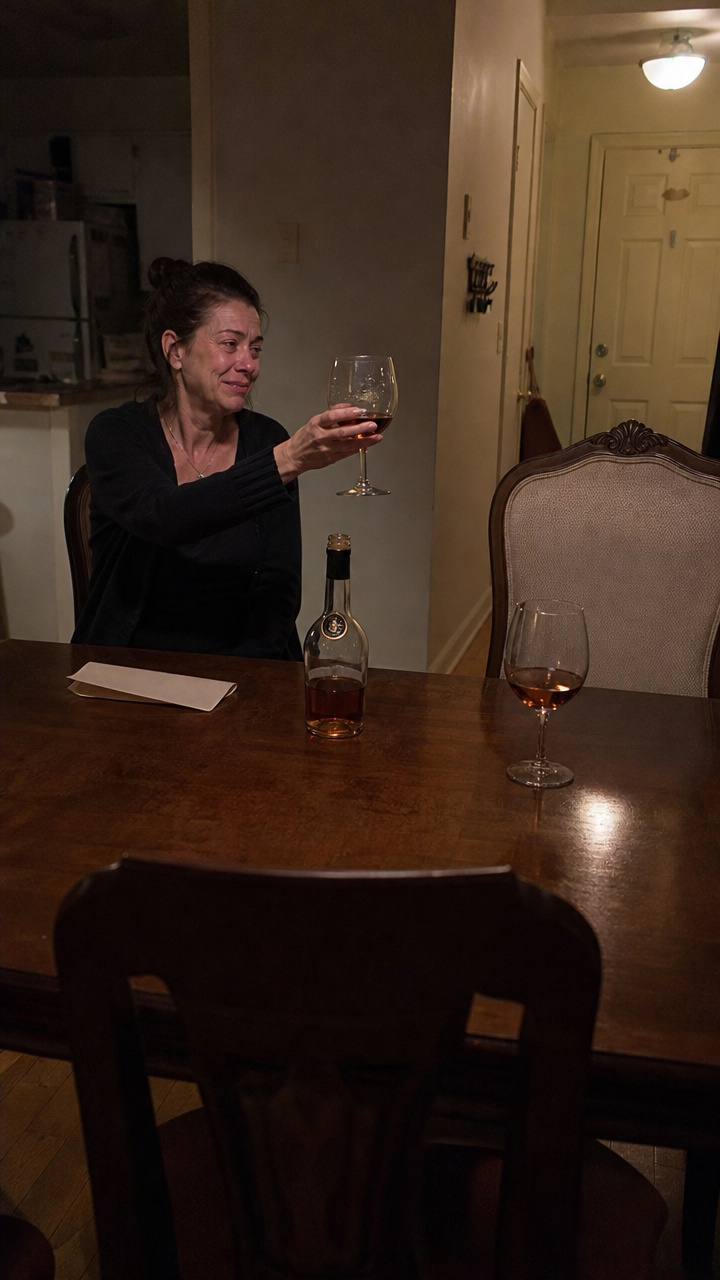
She places one in front of herself.
The other goes opposite her, beside the vacant chair.
She pours her drink.
Raises the glass.
And whispers,
“To one more day.”
Now she understands that what had seemed for so many years like control, pressure, and cruelty was, to Daniel, a desperate and deeply flawed attempt to keep her alive.