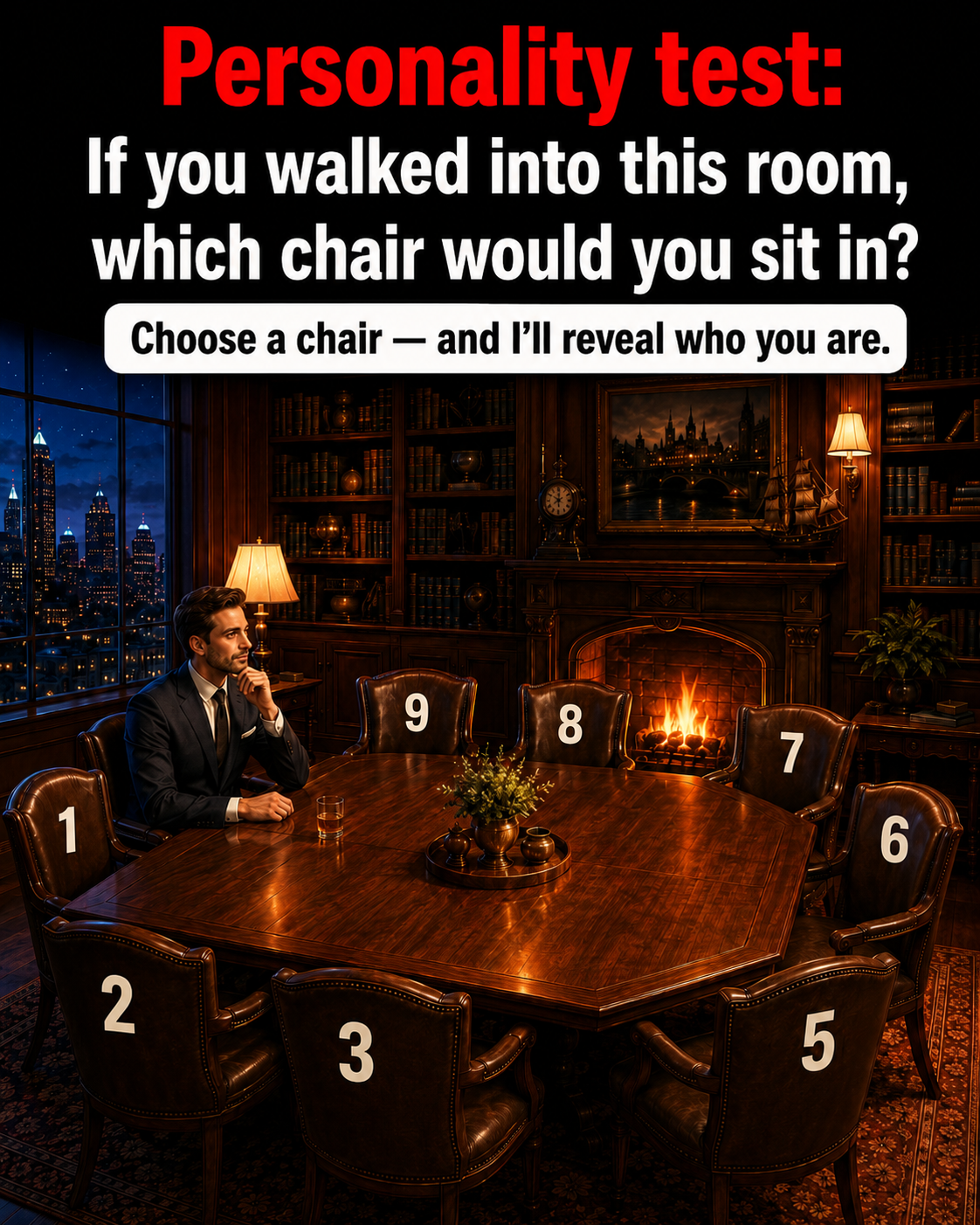
Personality test: if you were to walk into this room, which chair would you sit in? The image shows a long table in a warm, elegant room, with nine chairs arranged around it. A man is already seated at the head of the table, and this subtly alters the whole psychology of choosing a seat. Each chair offers a slightly different view of the room, the person present and the whole setting. Your choice can reveal a great deal about your personality, social behaviour and even how you relate to authority or build relationships with others.
Chair 1 — The Observer and Strategic Thinker
If you choose chair number 1, you are most likely the sort of person who prefers to observe first and only then get involved in what is happening. This seat is slightly set apart, yet allows you to see everything that is going on in the room. People who choose this position are usually thoughtful and analytical in their approach. It is important for them to understand the situation first before fully immersing themselves in it. Perhaps you value mindfulness and prefer to assess people’s intentions and character before getting close to them. This cautious approach often makes you a good problem-solver, because you gather information thoroughly before making a decision.
Chair 2 — A Friendly Conversationalist
Choosing chair number 2 suggests that you are probably a sociable person who enjoys conversation, socialising and lively interaction. This seat allows you to participate comfortably in a conversation without appearing too domineering. People who choose this chair often value relationships and communication. You most likely enjoy sharing ideas, listening to others and creating a trusting atmosphere within a group. You may have a warm and open personality, which makes those around you feel at ease in your company. You are the sort of person who often acts as a bridge between different personalities within a group.
Chair 3 — A Balanced Personality
Chair number 3 is often chosen by people who strive for balance and harmony. This position allows you to see both sides of the table clearly whilst maintaining a comfortable distance from the head of the table. Those who choose this chair are usually practical, fair and emotionally stable. You probably prefer a calm atmosphere and dislike unnecessary conflict. Within a group, you may act as a mediator who listens to everyone and tries to find a solution that benefits the majority.
Seat 4 — The Independent Thinker
If you choose seat number 4, you most likely value independence and personal space. This seat is slightly set back from the central social area, so it allows you to take part in what’s going on whilst maintaining a certain distance. People who prefer this seat are often deep thinkers and place a high value on their autonomy. You don’t necessarily need to be the centre of attention all the time, but you are confident in your thoughts and views. Those around you may perceive you as a calm, level-headed and self-sufficient person.
Seat 5 — The Quiet Observer
Seat number 5 is slightly set apart from the other seats, which may indicate a more introverted or contemplative personality type. If you choose this seat, you may prefer a calm atmosphere where you can observe how people interact, rather than dominating the conversation. This doesn’t mean you’re shy; rather, you prefer to think before you speak. People with this personality type often possess strong intuition and emotional intelligence. You may notice subtle details in people’s behaviour and situations that others easily overlook.
Chair 6 — The Practical Realist
Choosing chair number 6 may suggest that you are practical and efficiency-oriented. This seat offers a good view of the room, but does not place you squarely in the centre of attention. People who choose this seat often prioritise comfort and convenience over social status. You probably take a realistic approach to life, preferring clear goals and logical solutions. Those around you may see you as a reliable, responsible person who remains calm even under pressure.
Seat 7 — The Confident Participant
Seat number 7 is situated quite close to the head of the table, which may indicate confidence and a willingness to engage with authority or leadership. If you’ve chosen this seat, you probably enjoy being involved in important conversations and decisions. You most likely have your own opinion and aren’t afraid to express it respectfully and directly. People of this type often display ambition and determination. They enjoy situations where they can contribute their ideas and influence the outcome.
Seat 8 — An Ambitious Personality
Choosing seat number 8 may reflect a personality that is comfortable with leadership and responsibility. This seat is situated next to the head seat and close to the warmth of the fireplace, symbolising both influence and cosiness. People who choose this seat often possess a strong sense of ambition and self-confidence. You may enjoy challenges and opportunities to prove your abilities. Those around you are likely to see you as a motivated, determined person, capable of taking the initiative in difficult situations.