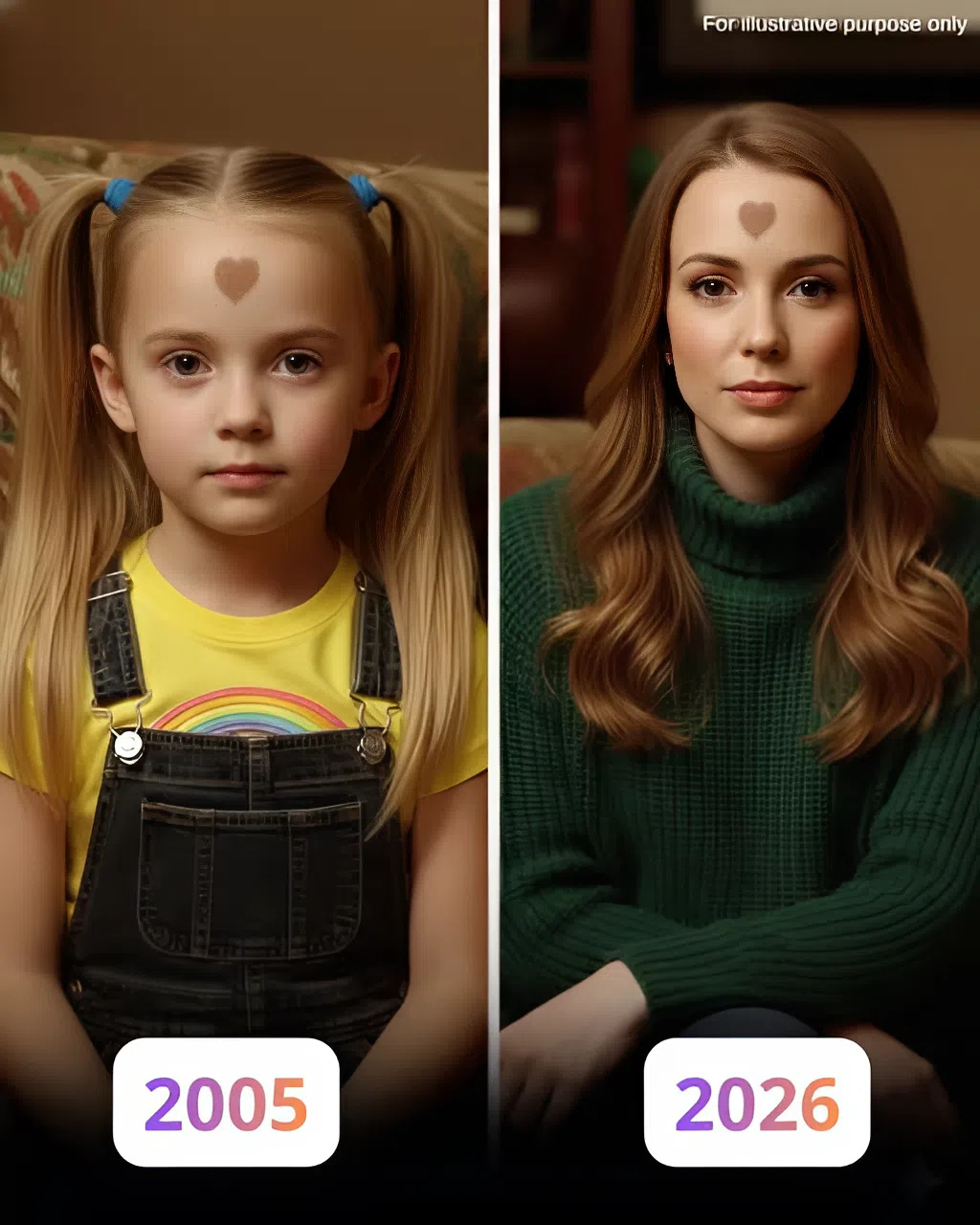
I spent my childhood convinced the birthmark on my forehead was the worst part of me. I spent years hiding it, and eventually booked surgery to make it disappear. Then, during a job interview, a man I’d never seen before stared at me and said I was supposed to be dead. What followed left my hands shaking.
I was born with a dark mark centered on my forehead.
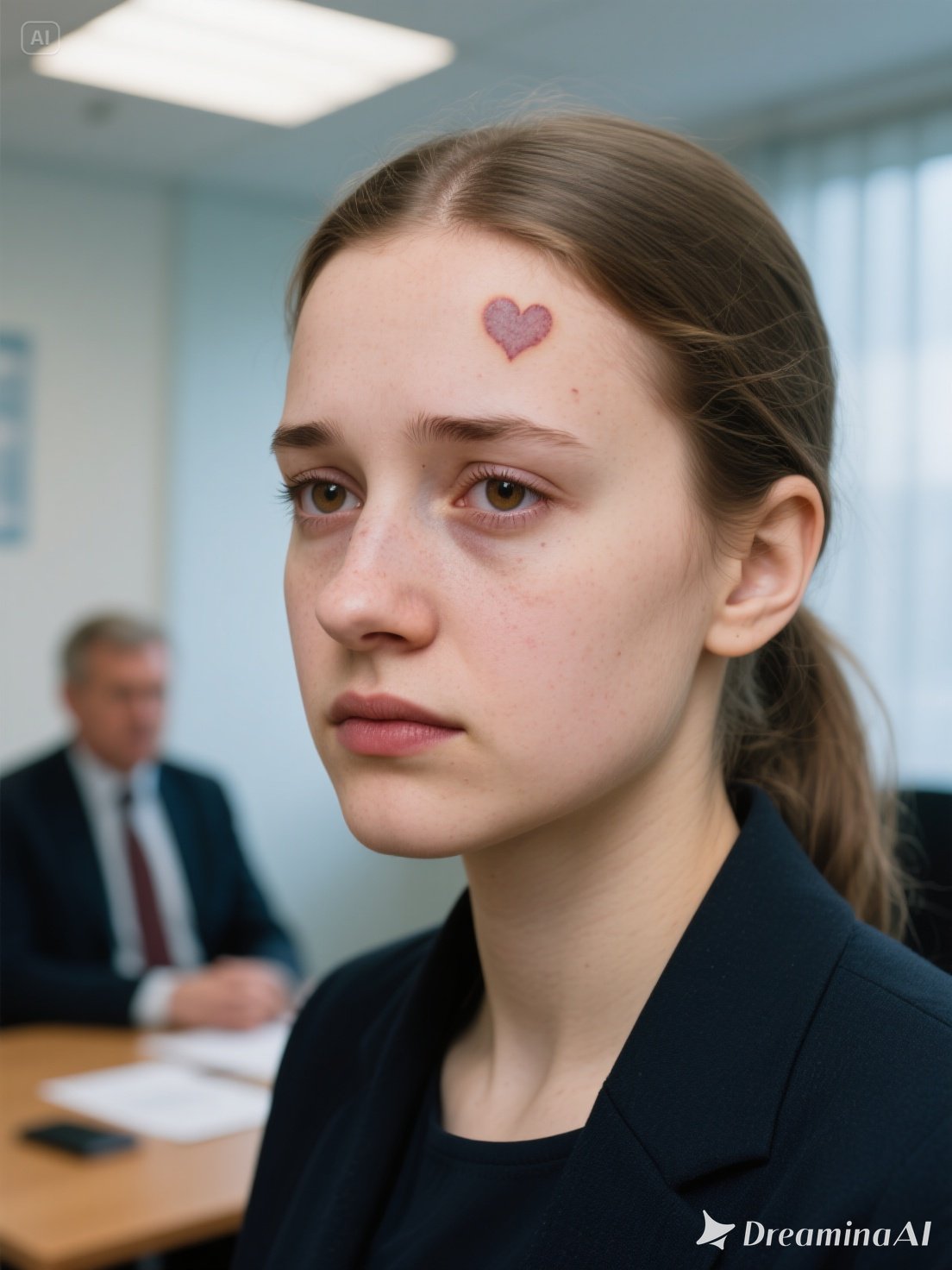
The kind people notice immediately, then quickly pretend they didn’t.
In elementary school, it became a reason to tease me.
It began subtly. One afternoon at lunch, a boy leaned across the table and squinted at my forehead like it was a riddle.
“Did you hit your head?” he asked.
Another kid snorted. “It looks like paint.”
After that, it escalated.
I remember staring at my milk carton, cheeks burning, acting like I couldn’t hear them, like my mind was somewhere else entirely.
You figure out how to do that early when you have to.
Middle school made everything louder.
Doesn’t it always? Louder voices, sharper cruelty, and kids who barely know you suddenly feeling entitled to comment on your body. One afternoon, a girl I barely recognized cornered me in the bathroom and said, “You should cover that up so the rest of us don’t have to look at it.”
I told a teacher once.
She gave me a tight smile and said, “Kids can be mean. Try not to let it bother you.”
How was I supposed to ignore something that followed me everywhere?
But I didn’t ask. I just nodded and walked away.
At home, my adoptive mom would tuck my hair behind my ear, her touch soft and reassuring, and say, “It makes you unique.”
My dad would nod along. “There’s nothing wrong with you. Not one thing.”
I believed them.
I also believed the kids.
That’s the part no one really explains about having loving parents.
Love doesn’t silence hallway whispers, lingering stares, or the feeling that you’ve been mentally labeled as “different.” By the time school photos rolled around, I’d mastered my angles — head tilted, chin lowered, bangs pulled forward just enough to cast a shadow.
“Hold still,” the photographer said every year.
I always did.
In high school, I stopped raising my hand even when I knew the answer. I didn’t want attention. I didn’t want eyes on me.
Being invisible felt safer, even if it meant shrinking myself.
Once, a boy I liked asked why I always styled my hair the same way.
I laughed and said, “Habit.”
He accepted that.
I got through school by shaping my entire personality around not being noticed — and I became very good at it.
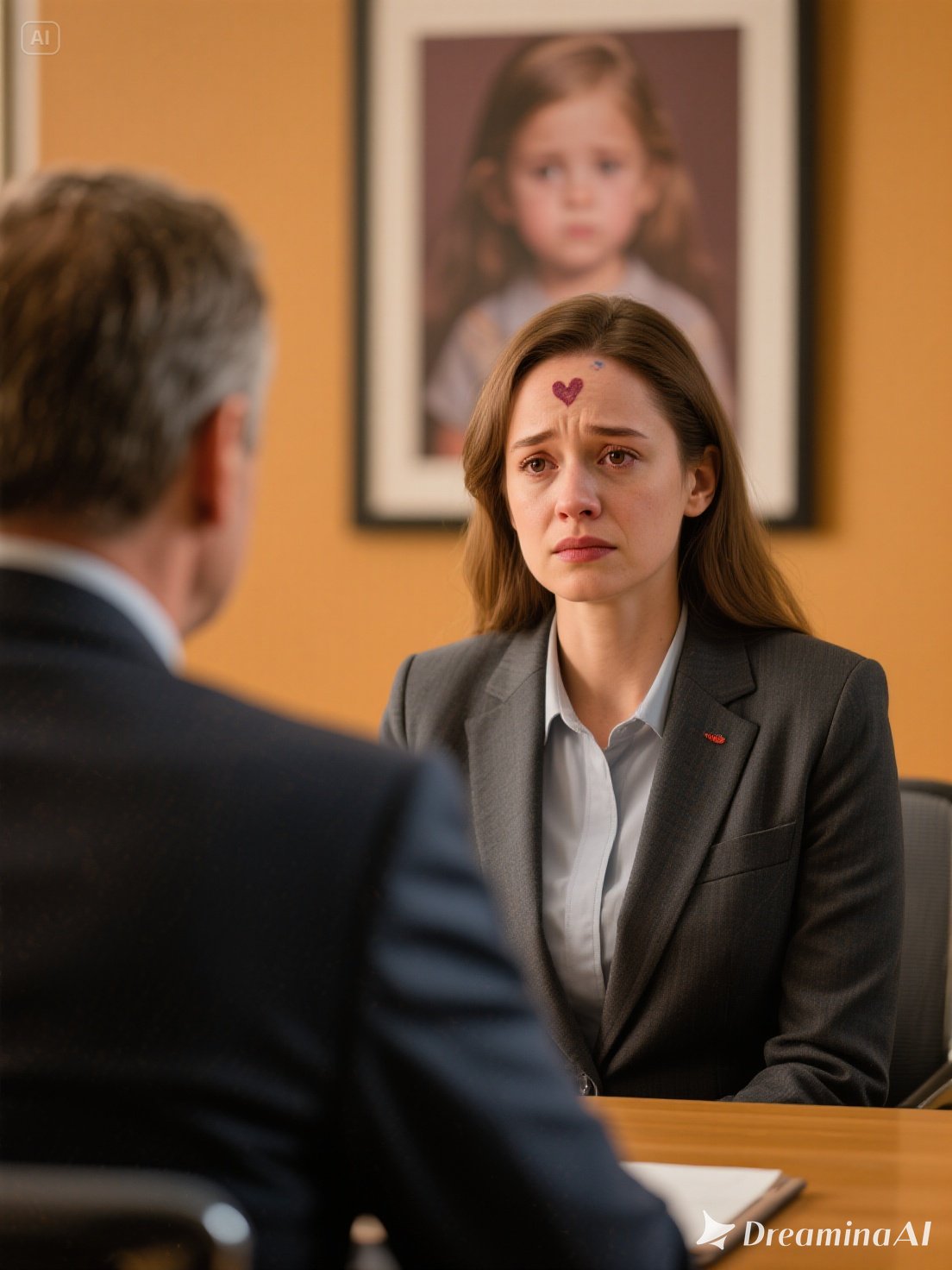
For years, I believed the birthmark was the worst thing that had ever happened to me. The source of every insecurity and doubt.
I thought if I could erase it, everything else would fall into place. I wouldn’t have to hide anymore. I could finally just exist as myself.
By my 20s, I had a savings account with a single goal: cosmetic surgery to remove the birthmark.
After college, I worked as a marketing coordinator, stashing away every spare dollar.
I scheduled consultations during lunch breaks.
Doctors spoke in calm tones about “options” and “minimal scarring” while I sat in sterile rooms, blinking back tears.
The surgery was scheduled for two weeks later.
I told my friend Amber over coffee one afternoon.
“I finally scheduled it! In two weeks, this birthmark will be gone forever.”
“You’re really excited about this, huh?”
“I think I’ll feel lighter,” I said. “Like I won’t have to think about it anymore.”
“But you know you don’t need to do that, right? I just mean,” she added gently, “I’ve never thought there was anything wrong with you. But if this is what you want, I’m with you.”
That was enough. I didn’t need full understanding — just acceptance.
I circled the date on my calendar and convinced myself everything would be easier afterward.
New face. New life. New start.
Then the email arrived.
I’d been invited to interview for my dream job — a role I never imagined I’d actually land. One of those rare opportunities.
I nearly postponed the surgery just to avoid the added stress.
Instead, I did something I almost never did.
I pulled my hair back.
Looking back, I know I wouldn’t have done that without Amber. That one conversation pushed me to be brave, and that tiny choice changed everything.
“If they don’t hire me because of a birthmark, I don’t want the job anyway,” I told my reflection.
It sounded bold in the mirror.
Walking into the building felt terrifying.
The office was sleek and quiet, all glass and muted tones. I sat across from the assistant, answering questions. It was going well.
Then the door opened.
My future boss stepped in.
Early 50s, confident posture, perfectly tailored suit. He looked like someone life rarely surprised.
He was reading from his tablet as he entered.
Then he looked up.
And froze.
Color drained from his face, and he stumbled back like he’d been struck.
“No, no, no. It can’t be true.”
The assistant stopped typing.
I assumed my worst fear had come true — that someone powerful had taken one look at me and decided I wasn’t worth it.
Then his gaze locked onto my forehead.
“You’re dead. You were supposed to be dead.”
What?!
I couldn’t speak. My throat closed completely.
The assistant looked between us. “Sir?”
He waved her away without breaking eye contact. His hand trembled.
“Please. Give us a moment.”
When the door shut, he dropped into the chair across from me, staring like I might vanish if he blinked.
“That mark,” he said softly. “That exact mark.”
My heart slammed against my ribs.
“I’m sorry… do I know you?”
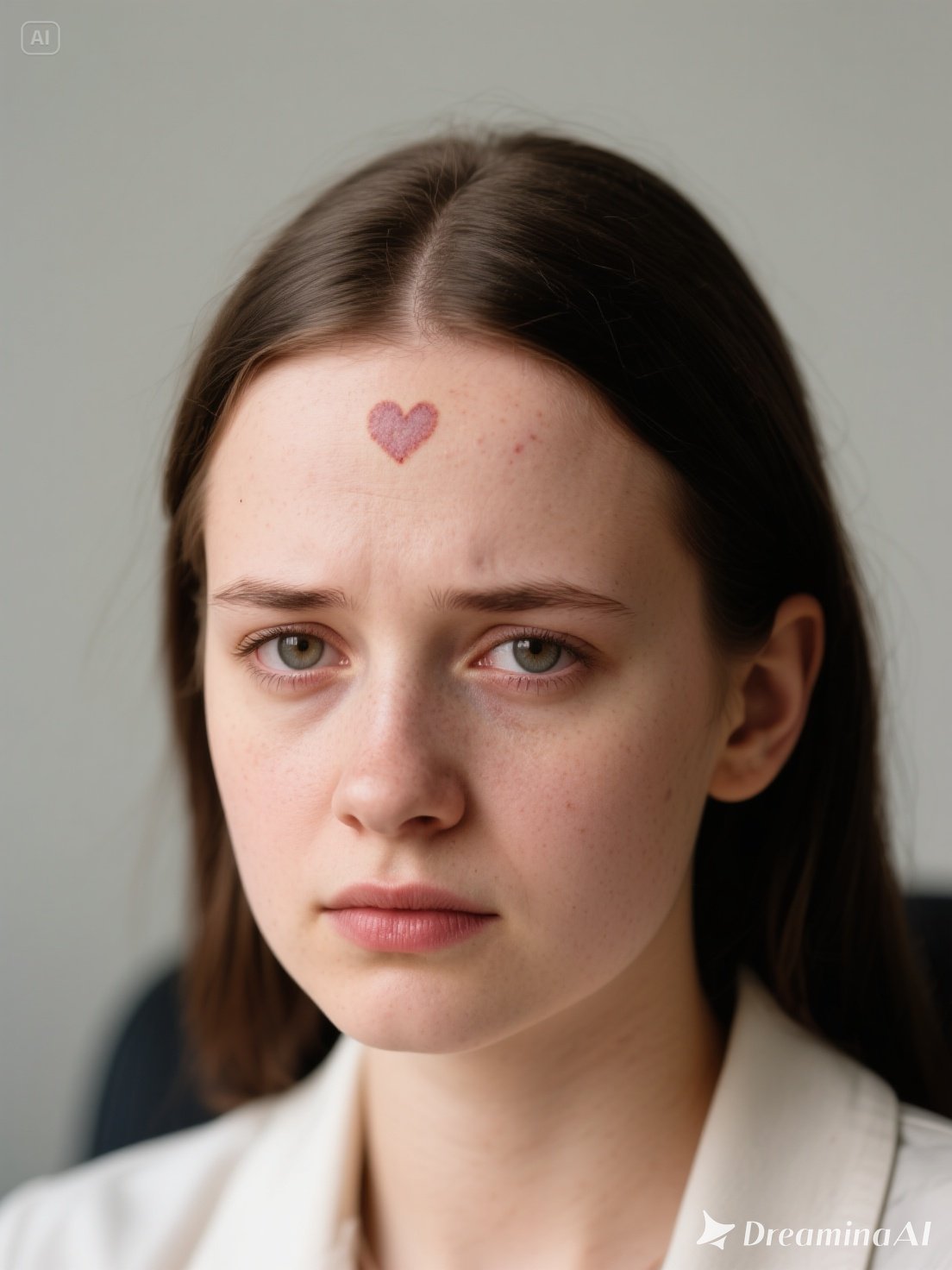
He studied me for a long moment before answering, his voice rough with emotion.
“No, you don’t, but I think I know you. I know your birthmark. I never thought I’d see it twice in my life, not after they told me you were gone.”
I clasped my hands together. “I don’t understand what you mean.”
He inhaled deeply, as if bracing himself.
“Twenty-five years ago, the woman I loved left town while pregnant. We were young. Afraid. She said it was easier that way.”
He swallowed. “Later, she called and told me the baby didn’t make it.”
I felt my throat tighten. “I’m sorry, but what does that have to do with me?”
“She sent me one photo. Just one. The baby had a birthmark.” His hand hovered near his own forehead. “Right there.”
The room felt unnaturally still.
“Your mother… is her name Lila?”
“I don’t know. I was adopted as a newborn.”
His eyes filled, but he didn’t look away.
“She lied to me… she must have.”
I searched his face, trying to breathe through the moment.
“You… you think I’m your daughter.”
He nodded.
“Would you agree to take a DNA test? Because if there’s even a chance…” His voice broke. “I’d like to know, and you deserve to know the truth, too. Even if it changes nothing.”
The question hung between us.
How do you answer something like that?
“Okay,” I said at last. “I’ll do it.”
We arranged everything right there.
He paid for expedited testing without hesitation.
The results came back quickly.
Too quickly.
We opened them at my parents’ house — the people who raised me, chose me, and loved me.
It was a match.
He was my biological father.
My mom cried. My dad held my hand. Neither let go.
He looked at me, tears streaming, silent.
“I have parents,” I said quietly. “They raised me. They chose me.”
“I understand, and I’m grateful.” He nodded toward them.
“But I’d like to know where I came from.”
He smiled.
Days before the surgery, the clinic called to confirm. After hanging up, I stood in front of the mirror, hair pulled back just like that interview day.
The mark I’d hated my whole life wasn’t a flaw.
It was proof — that I’d been carried, remembered, and wanted.
I called back and canceled.
“I’m sure,” I said.
I didn’t leave with everything solved.
I didn’t suddenly love my birthmark or feel grateful for cruelty.
But I left knowing the truth — and knowing I didn’t need to erase myself to belong.
The mark wasn’t a mistake.
It was a map that led me home.
And that was enough.