Two days before Christmas, I ignored all warnings and took in a trembling mother and her child. I thought I was just offering them a warm place to stay for the night — never imagining that it would change all our lives.
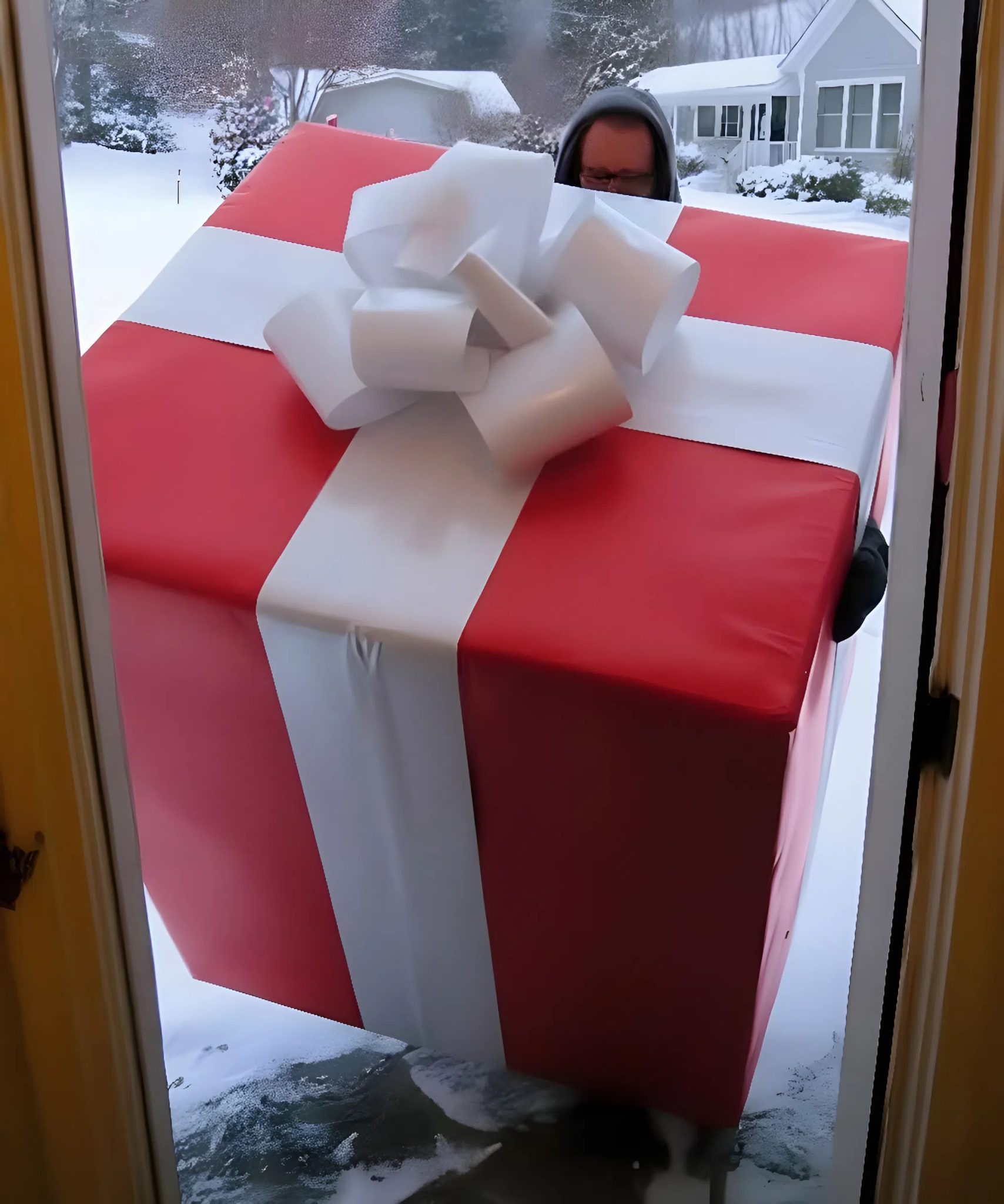
As soon as I opened my home to this family, a parcel arrived with my name on it on Christmas morning — and everything changed.
I am 33 years old and raising two young daughters on my own. They are five and seven, and they truly believe in Santa.
They write letters with backward Cs and crooked hearts. They discuss which cookies he prefers. They take it all very seriously.
Their father left three years ago.
There were no arguments or goodbyes — he just gradually disappeared. Fewer and fewer messages. Missed calls. Cancelled visits. At one point, I realised that he hadn’t been interested in the girls for several weeks.
Now there are three of us.
I work at a hospital.

I plan trips to the shop as if they were high-stakes gambles.
I know which shop has the cheapest milk,
which bread is discounted early in the morning,
and how to stretch one packet of minced meat into three dinners.
I’ve learned how to unblock drains, restore electricity and make our old heater work.
Sometimes I feel strong and capable.
Other days, it feels like if one more thing breaks, I’ll just fall to the kitchen floor and stay there.
The only real resource we have is our house.
It belonged to my grandparents.
It’s small, noisy, and the panelling has seen better days — but it’s paid off.
Not having a mortgage is the reason we’re still afloat.
Two days before Christmas, I was driving home after a late shift.
I was exhausted to the core — the kind of exhaustion where your eyes burn and everything seems slightly unreal.
It was already dark outside.

The roads glistened with a thin layer of ice that looked harmless but wasn’t.
Quiet Christmas music played on the radio as my brain ran through its tired to-do list.
Wrap the presents.
Hide the stocking stuffers.
Don’t forget to move that stupid elf.
My girls were at my mum’s.
They were already drinking hot chocolate, eating sugar cookies, and watching too many holiday movies.
I imagined them sleeping in their flannel pyjamas, their cheeks rosy and their mouths relaxed.
Warm. Safe.
I felt a wave of gratitude — and then the familiar thought: I still had to pack everything when I got home.
And then I saw her.
She was standing at the bus stop, half-hidden under a small plastic canopy.
A woman holding a child tightly to her chest.
She wasn’t pacing.
She wasn’t checking her phone.
She just stood there — completely still.
The wind was fierce — the kind that pierces right through your coat.
The child was wrapped in a thin blanket, his cheeks red from the cold. One tiny hand was sticking out, his fingers clenched and lost in the thin layer of the blanket.
I felt my heart sink.
I drove past her.
For about five seconds.
Then all the warnings in my head went off at once.
All lectures about strangers.
All the reminders that I am now a mother — and cannot take risks.
And beneath all this turmoil, a quiet thought:
What if it had been me?
What if it had been my child?
I slowed down.
I stopped.
My hands were shaking as I rolled down the passenger window.
‘Hello,’ I called out. ‘Are you all right?’
She flinched, then came closer.
Up close, she looked emaciated — dark circles under her eyes, chapped lips, her hair tied back in a ponytail that had long since lost its shape.
‘I…’ She paused, swallowing hard. ‘I missed the last bus.’
She hugged the child tighter.
‘I have nowhere to stay tonight.’
She wasn’t crying.
She said it calmly, like someone who had spent all her energy coming to terms with it.
‘Do you have anyone nearby?’ I asked. ‘Family? Friends?’
‘I have a sister,’ she said. ‘But she lives far away.’
She looked away, embarrassed.
‘My phone died. I thought there was another bus. I got the timetable wrong.’
The wind tore at the bus stop.
I looked at the empty road, the slippery pavement and the little boy’s red cheeks.
My daughters were asleep in warm beds at my mother’s house.
This child was here, in the cold.
Before my fear could argue, the words came out of my mouth.
‘Okay. Get in. You can stay at my place tonight.’
Her eyes widened.
‘What? No, I can’t. You don’t even know me.’
‘That’s true,’ I said. ‘But I know it’s freezing outside, and you’re holding a baby. Please. Sit down.’
She hesitated for just a second.
Then she opened the door and got into the car, still holding the child tightly, as if it were her armour.
As soon as the warm air touched him, he let out a small, tired cry.
‘What’s his name?’ I asked as we pulled away from the kerb.
‘Oliver,’ she said, and her face lit up instantly. ‘He’s two months old.’
She adjusted him carefully.