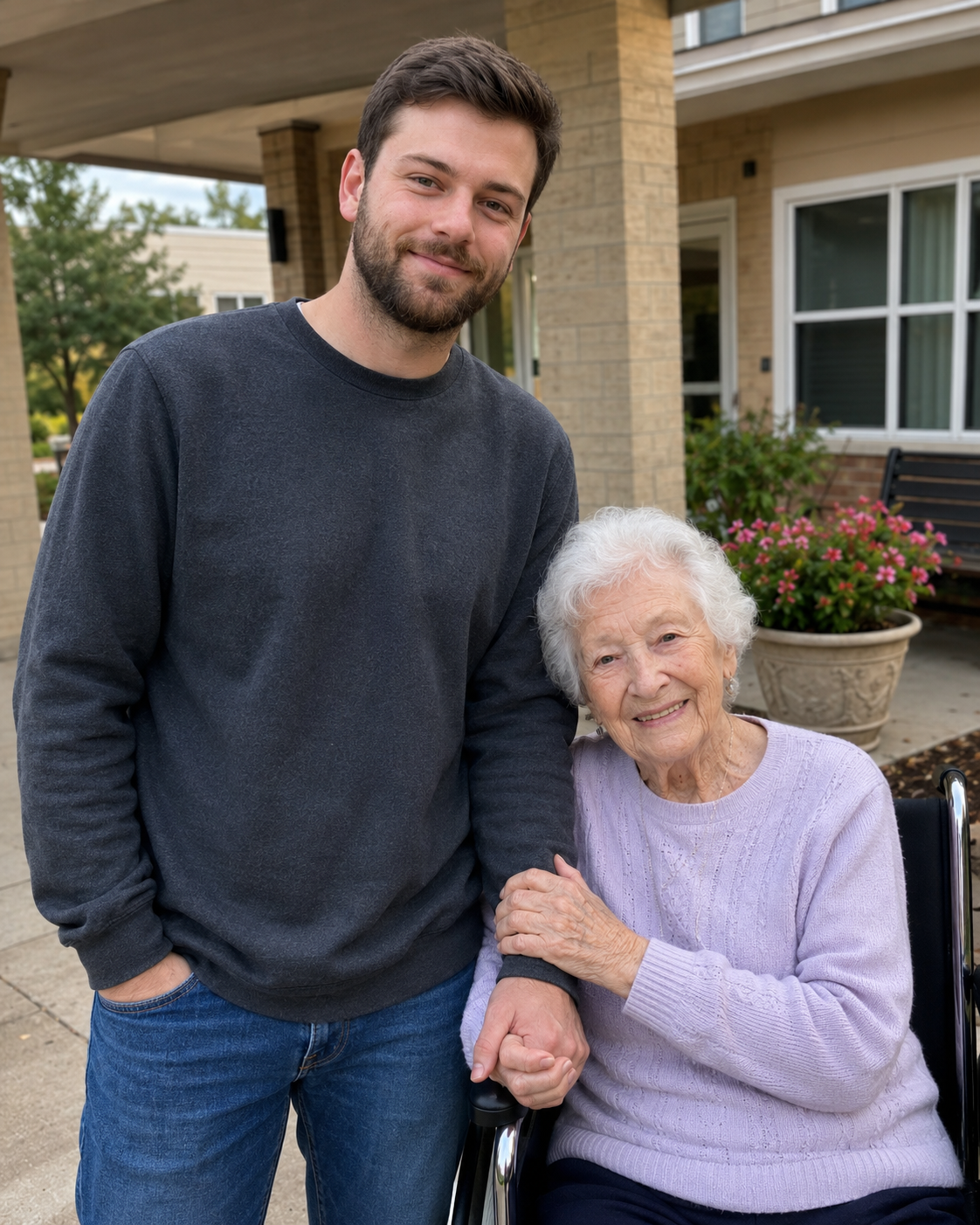
In the corridor I met Margaret, a fragile woman with sharp eyes and a cardigan two sizes too big. She watched me carry the flowers past her door.
“You visit her a lot,” she said.
“She’s my mother.”
Margaret tilted her head. “She’s the sweetest soul here. You’re lucky.”
Something in the way she said it made me look away.
I started skipping lunch to make the drive across town.
Tim called that Friday. His voice was clipped.
“You don’t need to go midweek, Jeremy. This is just a job. Keep it simple.”
“She gets lonely.”
“She has dementia. She forgets the second you leave.”
I gripped the phone tighter. “Maybe. But she remembers while I’m there.”
He hung up.

Weeks blurred into months. I started skipping lunch to make the drive across town. I read the newspaper to Rosie. I rubbed her hands when her knuckles ached.
I told myself it was just the dementia, just words drifting loose.
One afternoon she leaned close, her breath shallow, her eyes clearer than I had ever seen them.
“You’re a good man, son,” she said.
I almost broke down right there.
“Mama, I…”
“Shh.” She patted my cheek. “I know what I know.”
I did not understand then. I told myself it was just the dementia, just words drifting loose.
“She left something for you.”
I drove home that night thinking about my own mother, about how rarely I sat with her the way I sat with Rosie. I made a promise to do better. To call more. To stay longer.
Two days later, my phone rang while I was loading boxes onto the truck.
It was the nursing home director.
“Jeremy. Rosie passed away in her sleep last night.”
I set the box down on the wet pavement.
“And she left something for you.”
I opened the envelope with shaking fingers.
Three days after the funeral, I sat in Director Helen’s office, staring at a sealed envelope on her desk. I had braced for grief, not paperwork.
“She knew you weren’t her son,” Helen said gently.
I looked up. “What?”
“From the first visit, Jeremy. She told me a week in. She asked me to keep her secret.”
I opened the envelope with shaking fingers. Rosie’s handwriting wandered across the page, looping in places, steady in others.
“My dear boy who is not my boy. My memory failed me, but my eyes never did. I knew your face was not his. I let you stay because you stayed. That was enough. The key opens what I have saved. Use half for my friends here. They have so little.”
I didn’t think much of it at the time.
I pressed my thumb against the paper. A small brass key slid into my palm.
“She left it to you on purpose,” Helen said. “Not by mistake.”
Helen explained that because Rosie had left behind a safety deposit box and a written bequest, the nursing home’s legal executor would be required to notify Tim as her next of kin. I didn’t think much of it at the time.
Word travelled faster than I expected. Four days later, Tim was banging on my apartment door.
“Open up, Jeremy. I know you’re in there.”
I opened it. He pushed past me, eyes wild, jacket half-buttoned.
“Where is the key?”
“It’s not yours.”
“You manipulated a sick old woman.”
“She was my mother. Not yours. MINE.”
“Then where were you?” I asked calmly.
Tim paused. For a second something cracked behind his face, the same flicker I had seen in the coffee shop when he said he could not watch his mother. Then it hardened again.
“You manipulated a sick old woman. I have lawyers, Jeremy. Real ones. You’ll be lucky to keep your van.”
“I didn’t manipulate anyone. She knew.”
“Knew what?”
“Knew I wasn’t you. The whole time.”
Tim’s attorney filed to contest the bequest, claiming undue influence.
He laughed, ugly and short. “Tell that to a judge. See how that sounds coming from the man I paid $500 a week.”
The door slammed behind him so hard that a picture fell off the wall.
Within a week, the legal papers arrived. Tim’s attorney filed to contest the bequest, claiming undue influence. Then the phone calls started from relatives I had never met, calling me a fraud, a con man, and a vulture.
I sat on my mother’s couch that night, papers spread across the coffee table, and almost called the whole thing off.
“What are you going to do, baby?” she asked.
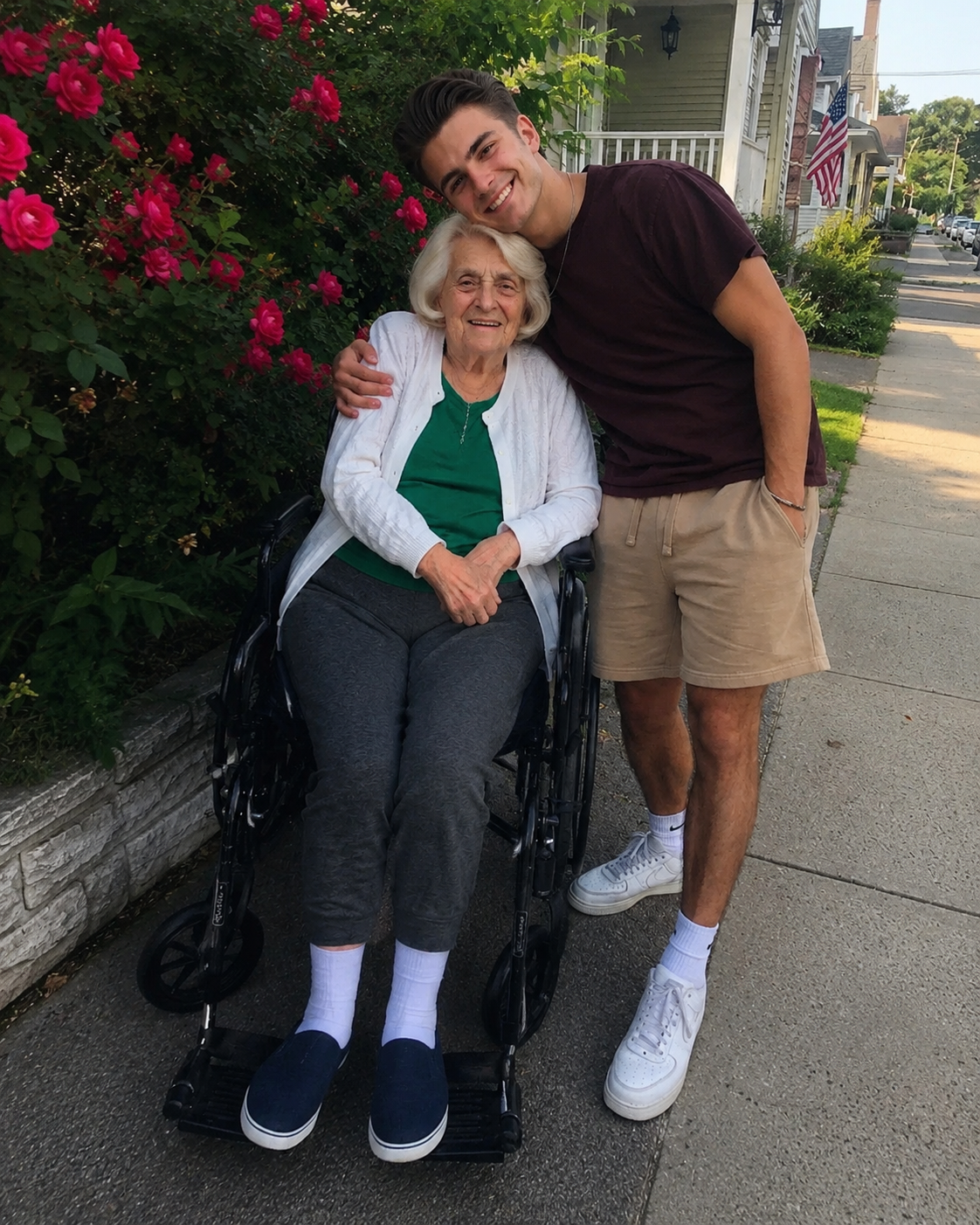
“I don’t know, Ma. He has money. I have nothing.”
“You have the truth.”
“She called you the boy who chose to stay.”
I drove to the nursing home the next morning. Margaret was in the sunroom, knitting something blue and crooked.
“Jeremy,” she said, patting the seat beside her. “I wondered when you’d come.”
“He’s suing me, Margaret. Tim. He says I tricked her.”
She set the knitting down.
“In her last week, Rosie told me about you every day. She called you the boy who chose to stay. Those were her words.”
“Would you say that in court?” I asked.
“I’ll say it anywhere they’ll let me.”
“Tomorrow you’ll have a settlement offer.”