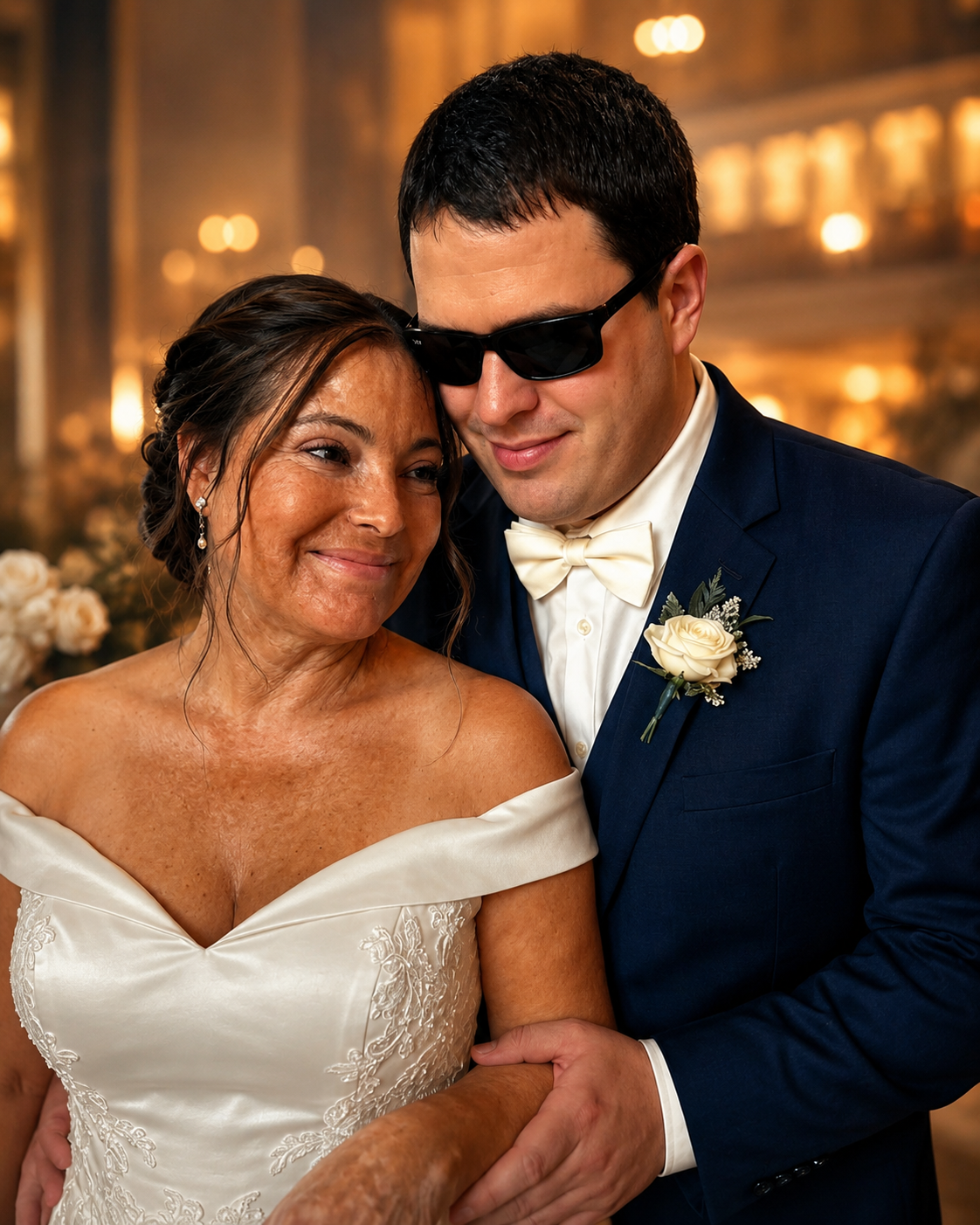
“What issue is that?” he asked.
I smiled.
“The kitchen officially belongs to me now.”
Callahan groaned dramatically.
“That’s unfair. I haven’t even had a chance to defend myself.”
“You set breakfast on fire.”
“It was only slightly overcooked.”
“It’s practically charcoal.”
“That seems a little harsh.”
Buddy barked again as if casting his vote in the argument.
I laughed even harder.
And for the first time since learning the truth, the crushing weight inside my chest eased.
That small, ridiculous moment became my very first official decision as a married woman.
Callahan was permanently banned from cooking unsupervised.
Buddy stretched out beneath the kitchen table like a mediator who had successfully negotiated peace between two exhausted nations. Every time either of us laughed, his tail thumped happily against the floor.
The apartment slowly filled with something that had been missing since the night before.
Hope.
Not the fragile kind built on secrets.
Not the temporary kind built on avoidance.
Real hope.
The kind that survives truth.
Over the weeks that followed, Callahan and I had difficult conversations. Some lasted for hours. Some ended in tears. Some ended in silence.
Forgiveness did not arrive all at once.
Trust did not magically repair itself overnight.
There were days when I felt angry.
Days when I felt confused.
Days when I looked at him and saw the frightened sixteen-year-old boy who ran away from a disaster.
And there were days when I looked at him and saw the man who spent years carrying guilt that slowly hollowed him out from the inside.
For the first time, we stopped hiding from the past.
He told me everything.
And I told him everything.
The fears.
The nightmares.
The loneliness.
The shame.
The years I spent believing that my scars were the first thing people saw and the only thing they remembered.
Callahan listened to every word.
He never interrupted.
He never tried to minimize my pain.
He simply held my hand and listened.
One evening, several months later, we were sitting on the porch while Buddy slept nearby.
The sun had already disappeared, and the world was wrapped in darkness.
For a long moment, neither of us spoke.
Then Callahan quietly asked:
“Do you ever wish you had never met me?”
I looked at him.
At the man who had broken my heart and helped heal it.
At the man who carried his own scars, invisible to everyone except himself.
And I answered honestly.
“No.”
He swallowed hard.
“Even after everything?”
“Yes.”
“Why?”
I reached for his hand.
Because finally, after all those years, I knew the answer.
“Because you never looked at me the way everyone else did.”
His fingers tightened around mine.
“But I couldn’t even see you.”
I smiled softly.
“That’s exactly why.”
For most of my life, people saw my scars before they saw me.
They saw damage.
They saw tragedy.
They saw something broken.
But Callahan never saw any of that.
He saw my voice.
My laughter.
My kindness.
My stubbornness.
My heart.
And somehow, despite carrying his own guilt and darkness, he loved all of it.
For years, I believed my scars were the worst thing about me.
Now I understand they were never the problem.
The problem was believing they defined me.
What happened that day was not my fault.
It never was.
And perhaps the greatest gift I received was realizing that the person who knew the darkest truth connected to my scars still found me worthy of love.
Not despite what happened.
Not because he pitied me.
But because he saw who I truly was beneath it all.
These days, when I catch my reflection in a mirror, I no longer search for the damage first.
I see a survivor.
I see a wife.
I see a woman who learned that healing does not come from hiding wounds.
It comes from allowing yourself to be loved with them.
And every morning, when Callahan reaches across the bed to find my hand before he says a single word, I remember something important.
Some people spend their entire lives being looked at.
Very few are ever truly seen.
I was fortunate enough to find someone who saw me through nothing but darkness.
And in the end, that changed everything.